Author: user

  • AmEx Introduces “Waterfall” Lifetime Language on Amex EveryDay Card

    AmEx Introduces “Waterfall” Lifetime Language on Amex EveryDay Card

    American Express, a key player in the credit card industry, recently introduced a concept known as “waterfall” lifetime language to its Amex EveryDay Card. This seemingly innocuous change has significant implications for those looking to maximize their rewards and enjoy the benefits of American Express’s Membership Rewards program.

    Understanding “Waterfall” Lifetime Language

    The term “waterfall” may conjure images of cascading streams, but in the world of credit card churners, it signifies something quite different. This new language is all about limiting your eligibility for signup bonuses based on your previous card history within the same family. To put it simply, if you currently hold or have ever held a higher-tier card in the same family, your eligibility for a signup bonus on a lower-tier card is restricted. The reverse, however, is not true.

    In practical terms, if you’ve had the Amex EveryDay Preferred Credit Card, you won’t be eligible for a signup bonus on the basic Amex EveryDay Card. This applies not only to the current moment but extends to any point in the future when you might consider reapplying for the Amex EveryDay Card.

    You may not be eligible to receive the welcome offer, intro APRs, and intro plan fees if you have or have had this Card, the Amex EveryDay Preferred Credit Card or previous versions of these Cards. You also may not be eligible to receive the welcome offer, intro APRs, and intro plan fees based on various factors, such as your history with credit card balance transfers, your history as an American Express Card Member, the number of credit cards that you have opened and closed and other factors.

    Fine print from AmEx (emphasis added is ours)

    The Evolution of “Waterfall” Language

    This trend began a few weeks ago with the personal Delta cards and was later expanded to include the Amex Gold and Platinum cards. However, business cards are yet to be affected, so if you’re yet to pick up bonuses on popular AmEx business cards, you still have time to do so.

    Historically, the EveryDay and EveryDay Preferred cards have not been known for their extravagant signup bonuses. Therefore, the impact of “waterfall” language on these cards may not be as alarming as it is on cards like the Delta card family and the AmEx Gold/Platinum. However, it’s crucial to acknowledge that this trend seems to be spreading rapidly throughout AmEx’s portfolio.

    Navigating the “Waterfall” Strategy

    If you’re an avid points collector and are starting from scratch, the best strategy is to progress sequentially within a specific card family. For instance, begin your journey with the AmEx Green Card, then move up to the Gold Card, and eventually set your sights on the Platinum Card. By following this order, you can maximize your signup bonuses “on the way up,” ensuring you receive the most value from your card applications.

    Bottom Line

    The introduction of “waterfall” lifetime language on the Amex EveryDay Card is part of a broader trend in the credit card industry, making signup bonuses more difficult to come by through churning. While these particular cards may not have an earth-shattering impact, the potential consequences for other card families and their associated signup bonuses should not be underestimated. As the credit card landscape continues to evolve, it’s essential for enthusiasts and churners to adapt and strategize, ensuring they make the most of the rewards available while staying one step ahead of the game. So, if you’re thinking about applying for an Amex EveryDay Card, make sure to read the fine print and consider your card progression carefully. Happy collecting!
  • Southwest Airlines Unveils Major Updates to Rapid Rewards Program

    Southwest Airlines Unveils Major Updates to Rapid Rewards Program

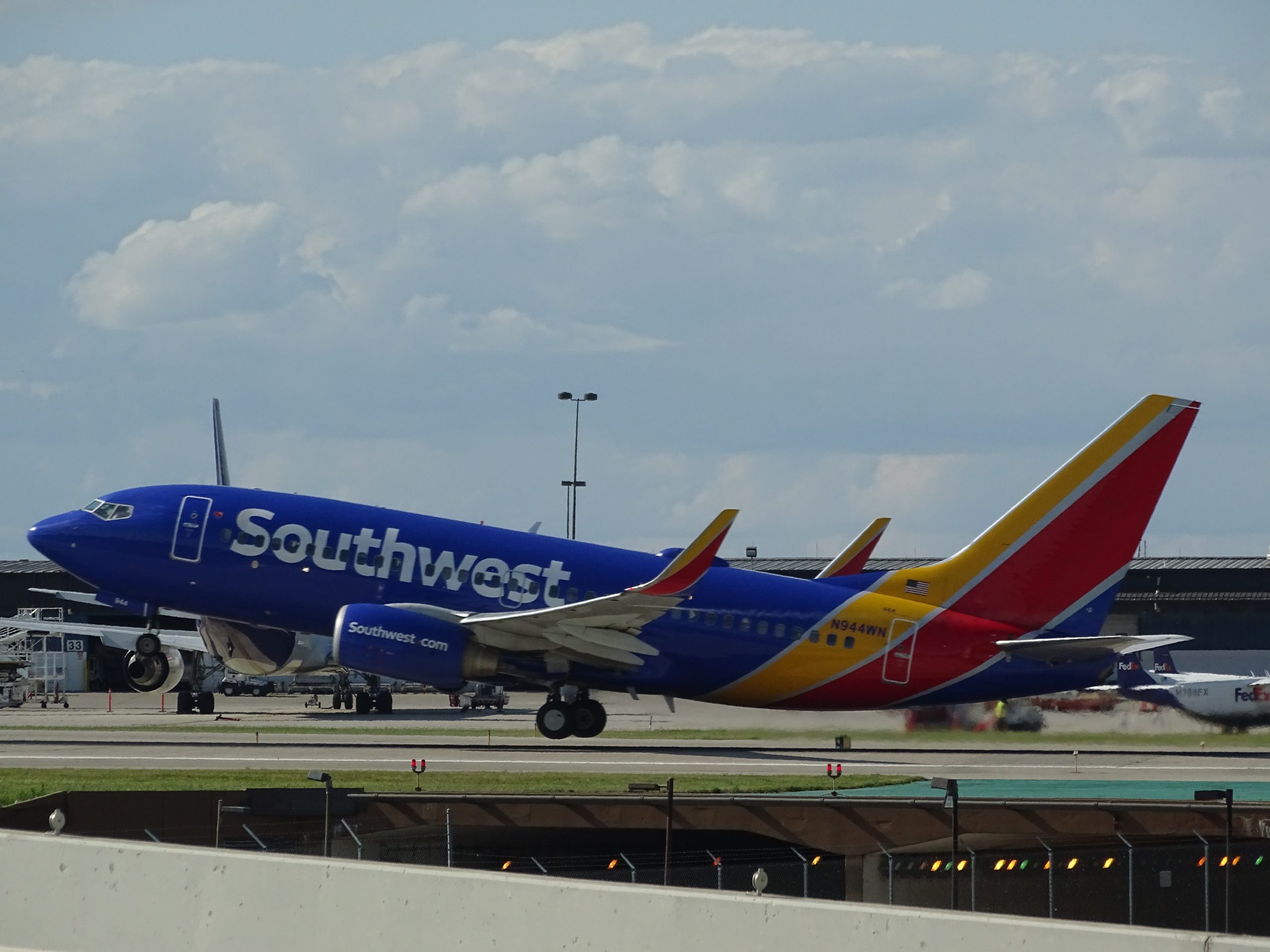
    Southwest Airlines is shaking up its Rapid Rewards program with a series of changes that aim to enhance the experience for its loyal customers. These enhancements come at a crucial time for the airline, which has been grappling with operational challenges and striving to regain the trust of its passengers. Let’s dive into what these changes mean for Southwest’s Rapid Rewards members.

    Earning Elite Status Just Got Easier

    One of the most significant changes is the adjustment to the requirements for earning A-List and A-List Preferred status. Starting on January 1, 2024, Rapid Rewards members will need to complete fewer qualifying flights to qualify or requalify for status. Interestingly, the thresholds for those qualifying by tier-qualifying points remain unchanged, though earning TQPs from a cobranded credit card becomes easier.

    For A-List status, the bar has been lowered from 25 one-way qualifying flights to just 20 flights, or 35,000 tier-qualifying points. This change makes it more attainable for frequent Southwest flyers to enjoy the benefits of A-List status, which include priority boarding, priority check-in, bonus points, and even same-day confirmed changes with no difference in base fare (pending availability).

    A-List Preferred status, which offers even more perks, will also be more accessible. The requirements have been reduced from 50 one-way qualifying flights to 40 flights or 70,000 tier-qualifying points. Achieving A-List Preferred status brings additional benefits such as free inflight WiFi. Again, the TQP thresholds remain the same, so this primarily helps those who qualify by number of flights taken.

    Boosting Your Status with Credit Card Spending

    The Rapid Rewards program’s tie-in with Southwest’s cobranded credit cards from Chase has also received a facelift. Cardmembers will now earn 1,500 tier-qualifying points for every $5,000 spent, previously $10,000. This change encourages credit card users to accelerate their progress toward elite status by making everyday purchases on their cobranded Chase cards.

    In-Flight Perks for A-List Preferred Members

    For A-List Preferred Members, starting November 6, 2023, there’s a new perk on the horizon: up to two complimentary premium drinks per flight. These drink coupons will be seamlessly added to their mobile boarding passes to redeem onboard.

    Flexibility in Booking with Cash and Points

    In spring 2024, Rapid Rewards Members will enjoy increased flexibility when booking flights. They will have the option to pay for their flights using a combination of cash and Rapid Rewards points, starting with as few as 1,000 points. This may prove to be a much better option than purchasing points to top off your account when you fall just short of a redemption.

    Southwest’s Road to Recovery

    While these changes to the Rapid Rewards program may seem like a welcome improvement, they come at a time when Southwest is working diligently to regain the trust of its customers. The airline has faced operational challenges and customer service issues in recent years that have earned it the unfortunate moniker “Southworst” by some passengers.

    It’s important to note that Southwest’s business model of point-to-point flights without large hubs has, at times, made it more vulnerable to operational issues. Unlike major hub airports where replacement aircraft and crew can be more readily available, point-to-point models can face greater challenges when issues arise. Additionally, when a single flight number is used for many stops, and passengers are thru-ticketed on it, any issue from A-B creates a domino effect on B-C, C-D, and so on.

    Furthermore, while the offer of complimentary premium drinks for A-List Preferred Members is a nice touch, it may not be a game-changer for everyone, especially when compared to the perks offered by legacy carriers. For instance, American’s entry-level Gold elites enjoy complimentary access to Main Cabin Extra seating, which includes complimentary alcoholic beverages without a stated limit. Additionally, if an elite passenger is upgraded, complimentary drinks are a standard offering.

    As for earning tier status, American’s Loyalty Points scheme still makes it considerably easier to earn elite status via credit card spend alone, offering a straight $1 = 1 LP ratio. Earning low-tier A-list elite status will still require over $116k of credit card spend to earn on Southwest, while AAdvantage Gold requires only $40k (and that’s assuming you don’t partake in the myriad of other ways to earn LPs).

    A Tough Competitive Landscape

    Southwest’s decision to revamp its loyalty program is occurring in a competitive landscape where low-cost carriers are facing headwinds. The post-pandemic “revenge travel” boom appears to be fizzling out amid mass layoffs and rising inflation, and those who are traveling tend to favor European destinations, where Southwest does not operate. It theoretically could reach northwest Europe from the northeast US using the Boeing 737 MAX 8, but that would require obtaining costly landing slots at level 3 airports, and convincing passengers to spend 7 hours on a single-aisle narrowbody with limited catering.

    Legacy carriers, on the other hand, are expanding their fleets, matching fares, and offering more international routes. This increased competition puts pressure on Southwest to adapt and make changes to keep its loyal customer base.

    The changes to the Rapid Rewards program are undoubtedly a positive step for Southwest and its loyal passengers. It aims to make elite status more attainable, offers in-flight perks, and provides greater flexibility in booking flights. However, the airline still faces challenges on its path to recovery and must navigate a fiercely competitive aviation landscape. These enhancements to the Rapid Rewards program are a significant step in the right direction for Southwest, but the road ahead remains challenging.

  • What is C-MUSIC? How El Al Protects Passengers from Anti-Aircraft Missiles

    What is C-MUSIC? How El Al Protects Passengers from Anti-Aircraft Missiles

    When it comes to airline security, El Al is known for taking absolutely zero chances. And understandably so – operating in one of the world’s most geopolitically volatile environments, the Israeli airline knows the importance of staying ahead of the curve. This importance is more apparent than ever, especially amid Israel’s ongoing war with Hamas and repeated attempted rocket attacks on Tel Aviv’s Ben Gurion International Airport.

    There’s a common misconception that El Al’s commercial airliners are armed with actual missiles – and that simply isn’t true. However, these aircraft do have onboard missile defense systems, which are designed to thwart heat-seeking missiles. In the past, these systems primarily used flares for this purpose, while newer installations have increasingly adopted the sophisticated C-MUSIC system, created by Elbit Systems of Haifa, Israel.

    What’s the Threat?
    Heat-seeking, anti-aircraft missiles, or MANPADS (Man-Portable Air Defense Systems), pose a grave danger to commercial aviation and VIP aircraft. These highly transportable and extremely lethal missiles have proliferated across the region in recent years, finding their way into the hands of terrorists and hostile non-state organizations. The consequences of a missile attack against an aircraft can often be dire, resulting in the loss of the aircraft and, tragically, the passengers on board.

    A Brief History
    El Al was an early pioneer in the development of onboard missile defense systems, commencing their foray into this technological realm back in the early 2000s under the moniker ‘Flight Guard.’ This initial system employed flares to confound heat-seeking missiles, a strategy that sparked controversy. Aviation authorities in some countries took issue with the utilization of flares, deeming it a potential fire hazard, and leading to the airline being banned from landing in some European countries like Switzerland. Such concerns ultimately catalyzed the development of an even more sophisticated and modern solution.

    Enter C-MUSIC
    C-MUSIC, short for Commercial-Multi Spectral Infrared Countermeasure, offers a powerful Directed Infra-Red Counter Measure (DIRCM) solution against MANPADS, drawing on years of proven experience in military settings to protect civilian aircraft. This advanced system has been installed on a wide range of commercial and civilian aircraft, including those transporting heads of state. Notably, it is certified by Israel’s Civil Aviation Authority, laser-based, and fully autonomous, requiring no action from the crew during engagement. In other words, it provides large jet aircraft with comprehensive protection against advanced heat-seeking ground-to-air missiles.

    How C-MUSIC Works
    C-MUSIC is neatly contained within a single, fuselage-mounted pod, employing sophisticated missile detection and jamming techniques to deliver superior aircraft protection. It has undergone extensive operational testing under the Israeli Ministry of Defense’s watchful eye. Additionally, it’s in use on various aircraft worldwide, including those serving high-profile passengers. The low-profile pod’s versatility enables swift detachment from one aircraft and reattachment to another, a crucial feature for fleets.

    The system uses an onboard FLIR infrared camera to detect incoming missiles, and fires back with infrared of its own to jam the missile’s target acquisition capabilities and (intentionally) lead it astray. C-MUSIC has gained the Government of Israel’s trust and is tasked with protecting all Israeli commercial airliners. It’s certified and installed on several Boeing and Airbus aircraft, with negligible impact on the aircraft’s performance. Through a multitude of flight tests and live fire tests, C-MUSIC has amassed over 35,000 operational hours across various aircraft platforms, proving its effectiveness under a wide range of operational conditions.

    Per FlightAware data at time of writing, it seems most of the flights still going in and out of Tel Aviv are on El Al metal. While most non-Israeli carriers have suspended all service to Ben Gurion, save for some limited repatriation flights, it seems to be largely business as usual for El Al – a testament to the airline’s advanced technology and know-how when it comes to operating in a volatile environment.

    Bottom Line
    C-MUSIC is more than just another addition to El Al’s security arsenal; it’s a testament to the airline’s unwavering commitment to passenger safety. Amid the outbreak of war in the Middle East, it’s reassuring to know that innovations like C-MUSIC are helping to keep the skies a safer place for everyone. Whether you’re an aviation enthusiast or just someone who values security in the skies, C-MUSIC is an advancement worth celebrating.

    Featured image courtesy Elbit Systems

  • Breeze Airways Pulls the Plug on TUL

    Breeze Airways Pulls the Plug on TUL

    Breeze Airways, the brainchild of JetBlue founder David Neeleman, took off in 2021 with grand aspirations. They aimed to disrupt the airline industry with their point-to-point, leisure-focused routes. Yet, it’s safe to say they’ve had a rocky start.

    Earlier this year, One Mile at a Time sounded the alarm bells, hinting that Breeze might be in deep financial trouble. Their Q1 2023 financial report painted a grim picture, with revenue at $67,378,610 and expenses soaring to $115,400,500, resulting in a staggering loss of $48,021,890 and an operating margin of -71%. A year ago, in Q1 2022, the airline wasn’t faring any better, with a loss of $21,026,850 and an operating margin of -122%. Ouch.

    Now, I’m no CPA, but even I can see that these numbers are concerning. Sure, it takes time for an airline to find its wings, but these margins are, to put it mildly, horrendous. It’s likely that Breeze has already burned through a considerable chunk of their startup capital, and it’ll be interesting to see if Neeleman’s airline can continue to stay afloat amid strong economic headwinds.

    The latest news in the Breeze saga is the discontinuation of their service to my home airport, Tulsa International Airport (TUL). I was actually at dinner when the announcement broke, and my phone started blowing up with texts from friends and colleagues about an article from The Bulkhead Seat breaking the news.

    At the time of the announcement, Breeze had only one route out of TUL, which they’d started less than a month ago. This route was operating twice-weekly service to Louis Armstrong New Orleans International Airport (MSY), with a “BreezeThru” to Orlando International Airport (MCO). It seems like they barely gave the service a chance to spread its wings before pulling the plug.

    Now, to be honest, I can’t say that I’m too surprised. I only personally know one person who has ever flown Breeze into or out of TUL, and that was on a TUL-BNA route that doesn’t even exist anymore. If there’s not enough demand to sustain a route, then it’s understandable that Breeze would cut it loose.

    TUL isn’t the only city that’s seen Breeze pull the plug recently. They’ve also bid adieu to BNA, OKC, and SAT. This airline is developing a reputation for adding and removing routes at a staggering pace. So, while it might seem like a goodbye now, it could very well be a “see you later.” TUL has already played this game with Breeze several times, and who’s to say we won’t see them back in a few months? It’s hard to rely on an airline that seems to throw darts at the wall to see what sticks, rather than taking a more measured and carefully-researched approach to route planning.

    Breeze Airways certainly has a lot to prove, both to its investors and to travelers like us. The airline industry is notorious for its ups and downs, and Breeze appears to be experiencing both in quick succession. The future for this leisure-focused carrier remains uncertain, but in the aviation world, anything can happen. Time will tell if Breeze can soar to new heights or if they’ll find themselves grounded for good.

  • Should You Wait to Hit that 60th Elite Night with Hyatt?

    Should You Wait to Hit that 60th Elite Night with Hyatt?

    Hyatt Globalist status is, without a doubt, the crown jewel of hotel elite statuses, and possibly one of the most valuable elite statuses across the board. With a slew of perks that make your hotel stays leaps and bounds better, it’s a highly sought-after status. Space-available suite upgrades, club lounge access, complimentary breakfast at all hotels, 4 pm late checkout, no resort fees even on cash stays, free parking on award stays, and being assigned a dedicated My Hyatt Concierge (after your 60th night). It’s a traveler’s dream come true.

    But today, we’re here to discuss a lesser-discussed benefit that comes with hitting that magical 60-night threshold: the annual Category 1-7 free night certificate. This milestone award can be worth potentially thousands of dollars depending how it’s used, but its timing can make all the difference. And Hyatt has some room to do better here.

    Here’s the deal: the Category 1-7 certificate is issued when you reach 60 nights, coincidentally the same threshold for achieving or renewing your Globalist status. However, a key point to remember is that this certificate is technically considered a milestone award and not a direct benefit of Globalist status (just like the My Hyatt Concierge benefit). So, if you obtained your Globalist status through Bilt Rewards or a corporate challenge, you won’t receive it unless you later hit the full 60 nights.

    The Category 1-7 certificate isn’t your run-of-the-mill free night certificate, as it’s considerably rarer than the more common Category 1-4 certificates. You can only obtain one Category 1-7 certificate per year, and it’s issued soon after your 60th night posts in your account. The catch is, it’s only valid for six months, and the clock starts ticking the moment it’s issued. To make matters worse, it’s not enough to just book a stay before the expiration date; you must actually complete your stay by that date, just like all Hyatt free night certificates.

    Now, here’s where the timing aspect comes into play. If you’re already a Globalist and you don’t have immediate plans to use that certificate, it might be in your best interest to pace yourself and time your 60th night closer to December 31st, which is the deadline to earn elite nights for the Hyatt membership year. Just remember you have to check out before the ball drops on Times Square in order to avoid inadvertently crediting those nights towards next year.

    For example, if you hit your 60 nights today, you’ll have to complete your stay by mid-April. However, if you strategically time your 60th night for December, you could potentially use your Category 1-7 certificate as late as June.

    Hyatt has some serious room for improvement regarding this aspect of their program. By tying the certificate’s expiration date to when you achieve an elite night milestone, it could unintentionally create a situation where a loyal member is actually discouraged from staying at a Hyatt to avoid triggering the certificate’s premature issuance. Hyatt could consider making changes to address this issue.

    One way to do this would be to make the certificates valid until the end of the following calendar or membership year (December 31st or February 28th, respectively). Alternatively, extending the certificate’s validity to a full 12 months, similar to how several of the Hyatt free night certificates already are (such as those from the World of Hyatt Credit Card by Chase), could give Globalists greater flexibility in planning their stays.

    The Category 1-7 free night certificate is a valuable perk that comes with achieving 60 elite nights with Hyatt. However, the timing of when you earn this milestone can significantly impact its usefulness. Hyatt could make a few adjustments to their program to provide more flexibility and ensure that loyal members can fully enjoy the benefits of their milestone awards. So, if you’re on the path to 60 elite nights with Hyatt, it might be worth pondering whether to wait a little longer before hitting that milestone.

  • Trifecta Under Threat? Recent Issues with UR Points Combining Raise Concerns

    Trifecta Under Threat? Recent Issues with UR Points Combining Raise Concerns

    For years, many of us in the points and miles game have reveled in the magic of the Chase trifecta or bifecta. The idea is simple: pair high-end Chase travel cards like the Chase Sapphire Reserve, Sapphire Preferred, or Ink Business Preferred with their “cashback” counterparts like the Chase Freedom Unlimited, Freedom Flex, or Ink Business Unlimited. It’s a wonderful ecosystem that has allowed us to maximize our rewards on mundane purchases over the years. But recent issues with the Combine Points tool have us questioning whether this ecosystem is on shaky ground.

    So, how does the Chase trifecta/bifecta work, and why is it so beloved by savvy travelers like you and me? Let’s break it down.

    Earning with Cashback Cards

    • The Freedom Unlimited, Freedom Flex, Ink Business Unlimited, and of course the OG Freedom card (no longer available to new applicants) all earn cashback in the form of Ultimate Rewards (UR) points. The conversion is straightforward: 1% cashback equals 1x UR points, 5% cashback equals 5x UR points, and so on.
    • For everyday purchases, this can result in a higher earning rate compared to using Chase’s high-end cards. For instance, the CFF offers a fantastic 5x bonus on rotating quarterly categories, while the CFU and CIBU earn a consistent 1.5x wherever Visa is accepted – which adds up quickly on substantial but mundane expenses like paying vendors or estimated taxes.
    • Typically, UR points on cashback cards are restricted, redeemable only for cash and cash equivalents like gift cards or Amazon purchases. There is simply no way to extract more than 1 cent per point (cpp) in value out of these restricted points. However, there’s a valuable loophole.

    Enter the Combine Points Tool

    • Chase’s “Combine Points” tool allows you to move those restricted UR points 1:1 to a travel card, liberating them from restrictions and enabling redemptions worth much more than 1 cpp. You can redeem these points for flights or hotel stays at a higher value by transferring them to Chase’s airline and hotel partners or using them through the Chase travel portal at a flat rate of 1.25 cpp on the CSP or 1.5 cpp on the CSR.
    • We usually recommend skipping the Chase travel portal and transferring directly to partners like World of Hyatt or Air Canada Aeroplan in order to obtain maximum value from your hard-earned points. While it’s tougher than it used to be, Hyatt objectively remains the best use for Chase UR points, and edge cases with redemption values north of 5 cpp are still well within reach of most of us.

    The beauty of this setup is that these cards are stronger together than they ever would be in isolation. The Chase Freedom cards are incredible for earning, but horrible for redemptions; this loophole overcomes the inherent weaknesses of the Freedom series, and is a big reason my Freedom Unlimited stays top-of-wallet whenever I’m not working on a new signup bonus. However, recent reports have left us wondering if this might be the end of the Chase trifecta/bifecta as we know it.

    Issues Come to Light

    • The initial report came from Zachary at Monkey Miles, and numerous other reports have since followed. While I haven’t personally experienced this issue yet, it’s concerning and makes me wonder if this is just a system issue, or if Chase is quietly piloting big changes here.
    • It appears that Chase has removed the Combine Points option from the UR portal for some cardmembers, particularly when viewing annual fee cards like the CSR.
    • As of now, cashback cards like CFU seem to be unaffected. So, if you need to transfer your points, it’s advisable to “push” them from your cashback card to your travel card rather than “pulling” them.

    This loophole has been incredibly valuable over the years, allowing us to extract more value from our cashback cards. Banks often market their bonus categories by focusing on the frequency of purchases, like dining out or parking & tolls, rather than the substantial but less frequent expenses like rent or utilities. Thus, the 50% bonus on a card like CFU can be a game-changer for travelers looking to amass points more quickly.

    Protecting Your Points
    If you’re reading this and use the Chase ecosystem in this manner, it’s time to take action. Don’t procrastinate; combine your points right now, just in case. We strongly recommend setting monthly reminders a few days after your statement closes, as this loophole has never been guaranteed and could be closed without notice. You wouldn’t want to be stuck holding thousands of cashback points when they could have been used as full-fledged UR points for epic travel adventures.

    The future of the Chase trifecta/bifecta is uncertain, but one thing is clear: we’ll keep a close eye on developments and hope that Chase continues to reward its loyal customers with the benefits they’ve come to love. Stay vigilant, and may your points continue to take you on incredible journeys.

  • Update: Air Canada Fires Suspended Pilot Involved in Anti-Semitic Posts

    Update: Air Canada Fires Suspended Pilot Involved in Anti-Semitic Posts

    In a significant development following our previous report, Air Canada has made an official statement confirming the termination of the pilot involved in the disturbing incident. The airline previously suspended Mostafa Ezzo, a first officer, earlier this week after a series of anti-Semitic posts surfaced on a now-deleted Instagram account associated with him. The posts, which depicted Ezzo in his pilot’s uniform draped in a Palestinian flag, included deeply offensive statements directed at Israel and its people.

    While Air Canada initiated an internal investigation process following the suspension, they understandably refrained from commenting on the specifics of their internal HR procedures. However, the airline has now concluded that process and officially announced in a statement on X (formerly Twitter) the termination of the pilot’s employment with Air Canada.

    The timing of Ezzo’s hateful online outbursts had raised concerns, coinciding with escalating tensions in the Middle East, notably a surprise attack on Israeli soil. The attack resulted in the loss of numerous lives and others taken hostage, including Israelis and tourists. In response to these events, Israeli Prime Minister Benjamin Netanyahu declared war.

    The airline unequivocally recognized the gravity of the situation and responded promptly by suspending Ezzo from service, sending a clear message that there is no place for anti-Semitism or any form of racially or religiously motivated hatred within the airline’s ranks. This is especially crucial during a period of heightened global tensions, and serves as a stark reminder that there can be no compromise when it comes to the trust placed in those who operate commercial aircraft.

  • United Airlines Adopts “WILMA” Boarding Order

    United Airlines Adopts “WILMA” Boarding Order

    United Airlines is taking a step back to the past in an effort to streamline their boarding process. Starting on October 26, 2023, they will be reintroducing a previously-trialed boarding system known as “WILMA.” Now, you might be wondering what WILMA stands for, and trust me, you’re not the only one scratching your head over this acronym. It stands for Window, Middle, and Aisle, though the origin of that “L” remains somewhat unclear.

    Why the switch? Well, United Airlines has noticed that it takes them an average of two minutes longer to board a flight now compared to 2019. You might think that two minutes isn’t much, but when multiplied across their entire network, that time can quickly add up. Oddly, this lag in boarding time has happened at a time when United has been expanding its basic economy fare class, which, notably, doesn’t include a carry-on bag.

    Why could this be? With business travel still lagging behind pre-pandemic levels, leisure travelers and families, who might not be as accustomed to the boarding process, now make up a significant chunk of their passenger roster, slowing down boarding.

    So, United is making a change, but what exactly does this mean for travelers? In a nutshell, the idea is to seat passengers in the window, middle, and aisle seats in that order. Starting with Group 3, the new system is as follows:

    • Preboarding remains the same and includes customers with disabilities, unaccompanied minors, active military members, Global Services members, travelers with children 2 years and younger, and Premier 1K members.
    • Group 1 continues to include Premier Platinum and Gold members, Star Alliance Gold members, and travelers in United Polaris, United First, and United Business cabins.
    • Group 2 still consists of Premier Silver members, Star Alliance Silver members, travelers with Premier Access or priority boarding, and select cobranded credit card holders.
    • Group 3 encompasses window seats, exit row seats, and non-revenue travelers.
    • Group 4 is for the middle seats.
    • Group 5 is for passengers in aisle seats.
    • Group 6 is for basic economy customers, though it’s important to note that for long-haul flights and select Central American routes, there won’t be a Group 6. This exception is due to United allowing carry-on bags for passengers with intercontinental basic economy tickets.

    At first glance, it might seem like a lot of groups, but keep in mind that United’s competitors like American Airlines and Delta both have a whopping 10 boarding groups, making United’s seven seem relatively tame. United also has one of the most punitive Basic Economy products in the business, placing even their MileagePlus elite members in Group 6 when flying on a Basic Economy ticket; on competing airlines, many of the restrictions of BE fares can be defeated with elite status or the right credit card.

    In my opinion, if an airline really wants to speed the boarding process, the current fee structure of charging most passengers to check a bag should be flipped. Carry-on bags slow the boarding process immensely, especially towards the end of the process as overhead bins fill, and people have to get creative as to where to stow their bags. This slowdown plays out in reverse upon landing, creating frustrating delays in getting off the aircraft. Road warriors and business travelers recognize the huge time suck involved in checking a bag, and I imagine most would be willing to pay a premium for the ability to bring a full-size carry-on. As an AA elite, I’m entitled to free checked bags, yet I rarely utilize this benefit based on the inconvenience factor alone. United seems to recognize this reality, as they already require Basic Economy passengers to check their bags (and pay for the privilege). Perhaps airlines should consider a fee structure charging non-elites to bring a full-size carry-on into the cabin, and incentivize more passengers to check their bags by making those free of charge.

    Ultimately, the airline industry is fiercely competitive, and with razor-thin margins, carriers are constantly seeking ways to shave precious minutes off their boarding times. There are countless academic studies all centered around shaving minutes and seconds off the boarding process. For airlines like Southwest, their open-seating policy allows for fast boarding, as passengers can just sit down wherever they see a seat and space for their carryon; this is especially crucial as their business model has long relied on quick turns. United’s reversion to the “WILMA” system might be just the ticket to streamline the process and get passengers on board a bit faster, even if we’re still pondering the mysterious “L” in the acronym.

  • Spark by Hilton: A Motel by Any Other Name?

    Spark by Hilton: A Motel by Any Other Name?

    Hilton has just thrown open the doors to the first member of its new Spark by Hilton brand, and boy, oh boy, does it leave us with some questions. Say hello to the Spark by Hilton Mystic Groton in Mystic, CT, a place that, at first glance, looks like a questionable roadside motel with a fresh coat of paint. And that’s no optical illusion – this property used to go by the name “Days Inn by Wyndham Mystic.” While Hilton seems to have slapped on a new (and might I add, less than appealing) paint job and spruced up a few areas, let’s not get carried away. It’s akin to slapping lipstick on a pig.

    Spark by Hilton is Hilton’s newest addition to its roster of economy brands. Following rivals Marriott and Hyatt amid these uncertain economic times, Hilton’s leaping into the lower-tier market, and it’s diving in headfirst. Perhaps a bit too headfirst, given the dubious “charm” of this Mystic property. Spark seems dead-set on converting old motels into something that, at best, competes with the likes of Motel 6 and Howard Johnson. Conversion-only brands rarely produce anything that’s, well, truly worth staying in, and Spark’s no exception. The writing on the wall suggests that this is a brand that’s more in line with your typical motel next to an interstate and a Denny’s than midscale joints like Hampton Inn or Hyatt Place.

    What do you get when you shack up at Spark? The usual amenities you’d expect from a low-tier Hilton brand – complimentary breakfast that might make you wish you’d just gone out to eat locally instead, free Wi-Fi, a 24-hour market stocked with life’s essentials, simple furniture that’s functional but hardly Instagram-worthy, and an open closet – which, let’s be honest, the fewer nooks and crannies in a hotel likely to have hit-or-miss housekeeping, the better. We just hope the towels are good.

    While Hilton’s Spark by Hilton brand enters the economy hotel segment, competitors like Hyatt and Marriott have introduced their own low-tier brands. Hyatt’s new brand Hyatt Studios focuses exclusively on new-build properties, potentially addressing their weaknesses in the select-service space, and allowing them to expand to markets they otherwise may not have served. Marriott’s StudioRes appears geared towards extended stay travelers who want amenities like a full kitchen. These moves may make a lot more sense than simply taking old Wyndham motels and giving them a fresh coat of paint.

    But here’s the real head-scratcher. Are we witnessing a subtle shift in Hilton’s grand strategy? It’s no secret that domestic Hilton properties took a nosedive in quality, especially when compared to heavy-hitters like Hyatt and Marriott during the pandemic. Could it be that Hilton’s given up on trying to duke it out with the big boys and is slowly realigning itself to take on Wyndham and Choice Hotels? With Spark, they’ve effectively rolled out a motel brand that, well, looks like it belongs in Wyndham’s stable more than Hilton’s.

    So, there you have it, folks. Spark by Hilton has entered the chat, and it seems like they’re setting their sights on the motels rather than the Marriotts of the world. Let’s just hope the rest of the Spark properties have a bit more shine.

  • Last Call: World of Hyatt Elite Members, Secure Your AAdvantage Instant Status Pass

    Last Call: World of Hyatt Elite Members, Secure Your AAdvantage Instant Status Pass

    If you’re a World of Hyatt elite member and you haven’t heard about the American AAdvantage Instant Status Pass yet, you’re in for a treat. The clock is ticking, and there’s only one day left to take advantage of this fantastic offer. So, let’s get straight to the details.

    The AAdvantage Instant Status Pass

    If you’re a loyal member of both World of Hyatt and AAdvantage, you’re in luck. American Airlines is offering complimentary AAdvantage status to World of Hyatt Explorist and Globalist members. All you need to do is link your World of Hyatt and AAdvantage accounts and register for this promotion before October 12, 2023.

    Here’s what you can expect:

    1. Explorist Members: You’ll receive complimentary AAdvantage Platinum status.
    2. Globalist Members: You’ll be upgraded to AAdvantage Platinum Pro status.

    This elite status will be yours for four months after registration. And the best part? You can extend it for an additional four months through specific activity.

    Maintaining Your AAdvantage Status

    To keep enjoying your AAdvantage status, here’s what you need to do during the qualifying four-month period:

    • Explorist Members: Earn at least 25,000 Loyalty Points to maintain AAdvantage Platinum.
    • Globalist Members: Aim for at least 42,000 Loyalty Points to hold onto your AAdvantage Platinum Pro status.
    • If you’re feeling extra ambitious, you can even earn AAdvantage Executive Platinum status by reaching 67,000 Loyalty Points.

    The icing on the cake is the opportunity to extend your status for an entire membership year after completing three consecutive four-month “qualifying phases.”

    How to Register

    To get started, head over to the link provided on Hyatt’s official page to connect your Hyatt account to your AAdvantage account. If your accounts are already linked, check out the “Promotions” tab in your AAdvantage account for the registration details.

    Important Notes

    Before you jump in, take note of a couple of important points:

    • You can’t participate in an offer for the same or lower status during the same membership year. So, choose wisely.
    • If you’ve enrolled in the Instant Status Pass™ in the previous 24 months, you won’t be eligible for this promotion.

    A Growing Trend

    For those of you who’ve been in the loop, you might recall that AA and Hyatt ran a similar promotion last year, which gained significant popularity. It seems like more travelers have been targeted this year, so you won’t want to miss out. This joint promotion is an extension of a wider partnership between the airline and hotel group, allowing elite members in both programs double-dipping opportunities on revenue flights and hotel stays (the latter of which also counts towards Loyalty Points with AA).

    So there you have it, folks! The clock is ticking, and you’ve got just one day left to make the most of the AAdvantage Instant Status Pass. If you’re a World of Hyatt elite member, this is an offer that could elevate your travel game for months to come. Don’t let this opportunity slip through your fingers. Register now and enjoy the perks of elite status. Safe travels!