Author: user

  • DFW’s State of the Airport 2023: Terminal F and Terminal C Renderings Unveiled

    DFW’s State of the Airport 2023: Terminal F and Terminal C Renderings Unveiled

    Dallas/Fort Worth International Airport (DFW) has been making headlines recently, and for all the right reasons. The 2023 State of the Airport event shed light on some exciting developments, including impressive economic impacts and tantalizing glimpses into the future of this bustling hub, including a clearer idea of what to expect from the long-awaited sixth terminal, and reconstruction of the aging Terminal C. Let’s dive right in.

    The Terminal C of the future is dramatically different than the one we know today. (credit: DFW Airport)

    DFW Airport has been a powerhouse, a critical economic engine for North Texas and the entire country, and the 2023 SOTA highlights just how significant its impact is. According to an updated economic impact study by the Perryman Group, DFW contributes a jaw-dropping $38 billion in direct and indirect payroll support, $24 billion in visitor spending, and $5 billion in state and local tax revenue annually. That’s no small feat, and it doesn’t stop there. The airport also supports over 634,000 direct and indirect jobs across the region. Impressive, right?

    Dallas Mayor Eric L. Johnson couldn’t have put it better: “DFW Airport is an incredible asset driving the economic activity for our entire metro area.” It’s a sentiment shared by Fort Worth Mayor Mattie Parker, who emphasized DFW’s role as a job creator and economic engine, connecting the region to global audiences and enhancing opportunities for residents and businesses alike. “Airports are not just gateways to the world, they are gateways for our community’s prosperity and progress,” said Parker.

    I can’t tell if this is DFW or LaGuardia… and for the first time, that statement is a compliment to both (credit: DFW Airport)

    DFW’s CEO, Sean Donohue, expressed pride in the airport’s continued role as a Texas economic powerhouse and reaffirmed its commitment to growth and success. “We are proud to continue serving as one of the main economic engines not just in North Texas, but in the entire state of Texas,” said Donohue. The numbers don’t lie, and DFW’s impact on the local and state economy is undeniable.

    But let’s not forget what really piqued our interest during the SOTA event—those stunning new renderings of Terminal F and the much-needed reconstruction of Terminal C.

    DFW is rapidly evolving into a world-class airport, a standout among U.S. airports. In fact, it’s now the second-busiest airport on the planet, with the 10 busiest travel days in DFW history all happening this past summer. Moreover, during the tumultuous shutdowns of 2020, DFW briefly held the title of the world’s busiest airport. It appears poised to regain that position permanently in the coming years.

    DFW also already contains one of the highest lounge densities in the Western Hemisphere, with Chase set to open a new Sapphire Lounge in Terminal D next year. This is in addition to a bevy of quality dining and shopping options throughout the terminals (Pappasito’s, anyone?). Personally, it’s one of the few airports where I prefer longer layovers.

    Now, onto the star of the show—Terminal F. The renderings are nothing short of breathtaking, and this terminal promises to be a game-changer for transit passengers. However, it may pose some challenges for origin and destination (O&D) travelers due to its unique design. With just 15 gates, Terminal F will be the smallest of DFW’s terminals and breaks from the traditional horseshoe layout of the others. Interestingly, Terminal F’s construction was always part of DFW’s master plan, with the Express South parking lot making way for its future location.

    Then there’s the much-anticipated reconstruction of Terminal C, which was initially slated for demolition and was therefore left out of the initial round of renovations. However, based on these renderings, the newly reimagined Terminal C will be worth the wait, going from one of America’s worst hub terminals to one of the best. Parts of the terminal have shown their age, but the renderings give us a glimpse of its future – and futuristic it is! What’s unique about this project is that it’s being reconstructed piece by piece in a modular fashion—a first for a U.S. airport. These modular components are so massive that they’re being constructed on-site in a remote part of the airfield. Gates C35-C39 are already open, so if you want to see the future in-person, stop by on your next visit!

    Terminal C Midpoint (courtesy: DFW Airport)

    DFW Airport is soaring to new heights, not only in terms of economic impact but also in the quality of its facilities. While U.S. airports typically lag behind those in other countries, I firmly believe DFW has the potential to hold its own against major hubs around the globe. The renderings of Terminal F and the reconstruction of Terminal C are tantalizing teasers of what’s to come, and it’s clear that DFW is making strides to solidify its position on the world stage. Stay tuned for more updates on these exciting developments as DFW continues to evolve and transform.

  • SAS to Exit Star Alliance, Join SkyTeam as Air France-KLM Acquires Stake

    SAS to Exit Star Alliance, Join SkyTeam as Air France-KLM Acquires Stake

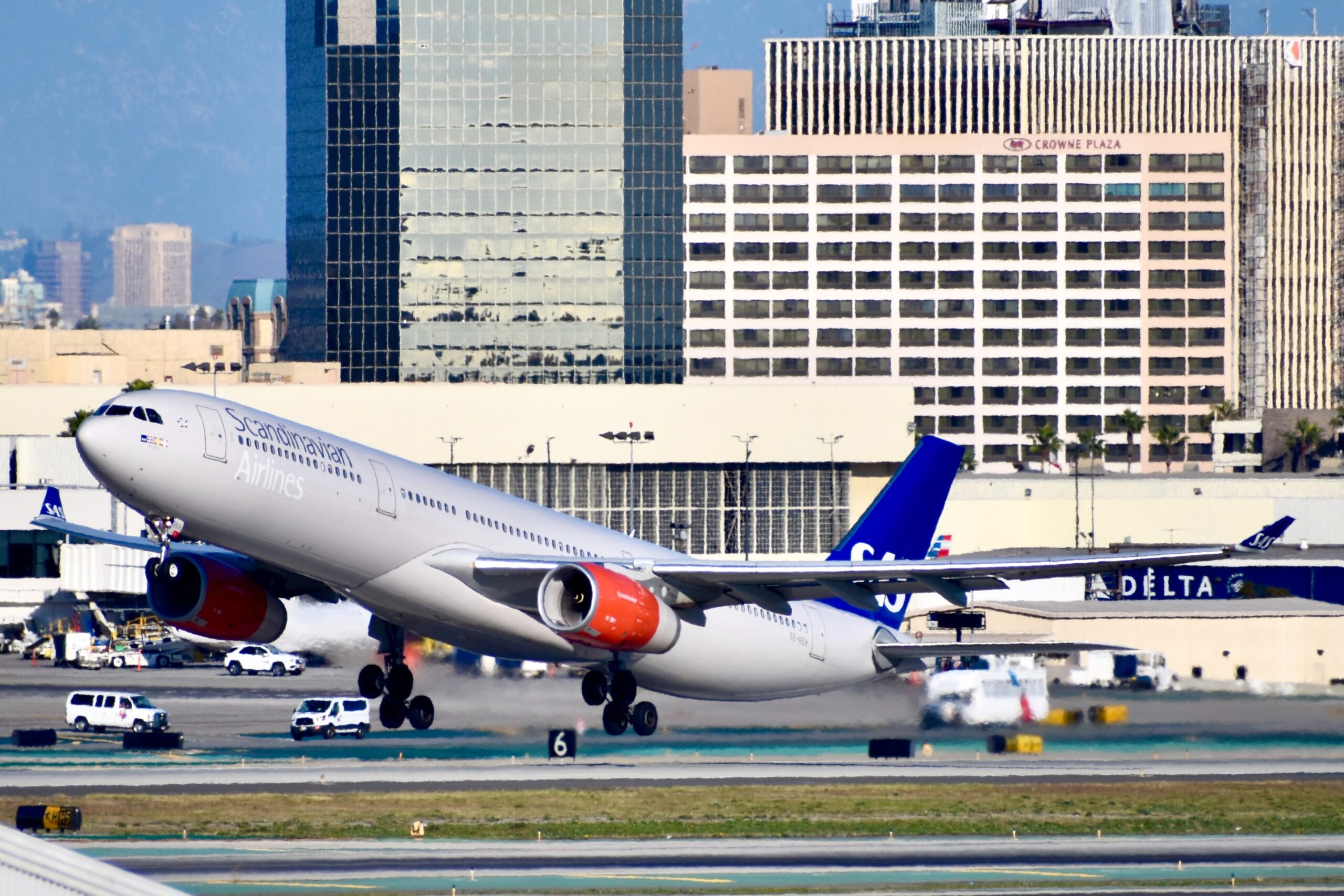
    In a surprising move, Scandinavian Airlines (SAS) has announced its intent to exit the Star Alliance, a coalition of airlines it helped found back in 1997. The news comes as Air France-KLM bids to acquire a non-controlling 19.9% stake in the beleaguered Scandinavian carrier, subject to approval by regulators.

    At first glance, this departure from the Star Alliance might seem shocking, given SAS’s historical role as one of its founding members. However, a closer look reveals the stark financial challenges that SAS has been grappling with since the onset of the COVID-19 pandemic. The airline’s struggle for survival has been so intense that it recently secured an extension of bankruptcy protection that will stretch into 2024. In light of these circumstances, SAS’s decision to seek a quick infusion of cash by selling a substantial stake in the company doesn’t come as a complete surprise.

    As of now, the specifics of this deal remain shrouded in mystery, with few details available to the public. However, one can reasonably expect SAS to continue operating under its own brand and identity within the SkyTeam alliance.

    For Star Alliance loyalists, this departure marks a loss, as SAS has been a familiar presence within the network for over two decades. On the flip side, this move bolsters the network strength of the SkyTeam alliance. It adds three new hubs to its roster, namely Copenhagen (CPH), Stockholm (ARN), and Oslo (OSL). Notably, this comes at a time when Dutch authorities are actively implementing flight caps at Amsterdam’s Schiphol Airport (AMS) as part of a deliberate strategy to shrink operations at the hub.

    This development takes place against the backdrop of a broader wave of consolidation in the European airline industry. Just recently, TAP Air Portugal was put up for sale as the Portuguese government seeks to privatize the state-owned carrier. The winds of change are blowing across the European skies, and SAS’s shift from Star Alliance to SkyTeam is a notable gust in this evolving landscape.

    While SAS has been an important part of the Star Alliance, the airline’s financial struggles and the need for a cash injection have made this unexpected move just a little less shocking. As we await more details about the implications of this shift, it’s evident that the European airline industry is in a state of flux, with consolidation and change on the horizon.

  • AmEx Business Gold Card: New Features, Higher Annual Fee

    AmEx Business Gold Card: New Features, Higher Annual Fee

    The American Express Business Gold Card has been a steadfast choice for those seeking respectable returns on common business expenditures. AmEx just announced a significant refresh to this card, and while some will love the changes, others may be put off by removed benefits and a higher annual fee. Let’s dive right into what these changes mean for you.

    Higher Annual Fee

    First things first, let’s address the annual fee. Starting February 1, 2024, the Amex Business Gold Card’s annual fee will increase to $375 from its previous $295 (see rates and fees). It’s not uncommon for card updates to bring about fee hikes, and this change is no exception. For those looking to score a signup bonus on this card without forking over another $80, you’ve got a few more months to apply.

    Spending Category Changes

    The core feature of the AmEx Business Gold Card remains intact – you’ll still earn 4 points per dollar spent on your top two spending categories each billing cycle, capped at $150,000 in combined spending. However, there are some changes in the bonus categories.

    Two new bonus categories have been introduced:

    1. Transit purchases: This covers trains, taxicabs, ride-hailing services, ferries, tolls, parking, buses, and subways.
    2. Monthly wireless telephone service charges: Earn rewards for charges made directly with a U.S. wireless telephone service provider. This is a poor addition just as many wireless carriers drop discounts for those paying with a credit card, but keep reading for a workaround.

    However, to make room for these additions, two categories have been dropped from the bonus rewards list:

    1. Airfare purchased directly from airlines: AmEx seems to want to incentivize use of their own travel agency here.
    2. U.S. purchases for shipping: Depending on how you spend on shipping, the newly-added FedEx credits may offset the loss of bonus points for you.

    Extra Points on AmEx Travel

    On the bright side, the AmEx Business Gold Card will now reward you with 3x points per dollar spent on flights, prepaid hotels, and prepaid flight and hotel packages booked through AmEx Travel or AmexTravel.com. But, there’s a caveat: the 25% rebate when using points to pay for travel is no more, and for most, the increase in points may not fully offset this loss.

    Moreover, booking through AmEx Travel can sometimes be pricier than booking directly with airlines or hotels, and while AmEx itself generally has a reputation for excellent customer service, the travel agency is run by a third party, with a reputation for being difficult to work with in the event of changes or IRROPS. Additionally, by booking a hotel through AmEx Travel, you forfeit any accrued points and elite nights with the hotel chain, and won’t receive any elite benefits during your stay.

    New Statement Credits Offset Fee Increase

    One notable improvement is the introduction of statement credits for Amex Business Gold cardholders. Here’s what you can look forward to:

    • Up to $20 per month ($240 annually): Eligible purchases at FedEx (shipping only), Grubhub (delivery only), and office supply stores. It’s a shame to see GrubHub restricted to delivery only; I mostly burn my credits with delivery services by opting for pickup.
    • Up to $12.95 per month ($155 annually): A monthly Walmart+ membership; it’s worth noting that purchasing an annual membership costs only $98, so if you plan to prepay the entire year anyway, you may value this differently. You must opt to pay monthly to receive this credit.

    Maximizing these statement credits can effectively offset the card’s entire annual fee (or nearly offset it, depending on if you value Walmart+ at $155 or $98). The FedEx credit is a particularly interesting addition, especially as the card removes bonus points on shipping purchases.

    Cellphone Insurance

    Another perk is the addition of cellphone protection. This feature reimburses you for repair or replacement costs for a stolen or damaged cellphone, with coverage of up to $800 per claim (up to two claims per year, with a $50 deductible per claim). While it may not save you a fortune, it offers peace of mind and could eliminate the need for other cellphone insurance plans. Keep in mind many phone providers now only give autopay discounts to those using a debit card or bank account; this can often be thwarted by setting up automatic payments on a debit card, and manually pushing through a credit card payment before your due date each month.

    Rose Gold Now Available

    For those who appreciate aesthetics, the rose gold option, already available on the personal Gold card, is now extended to the Amex Business Gold. I’ve never seen the appeal in this option on the personal Gold card and think the classic design looks great, but I guess choices are always better than no choices?

    Welcome Offer Still Lukewarm

    Despite all these updates, there’s no change to the welcome offer. New cardmembers will continue to earn 70,000 Membership Rewards points after spending $10,000 in the first three months of card membership. While this is a fairly lukewarm offer, if your Membership Rewards balance is running low, and you can manage the hefty spend, this offer may be worth looking into.

    Bottom Line

    The refreshed Business Gold Card comes with a new set of bonus categories, statement credits, and cell phone protection. However, the $375 annual fee is beginning to encroach into a more premium class of card (Venture X, anyone?), and I personally would have a tough time dropping that much on a card that didn’t even feature Priority Pass. How much value you obtain depends on your own spending patterns, and genuine business owners may get a lot of value out of this card. But I’ll personally pass on this card, at least until a better welcome bonus is released.

  • Visitor Pass Programs Make a Comeback in US Airports: XNA Joins the Trend

    Visitor Pass Programs Make a Comeback in US Airports: XNA Joins the Trend

    It’s an exciting time for aviation enthusiasts, as visitor pass programs are making a triumphant return to airport terminals across the United States, becoming available in far more airports than ever before. These programs, which allow non-travelers to explore airport terminals, watch planes take off and land, accompany family members to their gate, and enjoy most terminal amenities, were largely suspended during the height of the pandemic. However, now they are back in full swing, with many airports embracing this trend for the first time. Today marks a milestone on this front as Northwest Arkansas National Airport (XNA) officially launches its new visitor pass program.

    The Resurgence of Visitor Pass Programs

    Before we dive into the details of XNA’s program, it’s worth noting the resurgence of visitor pass programs nationwide. While a few airports offered these passes pre-pandemic, most had to suspend them due to health and safety concerns. But as travel steadily recovers, these programs are coming back stronger (and more numerous) than ever before, offering members of the general public an airport experience reminiscent of the pre-9/11 days, where anyone – not just ticketed passengers – could proceed through the security checkpoint and enjoy all the airport had to offer. Considering many U.S. airports have improved dramatically in terms of amenities and quality since then, this is a great trend we hope to see spread across the country.

    U.S. airports are uniquely positioned to offer an experience like this; while it’s great that many major airports in other parts of the world like Amsterdam Schiphol (AMS) offer sterile international-to-international transit, this would make a visitor pass program logistically impossible in much of the terminal, as that would mean comingling with individuals who have not been processed through customs.

    What You Need to Know About Visitor Pass Programs

    Visitor pass programs typically share some common characteristics, although rules may vary slightly from one airport to another:

    1. Advance Registration: Usually, visitors must register between 24 hours and up to 7 days in advance, with a few exceptions like TUL (Tulsa International Airport), which permits same-day registration.
    2. Restrictions on Entry: Most airports limit entry to designated hours, typically not permitting entry after about 7-9 p.m. local time. Some restrict visitors to only certain terminals or checkpoints, or require visitors to leave by a certain time (though it’s unclear how this could be enforced).
    3. Limited Capacity: To maintain a comfortable experience, airports often cap the number of visitors per terminal per day, typically ranging from 25 to 75 individuals. Interestingly, these programs are often not widely advertised, so capacity is often a non-issue.
    4. Security Measures: Safety is, of course, always the #1 priority. All visitors are vetted against the SECURE FLIGHT database and must pass through TSA screening, just like ticketed passengers. This process ensures that visitor pass holders are not on any no-fly lists, and can’t bring prohibited items into the sterile area.
    5. QR Code for Entry: Once successfully vetted, visitors typically receive a QR code via email to present instead of a boarding pass when going through TSA screening. You still need to present a valid form of government-issued ID along with this QR code, just as if you were flying.
    6. PreCheck No Good: Non-ticketed visitors usually need to use the general screening lane, and cannot take advantage of TSA PreCheck or CLEAR when entering the security checkpoint.

    It goes without saying that you should always check the details of your local airport’s program beforehand, as each airport has its own rules and procedures.

    Airports Offering Visitor Pass Programs

    Several airports across the country are currently offering visitor pass programs, and here are some of them:

    • MCO (Orlando International Airport) – Available only at the recently-opened Terminal C.
    • DTW (Detroit Metropolitan Wayne County Airport) – One of the oldest programs, reinstated post-pandemic.
    • TUL (Tulsa International Airport) – My home airport, which recently implemented a visitor program.
    • XNA (Northwest Arkansas National Airport) – Today marks the launch of this new program.
    • SEA (Seattle-Tacoma International Airport)
    • FNT (Flint Bishop International Airport)
    • ONT (Ontario International Airport)
    • SNA (John Wayne Airport)
    • MSY (Louis Armstrong New Orleans International Airport)

    Before the pandemic, a few other airports also offered visitor pass programs:

    • TPA (Tampa International Airport) – Although TPA All Access was previously available, there’s no indication of it returning. TPA’s website states the program is suspended as passenger numbers are being evaluated, and has said this for well over a year.
    • DFW (Dallas/Fort Worth International Airport) – This program, previously only available to registered guests of the Grand Hyatt DFW, seems to have quietly disappeared.

    XNA’s New Guest Pass Program

    Now, let’s turn our attention to the newest addition to the visitor pass program family – XNA. After months of anticipation, XNA has officially launched its “guest pass” system, allowing non-flying guests to enjoy the airport’s restaurants and shops while being in the secure area.

    Unlike many airports which require pre-registration online, XNA has opted for a registration via a kiosk. The guest pass kiosk is conveniently located next to the baggage claim in the airport lobby. To obtain a pass, guests simply answer a few questions and scan their photo IDs. Once the kiosk generates the pass, visitors can proceed through airport security.

    In an article on 5NewsOnline.com, Olivia Moore, spokesperson for XNA, emphasizes that guest pass holders get access to all the amenities that boarding pass holders do, except they don’t board a plane. This includes exploring vendor options, plane-spotting, and trying out the new coffee robot, “Bionics by Onyx,” set to be operational in the coming weeks. This innovative robot will serve specialty drinks using Onyx coffee 24/7, adding a local touch to the airport experience (and if you’ve never had Onyx coffee, it’s probably the best I’ve ever tasted domestically). “When we announced it, a lot of people were extremely excited. I mean, it’s not every day that you get to say goodbye to your family members while seeing them get on the plane to say goodbye,” Moore said.

    In conclusion, the return of visitor pass programs in U.S. airports is a welcome development for travelers and aviation enthusiasts. With XNA joining the ranks, it’s clear that airports are increasingly recognizing the value of offering unique experiences to the non-traveling public. So, if you’re looking for a new way to spend a day at the airport, or want to see off a loved one, consider exploring a visitor pass program at a participating airport near you.

  • From Black Card to Blacklist: Florida Centurion Holder Sued by AmEx for Nearly $1 Million

    From Black Card to Blacklist: Florida Centurion Holder Sued by AmEx for Nearly $1 Million

    In the world of credit card mishaps, today’s story comes straight out of the Florida Man playbook. Dr. Ronald Glatzer, a Boca Raton ophthalmologist, finds himself in hot water as American Express takes him to court, alleging he owes a jaw-dropping $936,000 on his Centurion Card. Yes, you read that right – that’s almost a million bucks. While Glatzer has been recognized as one of the “Best Doctors in America,” it would seem his skills as a doctor don’t translate to money management.

    Now, we’re not here to revel in anyone’s financial woes, but this one is worth a raised eyebrow or two. Let’s dive into the details of this case and explore the lessons we can all learn from Dr. Glatzer’s unfortunate situation.

    The Eye-Popping Debt

    According to a complaint uncovered by BocaNewsNow.com, Dr. Glatzer has accumulated a staggering debt of $934,455.92 with American Express. While it’s unclear when the good doctor last made a substantial payment, it’s worth noting that a mere 45 cents were credited to his account in August of 2023. Not exactly a dent in that hefty balance.

    American Express, understandably, is not taking this lightly. They’ve slapped Dr. Glatzer with a “breach of contract” lawsuit, aiming to recoup their nearly one million dollars. The minimum payment due as of September 23, 2023, was practically the entire outstanding balance at $934,455.92, with the total balance reaching $936,247.66.

    Facing the Music

    In legal terms, Glatzer’s situation doesn’t look too promising. The complaint clearly states that he defaulted on the account’s terms and conditions, prompting American Express to accelerate the full balance. Ouch.

    Now, when someone finds themselves in such dire straits with the credit card issuer, they often end up on a not-so-coveted list: AmEx’s blacklist. Not much is publicly known about this list, but word on the street is that it can take anywhere from 10 to 30 years to get off it after repaying a delinquent debt. Some have suggested that becoming an authorized user might expedite the process—emphasis on “might.”

    Then, there’s the “super blacklist,” reserved for individuals who are almost certainly on the outs with AmEx due to severe issues or massive unpaid debts. It’s safe to assume given the extreme amount at hand here, Dr. Glatzer might be rubbing shoulders with this exclusive group.

    Lessons Learned

    Now, before we all shake our heads at the misfortune of Dr. Glatzer, it’s worth remembering a few golden rules of the credit card game. First and foremost, interest charges can quickly outweigh any value earned through points and miles. So, if you can’t commit to paying off your cards on time and in full every month, it might be wiser to consider cards with lower APRs rather than those tantalizing rewards cards.

    This tale from Boca Raton serves as a stark reminder that financial missteps can happen to anyone, even wealthy professionals like Dr. Glatzer. It’s essential to manage your credit responsibly and avoid burning bridges with valuable credit card issuers. After all, American Express is among the most prized in the game, particularly for those who cherish their points and miles. Being on the AmEx blacklist (and the ensuing hit to one’s credit score) would be a huge hit to many of us.

    In the end, while this is a rather extreme example, let Dr. Glatzer’s story be a cautionary tale for us all to use our credit cards responsibly. Keep your financial house in order, or you might just find yourself in the spotlight as the next “Florida Man” of credit card debacles.

  • What’s the Deal With Hilton & Late Check-Out? My Bizarre Experience

    What’s the Deal With Hilton & Late Check-Out? My Bizarre Experience

    As the world reopened from COVID-induced shutdowns, my hotel loyalty has largely shifted away from Hilton, a chain I once held in high regard. Having transitioned most of my business to World of Hyatt and keeping Marriott Bonvoy as my backup program, I allowed my Hilton Honors Diamond status to lapse, though I still maintain Gold status through AmEx (offered on cards like the AmEx Platinum and Hilton Honors Surpass Card). A large driver of this is the huge deterioration in service, including (but not limited to) changes in benefits such as upgrades, breakfast, and late check-out.

    While the Hilton Honors program is iconic, having even been a centerpiece in the movie Up in The Air, gone are the days where the benefits are competitive amid rival programs. While Hilton Honors was never the best, pre-pandemic, it at least used to have some unique strengths. A points & miles beginner could grab a Surpass card for $95 and, considering the modest annual fee, extract a ton of value and benefits out of it. Nobody is rationally expecting pre-COVID standards of service to ever return – if you haven’t seen the popular 2009 movie since the pandemic, go re-watch it now and think about how ancient and distant times like that seem. However, competitors like Hyatt, Marriott, and IHG seem to have coalesced around a permanent “new normal,” while Hilton seems to be stuck in late 2021.

    However, my recent experiences have uncovered another aspect of Hilton’s service that has taken a turn for the worse—their stance on late check-out. During the pandemic, Hilton quietly removed late check-out from its list of published benefits, even for Diamond members. Hilton’s website now provides a vague statement: “Policies vary by location. Visit the hotel’s website to find out whether late check-out is available and if fees apply.” (Interestingly, I’ve yet to find an individual Hilton property that spells out their policy online.)

    This means that even Hilton’s highest-tier elite members are left at the mercy of individual franchisees when it comes to late check-out. In the pre-pandemic era, securing a late check-out at any Hilton property was usually relatively easy, even for those without elite status (though to be sure, even in the good ol’ days, they were still relatively stingy on how late that checkout could be). Now, it often requires persistence, and at times, it’s simply denied.

    What sets Hilton apart, and not in a good way, is that it’s now the only one among the four major hotel chains that does not offer late check-out as a published benefit to at least mid-tier elite members. Marriott Bonvoy offers Gold Elite members a 2pm check-out, subject to availability. World of Hyatt extends this privilege to even entry-level Discoverist status members. Higher-tier members with Marriott and Hyatt can get 4pm, and Marriott Ambassador members can get even later! Surprisingly, IHG, a brand not typically associated with robust program benefits, offers a 2pm checkout to everyone who signs up for their complimentary IHG One Rewards program, regardless of elite status or lack thereof. Meanwhile, Hilton officially offers nothing.

    My most recent encounter at a Hilton Garden Inn property is a telling example of this shift in policy. While one might temper expectations at a select-service brand like HGI, there’s still a basic level of service one expects from the Hilton brand – and outright denial of my late check-out would have been a better experience than the very bizarre runaround I was given at this property.

    The day before check-out, I politely approached the front desk to inquire about a late check-out, only to be met with hostility from the front desk agent (really, all the staff at this property were borderline hostile for some reason), insisting that I check back in the morning. The front desk agent mumbled some nonsense about needing to check occupancy factors; meanwhile, this same hotel had ended breakfast early that day with no notice due to… wait for it… low occupancy factors! I had a late night ahead of me, and my intention was to sleep in the following morning; waking up early to engage with the front desk defeated the purpose here.

    On the morning of my departure, I called the front desk to request a 2pm check-out. After some back-and-forth with an uncooperative agent, we met halfway and agreed on 1pm. However, it didn’t end there. Housekeeping knocked on my door a full 25 minutes before the published check-out time of 11am. Though it’s not unusual to receive such knocks during a late check-out scenario, I’ve never had this happen prior to the hotel’s published check-out time. When I explained the situation to the housekeeper, she replied that the front desk relayed to her that the room across the hall had a 1pm check-out, but not me; strangely, that room had a sign on the door warning not to enter, as an ozone machine was in use (likely to remove tobacco odors from a previous guest). When I politely pointed out to the housekeeper that room in question likely wasn’t occupied at all, she relented.

    Just when I thought the experience couldn’t get any more bizarre, at 12:40 (20 minutes prior to the agreed check-out time), the in-room phone rang. It was the front desk, inquiring if I intended to pay for another night, since I hadn’t yet vacated my room. While I’m not 100% sure, the voice on the other end sounded very similar to that of the individual I had spoken to earlier about securing the late check-out. This was quite a bizarre experience, and frankly, I’d have been left with a better taste in my mouth had they just outright refused my request vs. giving me the runaround I was given.

    All in all, my recent encounters have left me wondering about Hilton’s changing attitude towards late check-out. In a world where its competitors are extending this courtesy even to entry-level elite members (or in IHG’s case, anyone who takes 60 seconds to register for their free rewards program), Hilton’s silence on the matter is deafening. As a brand that once prided itself on elite benefits, Hilton appears to be falling behind in the race for customer satisfaction and loyalty. And if late check-out is something that’s important to you, you might just consider taking your business elsewhere.

  • Controversial Flight Caps at Schiphol Spark Debate: Is There a Better Way?

    Controversial Flight Caps at Schiphol Spark Debate: Is There a Better Way?

    The largest airport in The Netherlands is about to get a lot smaller, as the Dutch government pushes forward with plans to cap the number of flights in a bid to reduce noise pollution and carbon emissions. The decision, set to take effect in 2024 pending approval from the European Commission, has stirred up quite a storm, with flag carrier KLM and airline industry groups vehemently opposing it. The government’s reasoning behind the cap encompasses concerns about noise pollution, greenhouse gas emissions, and logistical issues at the airport. But is there a more effective way to address these concerns without stifling air travel and potentially impacting passengers and the European economy? Let’s dive into the debate.

    The Flight Cap: A Harsh Reality for Airlines and Passengers

    Under the proposed cap, Schiphol Airport will see flights limited to 452,500 per year, a 9.5% reduction from 2019 levels and slightly lower than an earlier proposal of 460,000. Airlines, including Air France-KLM, have contested this move, arguing that it will harm their business and contravene previous agreements. KLM went as far as calling the cap “incomprehensible” and a threat to the Netherlands. Considering Schiphol is one of Europe’s most important economic engines, I’d be inclined to agree here.

    The government’s primary motivation for imposing the cap revolves around mitigating noise pollution, reducing greenhouse gas emissions, and resolving logistical challenges at the airport. These reasons have garnered support from environmental groups and even Schiphol itself. However, the airlines’ appeals to the Dutch Supreme Court, after a July appeal loss, highlight the contentious nature of the issue.

    Passenger Impact: Higher Fares and Fewer Nonstop Options

    The implications for passengers are profound. Schiphol serves as a critical global hub, connecting not only the Netherlands but all of Europe to the rest of the world. Many passengers transit through AMS on their way to various European destinations. Moreover, KLM, headquartered at AMS, plays a vital role in providing connectivity to smaller European airports, such as Aberdeen, Scotland (ABZ), where nonstop options to the mainland are limited. The flight cap raises questions about the viability of these services, which could translate into higher fares and fewer nonstop options for passengers.

    While 9.5% sounds like a small number, consider that in 2022, Schiphol welcomed 52.5 million passengers. A 9.5% reduction would displace approximately 5 million passengers over the course of a year. Taking 5 million seats out of circulation would undoubtedly cause fares not just to/from AMS, but to Europe as a whole to rise considerably.

    A Different Approach

    As we consider the implications of this flight cap, it’s worth exploring alternative approaches that might achieve the same environmental goals while preserving the viability of Schiphol as a global hub. Here are some thoughts:

    1. Promote Sustainable Aviation Fuel (SAF) and Fuel-Efficient Aircraft: Rather than restricting the number of flights, incentivize airlines to use SAF and deploy more fuel-efficient aircraft like the Boeing 787 Dreamliner or 737 MAX series. This approach tackles emissions directly without limiting air travel. Additionally, these aircraft are much quieter than their predecessors (tackling the noise issue) and feature lower operating costs and a better passenger experience. It’s a win-win for everyone involved.
    2. Implement a Carbon Offset Tax: Instead of flight caps, the Dutch government could implement something similar to the UK’s Air Passenger Duty (APD) and use the funds collected towards carbon offset activities. This would also allow the Dutch government, similar to the UK, to implement this selectively based on various criteria (for example, taxing O&D passengers without impacting the massive transit operation at Schiphol).
    3. Restrict Private Jets: If environmental concerns are paramount, consider that private jets emit considerably more CO2 per seat mile flown than a commercial flight. Some major airports already have restrictions on private aviation for operational reasons, and given the logistical issues already present as Schiphol, this would be a great “two birds with one stone” strategy.
    4. Consider the Big Picture: Recognize that climate initiatives can’t exist in isolation. Understand that limiting flights at Schiphol may simply redirect air traffic to other regional hubs, leading to more emissions due to additional stops in itineraries. Travel demand is higher than it’s ever been, and I can’t see this new rule slowing it down in any meaningful way; rather, passengers will connect through alternative hubs like CDG or Heathrow. It’s a lose-lose-lose scenario; passengers lose convenience & choice, airlines lose revenue, and the environment loses with more emissions.

    Bottom Line

    The decision to cap flights at Schiphol Airport has sparked intense debate, pitting environmental concerns against the economic and practical realities of air travel. While these concerns have validity, it’s essential to explore alternative approaches that balance environmental goals with the needs of passengers and businesses, instead of jumping to conclusions and implementing blanket, one-size-fits-all “solutions.”

  • Super Original: Hyatt Launches Vacation Rental Platform

    Super Original: Hyatt Launches Vacation Rental Platform

    Hyatt is dipping its toes into the vacation rental market with the launch of “Homes & Hideaways by World of Hyatt.” It seems like everyone wants a piece of the short-term rental pie these days, and Hyatt is no exception. While I doubt many people are shocked by this move, it’s worth taking a closer look to see if it’s anything to get excited about.

    First things first, let’s break down what we know. The platform is set to launch soon, but Hyatt is keeping most of the details under wraps for now. What we do know is that World of Hyatt members will be able to use their points for stays at these vacation rentals and even earn elite nights. As for the specifics of the benefits and redemption rates, we’ll have to wait a bit longer for those details to emerge.

    Hyatt’s pitch here is all about flexibility. They want to cater to the diverse needs of their guests, particularly Millenial and Gen Z guests who tend to favor peer-to-peer home rentals over traditional hotels, by offering a range of premium vacation rentals. Initially, the focus will be on leisure destinations in the United States, including popular destinations like Hawaii and Colorado, but there are plans to expand globally down the road.

    Amy Weinberg, Hyatt’s SVP of Brand, Loyalty, and Data, talks a big game about this development, saying they’re committed to providing accommodations that go beyond their hotels. She mentions catering to large families and remote workers looking for extended stays. Sounds promising, but we’ll have to see if they can deliver on these promises.

    “We are committed to evolving access to the type of accommodations World of Hyatt members are seeking that go beyond our hotels – from a large family who travels together or guests looking to work from anywhere for an extended period of time. Homes & Hideaways by World of Hyatt brings a unique collection of curated homes which increases Hyatt’s home offerings and expands new ways and new places where we can extend care to members.”

    Amy Weinberg, SVP of Brand, Loyalty, and Data

    Now, let’s put this in perspective. Hyatt isn’t the first hotel group to venture into the vacation rental space. Marriott has its own “Homes & Villas by Marriott” platform, and it’s been around for a while. So, Hyatt is playing catch-up here, and they’re likely hoping to capture a piece of the pie.

    But let’s be real for a moment. Don’t expect this to be a game-changer or a haven of luxury. In all likelihood, many of these vacation rentals will just be properties you could find on Airbnb or Vrbo but listed in yet another place. And while earning and redeeming points is a nice touch, don’t expect this to be a groundbreaking deal. Additionally, with many popular locales beginning to adopt ordinances against short term rentals, one has to wonder if Hyatt is launching this platform just as the bubble is bursting on home rentals.

    It’s good to see Hyatt trying to adapt to changing travel trends, but we should approach this with a healthy dose of skepticism. We’ll keep an eye on how “Homes & Hideaways by Hyatt” unfolds and whether it can truly compete in the vacation rental market. In the meantime, if you’re looking for a vacation rental, you might want to stick with the tried-and-true options until Hyatt proves itself in this new arena. (h/t One Mile at a Time)

  • Indefinite Closure of MIA’s SkyTrain Leaves Passengers with a Long Hike Ahead

    Indefinite Closure of MIA’s SkyTrain Leaves Passengers with a Long Hike Ahead

    Miami International Airport (MIA) has long been a hub for American Airlines and for years, passengers have relied on the SkyTrain to ease their journey through the infamously large Concourse D. However, in a new development, this convenient mode of transport has been indefinitely sidelined due to structural concerns. Let’s dive into the details.

    The SkyTrain: A Brief Introduction

    The SkyTrain has been a fixture at MIA since 2010, part of a massive $3 billion expansion project that consolidated four concourses into Concourse D. This ambitious endeavor was aimed at optimizing space for planes, with the drawback of increasing walking distances for passengers. For the past decade, the SkyTrain has been a lifeline for travelers, ferrying them across the sprawling concourse and mitigating the additional distance between gates. The service, operated by Crystal Mover Services, a subsidiary of Japanese train-maker Mitsubishi, has been the go-to choice for those looking to traverse the expansive concourse with ease.

    The Abrupt Closure

    Early in September, engineers working on behalf of Miami-Dade County stumbled upon what they called “accelerated deterioration” in several concrete structures supporting the SkyTrain tracks. Specifically, Pier 106 displayed significant structural issues, with extensive cracking along the pier cap perimeter. Faced with this alarming discovery, Miami-Dade County took immediate action and decided to halt the SkyTrain operations indefinitely.

    Greg Chin, an MIA spokesperson, shared that the analysis of the problem alone is expected to continue until at least mid-October. After that, MIA decision makers will have to pore over the findings and determine the best path forward. Given the gravity of the situation, it’s probably safe to assume that the SkyTrain may remain non-operational through the rest of 2023, if not even longer. While not everyone can easily avoid MIA, if you’re booking new reservations for the next several months (or can easily rebook existing ones without a huge fare difference), you might give some thought to connecting at other AA hubs like CLT or DFW (where it makes sense to do so) if you’re not prepared to walk significant distances.

    Questions Remain Unanswered

    One pressing question remains: why were these cracks not addressed earlier? Miami-Dade County has not yet released the inspection report from HNTB or provided an explanation for the delayed repairs. According to Chin, the SkyTrain structure undergoes inspection every two years, in accordance with Florida transportation regulations. Minor cracks in the three piers in question were identified during the 2021 inspection but were merely monitored.

    It was during a subsequent May inspection that the issues seemed more significant, leading to the in-depth analysis by HNTB and, ultimately, the shutdown in September.

    The Long Walk Ahead

    For now, passengers in Concourse D find themselves without the SkyTrain as their trusty ally. The closure has left most travelers with no choice but to resort to the traditional method of walking. With each end of the concourse separated by over a mile of terminal space, this could be quite a trek for many.

    MIA has introduced a limited alternative: two six-seat golf carts that run between 9:30 a.m. and 7 p.m. Passengers in need can flag down one of these carts to assist with their journey, but the availability is extremely limited. These carts aim to help those who might struggle with the extended walking distance.

    Bottom Line

    The unexpected and indefinite closure of the SkyTrain at MIA’s Concourse D is undoubtedly a significant inconvenience for travelers. With the analysis alone expected to continue through mid-October, it’s clear that we’ll have to do without this automated mover for the foreseeable future. If you’re planning to pass through MIA, it might be wise to prepare for a long walk ahead, especially if your journey extends into 2023 and beyond.

    Source: Miami Herald

  • Southwest Stowaway: The Mystery Passenger Who Defied the Odds

    Southwest Stowaway: The Mystery Passenger Who Defied the Odds

    A recent Southwest Airlines flight to New Orleans (MSY) encountered an unexpected passenger that left everyone scratching their heads for over 40 minutes. It’s a tale that highlights the quirks of the airline’s unique open seating policy and raises some questions about airport security.

    Picture this: The flight’s manifest showed one fewer passenger than there were individuals physically present on the plane. To make things even more puzzling, reports suggest that the flight was completely sold out, so there weren’t enough seats for everyone on the aircraft. So, how did this happen? Well, it turns out there was a stowaway among the passengers, and she wasn’t exactly eager to come forward. After all, she apparently had a Beyoncé concert to get to.

    With Southwest Airlines’ open seating policy, identifying the rogue passenger wasn’t as straightforward as comparing occupied seats to seat assignments. There were no assigned seats in the first place. So, the airline had to resort to a more labor-intensive process. They enlisted the help of the cabin crew to get to the bottom of this perplexing situation, but the stowaway remained tight-lipped.

    https://twitter.com/Cee_dot_Moody/status/1706891808347689394

    As a result of the lack of assigned seating, it took a whopping 40 minutes of ID checks for the airline to finally pinpoint the mysterious woman nestled in the back of the plane – a passenger who was, in fact, not supposed to be there. It’s certainly interesting they appear to have carried this process out on the plane itself; on the (very) rare occasion I’ve been on a plane where there was any question as to the passenger manifest, it’s been handled by having everyone deplane, and scanning back onto the aircraft one-by-one. Perhaps with the first-come, first-served seating policy, the airline didn’t want to anger anybody by taking away the seat they rushed to snag?

    Now, you might be wondering how this individual managed to slip through the airport security checkpoint in the first place. After all, she would have had to show her ID and possibly her boarding pass, right? It’s not entirely clear how she navigated this hurdle. There are few ways this could have happened, but the most plausible answer is that she entered the TSA checkpoint on a valid reservation, and cancelled once inside; many fare classes on US airlines allow changes, cancellations, and even refunds until the door is closed, even if you’ve already checked in & cleared TSA. While it’s unclear where the flight departed from, some airports like MCO and TUL also offer free visitor passes, allowing the general public to proceed through TSA like a normal passenger to planespot, accompany family, or explore the terminal.

    However, the real head-scratcher is how she managed to board the Southwest flight without a boarding pass for that specific flight. Normally, you’re required to show your boarding pass, have it scanned, and the system is supposed to electronically validate that you’re indeed on the flight you’re trying to board. Yet, somehow, this woman slipped through the cracks and blended in with passengers who had successfully cleared this hurdle.

    One also has to wonder, especially with an open seating policy, how often this kind of incident occurs on Southwest and never gets detected. My hunch is had the flight not been completely full, this passenger likely would have gotten away with this unnoticed. Clearly, this woman did her homework in order to get as far as she did – perhaps she would have done well to at least check the load factors to make sure the flight wasn’t, you know, completely full? Either way, Southwest has some room to learn from this incident and implement new measures to make sure similar incidents can’t happen in the future – perhaps through turnstiles at boarding gates, or simply counting the number of empty seats as soon as boarding ends. Or maybe, just maybe, they end their open seating policy once and for all.

    The incident leaves us with more questions than answers. How did she get past security? How did she manage to board the plane without the necessary documents? And why did it take a whole 40 minutes to sort out this bewildering situation? One thing’s for sure; this unusual tale from the friendly skies raises serious concerns about airport security and the potential for gaps in the system that allow unexpected passengers to join the journey.

    (h/t: View From the Wing)