Author: user

  • Underwhelming at Best: Marriott and MGM Finally Reveal Details of Partnership

    Underwhelming at Best: Marriott and MGM Finally Reveal Details of Partnership

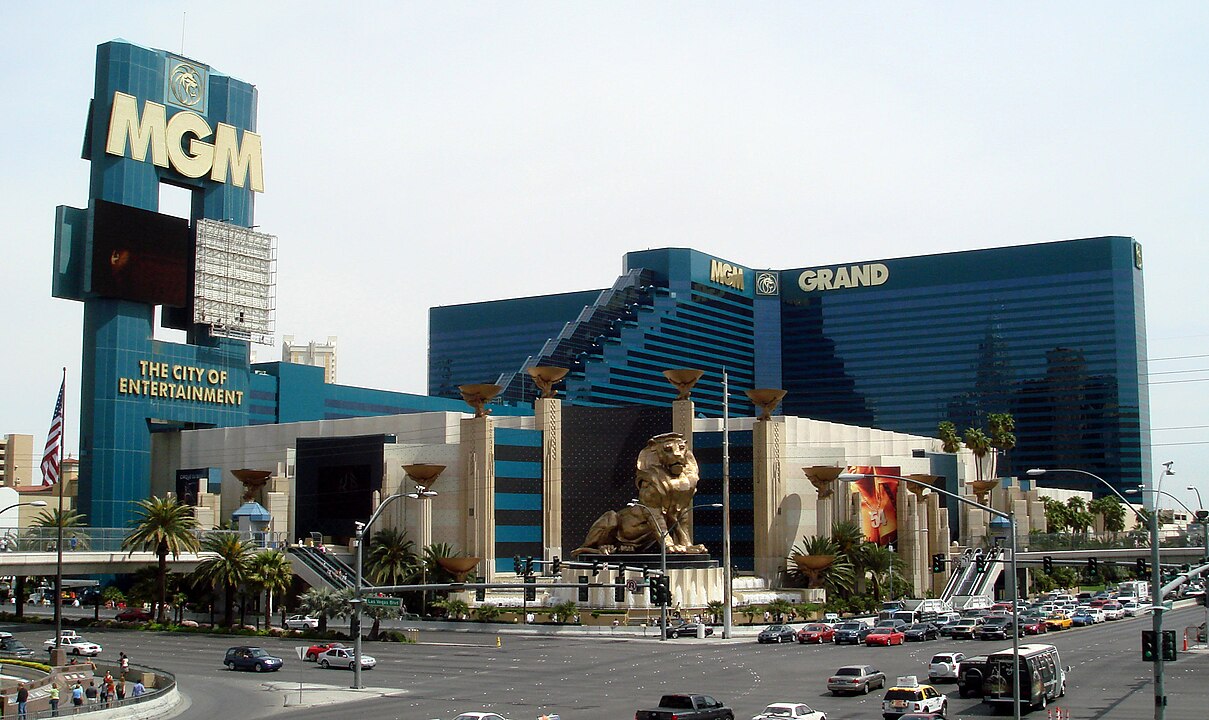
    After months of delays largely owing to the hacking of MGM’s IT infrastructure last year, Marriott and MGM have finally revealed the details of their new partnership, which will allow members of both loyalty programs to earn and redeem points, receive elite benefits, and transfer points between the two programs. Sounds great, right? Well, not so fast. When you look closer, you’ll see that this partnership is a shell of the old Hyatt-MGM partnership, which ended last year.

    First of all, Marriott members do not receive any status match to MGM’s program, which means they still have to pay resort fees, unless they are Marriott Ambassadors. Resort fees are one of the biggest rip-offs in Las Vegas, and Hyatt Explorist and Globalist members used to be able to avoid them by matching to MGM Gold. Oftentimes, the resort fee far exceeds the actual rate of the room itself, so being able to dodge these as a Hyatt Globalist was huge. This also created interesting “virtual” mattress running opportunities by remotely checking into Excalibur or Luxor for a sub-$20 nightly rate, though MGM caught on and shut down remote check-ins for Hyatt members.

    In addition to the lack of waived resort fees, the lack of a status match to MGM also means Bonvoy members (except Ambassadors) will have to pay for parking unless they have MGM status via another means. Maybe this finally gives the MGM Rewards Mastercard by FNBO, which doesn’t carry an annual fee, some tiny amount of value proposition for a very specific subset of readers who frequent Vegas? Self parking at MGM’s Vegas properties, once complimentary, now runs as much as $23 a day – which could, much like the resort fee, very well cost more than your room itself.
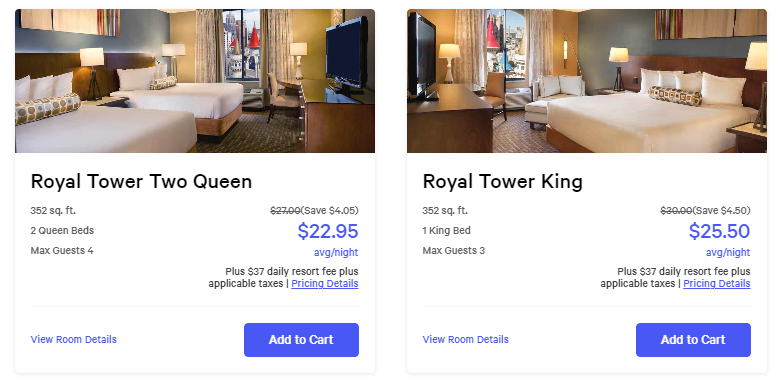
    A mid-week room rate at Excalibur; the resort fee is almost double the room rate, and self parking ($18/day during the week) costs almost as much as the room itself… talk about getting nickeled and dimed!

    Second, the benefits for Marriott elites staying at MGM hotels are pretty underwhelming. Silver and Gold members get almost nothing, except a small bonus on points and a welcome gift of 500 points (for Gold members), which is worth less than a cup of coffee (especially a cup of coffee in Vegas, where in-room coffee makers aren’t the norm). Platinum and Titanium members get a bit more, such as priority check-in, late check-out, and room upgrades, but these are subject to availability and not guaranteed. Only Ambassadors get one suite upgrade per year, early check-in, and free self-parking. The kicker: these benefits are only valid until December 31, 2024, which suggests that this partnership is not nearly as stable or long-term as suggested when it was first announced in 2023.

    Third, the points transfer ratio between the two programs is not very favorable. You lose 20% of your points every time you transfer, whether it’s from Marriott to MGM or vice versa. That means you need 12,500 Marriott points to get 10,000 MGM points, or 12,500 MGM points to get 10,000 Marriott points. That’s a pretty steep price to pay, especially when you consider that MGM points are just not very valuable to begin with. You need 25,000 MGM points for a free night at a standard MGM hotel, or 75,000 MGM points for a free night at a premium MGM hotel, such as Bellagio or Aria. That’s equivalent to 31,250 or 93,750 Marriott points, respectively. You’re better off saving your Marriott points for other redemptions and just paying cash rates, which are often very cheap in Las Vegas – it’s a loss leader for these resorts to offer insanely cheap room rates to get you in the door and spending money on their casino floor.

    The only potential benefit of this partnership is the ability to earn elite night credits with Marriott by staying at MGM hotels. This could be useful for mattress running, especially at the cheaper MGM hotels, such as Excalibur or Luxor. However, this is only possible if you book through Marriott channels, and not through MGM directly (a stark contrast to the former Hyatt partnership, where you could book directly with MGM and add your World of Hyatt number at check-in). This means you have to compare the rates and availability, and make sure you’re not paying more or getting less by booking through Marriott. Also, you have to hope that MGM will allow mobile check-in via their app, which they stopped doing for Hyatt bookings once the end of the partnership was announced.

    This much-hyped partnership is a huge disappointment for Marriott and MGM loyalists, especially compared to the previous Hyatt-MGM partnership. It offers very little value, very few benefits, and very limited options. It seems like a half-hearted attempt to attract more customers, without giving them any real incentives or rewards. Unless you’re a Marriott Ambassador or an MGM Noir, we’ve all gotten Bonvoyed by this deal.
  • “Hyad Park Hotel” – Ex-Hyatt Property in Tulsa Adopts Questionable Name Amid Mass Deflagging

    “Hyad Park Hotel” – Ex-Hyatt Property in Tulsa Adopts Questionable Name Amid Mass Deflagging

    In a hushed move that’s sending ripples through the hospitality realm, Hyatt seems to be quietly orchestrating a mass deflagging of properties, quietly ushering them out of the esteemed World of Hyatt program. While Hyatt maintains a stoic silence on the matter, word on the street suggests that franchisees of Hyatt-branded properties are facing a straightforward ultimatum from corporate: either get with the program and comply with Hyatt’s stringent brand standards (this usually means a partial or full remodel of the property), or get the heck out.

    The message from Hyatt corporate is clear: Hyatt is no longer tolerating low-quality properties. Period. Play time is over. This strategic cleansing seems to be primarily targeting the “OG” Hyatt Place hotels, relics of the initial 2005 acquisition of AmeriSuites. Hyatt loyalists have long detested these legacy AmeriSuites properties, relics frozen in time since the Bush administration. Newer Hyatt Place properties, when purpose-built to be a Hyatt Place, are an excellent select-service choice when the property takes a backseat to the destination, and all you need is a clean, modern place to sleep and shower (or undertake a mattress run). These older “legacy” properties water down the brand in a significant way, and Hyatt is doing the right thing by cleaning house.

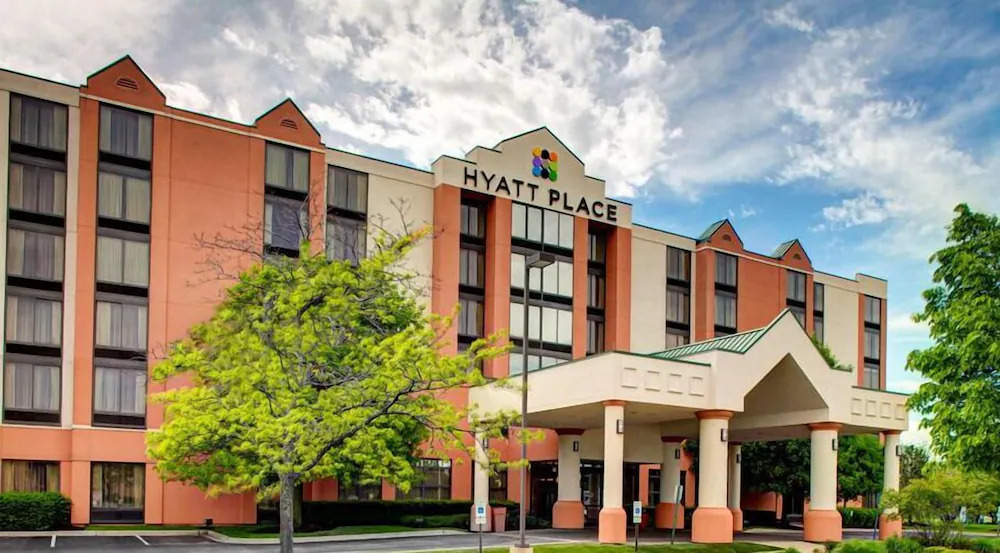
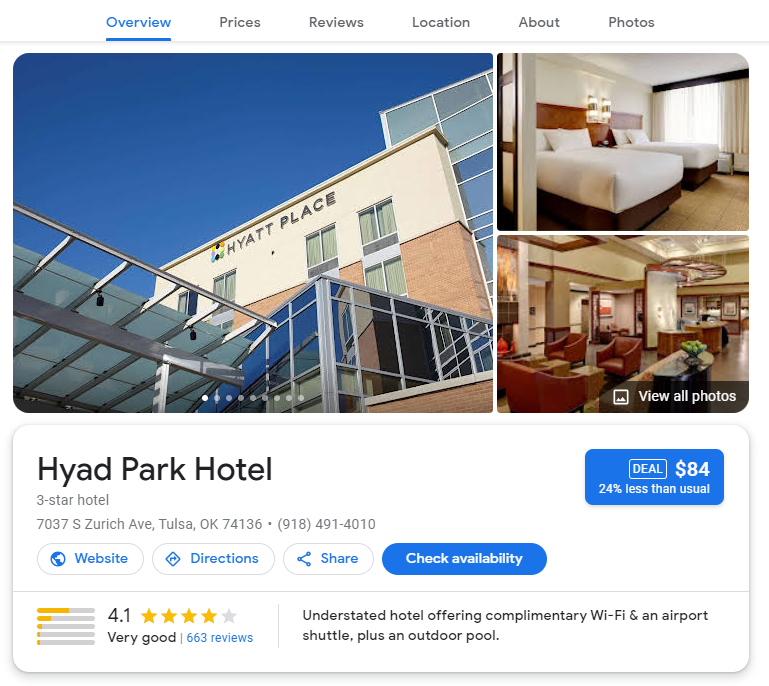
    In a move that’s raising questions among eagle-eyed observers, one Hyatt Place property in Tulsa, OK, not only lost its coveted Hyatt affiliation, but took on a rather dubious moniker in its place. The former Hyatt Place Tulsa-South/Medical District at 7037 S. Zurich Avenue now seems to be calling itself the… wait for it… “Hyad Park Hotel.” I don’t live very far from the property, and at this moment it appears to be closed with the original Hyatt signage intact, but the questionable name already appears on Google Maps. If and when they install signage, I’ll be sure to go grab some pictures. “Hyad Park” sounds like a creative workaround for a movie director who couldn’t get permission to feature the Park Hyatt brand in their movie. Hyatt’s legal team is poised for a field day with what appears to be a blatant trademark infringement.

    Screenshot for posterity

    The state of Oklahoma has shed about half of its Hyatt properties sometime in the last four months or so, which points to a very abrupt and drastic deflagging operation. So far, we have lost all our legacy AmeriSuites properties, namely:

    • Hyatt Place Tulsa-South/Medical District
    • Hyatt Place Oklahoma City-Northwest
    • Hyatt Place Oklahoma City Airport

    We have gained one new property, the Fordson Hotel in Oklahoma City. While I haven’t had an opportunity to stay yet, it seems promising for a quick weekend staycation option.

    Signs point to 2024 as the year Hyatt Place sheds its dated image, bidding adieu to many older properties, especially those lingering from the AmeriSuites era. It doesn’t seem like many of these properties are willing to remodel to brand standards, but did find one in Roanoke, VA that appears to be doing just that (ht Mike Jones). Surveying HDC’s development pipeline offers a glimmer of hope, with new select-service properties set to grace North America, potentially filling the void left by the departing legacy properties. Hopefully we get some more in Tulsa to fill the void left by the “Hyad Park,” as the one in question was a great mattress running opportunity for 3,500 points or < $80 most nights.

    The critical challenge for Hyatt lies in fortifying its portfolio elsewhere. With Marriott, IHG, and Hilton boasting larger footprints, Hyatt’s limited number of properties and geographical footprint has always been its Achilles heel. In Europe, they’re doing this primarily doing this through acquisition, buying UK-based Mr. & Mrs. Smith and German hotel group Lindner Hotels. We’ll see if they can build properties here in the States fast enough to backfill their portfolio.

  • Fowl Play: AA Passenger Brings Dead Bird as Carry-On; Contents Leak in Cabin

    Fowl Play: AA Passenger Brings Dead Bird as Carry-On; Contents Leak in Cabin

    So, you think you’ve seen it all when it comes to bizarre incidents during flights? Well, buckle up, because this one might shock even the most seasoned flyer (and we know a thing or two, because we’ve seen a thing or two). A recent Reddit post on the r/americanairlines community shared an eyebrow-raising tale that’ll have you questioning your fellow passengers’ sanity – or at least their understanding of acceptable carry-on items.

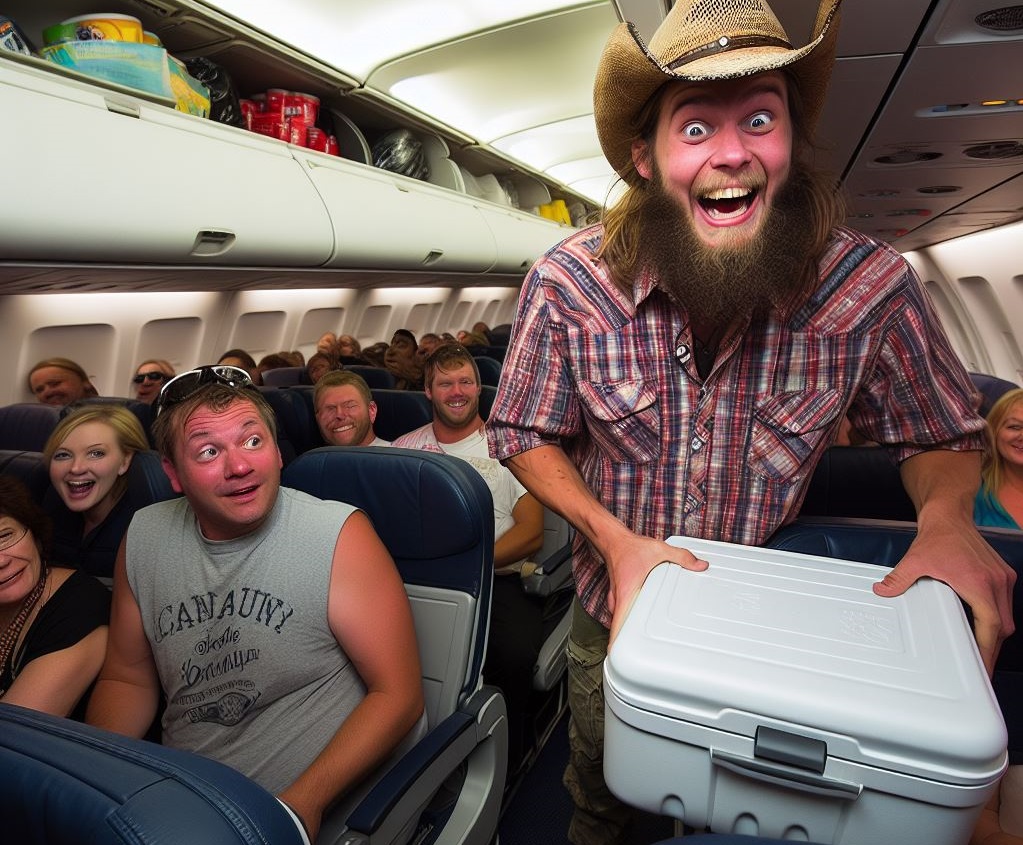
    User BackNBlack58 took to the internet with a public service announcement that’s as absurd as it is cautionary: “PSA dont bring dead animals in a cooler in your carry-on.” Yes, you read that right. Someone apparently did just that on a recent American Airlines flight. Eww!

    According to the post, a flight had to make an unexpected U-turn on the tarmac due to the presence of a cooler housing a deceased bird. Not only did the bird-in-a-box cause a mid-air spectacle, but it also managed to turn the overhead compartment into a scene from a particularly strange horror movie. The cooler’s contents spilled out, prompting the pilot to declare it a biohazard (subsequently causing the pilot to be awarded the title of “Captain Obvious”).

    Of course, the internet being the internet, one witty commenter couldn’t resist adding a dash of humor to the situation. User bbphrog63 chimed in with a quip, saying, “Guess they misunderstood carrion luggage.” Well played, bbphrog63, well played.

    Now, for those of you questioning the legality of transporting deceased creatures through the friendly skies, the truth might surprise you. Believe it or not, according to TSA regualations, it’s generally permissible to bring dead animals on a plane. However, the key here is a little thing called common courtesy – and airline rules, too.

    Sure, the regulations might give you the green light, but that doesn’t mean you should start packing your carry-on cooler with that roadkill you found on the highway or anything that might unleash itself mid-flight. The intent of the TSA allowing this is, for example, the transportation of cremated pet remains, or frozen animals (we’d suggest making sure it’s cold enough to remain frozen throughout your entire journey, and taking a nonstop flight). Let’s keep it real, folks – a little consideration for your fellow passengers goes a long way. And while the TSA may not stop you from bringing a deceased animal on your flight, your airline still has the final say here, so you should always discuss your situation with them prior to showing up at the airport with a cooler.

    So, the next time you’re contemplating bringing your hunting trophy on board, remember the tale of the ill-fated bird cooler, and maybe pick a container that seals a little bit tighter than a MAX 9 fuselage (or just consider driving to your destination if possible). Because in the grand scheme of air travel, we could all use a bit less drama and a lot more common sense. Until then, happy flying, and may your overhead compartments remain critter-free.

  • Alaska 1282: A Wake-Up Call on the 737 MAX 9

    Alaska 1282: A Wake-Up Call on the 737 MAX 9

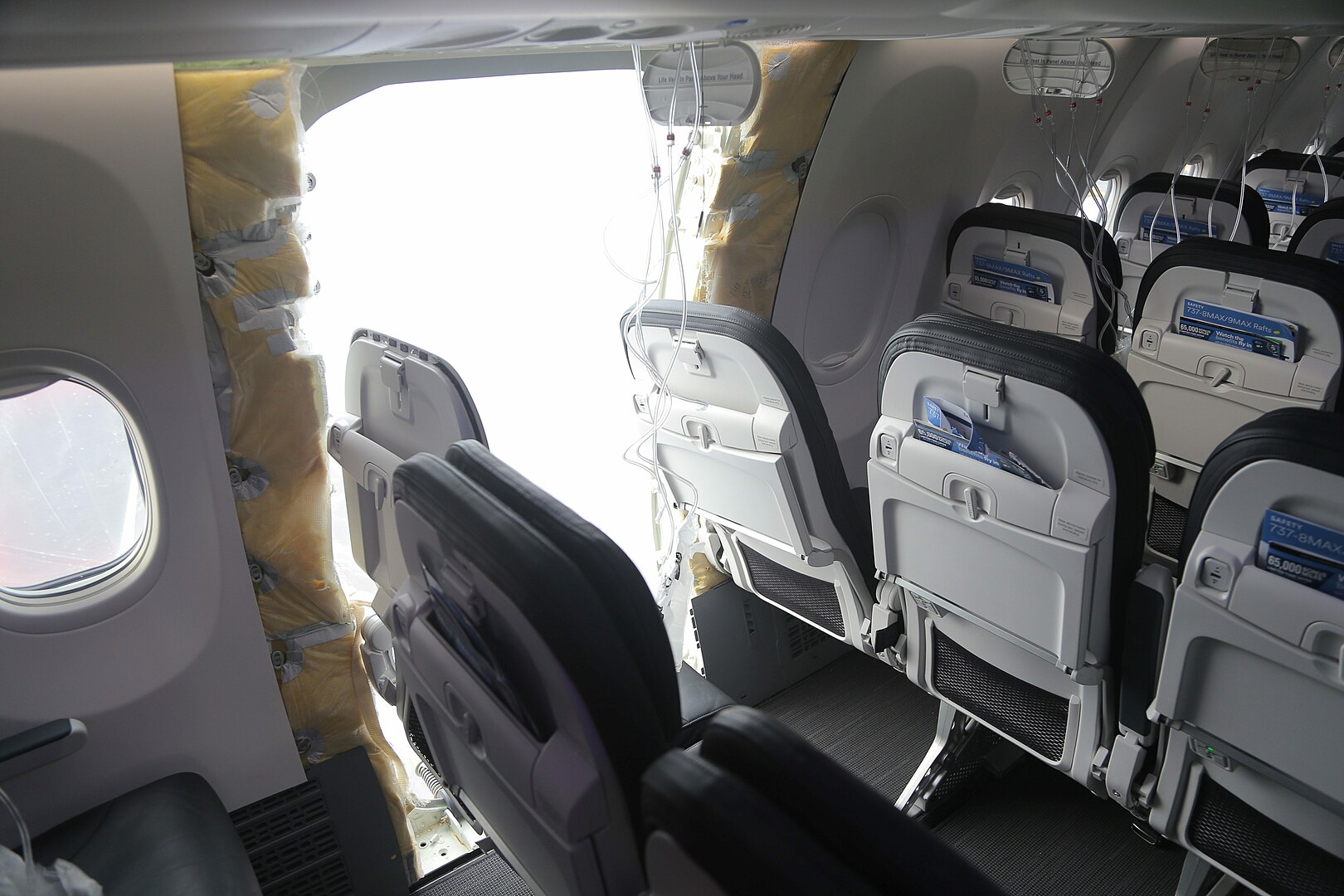
    On January 6, 2024, Alaska Airlines flight 1282, a Boeing 737 MAX 9, was en route from Portland (PDX) to Ontario, CA (ONT) when it experienced a cabin depressurization event involving a piece of the airplane falling off mid-flight. The pilots declared an emergency and diverted back to Portland, where they landed safely. Miraculously, no injuries were reported among the 153 passengers and crew on board.

    The cause of the incident was linked to a faulty door plug on the aircraft’s left side. The door plugs are used to seal openings that might otherwise be used for an aft emergency exit in denser seating configurations, where an additional set of exits would be required. No US carriers currently operate the MAX 9 in a dense enough configuration to need that emergency exit, so these so-called “plugs” semi-permanently seal that opening, leaving open the possibility of reconfiguring the aircraft in the future (perhaps if sold to a low-cost carrier in another country).

    Most cabin doors on modern commercial airliners are a “plug” or wedge shape – a convex shape with the interior side wider than the exterior side. This makes it impossible for the door to fit through the opening, distributes the stress of cabin pressurization more evenly, and makes the door impossible to open inflight. However, diagrams that have been released and findings from rival airlines suggest door plugs on the MAX 9 are not designed this way, but instead place the stress on a series of bolts. Preliminary reporting is suggesting perhaps failure of one or more bolts led to the AS1282 incident. This raises the question: are these “door plugs” actually “plugs” in the true sense of the word? Could Boeing potentially remedy this issue by implementing something more closely resembling a conventional plug-type exit door?

    The incident also comes amid a series of inspections by multiple airlines that have found “loose bolts” on many 737 MAX 9s. According to the FAA, the issue affects about 300 aircraft worldwide, and requires a “detailed visual inspection” of the door plugs and bolts. The FAA also issued an airworthiness directive on January 8, 2024, mandating the inspections within 10 days.

    After Alaska initially grounded their 737 MAX 9s, they promised to quickly return the planes to service after inspecting each one individually. However, the FAA quickly poured cold water on Alaska’s plans, grounding the MAX 9 nationwide. In fact, by the time the FAA issued their order, Alaska had already returned several MAX 9s to passenger service; those had to be subsequently pulled again. I have to wonder if this was purely a performative measure to placate the flying public. At this stage, did Alaska even know what they were looking for? Frankly, I’m still not sure they know what to look for, though issues with bolts may be a good start.

    The AS1282 incident is another blow to Boeing, which has been struggling to restore confidence in its 737 MAX family after two fatal crashes in 2018 and 2019 that killed 346 people. The MAX was grounded for 20 months before being allowed to fly again in late 2020, after Boeing made several changes to the software and hardware of the aircraft.

    Boeing employees are also calling out CEO Dave Calhoun amid the company’s recent HQ move from Chicago to DC. Many employees feel that HQ should be in Renton (or, at least, the greater Seattle area), where Boeing’s main factory is located, rather than across the country from the bread and butter of its core business. While there are many questions as to the difference in quality between Renton-produced and South Carolina-made Boeing aircraft, N704AL, the airframe involved in the AS1282 incident, was in fact produced in Renton, being delivered to Alaska just this past October.

    Bottom line on the 737 MAX series: It’s going to be incredibly difficult for Boeing to regain public trust now. Previous issues with the MAX series, including the Lion Air incident, were attributed to the planes being flown in developing countries with more lax safety regulations and less-experienced pilots. Now this has happened on US soil, on a US carrier, that excuse no longer flies.

  • TSA Fees for Long Layovers: Double Trouble for Your Wallet

    TSA Fees for Long Layovers: Double Trouble for Your Wallet

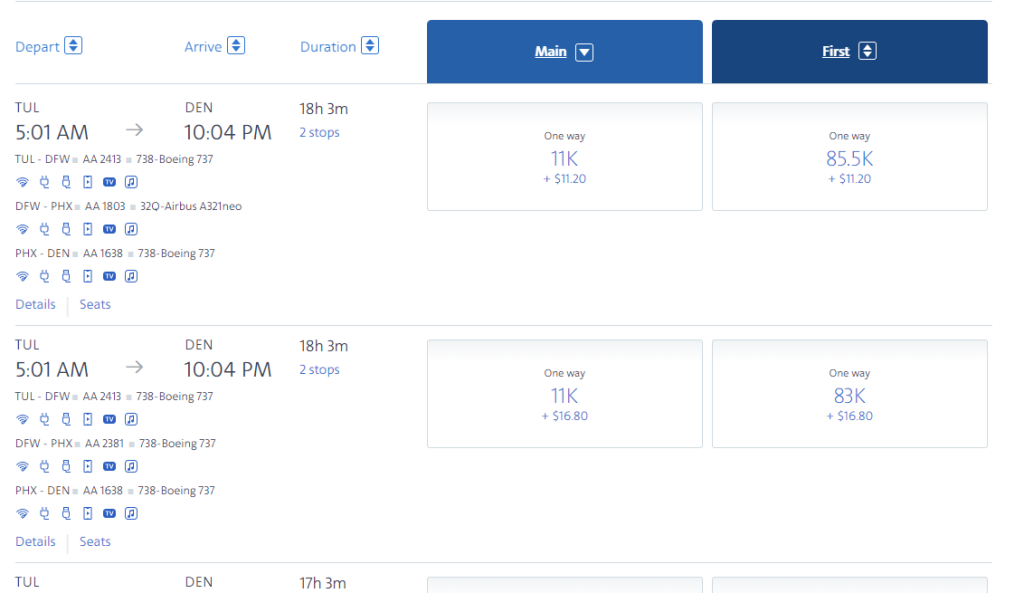
    In my recent quest for some (relatively) close-in American Airlines tickets to Denver (DEN), I stumbled upon a curious discovery that left me scratching my head. I always advise booking domestic itineraries as a pair of one-way flights, in order to retain the maximum possible flexibility. This is doubly true with AAdvantage award flights, owing to AA’s asinine policies preventing changes on most award tickets without canceling the entire PNR and starting over. By booking two one-ways, you can cancel your (separate) outbound PNR without touching your return, or vice versa. I practice what I preach, so I was doing just that in my search.

    What caught my attention was the price breakdown. One of the supposedly cheaper options came with a not-so-welcome surprise: 11,000 AAdvantage miles plus a hefty $16.80 in taxes and fees. Similar search results sported taxes and fees amounting to $11.20 for a one-way ticket. That’s 3x and 2x the normal $5.60 TSA security fee, respectively, for domestic and outbound segments originating in the USA. So what gives?

    TSA Fees on One-Way Domestic Itineraries

    Curiosity piqued, so I delved into the intricacies of TSA fees and found my answers in the depths of 49 CFR § 1510.3. It turns out that the fee is charged per “one-way trip,” but the devil is in the details of exactly how a “one-way trip” is defined.

    According to the regulation, a “one-way trip” is continuous air transportation without a stopover, where a stopover is defined as a break in travel exceeding four hours for continental flights and twelve hours for non-continental or international flights.

    In plain English, if your layover surpasses these thresholds, your “one-way trip” is split into two separate trips for TSA security fee purposes. Brace yourself for an additional $5.60 fee per passenger for each layover that breaches these limits.

    The rationale behind this distinction seems a bit questionable. The assumption is that anyone with a four-hour layover might venture outside the airport, necessitating a second round of TSA screening. While this logic may hold water in smaller hubs like Dallas-Love Field (DAL), leaving the airport on just a four hour layover feels like playing with fire in major hubs like Denver (DEN) or Atlanta (ATL), where even the TSA PreCheck & CLEAR lines routinely exceed a half hour wait.

    And let’s not forget, this fee is assessed based on the itinerary as booked. So, if your layover extends beyond four hours due to airline mishaps (such as IRROPS), you catch a break and avoid these extra charges. Conversely, if your layover shortens due to a delayed inbound flight to your layover point, there’s no refund coming your way.

    Now, nitpicking an extra $5.60 might seem like a trivial matter, but for a family of four making a roundtrip, that’s an extra $44.80 in fees. And here’s the kicker—you’re paying for a service you might not even use, especially if you’re not planning on leaving the secure area during your layover.

    I can’t help but wonder if I’m the only one just now catching onto this peculiarity. Perhaps it’s the infrequent budget travelers, who don’t have a stash of airline miles and rely on cash fares, bearing the brunt of these fees. These travelers likely wouldn’t realize it, as with cash fares, these fees are bundled into the fare shown at booking.

    And if you think these TSA fees are a headache, spare a thought for our neighbors to the north. In Canada, airports like Toronto Pearson International Airport (YYZ) tack on “airport improvement fees,” a range that spans from CAD$7 to CAD$40 (approximately USD$5 to USD$30 at the time of writing). Passengers with layovers under four hours get off relatively easy, facing charges on the lower end of the scale. However, for those unfortunate souls with layovers exceeding four hours, brace yourself for a significant hit to your wallet— as much as CAD$40 per passenger each way, the same amount charged to passengers originating at the airport. OUCH!

    Ironically, as President Joe Biden and Transportation Secretary Pete Buttigieg wage war on travel industry junk fees, the TSA seems to be exempt from their scrutiny. It’s a bit rich for the administration to target private industry while turning a blind eye to an agency under its command that’s doing the exact same thing.

    So, here’s a call to the administration: if you’re serious about eradicating junk fees, start by setting an example from the top down. The mirror may reveal more than you bargained for.

  • Points and Miles Heartbreak: Flying Blue Won’t Honor Ultra-Cheap Canada-Europe Mistake Fares

    Points and Miles Heartbreak: Flying Blue Won’t Honor Ultra-Cheap Canada-Europe Mistake Fares

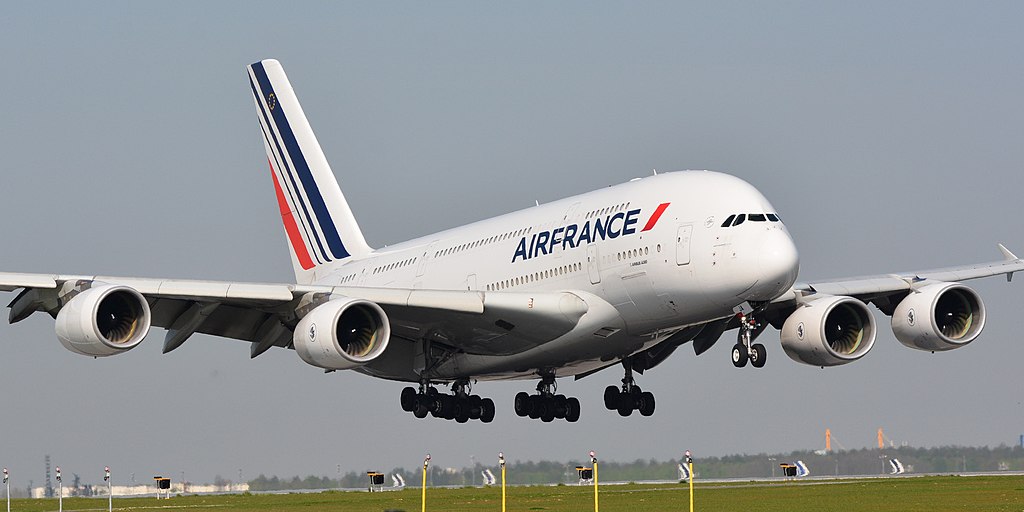
    Last week, the points and miles community buzzed with excitement as a glitch in Air France/KLM’s Flying Blue program seemingly paved the way for unbelievably cheap fares from Canada to France. The deal involved booking flights from Toronto (YYZ) or Montreal (YUL) to an off-the-beaten-path train station in Lille, France. The original offer of 13,500 miles each way in business class was already a steal, but then came the jaw-dropping drop to a mere 1,500 miles each way. Naturally, skepticism lingered, but that didn’t stop eager travelers from seizing the opportunity.

    Let’s face it; most of those who jumped on the deal probably had no intention of embarking on a scenic train journey to Lille. The idea was to get to Paris-Charles de Gaulle Airport (CDG), and “throw away” the train segment. Unlike with air-based “hidden city” ticketing, train tickets in Europe tend to be inspected at random (as opposed to each passenger scanning a boarding pass), so there’s a bit of plausible deniability for not showing up for your onward train journey.

    However, as the saying goes, “If it seems too good to be true, it probably is.” And, alas, this proverbial wisdom rings true once again. Flying Blue has decided not to honor these mistake fares, delivering a collective sigh of disappointment across the points & miles community.

    A post from Ben Lipsey, a director with Flying Blue, emerged on FlyerTalk, laying out the grim reality for those who thought they had hit the points and miles jackpot:

    Hi all,

    Unfortunately, this deal was too good to be true. Due to a technical glitch affecting some city pairs (primarily French train stations), some of you were able to book fares for as low as 1,500 miles in J. This was an error fare; the true price should have been 37.5k miles, which matches what is published for this month’s promo rewards and can be found on FB.com.

    All the 1,500 mile bookings have already been canceled, and the 13.5k mile bookings will also soon be canceled. Your miles and taxes will be refunded, and we will be sending out an email to those affected this week.

    However, we are making an exception for FB Gold, Platinum, and Ultimate members who booked the 13.5k mile fares – in recognition of their loyalty, we will honor the mistake fares for these members.

    Thanks for your understanding, and of course apologies for any inconvenience caused.

    Ben Lipsey, Director, Flying Blue (as posted on FlyerTalk)

    In a somewhat silver lining, Flying Blue extends a courtesy nod to its elite members—Gold, Platinum, and Ultimate—honoring the 13.5k mile fares as a token of appreciation for their loyalty. For the rest, it’s back to the drawing board, or in this case, the departure board, as dreams of a budget-friendly transatlantic jaunt are grounded. It does seem odd to me that they are honoring only certain mistake fares, and only for certain groups of passengers.

    And so, the lesson lingers once more: in the world of points and miles, as in life, be wary when faced with a deal that seems too good to be true. And definitely try to avoid nonrefundable hotel, train, and activity reservations that rely on a mistake fare to get you there.

  • Stowaway Solutions: Should Southwest Take Notes From SWISS?

    Stowaway Solutions: Should Southwest Take Notes From SWISS?

    SWISS International Airlines is stepping into the future with plans to automate passenger counting using artificial intelligence (AI). The airline’s move to replace manual headcounts with AI-driven cameras aims to enhance efficiency during boarding. Now, the question arises: Should a certain Dallas-based low-cost carrier be taking notes from SWISS?

    Southwest has had well more than its fair share of stowaway incidents. In one case last September, a mystery passenger infiltrated a flight to New Orleans (MSY), only being discovered due to a fully occupied flight leaving more passengers than available seats. In September, I wrote about the potential stowaway I encountered at TUL, making me question if this is happening way more often than is being reported.

    TSA’s role primarily involves screening for prohibited items and ensuring individuals on the no-fly list don’t enter the sterile area. They don’t care where you go once you’re past the checkpoint (as long as you stay out of restricted areas). The responsibility of guarding the jet bridge door falls squarely on the airlines. Southwest seems to be falling short in this regard. There are several ways someone could (legally & legitimately) enter the sterile area to try this. You could buy a fully refundable ticket and cancel once beyond the TSA checkpoint (or just no-show if you don’t care about losing your money). You could arrive on a domestic flight. Or, at a growing number of US airports, you can obtain a gate pass simply by asking, for any reason (or none at all).

    Enter SWISS, pioneering the use of AI to automate passenger counting during boarding. The system, developed by Berlin-based startup Vion AI, utilizes cameras to accurately record the number of people boarding the plane. SWISS anticipates that this technological leap will streamline the boarding process, making it faster and more efficient. The airline asserts that all data will be handled in compliance with stringent European and Swiss data protection regulations (GDPR, anyone?).

    While SWISS is investing in cutting-edge technology, Southwest might want to consider whether it’s time to implement similar measures as part of a comprehensive set of checks and balances. Alternatively, Southwest could just, you know, train their employees to do their jobs, ensuring gate agents effectively monitor the boarding process.

    As SWISS takes a major step into the digital future, Southwest may need to reassess its approach to passenger security and boarding procedures. I disagree with the prognosticators saying that AI will upend everything, but there are a ton of opportunities to use AI to simultaneously secure our skies while actually improving passenger experience.

    h/t Paddle Your Own Kanoo

  • Alaska Announces 2024 Program Updates, New Partnership with Porter

    Alaska Announces 2024 Program Updates, New Partnership with Porter

    Alaska Airlines is shaking things up in the Mileage Plan program for 2024, and it’s worth taking a closer look at what’s in store. But before we dive into the details, let’s not forget that Alaska recently made headlines with its ambitious plan to acquire Hawaiian Airlines in a whopping $1.9 billion deal, adding the airline to the Oneworld Alliance.

    Now, back to the Mileage Plan changes. The elite status adjustments for 2024 come with a mix of positive shifts and a few headscratchers. The simplified process of earning elite status based solely on elite qualifying miles (EQMs) is a notable shift. Whether you’re eyeing MVP, MVP Gold, or the prestigious MVP Gold 100K status, it all boils down to your EQMs. Importantly, there are no changes to the EQM thresholds required for status.

    This kind of change seems to be a trend in the airline industry as a whole. American did this the right way with its Loyalty Points scheme. Delta got it very wrong and later backtracked. United seems to be on the way to a Loyalty Points-like scheme, which makes sense because CEO Scott Kirby trained under Doug Parker at American, so we’d expect United and American to closely follow each other while Delta does its own thing.

    The elimination of segment-based qualification might raise an eyebrow for some, but it’s balanced by the freedom to earn Mileage Plan status solely through travel on partner airlines. This is great news, as Alaska’s reach is largely west coast-focused. Alaska is also sweetening the deal for Mileage Plan members who wield the Alaska Airlines Visa® credit card. In 2024, for every $10,000 spent on the card, members will rake in 4,000 EQMs, with a cap of 20,000 EQMs per year after $50,000 in eligible credit card spending. It’s a move reminiscent of recent trends in the airline industry, where credit card spending becomes a key player in elite status attainment.

    MVP Gold 100K members get an exclusive treat with the introduction of limited-time rollover miles. Any EQMs beyond 100,000 in 2023 will carry over to the 2024 program year, a one-time offer that could be a game-changer for the most dedicated Mileage Plan members.

    Looking ahead to late 2024, Alaska Mileage Plan promises a buffet of “choice rewards.” While details are scarce, the plan is to empower members to cherry-pick the perks that matter most to them. From bonus miles and status accelerators to day-of-travel perks and experiences, it’s a tantalizing menu that could add a new layer of personalization to the loyalty program.

    Now, for the less savory news. In 2025, Alaska Mileage Plan will be downsizing elite mileage bonuses for three out of four elite tiers. MVP members, MVP Gold members, and MVP Gold 75K members will experience reductions ranging from 25% to 50%. At least Alaska gave a full year of advance notice here, and it aligns with the airline’s investment in new choice rewards.

    Buried under the news about Alaska’s loyalty program updates, it’s worth noting that Alaska is expanding options for its members by adding Porter Airlines as its 30th global airline partner and the first Canadian airline partner. This news should please AvGeeks, as Porter seems all-in on the comfortable Embraer E195 E2, a rare find within North America.

    Alaska’s 2024 program updates signal a positive shift overall. The streamlined elite status qualification and the added perks for credit card holders are steps in the right direction. However, the reduction in elite mileage bonuses come 2025 might be a bitter pill for some loyalists to swallow. Yet, as we navigate these changes, it’s clear that Alaska Airlines is charting a course towards a more straightforward program as it looks to acquire Hawaiian.

  • Wow: Chase Brings Back Best-Ever 90,000 Point Offers for No Annual Fee Ink Cash and Ink Business Unlimited

    Wow: Chase Brings Back Best-Ever 90,000 Point Offers for No Annual Fee Ink Cash and Ink Business Unlimited

    Chase is turning up the heat once again with the return of the best-ever initial bonus offers on two of its no annual fee business credit cards – the Ink Business Unlimited® Credit Card and the Ink Business Cash® Credit Card. If you’re a savvy points collector, this news might just make your day.

    Both cards are throwing a whopping $900 your way, which translates to a cool 90,000 Ultimate Rewards points. All you need to do is spend a reasonable $6,000 on purchases within the first 3 months of opening your account. I’m willing to bet that’s a benchmark most of us are able to hit.

    Now, let’s talk about why these points are a big deal. Chase Ultimate Rewards points are some of the most valuable in the points and miles game. They’re versatile and pack a punch when it comes to value. You should always aim to redeem them for, at an absolute minimum, 2 cents per point. In fact, you’ll often find opportunities to get value well north of that, especially with valuable transfer partners like World of Hyatt and Air Canada.

    While this isn’t the first time we’ve seen a 90,000 point offer on these cards, it’s worth noting that this pretty rare, and is tied for the best-ever signup bonuses on these particular products. So, if you’ve been eyeing these cards, now might be the time to make your move.

    Let’s break down what each card brings to the table:

    Ink Business Unlimited® Credit Card:
    Earns a solid 1.5% back on all your purchases. Simple, straightforward, and effective.

    Ink Business Cash® Credit Card:
    This one’s a bit more nuanced. You’ll earn 5% on the first $25,000 spent in combined purchases at office supply stores and on internet, cable, and phone services each account anniversary year. Plus, you’ll get 2% on the first $25,000 spent in combined purchases at gas stations and restaurants each account anniversary year. It’s a strategic way to maximize your rewards based on your spending habits.

    But remember, in Chase’s world, 1% cash back equals 1x Ultimate Rewards points. Keep in mind, you’ll need at least one Ultimate Rewards card with an annual fee, like the Sapphire Preferred, Sapphire Reserve, or Ink Business Preferred, in your portfolio in order to be able to transfer these points to partners like Hyatt.

    Chase is known for its infamous 5/24 rule. If you’re not familiar, it’s pretty straightforward – if you’ve opened five or more personal credit cards (from any bank) in the past 24 months, you’re likely to face a rejection when applying for new Chase cards. However, some folks in the points and miles community have reported that the 5/24 rule isn’t being enforced as strictly as it once was. It’s not a guaranteed pass, but there’s a glimmer of hope for those who might be a tad over the limit.

    While Chase business cards won’t add to your 5/24 count, you generally still need to be under 5/24 to get approved for new Chase business cards. At least you don’t have to worry about Chase denying you for being too responsible with credit, like a certain other bank.

    These are phenomenal offers, especially considering they come with no annual fee. So, if you’re in the game and itching to boost your Ultimate Rewards balance, the Ink Cash and Ink Business Unlimited cards might just be your golden ticket right now. Grab those 90,000 points and start planning your next adventure.

  • TSA Weighs In on Viral Video: Shrimp and Potatoes, or Security Breach?

    TSA Weighs In on Viral Video: Shrimp and Potatoes, or Security Breach?

    The TSA often gets a bad rap in the court of public opinion, but I’ve gotta say, my experiences with them have been mostly smooth sailing. Sure, there’s the occasional grumpy agent or a line that seems to stretch to eternity, but overall, I find the screening process here in the U.S. more friendly and efficient than in many foreign countries.

    Call me crazy, but I actually miss the TSA when I’m traveling abroad. Maybe it’s because I’m a Global Entry member, enjoying the perks of expedited screening, but there’s a certain (dare I say) charm to the TSA that other federal agencies just don’t have. They’ve got personality – just check out their social media feeds. Honestly, they’re one of the funnier accounts I follow online.

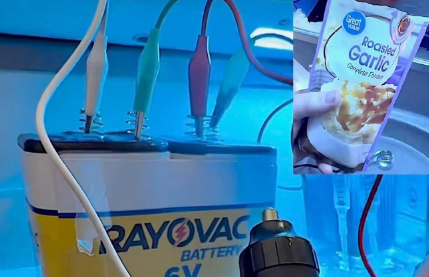
    In a previous post, we dished out the deets on a Delta passenger who took culinary creativity to new heights by cooking shrimp and mashed potatoes in an airplane lavatory sink. Yep, you read that right. He rigged up a contraption involving a 6v battery pack, a beverage warmer, and some alligator clips – a setup that could easily be mistaken for something you wouldn’t want to encounter at 30,000 feet.

    Now, the TSA itself has weighed in on the viral video, sharing a close-up of the man’s alligator clip-laden masterpiece. Believe it or not, he’s not packing any prohibited items, which explains how he got past those awful Analogic scanners. However, the way he’s utilizing his gear might cross into a gray area when it comes to FAA regulations.

    https://www.instagram.com/p/C0umsV0Saa4/

    According to the official word from the FAA, “Dry batteries are only permitted to be carried by passengers on aircraft when protected against damage and short circuit.” And here’s the kicker – a person who knowingly or recklessly violates hazardous materials regulations could be slapped with fines up to a whopping $96K for each violation and face up to five years behind bars. Youch.

    So, the advice from the authorities is crystal clear – stick to the standard inflight snacks like pretzels and Biscoff cookies. Leave the impromptu shrimp scampi experiments to the professionals, and don’t try this at home (or, in this case, inflight).