Author: user

  • Capital One Sends E-mail Threats, Escalates War on Responsible Credit Users

    Capital One Sends E-mail Threats, Escalates War on Responsible Credit Users

    Capital One, the financial behemoth often viewed as the dark horse in the credit card race, has been making some intriguing moves lately. On one hand, they’ve launched the Venture X, parading it as a challenger to the AmEx and Chase duopoly, and even venturing into the glamorous world of airport lounges. Yet, beneath this veneer of competition in a more prestigious arena, Capital One’s underwriting practices tell a different tale.

    Most credit card issuers neatly fit into two categories: those that are all about lending and those that thrive on spending. Chase and AmEx fall solidly into the spend-focused camp, attracting users who treat their cards like glorified debit cards, and making their profits primarily on interchange, or “swipe” fees. Capital One and Discover (do they even count?), on the other hand, remain steadfastly lend-focused. Their target? Consumers who carry balances and incur interest, padding Capital One’s coffers with the fruits of compounded interest.

    In fact, having an impeccable credit score may actually be a hindrance when seeking approval for Capital One’s credit card products. Tales abound of individuals boasting 800+ credit scores, effortlessly securing cards from the likes of Chase, Citi, and AmEx, only to face the unfamiliar sting of rejection from Capital One.

    Now, it seems Capital One has escalated its war on responsible credit users. A reader shared a snapshot of an ominous email from the issuer, threatening a decrease in their credit limit. The reason? They haven’t come close enough to maxing out their cards. In the stark words of the email, “Over the last several months, the highest balance on this account has been significantly lower than your credit limit. Because of this, your credit limit could be decreased following this review.” They want you toeing the line, and if you’re not, there are consequences.
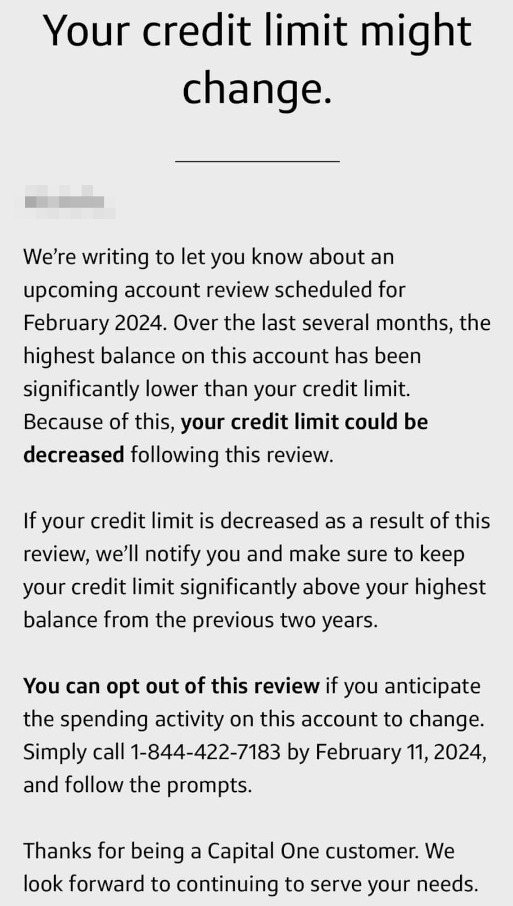
    Screenshot of an email from Capital One, as shared by a reader.

    The email gives a 60-day heads-up, offering a choice: either ramp up your balance, or dial a toll-free number to plead your case. But why should you care about this? Even if you have no plans to need that large of a credit line, a decrease in your credit limit can wreak havoc on your credit score, particularly by increasing your credit utilization ratio. This is a percentage of your available credit being used; if the denominator goes down and the numerator remains constant, that percentage is going to soar, even if your spending habits don’t change.

    Now, why would Capital One want to lead people down the treacherous path of poor credit decisions? The answer is glaringly simple: interest rates are soaring. While some pundits predict the end of interest rate hikes, many credit cards are still flexing jaw-dropping interest rates of 30% or more. It’s a lucrative time for banks, and Capital One wants a slice of that high-interest pie. Most of us don’t even know the interest rates on our own credit cards, because we pay them off each month before interest begins accruing. If this describes you, you’re probably not in Capital One’s target audience.

    But, wouldn’t they be concerned about users defaulting? Not quite. From the bank’s perspective, it’s akin to making an investment with a jaw-dropping ~30% annual return, compounding. It’s a staggering return, and of course no investment carries that kind of return without risk. However, the banks are well aware of this, pricing it into their calculations. After all, when the potential gains are that substantial, a calculated risk becomes just another part of the game.

    As interest rates soar, the issuer’s tactics appear geared towards nudging users into carrying balances, transforming their credit cards into instruments of compounded returns for the bank. While Chase and AmEx focus on a customer base with pristine credit and good money management habits, Capital One seems intent on playing by its own rules.

  • Eww: Delta Passenger Cooks Shrimp and Potatoes à la Lavatory

    Eww: Delta Passenger Cooks Shrimp and Potatoes à la Lavatory

    Some people take the concept of “cooking on the go” to a whole new level, and it’s not exactly a Michelin-starred affair. Remember the guy who cooked baby back ribs in a hotel bathroom? Well, he’s back at it, and this time, it involves garlic shrimp and instant mashed potatoes at 30,000 feet. You know, the ideal setting for a preparing a gourmet meal.

    In a video that redefines the term “terrible idea,” a culinary pioneer with the TikTok handle @barfly7777 showcases his skills in the art of airplane lavatory cooking. After his previous hotel bathroom stunt, he decided to elevate his game by taking his talents to the skies.

    https://twitter.com/ATDrummond/status/1732855305761939672

    The video begins with our protagonist boldly declaring his intention to embark on this culinary adventure. He navigates the TSA checkpoint, fully aware that his battery-powered setup might raise a few eyebrows. No worries, though, as he proceeds to the lavatory of his Delta Air Lines flight, armed with a 6-volt battery pack that, at least on the surface, appears more fitting for jumpstarting a car.

    Once inside the lavatory, he unveils his cooking apparatus, connecting it to a makeshift power source resembling a cigarette lighter. Forget airplane etiquette; this maverick chef powers up the lavatory sink, utilizing the diaper changing table as a makeshift kitchen counter. Yuck!

    As he submerges raw shrimp into the sink water, you can’t help but question the life choices that led this man to attempt this. The climax of this culinary saga involves the addition of instant mashed potatoes to the shrimp-infused water, resulting in a barf bag of garlic mashed potato-coated shrimp. Seems you might be needing that barf bag later, sir.

    Now, I’m no culinary expert, but I can’t help but cringe at the thought of consuming anything concocted in the unsanitary confines of an airplane lavatory sink. Bravo to this man with the iron stomach, but for the rest of us, the inflight meal options seem a tad more appetizing.

    And a quick word of advice – while @barfly7777 might have discovered the secret to lavatory haute cuisine, it’s probably best not to attempt such feats at home or inflight. Safety concerns, anyone? The last thing you’d want is a fire breaking out at FL370 due to an impromptu kitchen experiment. Stick to the peanuts and pretzels, folks. Bon appétit… I guess.

  • “Blinking Red Lights Everywhere:” Why You Should Arrive Earlier for Your Next Flight

    “Blinking Red Lights Everywhere:” Why You Should Arrive Earlier for Your Next Flight

    We’ve all been there – cutting it close, racing against the clock to make it to the airport just in the nick of time, especially for domestic flights. It’s a habit many of us share, but it might be time to reconsider, especially with the looming possibility of additional TSA screenings this holiday season. Why? Well, it’s a reality we haven’t had to face in years – terrorism.

    FBI Director Christopher Wray recently dropped a bombshell during a Senate Judiciary Committee hearing, revealing that the terror threat facing the United States has skyrocketed since the October 7th attack on Israel. In response to Senator Lindsey Graham’s inquiry about the current “threat matrix,” Wray emphasized the unprecedented nature of the situation, stating, “I’ve never seen a time where all the threats or so many of the threats are all elevated, all at exactly the same time.” According to Wray, “blinking red lights are everywhere,” signaling a heightened state of alert.

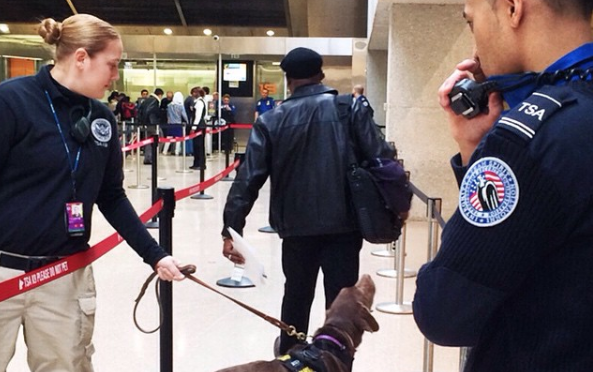
    While the TSA doesn’t disclose specifics about their screening procedures, frequent flyers I’ve spoken with are reporting a marked increase in random secondary screenings at airports. Even if you’re enrolled in TSA PreCheck or Global Entry, it isn’t a foolproof shield against these additional checks (though it could mitigate to some extent). I won’t name the airports where this seems to be most prevalent, as that would be bordering on sensitive info, but be prepared to allow an extra 15 minutes or so in case you find yourself selected for additional screening. You should probably be doing that anyways, thanks to the introduction of those horrific Analogic CT scanners.

    TSA’s official stance, as stated on their website, reinforces the notion that all travelers are subject to screening, and no one is guaranteed expedited processing. Unpredictable security measures, both seen and unseen, are being implemented throughout airports to ensure safety.

    TSA uses unpredictable security measures, both seen and unseen, throughout the airport. All travelers will be screened, and no individual is guaranteed expedited screening.

    Transportation Security Administration

    Despite these heightened security measures, it’s crucial to remember that air travel remains statistically safe. Fear shouldn’t dictate your decisions, as succumbing to it only means the terrorists have achieved their goal. The U.S. intelligence apparatus has vastly improved since 9/11, and advancements in screening technology, reinforced cockpit doors, and enhanced training for airline crews contribute to a safer travel environment. And remember that security isn’t a spectator sport – if you see something, say something. And of course, leave a little extra time for enhanced screening before your next flight; if you don’t end up needing it, that’s time for another drink at the lounge.

  • Another Day, Another Runway Incursion at AUS?

    Another Day, Another Runway Incursion at AUS?

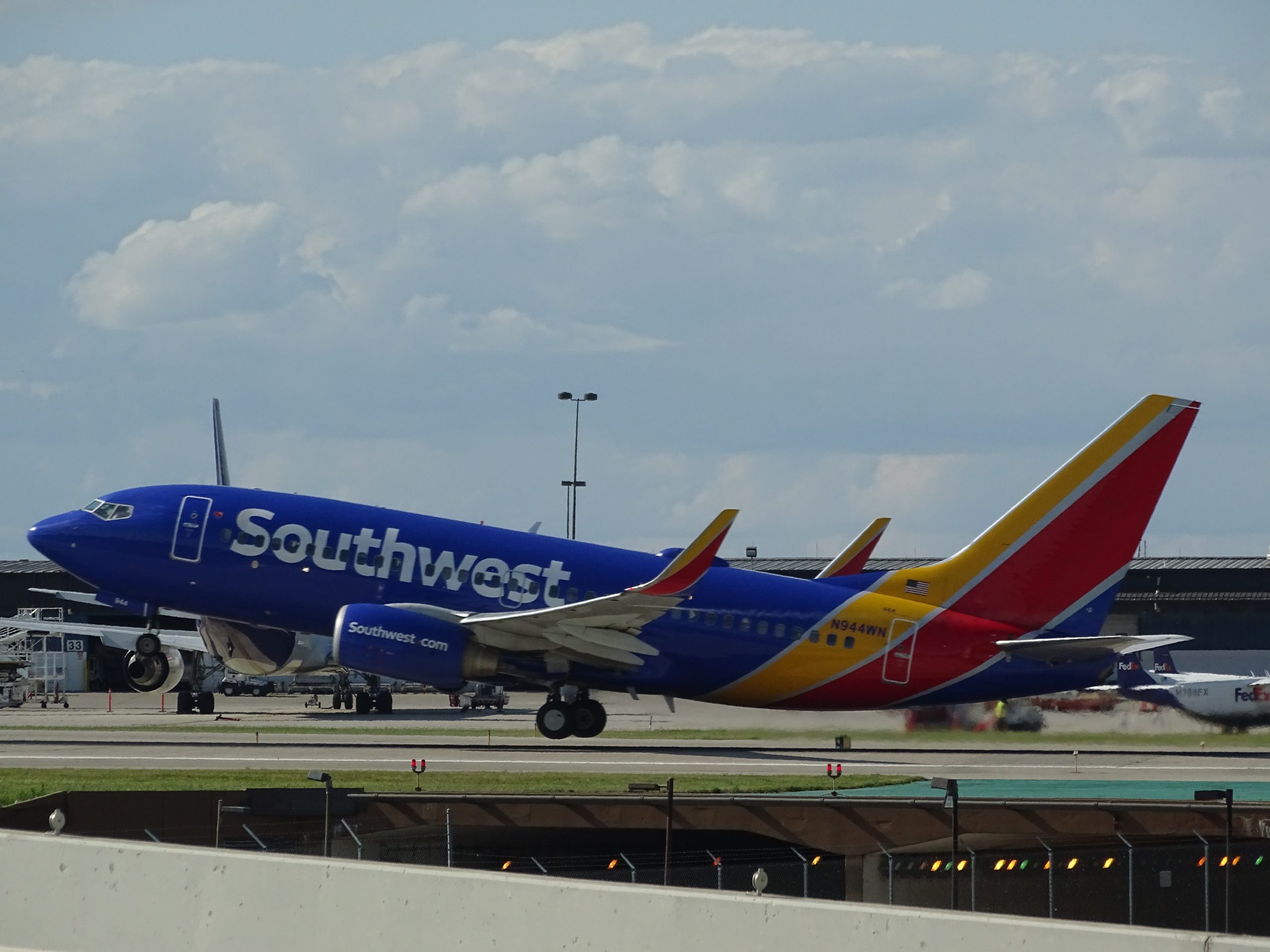
    Monday night, Austin-Bergstrom International Airport (AUS) witnessed yet another incident that’s becoming all too familiar in recent times – a runway incursion. This time, it involved Southwest Airlines flight WN2959 from Nashville (BNA), adding to the growing list of near-misses at the Austin airport over the past year.

    According to FlightAware data, the flight commenced its descent to AUS a little after 6 p.m. local time. However, things took an unexpected turn when the aircraft, at a mere 600 feet above the ground, decided to climb back up to 2,850 feet. The flight then made a second attempt at landing, eventually touching down at 6:17 p.m.

    A Southwest spokesperson downplayed the incident, describing it as a “standard go-around procedure” and emphasizing that pilots are well-trained to handle such scenarios, encountering them somewhat regularly. While the airline aims to reassure the public, this latest event has raised eyebrows in light of the increasing number of similar incidents at AUS in recent times.

    The Federal Aviation Administration (FAA) provided its official stance, stating that an air traffic controller instructed Southwest Airlines Flight 2959 to perform a go-around at 6:06 p.m. local time on Monday. The reason cited was the presence of another aircraft that had not yet exited the runway. Importantly, the FAA asserted that there was no compromise to the safe separation between the Southwest flight and any other aircraft.

    An air traffic controller instructed Southwest Airlines Flight 2959 to perform a go-around at Austin-Bergstrom International Airport at 6:06 p.m. local time on Monday, December 4, because another aircraft had not yet exited the runway. There was no loss of safe separation between the Southwest flight and any other aircraft.

    FAA Statement

    This incident comes on the heels of heightened concerns about safety at Austin’s airport, with a series of near-miss incidents in the past year, including another serious runway incursion earlier this year, prompting regulatory agencies to intervene. Just last week, the National Transportation Safety Board (NTSB) released a comprehensive 3,000-page report detailing that near-miss at AUS back in February.

    I can’t help but wonder if this is happening more often than is making news. Last September, I experienced a go-around on an American Airlines flight from Dallas/Fort Worth (DFW) into AUS. I was never able to figure out why, so I’m unsure if it was a runway incursion, or something related to the 8-hour series of events (including not one but two deplanings and a visit from DFW Airport PD) leading up to this aborted landing. Maybe someday I’ll write a post about that, but suffice to say it was by far the worst AA experience I’ve ever had, and had there been a single rental car available at DFW, I’d have just driven (this was a connecting flight). Luckily, I had a great seatmate that kept me sane through the ordeal; she and I still keep in touch to this day.

    The repeated occurrences of runway incursions and near misses underscore the importance of addressing safety measures at Austin-Bergstrom International Airport. It remains to be seen how authorities will implement and enforce measures to prevent such incidents in the future. The need for heightened vigilance and stringent safety protocols has never been more apparent in the skies over Austin.

    ht KXAN

  • Aer Lingus Added as Earn-Only AA Partner; Will They Rejoin Oneworld?

    Aer Lingus Added as Earn-Only AA Partner; Will They Rejoin Oneworld?

    American Airlines and Aer Lingus forged a partnership early in 2022. This move followed the Irish flag carrier’s entry into the Oneworld transatlantic joint venture in 2020.

    The partnership initiated a codeshare agreement aimed at enhancing the travel experience between the United States and Ireland. This agreement allowed American Airlines and Aer Lingus to place their codes on each other’s flights, streamlining the booking process for passengers on either airline’s website.

    Despite the promising start, the journey to full integration faced challenges, particularly in the area of frequent flyer reciprocity. For nearly two years after the launch of the partnership, passengers had no opportunities to earn or redeem miles, and certainly didn’t receive reciprocal elite benefits.

    However, as of December 2023 (in other words, now), a breakthrough has emerged with the introduction of reciprocal mileage earning. Let’s be clear: this is currently an earn-only partnership at this time. American AAdvantage members can now earn miles for flights marketed and operated by Aer Lingus, with an earning rate of 5x miles per dollar spent. Additional elite bonuses are available for higher-tier AAdvantage members.

    While reciprocal award redemptions are anticipated in the future, the timeline for this development remains uncertain. Moreover, there is no indication of reciprocal elite perks at this point.

    The integration process has not been without its challenges, and concerns have been raised about the slow progress and lack of metal neutrality in the oneworld transatlantic joint venture. Despite Aer Lingus’s membership in the joint venture for almost three years, the reciprocity between the airlines took time to materialize, leaving observers perplexed about the reasons behind the delayed and limited integration.

    Adding to the complexity of the situation is Aer Lingus’s historical partnership with United, which recently came to an end, as previously discussed in an October blog post. The severed ties with United seem to be a push to align the airline even further with Oneworld.

    Looking beyond the immediate developments, industry observers are left speculating about Aer Lingus’s potential return to the Oneworld alliance. The airline was a member of Oneworld until it departed in 2007 but has maintained strong connections to the alliance despite its official neutrality (possibly owing to its ownership by IAG). Rumors circulating on FlyerTalk earlier in the year suggested that Aer Lingus might be considering a return, possibly as early as Q2 2025.

    Aer Lingus’s unique position within International Airlines Group (IAG) adds to the intrigue. It stands as the only full-service airline under the IAG umbrella that is not a member of any alliance, let alone Oneworld. With IAG’s other legacy carriers, including British Airways and Iberia, holding longstanding Oneworld memberships, the recent severing of ties with United, and now this new development, the speculation about Aer Lingus’s return to the alliance gains momentum.

    While it’s unclear exactly what the future holds, let’s all cross our fingers for a big announcement sometime in early to mid 2024.

  • Reports: Centurion Lounge in MIA Closed Until at Least Midweek

    Reports: Centurion Lounge in MIA Closed Until at Least Midweek

    Multiple reports are streaming in, and it’s not the kind of news AmEx Platinum cardholders passing through Miami International Airport (MIA) were hoping for. The Centurion Lounge is officially on hiatus, and the cause? A rather mysterious “plumbing issue.” The initial rumors suggest “at least three days” of downtime, but for those familiar with MIA’s track record (see also: indefinite closure of the SkyTrain), getting that lounge back in action in just 72 hours seems incredibly optimistic.

    A post surfaced in a private Facebook group showcasing AmEx-branded “happy meal” style boxes of to-go food being handed out to cardmembers. We’d share that photo here, but the initial uploader of this discovery hasn’t yet responded to our request to use their photo. Curious minds might wonder: does AmEx have a secret stash of these kits ready for deployment in case of unforeseen lounge disruptions?

    While we await more information and clarity on the mysterious “plumbing issue,” we invite those on the ground at MIA to keep us in the loop. Feel free to use the contact form and send us any firsthand accounts of the situation, or DM us on the “platform formerly known as Twitter” @PointsAndPDBs.

  • Sunday Surprise: Alaska Announces Intent to Purchase Hawaiian Airlines in $1.9 Billion Deal

    Sunday Surprise: Alaska Announces Intent to Purchase Hawaiian Airlines in $1.9 Billion Deal

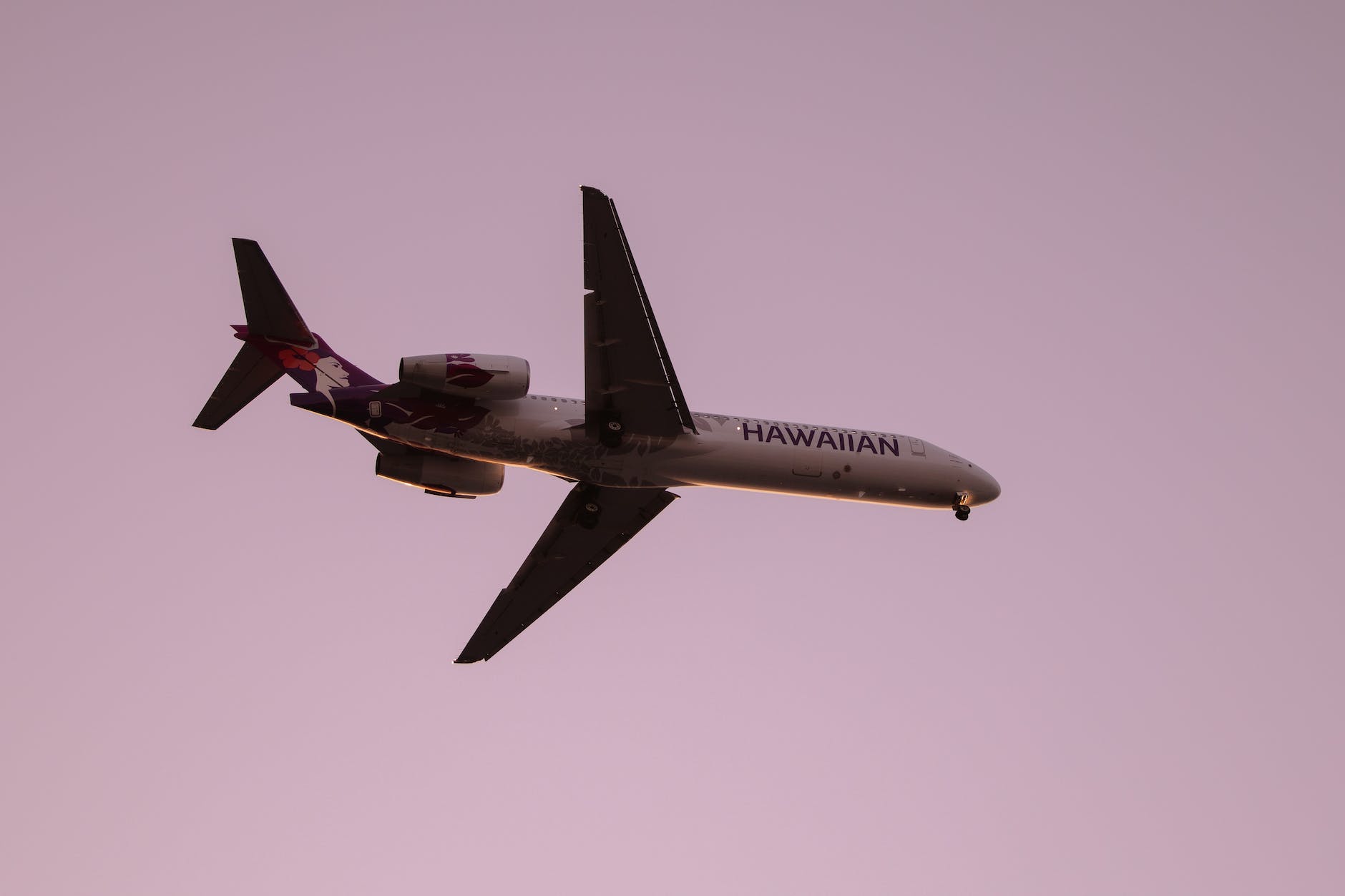
    Alaska Airlines just dropped a Sunday bombshell: they went shopping and picked up a Hawaiian Airlines in a hefty $1.9 billion deal, subject to regulatory approval. The cash transaction values each Hawaiian Airlines share at $18.00, with the overall package including $0.9 billion of Hawaiian’ Airlines’s net debt.

    The Hawaiian brand isn’t going anywhere, however. The marriage of these two carriers will keep both the Alaska Airlines and Hawaiian Airlines brands intact, backed by a unified loyalty program. The resultant behemoth will boast a fleet of 365 aircraft, providing connections to 138 destinations on HA/AS metal, and hooking into the extensive Oneworld Alliance for access to over 1,200. This merger isn’t just about dollars and cents; it’s about establishing Honolulu (HNL) as a strategic hub for the combined airline. This move promises expanded services for Hawaii residents headed to the mainland U.S., and opens up fresh connections for Alaska to the Asia-Pacific market.

    Admittedly, airline mergers are generally bad for consumers, but dare I say that this one would be an overall good thing for most passengers? Currently, American and Alaska’s route networks to Hawaii and the Asia-Pacific market are… other than the best. While there is, of course, bound to be some overlap, the existing two US Oneworld carriers don’t really compete with Hawaiian in any substantial way. Rather, the addition of Hawaiian to the alliance will be a complement to American and Alaska’s existing route networks. Aside from a limited partnership with JetBlue (which we expect to be unwound), Hawaiian currently lacks a serious network of feeder flights within the mainland, making it tough to fly Hawaiian to/from secondary markets in the continental US.

    As an example, let’s say your home airport is Tulsa (TUL). Currently, in order to fly Hawaiian to HNL, your options are to either drive 7-8 hours to Austin (AUS) to catch a nonstop, or book a separate positioning flight (at your own risk) to a market that Hawaiian serves. Now that Hawaiian will be joining Oneworld, you could book a flight on Hawaiian to/from TUL, with AA acting as the “last mile.” The inverse applies as well, giving Hawaii residents new options to reach secondary markets on the mainland (and some large markets, too, like Dallas/Fort Worth (DFW)), driving down prices through competition.

    On the flip side, the news could be the final death knell for American Airlines’ dreams of establishing an international gateway at Seattle-Tacoma International Airport (SEA). If the recent confirmation that AA’s SEA-LHR route is permanently grounded didn’t already spell the end of that experiment, this Alaska-Hawaiian affair definitely seals the deal.

    Am I the only one who saw this coming? Hawaiian has been a perennial money-loser in the wake of Southwest Airlines barging into the Hawaii market (I wish I’d been blogging back then so I could link to the article where I called this). Hawaiian is essentially the mom-n-pop store in a battle with the Costco of airlines (okay, maybe Southwest is more like a Walmart than a Costco, but… you get the idea). Like ’em or not, Southwest’s scale is a huge competitive advantage for them, and you’re not going to be able to compete against them with a fleet of 62 aircraft. The only paths forward for Hawaiian were to merge with a larger player, or die out. The fact that Alaska is allowing Hawaiian to maintain their distinct brand identity makes this the airline’s best shot at continued survival amid mounting economic pressures. Both airlines generally have a good reputation, so I don’t foresee the level of service suffering on either side here. The pilots also are represented by the same union, so arguably this is a great match.

    But let’s not pop the champagne just yet. The Biden Administration might still rain on this parade. The Biden DOJ, notorious for its tough stance on mergers and antitrust cases (see also: JetBlue x Spirit), could throw a spanner in the works. So, while some are clinking glasses to celebrate, others are watching with a cautious eye, aware that the fate of this union ultimately rests in the hands of regulators.

  • From Guest of Honor to Milestone Rewards: Hyatt’s Loyalty Game-Changers

    From Guest of Honor to Milestone Rewards: Hyatt’s Loyalty Game-Changers

    Hyatt is ushering in changes to its World of Hyatt loyalty program in 2024, and the overall outlook appears positive for most of us. The alterations touch on various aspects, offering members increased flexibility and added benefits without significant devaluation. Here’s a breakdown of the key modifications:

    Guest Of Honor Becomes a Milestone Reward

    One notable change is the transformation of the Guest of Honor benefit. Formerly an unlimited Globalist perk, it will now function as a Milestone Reward. This means members can enjoy the privileges of extending their status to friends or family after accumulating a set number of nights. The initial milestone is reached at 40 nights, making the feature accessible even before achieving Globalist status at 60 nights.

    The Guest of Honor credits are applicable to both paid and award stays, broadening the scope of its utility. Additionally, when gifting this benefit to others, the giver earns an elite qualifying night upon the completion of the recipient’s stay. While the move introduces some limits on usage, the overall flexibility and transferability of the benefit have increased.

    Expanded Choices Every 10 Elite Nights

    Hyatt is enhancing its Milestone Rewards, extending benefits every 10 elite nights up to 150 nights. This change provides members with more options to tailor their rewards based on their preferences. Notably, this expansion presents a compelling incentive for elite members, giving them the flexibility to choose benefits that align with their travel patterns and priorities.

    More Suite Upgrades Available Earlier

    The suite upgrade landscape is also evolving, with more suite upgrades available starting at 40 nights and continuing up to 150 nights. This adjustment allows members staying 60 nights, for instance, to enjoy five confirmed suites instead of the previous four. Importantly, these suite upgrades become transferable, offering members greater flexibility in how they utilize this valuable benefit.

    Easily Gifted Awards

    A significant shift in Hyatt’s approach is the increased transferability of awards. Virtually all Hyatt awards, including free night awards, club access, suite upgrades, and Guest of Honor awards, can be easily gifted to others. This added flexibility enables members to share their rewards with friends or family, enhancing the overall value of the program.

    Meetings, Events, and Small Business Stays Earn Elite Nights

    Hyatt introduces changes to how elite nights are earned through meetings, events, and small business stays. The new program allows meeting planners, travel advisors, and small business program administrators to earn 2 qualifying nights for every $5,000 spent, up to 60 elite nights per year. This initiative provides additional opportunities for various stakeholders to accrue elite status credits.

    Hyatt’s Continued Evolution and Future Outlook

    The integration of Mr. and Mrs. Smith into the program adds a new dimension to Hyatt’s offerings. While specific details are yet to unfold, the move signifies a strategic expansion of Hyatt’s portfolio with carefully selected properties.

    The changes to the World of Hyatt loyalty program for 2024 bring a mix of positive enhancements. While some limits have been introduced, the overall trend is one of increased flexibility and additional choices for members. The program’s focus on maintaining a valuable and differentiated experience for members reflects Hyatt’s commitment to standing out in the competitive loyalty landscape. As Hyatt continues to evolve, it remains to be seen how these changes will resonate with its diverse membership base.

    You can view the full press release here.

  • What Happens to TSA PreCheck When I Apply For Global Entry?

    What Happens to TSA PreCheck When I Apply For Global Entry?

    So, you’ve decided to level up your travel game and make the leap from a standalone TSA PreCheck membership to Global Entry. Smart move. But reader Mike Jones wanted to know: what exactly happens to your beloved TSA PreCheck membership during the application process? Let’s break it down.

    Global Entry: The Upgrade You Didn’t Know You Needed

    Global Entry is the ultimate trusted traveler program, offering a slew of benefits that go beyond the perks of TSA PreCheck. Think of it as TSA PreCheck on steroids. You still enjoy the hassle-free airport security experience, keeping your shoes on and liquids in your bag. But the perks extend to Customs & Border Protection at airports and land borders, as well as Canadian airport security (CATSA). That way, you won’t have to wait in a line like this one after a long-haul flight.

    But here’s the burning question: What happens to your trusty TSA PreCheck membership when you embark on the Global Entry application journey, which for most people takes 4-6 months to complete? (CBP allows up to two years because it does take longer for some people)

    The Simple Answer: Nothing Changes for TSA PreCheck

    Your TSA PreCheck membership remains untouched and fully functional until your membership’s original expiration date. Both programs provide the same streamlined benefits at TSA screening checkpoints, making your journey through security a breeze. However, it’s worth noting that TSA PreCheck and Global Entry are completely separate programs, offered by different, independent agencies (one by TSA and the other by CBP, respectively). Upon approval, you will be assigned a PASS ID number, which doubles as a new Known Traveler Number (KTN).

    It’s on you to keep both memberships up-to-date, but let’s be real—once you’ve tasted the efficiency of Global Entry, maintaining both might feel a tad redundant. Think of it kind of like continuing to use the Priority Pass from your AmEx Platinum while waiting for Chase to process your Sapphire Reserve application. Once the Chase-issued Priority Pass arrives, the AmEx one still functions, as it’s issued by a completely different entity. You can pay for both as long as you want, but aside from some overlap to ensure a smooth transition, you probably wouldn’t do that long-term.

    Known Traveler Numbers (KTN): The Key to Smooth Travels

    Now, let’s talk about Known Traveler Numbers, the secret sauce to your seamless travel experience. Much like having multiple credit cards, you can possess more than one active KTN. And just as you strategically choose which credit card to use, the same applies to your KTN.

    According to the TSA, feel free to use any active KTN you’ve been assigned. However, once you receive your Global Entry approval, consider switching to your Global Entry PASS ID as your KTN when making flight reservations. Why? Because it not only grants you TSA PreCheck privileges at US airports, but it will expedite your re-entry into the US. Also consider the expiration date of each KTN; if you’re allowing your TSA PreCheck KTN to expire, consider if that KTN will still be active by the time you fly.

    I reached out to the TSA for a bit of clarity, and received the following reply:

    You’re correct, Adam! You may use any active KTN that you have been assigned.
    However, if you’re traveling to a foreign country, please consider using your Global Entry PASS ID as your KTN when you make your flight reservation. With Global Entry, you’ll receive expedited customs processing when entering the U.S., plus you’ll receive TSA PreCheck® when flying from U.S. airports.
    Please let us know if you have any other questions. – Faith

    Reply from Transportation Security Administration

    KTNs from Various Agencies

    TSA is far from the only avenue to obtain Known Traveler Numbers. Here are a few ways to obtain them from various agencies:

    1. TSA PreCheck: Apply directly through TSA, and you’ll receive a TSA-issued KTN, a 9-character alphanumeric string starting with “TT.”
    2. Global Entry: Your Global Entry card’s PassID number doubles as a KTN, a 9-digit number that begins with “98,” “99,” or “1.”
    3. TWIC Card Holders: If you hold a valid TWIC card, the CIN number on it serves as a valid KTN. No need to do anything but add it to your reservations.
    4. Active-duty Military: For those serving our country, your 10-digit DoD ID number doubles as a KTN without the need to apply to anything else.

    You can change the KTN on your frequent flyer profiles or existing reservations at any time. Keep in mind – generally when adding a KTN to your frequent flyer profiles, it will be applied to any new reservations, but you’ll need to work with the airline to switch KTNs on any existing reservations. If you like to live dangerously, this can even be done at the airport on day of travel, but I’d probably just message the airline on your platform of choice. Oh, and don’t add any Lord or Lady titles, or TSA won’t be amused.

    There you have it—your guide to smoothly transitioning from TSA PreCheck to Global Entry. Now, go forth and skip those lines!

  • TSA’s New CT Scanners: The End of a Popular Travel Hack?

    TSA’s New CT Scanners: The End of a Popular Travel Hack?

    The recent introduction of Analogic CT scanners by the TSA has left many frequent travelers fuming (particularly TSA PreCheck and Global Entry members). While the convenience of leaving everything in your bag is a boon to infrequent travelers who don’t have TSA PreCheck, those of us who have PreCheck have enjoyed this benefit long before the introduction of the new scanners. We have to put up with much longer screening times at checkpoints equipped with CT scanners, and unlike for those in the general screening lanes, we get zero added benefit in exchange for the much slower screening.

    In my opinion, a potential solution would be to reserve the CT scanners for general screening lanes, preserving the efficiency of the old-school X-ray machines for the benefit of PreCheck members. In general screening lanes, the added time to screen each bag is likely canceled out by the time saved not waiting for frazzled, infrequent travelers to remove laptops and liquids from their bags prior to sending them through. But in PreCheck lanes, this is a huge loss with zero positive trade-off.

    A recent post on Reddit’s /r/TSA made me realize yet another unintended consequence of these new CT scanners—they effectively eliminate a popular travel hack.

    Traditionally, savvy travelers without elite airline status have utilized a simple hack to save $30-40 on bag fees: bring a bag you intend to check through TSA, then “volunteer” to check it at the gate. Gate agents, more often than not, have been accommodating of this practice, especially with legacy carriers. Rarely would anybody be told no or charged a fee; you’re volunteering to perform a kind and selfess act by checking your luggage and giving up your overhead bin space for another passenger! (This, however, doesn’t work on low-cost carriers that charge for carry-ons.)

    The TSA’s role, as they saw it, has solely been to prevent prohibited items from making their way onto flights, leaving the decision of whether a bag fits in the bag sizer up to the airlines to enforce. They don’t get paid enough to argue with you over your bag being half an inch too wide. As long as you’re in compliance with 3-1-1 and other security regs, you’re good.

    For travelers like me, who occasionally push the limits of punctuality when departing from airports lacking a lounge, this hack has been a reliable workaround for strict bag check cutoffs. If you miss the standard bag check cutoff time, you could simply follow these same steps at the gate; not only do bag fees typically not apply at the gate, but the cutoff times are significantly more lenient. While the FAA no longer really cares about voluntary separation of passenger and baggage on domestic flights, the airlines still seem to enforce this pretty strictly; if your checked luggage can’t make the flight, neither will you – even if you can still make it to the gate prior to closing. While I rarely check bags anymore, when I do, I’ve always packed them for 3-1-1 compliance just in case I needed to do this.

    The introduction of the new CT scanners has shifted the dynamic here. Unlike the old X-ray machines where you could slide your bag directly onto the conveyor, the CT machines mandate that everything, including luggage, must go into a plastic bin. If your luggage doesn’t fit, TSA won’t permit it through. Full stop.

    This change puts the TSA in the unexpected role of determining whether your bag meets the size criteria. It adds an extra layer of scrutiny to the screening process, potentially complicating this once straightforward strategy of gate-checking a bag.

    Let’s just hope TSA backtracks on this little CT scanner experiment, at least for PreCheck members.