Welcome to WordPress. This is your first post. Edit or delete it, then start writing!
Category: Uncategorized
-
Sticker Shock: Gas Station Near DFW Airport Charges Over $5 a Gallon
Traveling can be stressful enough without the added pressure of avoiding exorbitant gas prices near the airport. Unfortunately, if you’re refueling your rental car near Dallas/Fort Worth International Airport (DFW), you might encounter just that. A gas station near the airport is charging upwards of $5 a gallon, and it’s causing quite a stir among unsuspecting travelers.
It’s no secret that gas stations located near airports tend to charge above-market prices. The principle of supply and demand is at play here, with lots of people needing to refuel their rental cars before returning them. Business travelers, often on their company’s dime, might not pay much attention to the price per gallon, making them an easy target for higher charges.
The mantra “location, location, location” reigns supreme. Travelers are often in a hurry and prioritize convenience over cost, opting to fill up close to the airport even if it means paying more; after all, missing your flight could be significantly more expensive than overpaying a bit for fuel. Some gas stations take advantage of this urgency to an extreme, and that’s where the problem arises.
If you need a notorious example, look no further than Suncoast Energys near Orlando International Airport (MCO). This gas station has become infamous for charging unsuspecting travelers upwards of $5.50 a gallon, earning it a one-star rating on Yelp. Such predatory pricing exploits travelers who might not have the time or knowledge to seek out more reasonably priced gas stations.
The Valley View Shell: A Case of Overcharging at DFW
Enter the Valley View Shell at 4900 W Airport Fwy (SH-183) in Irving, TX. Situated between the southern entrance to DFW Airport and the President George Bush Turnpike, this gas station has recently come under scrutiny. According to recent Google reviews and social media posts, the station is charging upwards of $5 (and in some cases closer to $5.50) for a gallon of regular unleaded fuel.
Some reviews suggest that the station management is turning off their electronic signage, so you won’t know the price until you get to the pump. It’s a tactic that preys on hurried travelers who may simply pay the inflated price out of necessity.
Comparing Prices in Irving
To put this into perspective, at the time of writing, many stations in Irving are selling gas just below $3.00 a gallon, with the lowest prices ranging between $2.80-$2.90. Remarkably, the “DFW Mart” Shell station on airport property by the Rental Car Center was charging $3.29 a gallon, which while higher than prevailing prices in the local area, is still almost $2.00 per gallon cheaper than this station just outside the airport perimeter.
While Shell stations are generally known for being slightly more expensive than their competitors, the prices at Valley View Shell are beyond the pale. Although this station is likely an independently-owned franchise, it’s surprising that Shell would allow its brand to be associated with such predatory pricing practices.
Tips for Avoiding High Gas Prices Near Airports
As always, be vigilant when refueling your rental car. If possible, use an app like GasBuddy to plan your refueling stop at a gas station away from the airport to avoid inflated prices. The complimentary Walmart+ subscription provided with certain Amex cards can help save money (and avoid having your card skimmed by using Walmart as an intermediary). If you can find a Costco near the airport you’re departing from, even better.
-
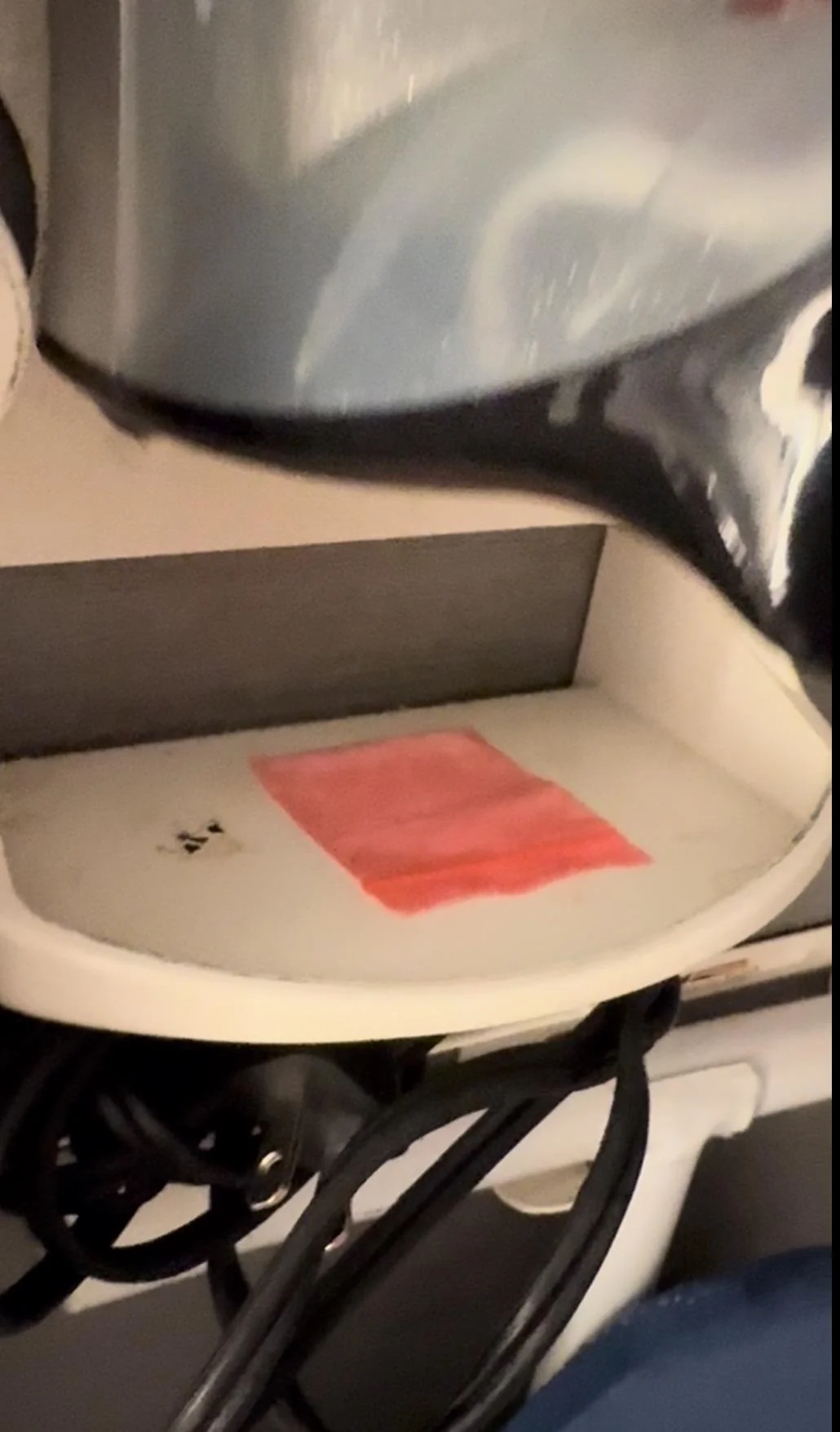
Hilton Guest Discovers Crystal Meth in Room
A guest at a Hilton property made a discovery that’s sure to raise more than a few eyebrows – and possibly the blood pressure of hotel management and guests alike. Tucked away under the iron, of all places, was crystal meth. Yes, you read that correctly. Not the remnants of the last guest’s room service or a forgotten sock, but methamphetamine.
Now, while the poster joked as to whether this unexpected find qualifies them for an upgrade to “Crystal” status, let’s not gloss over the gravity of the situation. This isn’t just a case of poor housekeeping or a forgotten item; it’s a very serious health hazard and a safety risk. The very idea that the iron in the room could have been used to heat crystal meth is alarming. While I’m no expert on the consumption methods of meth (other than that there’s often a heat source involved, and admittedly I don’t know if an in-room iron would be hot enough), the thought alone raises significant concerns about the contamination of the room. Meth residue can linger on surfaces and in the air, posing serious health risks. The process to make a former meth lab safe for habitation again is extensive and costly, often involving a partial or complete gutting of the building that once housed the meth lab.
Moreover, there’s the unnerving possibility of the previous occupant – or their acquaintances – attempting to reclaim their forgotten stash. The implications for the current guest’s safety are deeply troubling. Imagine the scenario: you’re enjoying what you thought would be a peaceful stay, and the previous guest breaks into your room in the middle of the night to retrieve their drugs. They notice you, and bad things happen.
This incident is reflective of a broader issue that I’ve touched on before: the decline of the Hilton brand, particularly in the U.S. Housekeeping and maintenance standards seem to be slipping, and not just in the form of minor oversights. Crystal meth left in a hotel room isn’t just an oversight; it’s a glaring red flag that signals a need for immediate and sweeping action.
Chris Nassetta, Hilton’s CEO, needs to take this incident as a wake-up call. It’s high time for a chain-wide review of housekeeping and security procedures, with a keen focus on ensuring something like this never happens again. While this is a new low for Hilton, this incident should not be seen as just an isolated event, but as a symptom of larger systemic issues within the brand’s operations in the U.S.
-
Charge Your Phone at the Airport? You Could Soon Have to Pay for That.
Back in the day, Wi-Fi at airports was largely a paid service, but now nearly every major airport offers some form of free Wi-Fi to all travelers. Now it seems we’re seeing the exact opposite phenomenon with power outlets in airports, with reports on Reddit suggesting that Memphis International Airport (MEM) is trialing monetization of power outlets with Japanese startup company Vidergy Networks. Yes, seriously.
Vidergy describes itself on LinkedIn as a “trailblazing advertising technology company that is disrupting the energy and adtech industry.” Their payment-based “energy exchange platform” aims to monetize previously-free public power outlets in high-traffic locations like airports, malls, cafes, hotels, and other venues. Translation: “We’re a startup focused on finding new ways to force captive audiences with few or no alternatives to pay for convenience.”
The implementation at MEM appears to involve scanning a QR code on or near the outlet to access a web portal, where travelers can watch a video advertisement to activate the outlet for just 15 minutes, or purchase a ChargePass for 60 minutes. The cost of the ChargePass at MEM is unclear, but after doing a little research, it appears Vidergy intends to charge roughly $2 USD for 60 minutes of charging based on my research. It’s also unclear what options you’ll have after your 15 minutes of “free” charging from watching the advertisement expires. Will you be able to simply watch another advertisement to renew your charging session for another 15 minutes? Or will you be asked to pay up at that point? I imagine if there is such a restriction, given that (unlike a public Wi-Fi network) the outlet wouldn’t know your device’s MAC address, I’m betting it would be easily defeated with a private/incognito browsing session.

Sample Vidergy payment portal (courtesy: Vidergy) It’s uncertain if this is every outlet in the terminal at MEM, or just select outlets. One has to wonder – does the cleaning crew have to enter a promo code to plug in their vacuum cleaners? This trend is troubling, indicating a race to the bottom of nickeling and diming travelers at every turn. What if your phone is completely dead, and you have no way of scanning the QR code and entering your payment details? Will you have to beg a stranger in the terminal to watch an advertisement on your behalf?
Vidergy is also a startup, and my research suggests they don’t even have 10 employees. Startups are known for taking a “go fast and break things” approach to engineering, and aren’t exactly renowned for adhering to engineering best practices. What happens when their systems go down, perhaps due to a bad change being pushed to production? Does that just mean nobody in the terminal will be able to charge at any price? Will we start seeing a trend of rogue passengers unplugging equipment at gates just to charge their phones?
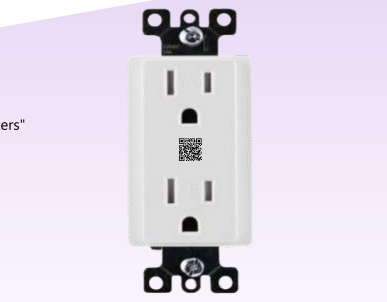
Vidergy’s hardware as shown on their datasheet. We have some questions about this… The QR code-based setup could also open up passengers to quishing attacks, skimming their credit card details virtually through fake Vidergy portals. Juice jacking is a big enough issue at airports (and is why you should always use your own AC adapter, not public USB plugs), and this could just add one more layer of security issues with public outlets.
The only silver lining I could maybe see here is that it may encourage airports with limited outlets to expand their charging options (MAF, I’m looking at you). However, the best course of action is never to assume there will be outlets available and always have your own alternative power source, such as a portable power bank. Even if you’re flying an airline with outlets at every seat, there is no guarantee the outlet won’t be INOP, or the prongs won’t be so loose as to allow your adapter to slide out (this is why I always fly with my UK plug adapter, even when flying domestically).
In the future, we might see “free charging” advertised as a perk of airport lounges, just as free Wi-Fi was a heavily-advertised perk back in the day. Let’s hope that’s not what our future holds.
-

Fact Check: No, Cinderella’s Castle Didn’t Burn Down
If you’ve been on TikTok lately, you might have seen a video claiming that Cinderella Castle at Walt Disney World’s Magic Kingdom burned down yesterday. The video shows images of the castle engulfed in flames, and suggests the Reedy Creek Fire Department took an hour to arrive on scene, at which point the castle was unsalvageable.
Before you panic and cancel your Disney vacation, let me assure you that this is fake news. Cinderella Castle is just fine, and there was no fire at the Magic Kingdom yesterday. The video is based on a satire article from Mouse Trap News, a website that posts fake news stories about Disney for entertainment purposes.
Seriously guys, do you really think that the Reedy Creek Fire Department (created by Disney to protect Disney property and its occupants, though Governor Ron DeSantis signed a law in 2022 seizing control of the district by the state) would allow an hour-long delay to an active structure fire at the iconic landmark? That castle is a huge part of WDW’s core identity… that wouldn’t be allowed to happen, ever. Let’s think critically here.
Mouse Trap News is known for its outrageous satire articles, such as “Disney Officially Launches Only Fans with Adult Content,” “Disney Building Roller Coaster That Jumps Track,” and “It’s a Small World Closing Permanently For Being Offensive.” The website clearly states:
Mouse Trap News is the world’s best satire and parody site. We write fake stories about Disney Parks stuff. From Disney Park announcements to Disney Hotel and resort news to made-up Disney partnerships, you can be assured that anything you read here is not true, real, or accurate, but it is fun. So technically our slogan The Moused Trusted Name in Disney News isn’t true, but we thought it was creative and funny, so we are running with it.
Mouse Trap News was created on a whim to have some fun and write stories about Disney we wish were true. Some Disney sites write deceptive stories for clicks. We write 100% made-up parody and satire stories for your enjoyment. We also hope that Disney sees how much people like some of our stories and decide to actually make one of our stories a reality!
While you read our articles, be sure to keep your hands, arms, feet, and legs inside the vehicle at all times, and remember these are strictly fictional for your enjoyment. Please share any articles you enjoy reading with your Disney friends and on social media to help us grow and continue to put out fun articles
Mouse Trap News About PageHowever, someone decided to take the satire article about Cinderella Castle burning down and turn it into a viral TikTok video, without any indication that it was a joke. The video has been shared over 150k times, and has caused a lot of confusion and outrage among Disney fans.
The images of the castle on fire are clearly generated by some kind of generative AI, likely OpenAI’s highly-regarded DALL-E 3. DALL-E 3 is a neural network that can create realistic images from text descriptions, such as “a dragon made of flowers” or “a snail wearing a sombrero”. It’s scary how good AI has gotten at creating fake images that look real. And yes, I and other bloggers have been guilty of using DALL-E to create artwork for posts when we just don’t have a great photo to use to keep things visually pleasing – though I would never go so far as to imply the product of an AI model is real imagery. It’s purely there as “filler” when I otherwise don’t have a great image to use.
As someone who works in IT, I am blown away at the quality and accuracy of some of the images coming out of these AI models. They can create anything you can imagine, and sometimes things you can’t. However, while this satire article is all good harmless fun that’s been blown way out of proportion, it underscores the importance of thinking critically for yourself, especially during an election year.
Regardless of who you plan on voting for, expect that the advent of generative AI will cause “deepfakes” to be a bigger problem than ever this election cycle, and remember to not necessarily take everything you read (or watch on TikTok) at face value. Always check the source, the date, and the facts before you share or believe something online. And don’t worry, Cinderella Castle is still standing, and will be there for you when you visit the most magical place on earth.
-

Can Your Family Cost You Your Global Entry Membership?
Global Entry is one of the best travel perks money can buy (and that assumes you don’t have a credit card that will reimburse you for it!). It allows you to breeze through immigration and customs when returning to the U.S. from abroad, and it also includes TSA PreCheck, which lets you skip the long security lines at the airport.
But what if you have a family member who is not so squeaky clean? Can their criminal record or immigration status affect your Global Entry membership?
The answer is yes, it can. According to the U.S. Customs and Border Protection (CBP) website, Global Entry eligibility is determined on a case-by-case basis and may be denied or revoked for various reasons, including:
- Providing false or incomplete information on the application.
- Having a criminal history or being the subject of an investigation by any federal, state, or local law enforcement agency.
- Having a record of customs, immigration, or agriculture violations or penalties.
- Being inadmissible to the U.S. under immigration regulations, including applicants with approved waivers of inadmissibility or parole documentation.
- Being unable to satisfy CBP of your low-risk status.
That last part is very subjective and open-ended, and that’s a feature, not a bug. If CBP or DHS finds anything that casts any shadow of a doubt that you’re extremely low-risk, they can refuse, non-renew, or even revoke your membership. This means that if you have a family member who has any of these issues, they may not be able to join Global Entry themselves, and they may also jeopardize your own membership if you are associated with them.
For example, if you live at the same address as a family member who has a criminal history or an immigration violation, CBP may flag your application or revoke your membership after a periodic review. Generally, outside of authoritarian regimes, the very notion of collectively punishing an entire family for the actions of their kin is unthinkable. However, trusted traveler programs are a privilege, not a right, and may be revoked at any time, for pretty much any reason – so the loss of GE privileges may very well be a punishment a family must suffer collectively.
There have been reports of people who have had their Global Entry memberships revoked or denied because of their family members’ actions, such as:
- A woman who had her Global Entry revoked because her husband was arrested for drug trafficking.
- A man who had his Global Entry denied because his brother was on a terrorist watch list.
- A couple who had their Global Entry revoked because their son was arrested for DUI.
Sometimes the revocation is triggered when the family member in question applies for Global Entry themselves. Reddit user XxTOHMExX posted such a cautionary tale on /r/GlobalEntry:
Another unlucky member of /r/GlobalEntry had their GE membership revoked after their wife was involved in some kind of unspecified customs violation. While we can’t help but think there’s more to the story here, what is clear is his wife’s actions while he wasn’t present were enough to get his membership pulled.
Of course, these are extreme cases, and CBP does not automatically disqualify anyone who has a family member with a criminal record or an immigration issue. But it does mean that you have to be careful and honest when applying for or renewing your Global Entry membership, and be prepared to explain any potential red flags that may come up during the background check or the interview. It’s worth remembering that GE is a program for travelers who carry almost zero risk, and membership is never guaranteed to anyone.
By joining Global Entry, you consent to a certain degree of ongoing monitoring by DHS even when you aren’t traveling. In fact, DHS performs queries on every single Global Entry member every 24 hours for changes in “risk.” In FY2022, about 12,000 Global Entry members received the boot, primarily by becoming the subject of an ongoing investigation by law enforcement.
If you do have a family member who is ineligible for Global Entry, you may still be able to enjoy the benefits of the program by traveling separately from them or by using alternative programs such as Mobile Passport Control or Automated Passport Control, which are free and do not require a membership or an interview. You can also use CLEAR Plus and CLEAR Reserve at selected checkpoints; contrary to popular belief, there is no background screening involved in CLEAR – it’s just a private service to get escorted to the front of the line. CLEAR Plus costs $189 a year (though some AmEx cards will reimburse this), while CLEAR Reserve is free of charge and available in selected airports outside the US, too. You could try your luck at getting a standalone TSA PreCheck membership, but we’d hazard a guess that previous denial or revocation of another trusted traveler program would pretty much be a permanent disqualifier here.
Global Entry is a great way to save time and hassle when traveling internationally, but it is not a right or a guarantee. It is a privilege that can be revoked at any time by CBP. So make sure you and your family members follow the rules and stay out of trouble, or you may lose your Global Entry membership for good.
-

TSA Fees for Long Layovers: Double Trouble for Your Wallet
In my recent quest for some (relatively) close-in American Airlines tickets to Denver (DEN), I stumbled upon a curious discovery that left me scratching my head. I always advise booking domestic itineraries as a pair of one-way flights, in order to retain the maximum possible flexibility. This is doubly true with AAdvantage award flights, owing to AA’s asinine policies preventing changes on most award tickets without canceling the entire PNR and starting over. By booking two one-ways, you can cancel your (separate) outbound PNR without touching your return, or vice versa. I practice what I preach, so I was doing just that in my search.
What caught my attention was the price breakdown. One of the supposedly cheaper options came with a not-so-welcome surprise: 11,000 AAdvantage miles plus a hefty $16.80 in taxes and fees. Similar search results sported taxes and fees amounting to $11.20 for a one-way ticket. That’s 3x and 2x the normal $5.60 TSA security fee, respectively, for domestic and outbound segments originating in the USA. So what gives?
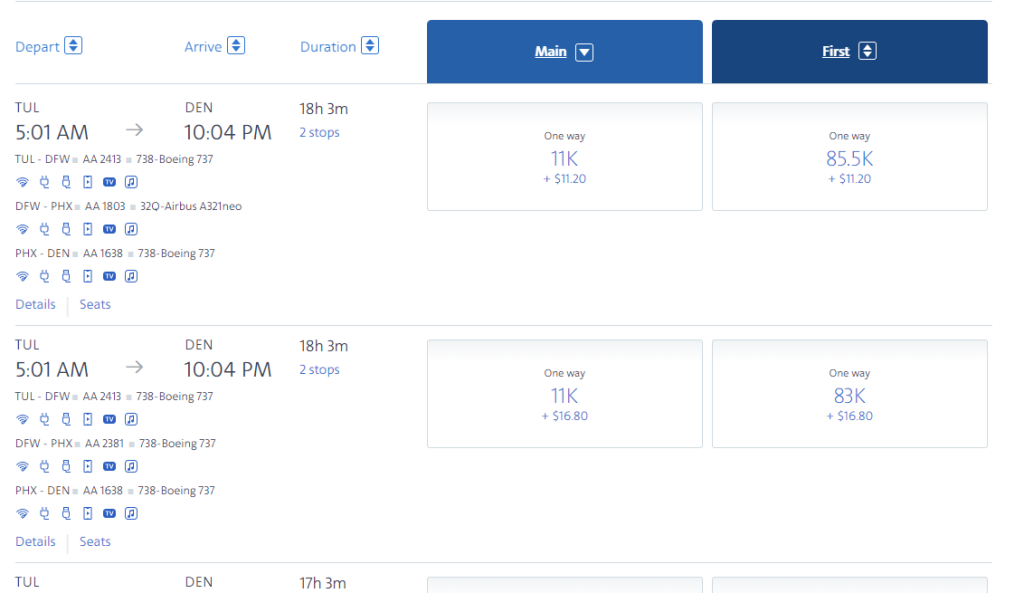
TSA Fees on One-Way Domestic Itineraries Curiosity piqued, so I delved into the intricacies of TSA fees and found my answers in the depths of 49 CFR § 1510.3. It turns out that the fee is charged per “one-way trip,” but the devil is in the details of exactly how a “one-way trip” is defined.
According to the regulation, a “one-way trip” is continuous air transportation without a stopover, where a stopover is defined as a break in travel exceeding four hours for continental flights and twelve hours for non-continental or international flights.
In plain English, if your layover surpasses these thresholds, your “one-way trip” is split into two separate trips for TSA security fee purposes. Brace yourself for an additional $5.60 fee per passenger for each layover that breaches these limits.
The rationale behind this distinction seems a bit questionable. The assumption is that anyone with a four-hour layover might venture outside the airport, necessitating a second round of TSA screening. While this logic may hold water in smaller hubs like Dallas-Love Field (DAL), leaving the airport on just a four hour layover feels like playing with fire in major hubs like Denver (DEN) or Atlanta (ATL), where even the TSA PreCheck & CLEAR lines routinely exceed a half hour wait.
And let’s not forget, this fee is assessed based on the itinerary as booked. So, if your layover extends beyond four hours due to airline mishaps (such as IRROPS), you catch a break and avoid these extra charges. Conversely, if your layover shortens due to a delayed inbound flight to your layover point, there’s no refund coming your way.
Now, nitpicking an extra $5.60 might seem like a trivial matter, but for a family of four making a roundtrip, that’s an extra $44.80 in fees. And here’s the kicker—you’re paying for a service you might not even use, especially if you’re not planning on leaving the secure area during your layover.
I can’t help but wonder if I’m the only one just now catching onto this peculiarity. Perhaps it’s the infrequent budget travelers, who don’t have a stash of airline miles and rely on cash fares, bearing the brunt of these fees. These travelers likely wouldn’t realize it, as with cash fares, these fees are bundled into the fare shown at booking.
And if you think these TSA fees are a headache, spare a thought for our neighbors to the north. In Canada, airports like Toronto Pearson International Airport (YYZ) tack on “airport improvement fees,” a range that spans from CAD$7 to CAD$40 (approximately USD$5 to USD$30 at the time of writing). Passengers with layovers under four hours get off relatively easy, facing charges on the lower end of the scale. However, for those unfortunate souls with layovers exceeding four hours, brace yourself for a significant hit to your wallet— as much as CAD$40 per passenger each way, the same amount charged to passengers originating at the airport. OUCH!
Ironically, as President Joe Biden and Transportation Secretary Pete Buttigieg wage war on travel industry junk fees, the TSA seems to be exempt from their scrutiny. It’s a bit rich for the administration to target private industry while turning a blind eye to an agency under its command that’s doing the exact same thing.
So, here’s a call to the administration: if you’re serious about eradicating junk fees, start by setting an example from the top down. The mirror may reveal more than you bargained for.
-
TSA Weighs In on Viral Video: Shrimp and Potatoes, or Security Breach?
The TSA often gets a bad rap in the court of public opinion, but I’ve gotta say, my experiences with them have been mostly smooth sailing. Sure, there’s the occasional grumpy agent or a line that seems to stretch to eternity, but overall, I find the screening process here in the U.S. more friendly and efficient than in many foreign countries.
Call me crazy, but I actually miss the TSA when I’m traveling abroad. Maybe it’s because I’m a Global Entry member, enjoying the perks of expedited screening, but there’s a certain (dare I say) charm to the TSA that other federal agencies just don’t have. They’ve got personality – just check out their social media feeds. Honestly, they’re one of the funnier accounts I follow online.
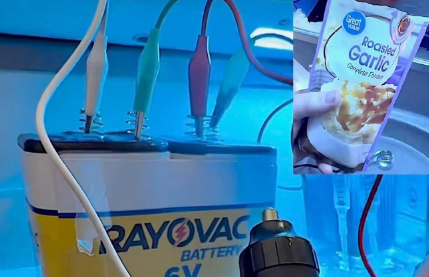
In a previous post, we dished out the deets on a Delta passenger who took culinary creativity to new heights by cooking shrimp and mashed potatoes in an airplane lavatory sink. Yep, you read that right. He rigged up a contraption involving a 6v battery pack, a beverage warmer, and some alligator clips – a setup that could easily be mistaken for something you wouldn’t want to encounter at 30,000 feet.
Now, the TSA itself has weighed in on the viral video, sharing a close-up of the man’s alligator clip-laden masterpiece. Believe it or not, he’s not packing any prohibited items, which explains how he got past those awful Analogic scanners. However, the way he’s utilizing his gear might cross into a gray area when it comes to FAA regulations.
According to the official word from the FAA, “Dry batteries are only permitted to be carried by passengers on aircraft when protected against damage and short circuit.” And here’s the kicker – a person who knowingly or recklessly violates hazardous materials regulations could be slapped with fines up to a whopping $96K for each violation and face up to five years behind bars. Youch.
So, the advice from the authorities is crystal clear – stick to the standard inflight snacks like pretzels and Biscoff cookies. Leave the impromptu shrimp scampi experiments to the professionals, and don’t try this at home (or, in this case, inflight).
-
“Blinking Red Lights Everywhere:” Why You Should Arrive Earlier for Your Next Flight
We’ve all been there – cutting it close, racing against the clock to make it to the airport just in the nick of time, especially for domestic flights. It’s a habit many of us share, but it might be time to reconsider, especially with the looming possibility of additional TSA screenings this holiday season. Why? Well, it’s a reality we haven’t had to face in years – terrorism.
FBI Director Christopher Wray recently dropped a bombshell during a Senate Judiciary Committee hearing, revealing that the terror threat facing the United States has skyrocketed since the October 7th attack on Israel. In response to Senator Lindsey Graham’s inquiry about the current “threat matrix,” Wray emphasized the unprecedented nature of the situation, stating, “I’ve never seen a time where all the threats or so many of the threats are all elevated, all at exactly the same time.” According to Wray, “blinking red lights are everywhere,” signaling a heightened state of alert.
While the TSA doesn’t disclose specifics about their screening procedures, frequent flyers I’ve spoken with are reporting a marked increase in random secondary screenings at airports. Even if you’re enrolled in TSA PreCheck or Global Entry, it isn’t a foolproof shield against these additional checks (though it could mitigate to some extent). I won’t name the airports where this seems to be most prevalent, as that would be bordering on sensitive info, but be prepared to allow an extra 15 minutes or so in case you find yourself selected for additional screening. You should probably be doing that anyways, thanks to the introduction of those horrific Analogic CT scanners.
TSA’s official stance, as stated on their website, reinforces the notion that all travelers are subject to screening, and no one is guaranteed expedited processing. Unpredictable security measures, both seen and unseen, are being implemented throughout airports to ensure safety.
TSA uses unpredictable security measures, both seen and unseen, throughout the airport. All travelers will be screened, and no individual is guaranteed expedited screening.
Transportation Security AdministrationDespite these heightened security measures, it’s crucial to remember that air travel remains statistically safe. Fear shouldn’t dictate your decisions, as succumbing to it only means the terrorists have achieved their goal. The U.S. intelligence apparatus has vastly improved since 9/11, and advancements in screening technology, reinforced cockpit doors, and enhanced training for airline crews contribute to a safer travel environment. And remember that security isn’t a spectator sport – if you see something, say something. And of course, leave a little extra time for enhanced screening before your next flight; if you don’t end up needing it, that’s time for another drink at the lounge.
-
What Happens to TSA PreCheck When I Apply For Global Entry?
So, you’ve decided to level up your travel game and make the leap from a standalone TSA PreCheck membership to Global Entry. Smart move. But reader Mike Jones wanted to know: what exactly happens to your beloved TSA PreCheck membership during the application process? Let’s break it down.
Global Entry: The Upgrade You Didn’t Know You Needed
Global Entry is the ultimate trusted traveler program, offering a slew of benefits that go beyond the perks of TSA PreCheck. Think of it as TSA PreCheck on steroids. You still enjoy the hassle-free airport security experience, keeping your shoes on and liquids in your bag. But the perks extend to Customs & Border Protection at airports and land borders, as well as Canadian airport security (CATSA). That way, you won’t have to wait in a line like this one after a long-haul flight.
But here’s the burning question: What happens to your trusty TSA PreCheck membership when you embark on the Global Entry application journey, which for most people takes 4-6 months to complete? (CBP allows up to two years because it does take longer for some people)
The Simple Answer: Nothing Changes for TSA PreCheck
Your TSA PreCheck membership remains untouched and fully functional until your membership’s original expiration date. Both programs provide the same streamlined benefits at TSA screening checkpoints, making your journey through security a breeze. However, it’s worth noting that TSA PreCheck and Global Entry are completely separate programs, offered by different, independent agencies (one by TSA and the other by CBP, respectively). Upon approval, you will be assigned a PASS ID number, which doubles as a new Known Traveler Number (KTN).
It’s on you to keep both memberships up-to-date, but let’s be real—once you’ve tasted the efficiency of Global Entry, maintaining both might feel a tad redundant. Think of it kind of like continuing to use the Priority Pass from your AmEx Platinum while waiting for Chase to process your Sapphire Reserve application. Once the Chase-issued Priority Pass arrives, the AmEx one still functions, as it’s issued by a completely different entity. You can pay for both as long as you want, but aside from some overlap to ensure a smooth transition, you probably wouldn’t do that long-term.
Known Traveler Numbers (KTN): The Key to Smooth Travels
Now, let’s talk about Known Traveler Numbers, the secret sauce to your seamless travel experience. Much like having multiple credit cards, you can possess more than one active KTN. And just as you strategically choose which credit card to use, the same applies to your KTN.
According to the TSA, feel free to use any active KTN you’ve been assigned. However, once you receive your Global Entry approval, consider switching to your Global Entry PASS ID as your KTN when making flight reservations. Why? Because it not only grants you TSA PreCheck privileges at US airports, but it will expedite your re-entry into the US. Also consider the expiration date of each KTN; if you’re allowing your TSA PreCheck KTN to expire, consider if that KTN will still be active by the time you fly.
I reached out to the TSA for a bit of clarity, and received the following reply:
You’re correct, Adam! You may use any active KTN that you have been assigned.
Reply from Transportation Security Administration
However, if you’re traveling to a foreign country, please consider using your Global Entry PASS ID as your KTN when you make your flight reservation. With Global Entry, you’ll receive expedited customs processing when entering the U.S., plus you’ll receive TSA PreCheck® when flying from U.S. airports.
Please let us know if you have any other questions. – FaithKTNs from Various Agencies
TSA is far from the only avenue to obtain Known Traveler Numbers. Here are a few ways to obtain them from various agencies:
- TSA PreCheck: Apply directly through TSA, and you’ll receive a TSA-issued KTN, a 9-character alphanumeric string starting with “TT.”
- Global Entry: Your Global Entry card’s PassID number doubles as a KTN, a 9-digit number that begins with “98,” “99,” or “1.”
- TWIC Card Holders: If you hold a valid TWIC card, the CIN number on it serves as a valid KTN. No need to do anything but add it to your reservations.
- Active-duty Military: For those serving our country, your 10-digit DoD ID number doubles as a KTN without the need to apply to anything else.
You can change the KTN on your frequent flyer profiles or existing reservations at any time. Keep in mind – generally when adding a KTN to your frequent flyer profiles, it will be applied to any new reservations, but you’ll need to work with the airline to switch KTNs on any existing reservations. If you like to live dangerously, this can even be done at the airport on day of travel, but I’d probably just message the airline on your platform of choice. Oh, and don’t add any Lord or Lady titles, or TSA won’t be amused.
There you have it—your guide to smoothly transitioning from TSA PreCheck to Global Entry. Now, go forth and skip those lines!