Category: Airlines

  • T-Mobile Puts a PIN in It: Inflight Wi-Fi Loophole Reportedly Closed

    T-Mobile Puts a PIN in It: Inflight Wi-Fi Loophole Reportedly Closed

    The days of freeloading on T-Mobile’s inflight Wi-Fi are coming to an end. It was a good run while it lasted, wasn’t it? For years, T-Mobile’s offer of complimentary inflight Wi-Fi to those on qualifying 5G plans was a standout feature, but it also opened the door to a glaring loophole. The system’s lack of verification meant that anyone armed with a T-Mobile customer’s number could access the Wi-Fi without paying a cent.

    But a screenshot shared on /r/AmericanAirlines shows that the free ride is no more. Now, a one-time PIN sent via SMS is required to connect, which effectively shuts down the exploit. It’s a simple fix, one that’s surprising in its lateness given the potential revenue lost by airlines and Wi-Fi providers like Viasat due to this oversight.

    For legitimate T-Mobile subscribers, this means a bit of prep is in order—make sure Wi-Fi calling is enabled before your flight to receive that crucial PIN. While iMessage works with just a simple Internet connection, SMS does require Wi-Fi calling to be enabled.

    Let’s just hope we soon see the day that T-Mobile’s free Wi-Fi is extended to long haul international flights using Panasonic’s offering – or, better yet, airlines ditching Panasonic altogether.

  • AA Award Map Shows Offensive Names for European Capitals

    AA Award Map Shows Offensive Names for European Capitals

    UPDATE: It has been pointed out by some Reddit users (and confirmed by me) that Los Angeles is now showing the R-word.

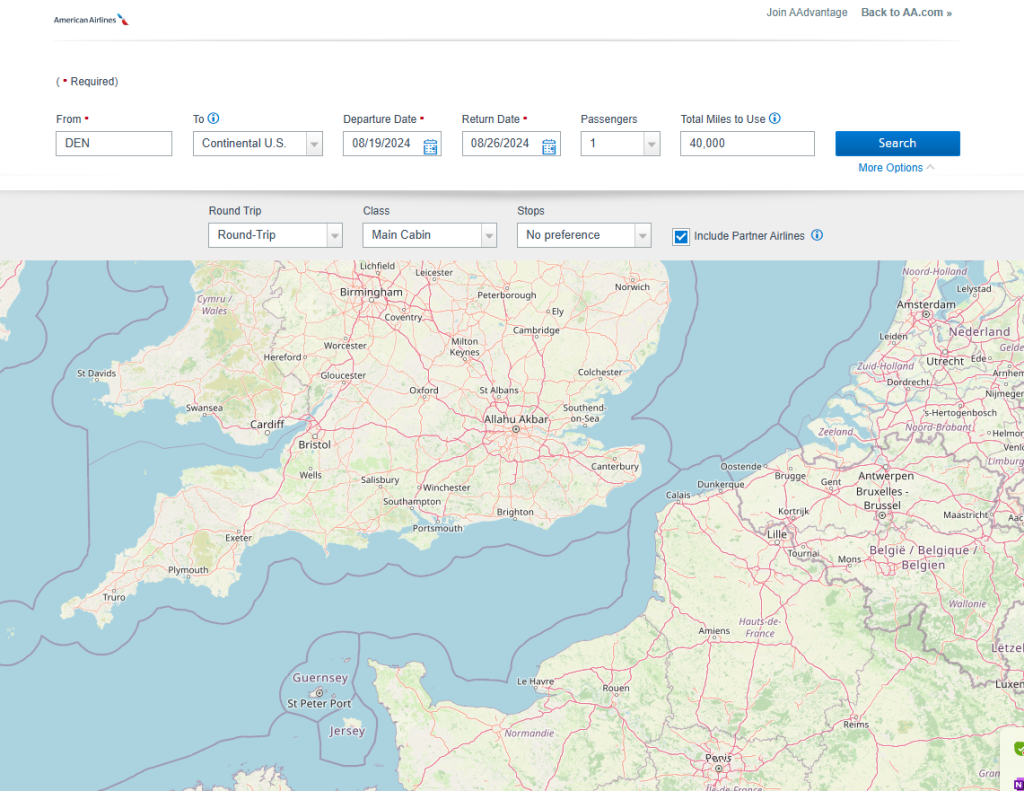
    American Airlines’ Award Map tool has become an essential resource for travelers seeking to book award flights. However, users are noticing something unusual tonight: some European capitals are appearing with incorrect and offensive names.

    If you zoom in and out at very specific levels, you’ll see London listed as “Allahu Akbar,” and Paris labeled with a term referring to male anatomy. It’s worth noting that while “Allahu Akbar” isn’t inherently an offensive term, one can safely assume whoever uploaded this edit likely didn’t do so with good intentions.

    Offensive names shown on AA Award Map in place of European capitals (C) 2024 Points & PDBs

    Now before we start staging boycotts of AA, let’s examine the facts. As an IT professional, I can tell you this isn’t a direct failure of American Airlines. The tool relies on data from OpenStreetMap, a community-driven geographic database similar to Wikipedia (but for mapping!), where edits can be made by volunteers – in fact, Wikipedia features OpenStreetMap data within many articles, and you can log in to edit OpenStreetMap with your Wikipedia credentials! I went straight to the source to confirm that OSM was showing the same data, and sure enough, there it was, clear as day.

    Right from the source… (C) 2024 Points & PDBs

    OpenStreetMap’s open-source nature allows for this kind of mischief, and while AA has been caught in the crossfire, I wouldn’t point fingers directly at the airline in this instance. That said, one has to question the wisdom in using mapping data sourced from the general public (and editable at any time!) on a production, public-facing tool. That, to me, just seems like asking for trouble. Even when I was a student at Oklahoma State, publicly-editable sources like Wikipedia were never acceptable to cite in one’s own work, due to the possibility of inaccuracies. Pony up & partner with a more professional source such as ArcGIS, where the data can’t just be edited by anyone with an Internet connection.

    All that said, I’d hate to be on AA’s PR team tonight…

  • Can You Go Into MCO’s New Terminal if Your Airline Isn’t There?

    Can You Go Into MCO’s New Terminal if Your Airline Isn’t There?

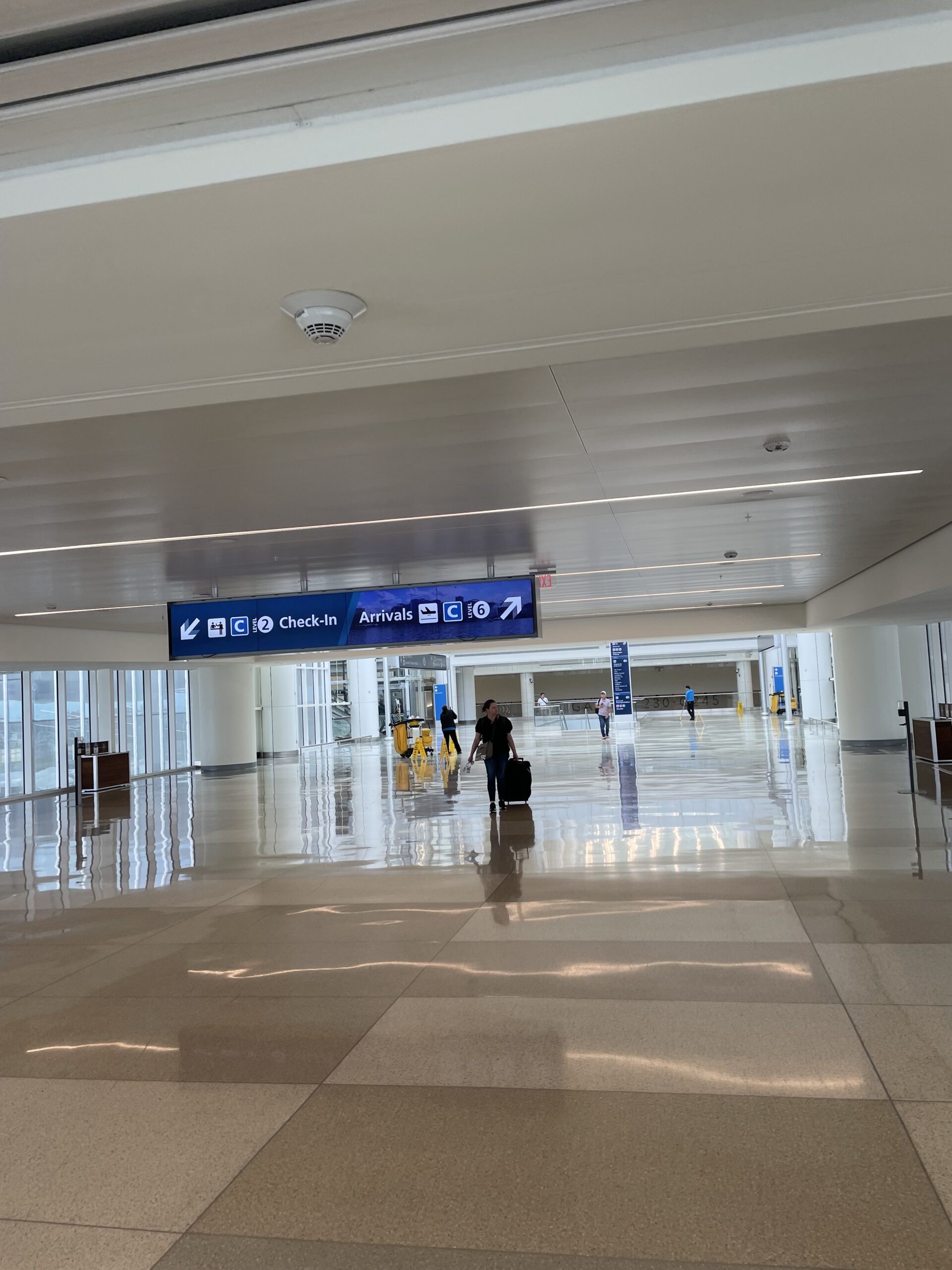
    In Fall of 2022, Orlando International Airport (MCO) opened Terminal C, a stunning, spacious new terminal that’s a stark contrast to the confusing, crowded, and cramped Terminals A & B. Truly, it’s hard to walk through the new terminal and believe that you’re at MCO – yes, that MCO. Making it even less believable is the terminal’s location on the airport grounds – which based on the hike from Terminals A & B, appears to be somewhere near Miami.

    That said, if your airline is in a different terminal, can you walk through the new terminal at all? And are you able to visit the Plaza Premium Lounge, which is likely the nicest on the airport grounds? The answer is yes, you can! You just need to know the right words to say.

    The trick is to tell the TSA agent checking IDs that you are “going to the lounge.” This seems to be TSA’s way of looking out for passengers, and making sure you’re fully aware that you are at the wrong terminal, and that getting to your flight will involve going through yet another TSA screening (as there is no airside path to the other terminals). I’d imagine the majority of domestic passengers (with the exception of JetBlue) showing up at the C Terminal are in fact lost, and need to be redirected to the correct terminal. But using these magic words in conjunction with a Southwest boarding pass, after verbally confirming that I was fully aware of what I was doing, TSA allowed me to proceed, with a friendly reminder to make sure I left enough time before my flight to change terminals. The staff in the Plaza Premium Lounge didn’t seem to bat an eye at my Southwest boarding pass, and happily granted me entry.

    There is another way to enter the terminal – the terminal offers gate passes to almost anyone via the Experience MCO visitor pass program. However, this is subject to restrictions and capacity restrictions, won’t allow you to utilize your TSA PreCheck or CLEAR memberships, and requires you to apply at least 24 hours in advance. Additionally, you presumably would not be able to use a gate pass to enter the Plaza Premium Lounge, even if you possess a qualifying credit card.

    Speaking of leaving enough time, you should absolutely do that. While the APM ride to Terminals A & B only takes around 4 minutes, said APM actually departs from the Brightline station, which at present requires walking through the longest exit lane I’ve ever seen at a US airport, taking an elevator, walking through the rental car center, and then taking a (temporary) marked path through the parking garage. I’d conservatively estimate 25-30 minutes being sufficient if you have PreCheck (and potentially CLEAR).

    It’s important to be aware that each airport individually sets their own policy around if this is permitted. Just down I-4 at “rival” airport TPA, this is forbidden, and the electronic gates won’t even allow you to board the shuttle to the “wrong” terminal. On the other side of the spectrum is DFW, where not only can ticketed passengers enter through any TSA checkpoint, but AA passengers can check luggage at any of the five terminals (yes, even the E terminal). DFW also has all terminals connected airside by the speedy and reliable Skylink APM, as well as pedestrian walkways connecting terminals A, B, C, and D (but not E).

  • Southwest Airlines Pilots Union Bracing for Potential Acquisition

    Southwest Airlines Pilots Union Bracing for Potential Acquisition

    The Southwest Airlines Pilots Association (SWAPA) is gearing up for what could be a significant move by the carrier. The union recently announced that it has retained several law firms in anticipation of Southwest Airlines potentially acquiring another airline. This move signals that SWAPA is taking proactive steps to protect its members’ interests in the event of a merger or acquisition. Does SWAPA know something we don’t?

    One of the law firms retained by SWAPA specializes in labor issues and would be tasked with ensuring that the pilots’ seniority list is integrated fairly. This is a crucial issue for pilots, as seniority determines many aspects of their career progression and benefits. The other firms would handle the business and equity side of the transaction, ensuring that pilots have a stake in the new entity’s capital.

    Last month, SWAPA made the decision to retain several law firms if Southwest attempts to acquire another carrier. One of those firms would be an experienced labor firm tasked with protecting SWAPA Pilots in a seniority list integration. The second — and possibly third — firm would handle the business and equity side of the transaction to ensure our Pilots were invested in the capital of the new entity. In 2010, then-SWAPA President Carl Kuwitsky and then-CEO Gary Kelly failed to follow Delta/Northwest’s lead in allowing the Pilots to be equity partners in the transaction when Southwest acquired AirTran. SWAPA will not make that mistake again.

    Message sent to Southwest pilots from SWAPA (h/t View from the Wing)

    This proactive approach by SWAPA is in response to past experiences. In 2010, when Southwest Airlines acquired AirTran, SWAPA was not involved in the decision-making process, and pilots were not given the opportunity to be equity partners in the transaction. SWAPA is determined not to repeat that mistake and is taking steps to ensure that pilots are involved in any future acquisitions or mergers.

    While SWAPA’s actions suggest that a merger or acquisition may be on the horizon for Southwest Airlines, the airline itself has not confirmed any such plans. In a message to pilots, SWAPA stated that neither the union nor its representatives have any knowledge of an acquisition or merger in Southwest Airlines’ future. However, the union emphasized that “hope is not a strategy,” indicating its belief that a merger or acquisition is a real possibility.

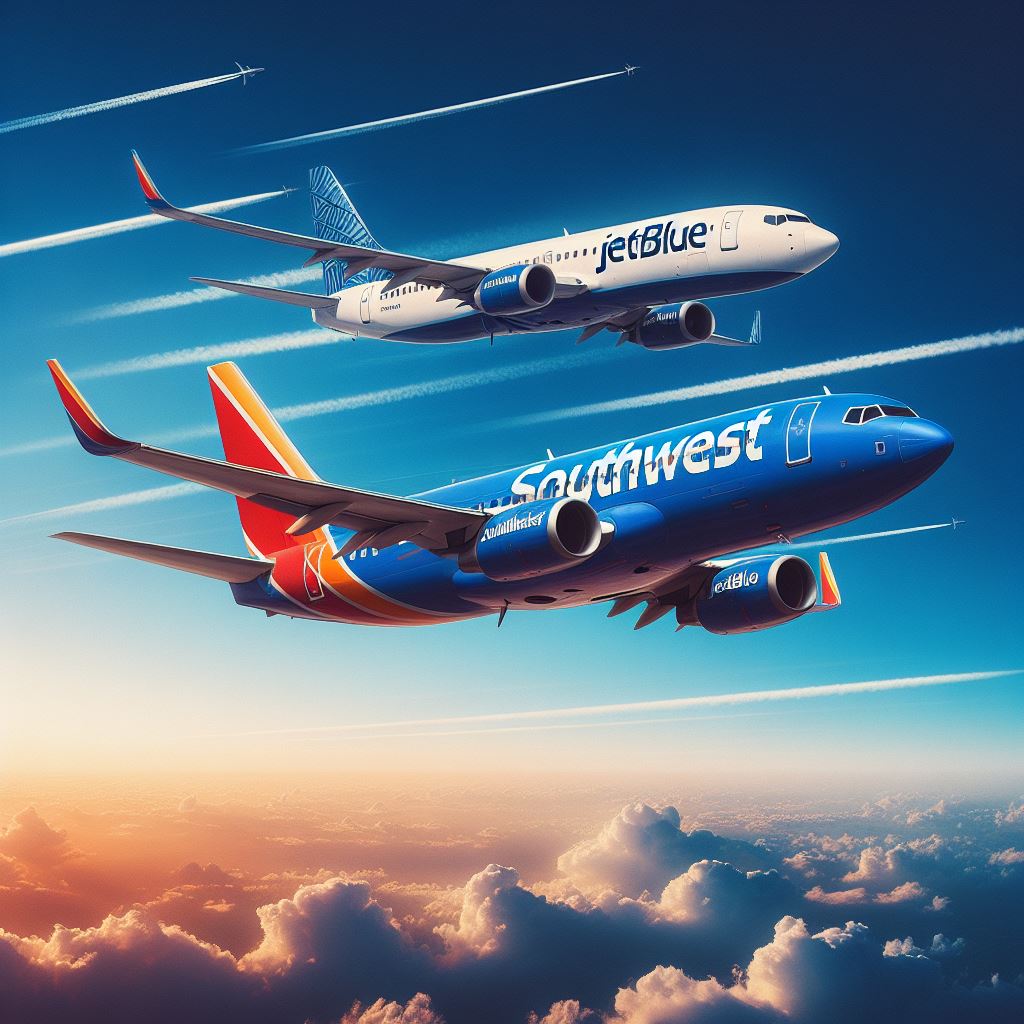
    One potential target for Southwest Airlines could be JetBlue. Once renowned for its reliability and quality of service, JetBlue has seen its reputation take a nosedive as it struggles financially. Despite limited non-stop overlap between the two carriers, a merger could have significant implications for the industry. Southwest Airlines is already the nation’s largest domestic carrier, and a merger with JetBlue could further solidify its position in key markets.

    Another perhaps less-likely target could be Sun Country Airlines. While much smaller, their all-Boeing 737 fleet would be a perfect fit for Southwest, as it would enable fleet commonality. I suppose time will reveal exactly what’s going on behind the scenes at Southwest.

    LCCs have had a rough time in the last year or so. Domestic travel has taken a nosedive, disproportionately affecting LCCs, while the relative stability of international travel has kept the engines running at legacy carriers like Delta and United. Southwest is struggling too, but they do have a very deep war chest and could still very easily purchase a competitor.

    However, any potential merger or acquisition involving Southwest Airlines would likely face scrutiny from the Department of Justice, especially under a Biden administration. The outcome of the presidential election could also play a role in the feasibility of such a deal; if Donald Trump returns to the White House, it’s likely we’d see the DOJ quickly become much more hands-off on antitrust matters such as this.

    As much as I wouldn’t want to actually fly on JetBlue right now, competition benefits us all by placing downward pressure on airfares across the board. I’d hate to see JetBlue be acquired, removing another competitor from the market; however it seems the alternative would be allowing the airline to collapse altogether.

    While the specifics of any potential merger or acquisition remain uncertain, SWAPA’s move here indicates that significant changes could be on the horizon for Southwest Airlines and the industry as a whole.

  • AA: Book With a Third-Party? No Points for You!

    AA: Book With a Third-Party? No Points for You!

    American Airlines has announced some changes to its AAdvantage program that will affect how you earn miles and Loyalty Points on flights, depending on where you book.

    Starting with tickets issued on May 1, 2024, you will only earn miles and Loyalty Points on flights when you:

    • Book directly with American and eligible partner airlines.
    • Book travel anywhere as an AAdvantage Business member or contracted corporate traveler.
    • Book through preferred travel agencies. American will share a list of eligible preferred agencies on aa.com in late April.

    This means that if you book through a third-party site like Expedia, Orbitz, or Priceline, you will not earn any miles or Loyalty Points on your flights. American says this is to “provide the best possible experience” and “reward our AAdvantage members”7. I say this is to discourage customers from shopping around for the best deals and to push them to book directly with American, where they can charge higher fares and fees.

    Basic Economy fare tickets will only earn when booked directly with American and eligible partner airlines – the key distinction here from “normal” economy being that it seems even bookings made with an accredited corporate travel agency won’t earn miles or LPs.

    Of course, for most of us, booking direct is the way to go anyway, unless you are forced to use a corporate travel agency. It’s so much easier in the event of irregular operations (IRROPS) to just work directly with the airline to fix things, rather than trying to work through a third-party. Which would you rather do… wait on hold for 6 hours to speak to a third party who may or may not be familiar with airline policies? Or stop by a ticketing/customer service desk (or even the Admirals Club)?

    Until now, however, there hasn’t been any real penalty to booking flights with an OTA (so long as nothing goes wrong). Hotels have been a different story for a long time. None of the “majors” will typically grant any points or elite credit/recognition on a third-party booking, unless that third party is an accredited corporate travel agency. Back in 2018, Hyatt Place even experimented with restricting its complimentary breakfast only to World of Hyatt members who booked direct (though that’s hardly a loss given the breakfast quality at your typical neighborhood Hyatt Place). Hyatt suspended this policy during the pandemic, and there’s currently no reason to think it’ll be reinstated anytime soon; the mediocre breakfast product just isn’t worth the manpower to protect, I guess!

    The message from AA is clear: book direct, or else. The major airlines tend to move in lockstep with each other, so time will tell if this is just an AA thing, or an industry-wide shift. What do you think of these changes? Will they affect how you book your flights with American?

  • Fowl Play: AA Passenger Brings Dead Bird as Carry-On; Contents Leak in Cabin

    Fowl Play: AA Passenger Brings Dead Bird as Carry-On; Contents Leak in Cabin

    So, you think you’ve seen it all when it comes to bizarre incidents during flights? Well, buckle up, because this one might shock even the most seasoned flyer (and we know a thing or two, because we’ve seen a thing or two). A recent Reddit post on the r/americanairlines community shared an eyebrow-raising tale that’ll have you questioning your fellow passengers’ sanity – or at least their understanding of acceptable carry-on items.

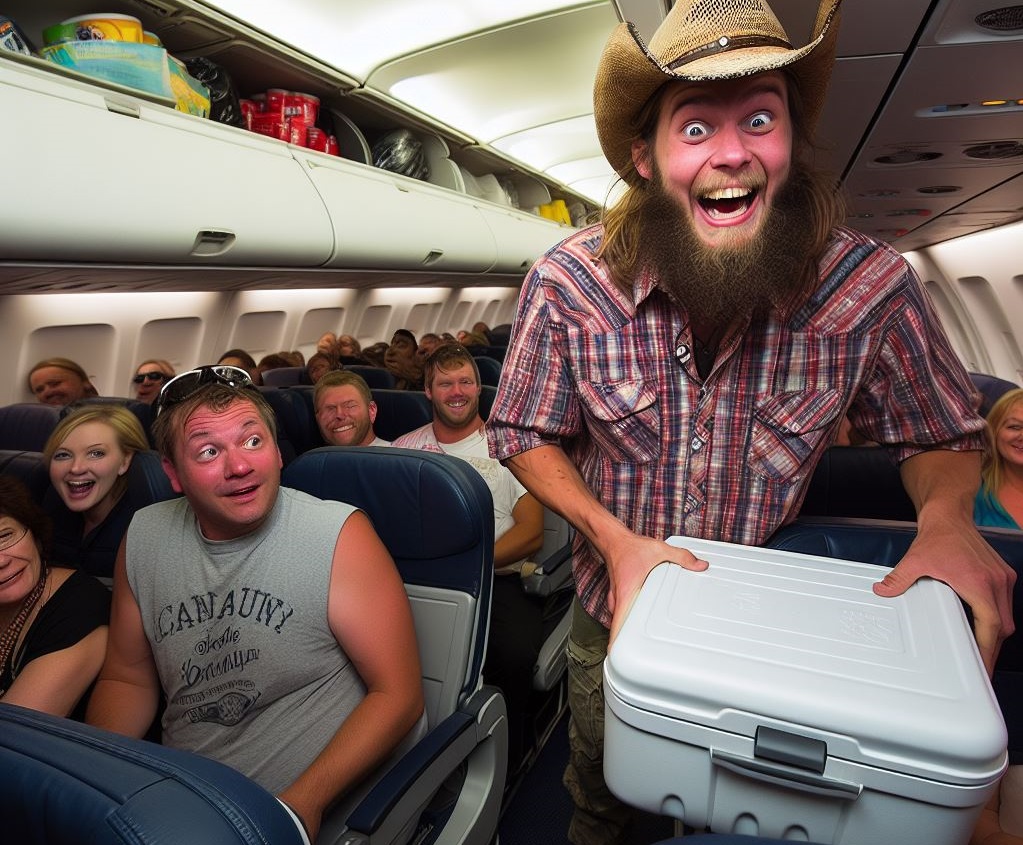
    User BackNBlack58 took to the internet with a public service announcement that’s as absurd as it is cautionary: “PSA dont bring dead animals in a cooler in your carry-on.” Yes, you read that right. Someone apparently did just that on a recent American Airlines flight. Eww!

    According to the post, a flight had to make an unexpected U-turn on the tarmac due to the presence of a cooler housing a deceased bird. Not only did the bird-in-a-box cause a mid-air spectacle, but it also managed to turn the overhead compartment into a scene from a particularly strange horror movie. The cooler’s contents spilled out, prompting the pilot to declare it a biohazard (subsequently causing the pilot to be awarded the title of “Captain Obvious”).

    Of course, the internet being the internet, one witty commenter couldn’t resist adding a dash of humor to the situation. User bbphrog63 chimed in with a quip, saying, “Guess they misunderstood carrion luggage.” Well played, bbphrog63, well played.

    Now, for those of you questioning the legality of transporting deceased creatures through the friendly skies, the truth might surprise you. Believe it or not, according to TSA regualations, it’s generally permissible to bring dead animals on a plane. However, the key here is a little thing called common courtesy – and airline rules, too.

    Sure, the regulations might give you the green light, but that doesn’t mean you should start packing your carry-on cooler with that roadkill you found on the highway or anything that might unleash itself mid-flight. The intent of the TSA allowing this is, for example, the transportation of cremated pet remains, or frozen animals (we’d suggest making sure it’s cold enough to remain frozen throughout your entire journey, and taking a nonstop flight). Let’s keep it real, folks – a little consideration for your fellow passengers goes a long way. And while the TSA may not stop you from bringing a deceased animal on your flight, your airline still has the final say here, so you should always discuss your situation with them prior to showing up at the airport with a cooler.

    So, the next time you’re contemplating bringing your hunting trophy on board, remember the tale of the ill-fated bird cooler, and maybe pick a container that seals a little bit tighter than a MAX 9 fuselage (or just consider driving to your destination if possible). Because in the grand scheme of air travel, we could all use a bit less drama and a lot more common sense. Until then, happy flying, and may your overhead compartments remain critter-free.

  • Alaska 1282: A Wake-Up Call on the 737 MAX 9

    Alaska 1282: A Wake-Up Call on the 737 MAX 9

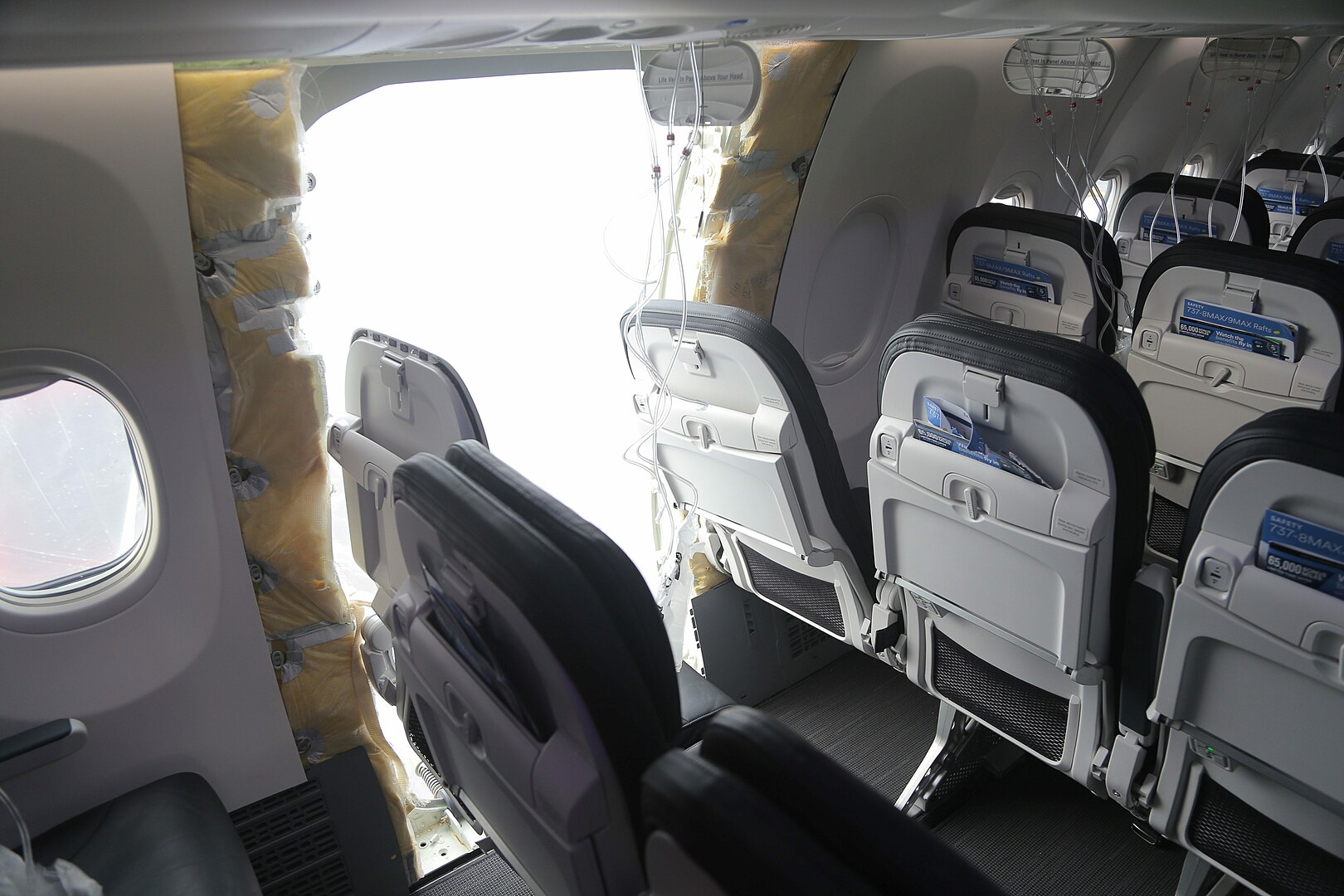
    On January 6, 2024, Alaska Airlines flight 1282, a Boeing 737 MAX 9, was en route from Portland (PDX) to Ontario, CA (ONT) when it experienced a cabin depressurization event involving a piece of the airplane falling off mid-flight. The pilots declared an emergency and diverted back to Portland, where they landed safely. Miraculously, no injuries were reported among the 153 passengers and crew on board.

    The cause of the incident was linked to a faulty door plug on the aircraft’s left side. The door plugs are used to seal openings that might otherwise be used for an aft emergency exit in denser seating configurations, where an additional set of exits would be required. No US carriers currently operate the MAX 9 in a dense enough configuration to need that emergency exit, so these so-called “plugs” semi-permanently seal that opening, leaving open the possibility of reconfiguring the aircraft in the future (perhaps if sold to a low-cost carrier in another country).

    Most cabin doors on modern commercial airliners are a “plug” or wedge shape – a convex shape with the interior side wider than the exterior side. This makes it impossible for the door to fit through the opening, distributes the stress of cabin pressurization more evenly, and makes the door impossible to open inflight. However, diagrams that have been released and findings from rival airlines suggest door plugs on the MAX 9 are not designed this way, but instead place the stress on a series of bolts. Preliminary reporting is suggesting perhaps failure of one or more bolts led to the AS1282 incident. This raises the question: are these “door plugs” actually “plugs” in the true sense of the word? Could Boeing potentially remedy this issue by implementing something more closely resembling a conventional plug-type exit door?

    The incident also comes amid a series of inspections by multiple airlines that have found “loose bolts” on many 737 MAX 9s. According to the FAA, the issue affects about 300 aircraft worldwide, and requires a “detailed visual inspection” of the door plugs and bolts. The FAA also issued an airworthiness directive on January 8, 2024, mandating the inspections within 10 days.

    After Alaska initially grounded their 737 MAX 9s, they promised to quickly return the planes to service after inspecting each one individually. However, the FAA quickly poured cold water on Alaska’s plans, grounding the MAX 9 nationwide. In fact, by the time the FAA issued their order, Alaska had already returned several MAX 9s to passenger service; those had to be subsequently pulled again. I have to wonder if this was purely a performative measure to placate the flying public. At this stage, did Alaska even know what they were looking for? Frankly, I’m still not sure they know what to look for, though issues with bolts may be a good start.

    The AS1282 incident is another blow to Boeing, which has been struggling to restore confidence in its 737 MAX family after two fatal crashes in 2018 and 2019 that killed 346 people. The MAX was grounded for 20 months before being allowed to fly again in late 2020, after Boeing made several changes to the software and hardware of the aircraft.

    Boeing employees are also calling out CEO Dave Calhoun amid the company’s recent HQ move from Chicago to DC. Many employees feel that HQ should be in Renton (or, at least, the greater Seattle area), where Boeing’s main factory is located, rather than across the country from the bread and butter of its core business. While there are many questions as to the difference in quality between Renton-produced and South Carolina-made Boeing aircraft, N704AL, the airframe involved in the AS1282 incident, was in fact produced in Renton, being delivered to Alaska just this past October.

    Bottom line on the 737 MAX series: It’s going to be incredibly difficult for Boeing to regain public trust now. Previous issues with the MAX series, including the Lion Air incident, were attributed to the planes being flown in developing countries with more lax safety regulations and less-experienced pilots. Now this has happened on US soil, on a US carrier, that excuse no longer flies.


  • Points and Miles Heartbreak: Flying Blue Won’t Honor Ultra-Cheap Canada-Europe Mistake Fares

    Points and Miles Heartbreak: Flying Blue Won’t Honor Ultra-Cheap Canada-Europe Mistake Fares

    Last week, the points and miles community buzzed with excitement as a glitch in Air France/KLM’s Flying Blue program seemingly paved the way for unbelievably cheap fares from Canada to France. The deal involved booking flights from Toronto (YYZ) or Montreal (YUL) to an off-the-beaten-path train station in Lille, France. The original offer of 13,500 miles each way in business class was already a steal, but then came the jaw-dropping drop to a mere 1,500 miles each way. Naturally, skepticism lingered, but that didn’t stop eager travelers from seizing the opportunity.

    Let’s face it; most of those who jumped on the deal probably had no intention of embarking on a scenic train journey to Lille. The idea was to get to Paris-Charles de Gaulle Airport (CDG), and “throw away” the train segment. Unlike with air-based “hidden city” ticketing, train tickets in Europe tend to be inspected at random (as opposed to each passenger scanning a boarding pass), so there’s a bit of plausible deniability for not showing up for your onward train journey.

    However, as the saying goes, “If it seems too good to be true, it probably is.” And, alas, this proverbial wisdom rings true once again. Flying Blue has decided not to honor these mistake fares, delivering a collective sigh of disappointment across the points & miles community.

    A post from Ben Lipsey, a director with Flying Blue, emerged on FlyerTalk, laying out the grim reality for those who thought they had hit the points and miles jackpot:

    Hi all,

    Unfortunately, this deal was too good to be true. Due to a technical glitch affecting some city pairs (primarily French train stations), some of you were able to book fares for as low as 1,500 miles in J. This was an error fare; the true price should have been 37.5k miles, which matches what is published for this month’s promo rewards and can be found on FB.com.

    All the 1,500 mile bookings have already been canceled, and the 13.5k mile bookings will also soon be canceled. Your miles and taxes will be refunded, and we will be sending out an email to those affected this week.

    However, we are making an exception for FB Gold, Platinum, and Ultimate members who booked the 13.5k mile fares – in recognition of their loyalty, we will honor the mistake fares for these members.

    Thanks for your understanding, and of course apologies for any inconvenience caused.

    Ben Lipsey, Director, Flying Blue (as posted on FlyerTalk)

    In a somewhat silver lining, Flying Blue extends a courtesy nod to its elite members—Gold, Platinum, and Ultimate—honoring the 13.5k mile fares as a token of appreciation for their loyalty. For the rest, it’s back to the drawing board, or in this case, the departure board, as dreams of a budget-friendly transatlantic jaunt are grounded. It does seem odd to me that they are honoring only certain mistake fares, and only for certain groups of passengers.

    And so, the lesson lingers once more: in the world of points and miles, as in life, be wary when faced with a deal that seems too good to be true. And definitely try to avoid nonrefundable hotel, train, and activity reservations that rely on a mistake fare to get you there.

  • Stowaway Solutions: Should Southwest Take Notes From SWISS?

    Stowaway Solutions: Should Southwest Take Notes From SWISS?

    SWISS International Airlines is stepping into the future with plans to automate passenger counting using artificial intelligence (AI). The airline’s move to replace manual headcounts with AI-driven cameras aims to enhance efficiency during boarding. Now, the question arises: Should a certain Dallas-based low-cost carrier be taking notes from SWISS?

    Southwest has had well more than its fair share of stowaway incidents. In one case last September, a mystery passenger infiltrated a flight to New Orleans (MSY), only being discovered due to a fully occupied flight leaving more passengers than available seats. In September, I wrote about the potential stowaway I encountered at TUL, making me question if this is happening way more often than is being reported.

    TSA’s role primarily involves screening for prohibited items and ensuring individuals on the no-fly list don’t enter the sterile area. They don’t care where you go once you’re past the checkpoint (as long as you stay out of restricted areas). The responsibility of guarding the jet bridge door falls squarely on the airlines. Southwest seems to be falling short in this regard. There are several ways someone could (legally & legitimately) enter the sterile area to try this. You could buy a fully refundable ticket and cancel once beyond the TSA checkpoint (or just no-show if you don’t care about losing your money). You could arrive on a domestic flight. Or, at a growing number of US airports, you can obtain a gate pass simply by asking, for any reason (or none at all).

    Enter SWISS, pioneering the use of AI to automate passenger counting during boarding. The system, developed by Berlin-based startup Vion AI, utilizes cameras to accurately record the number of people boarding the plane. SWISS anticipates that this technological leap will streamline the boarding process, making it faster and more efficient. The airline asserts that all data will be handled in compliance with stringent European and Swiss data protection regulations (GDPR, anyone?).

    While SWISS is investing in cutting-edge technology, Southwest might want to consider whether it’s time to implement similar measures as part of a comprehensive set of checks and balances. Alternatively, Southwest could just, you know, train their employees to do their jobs, ensuring gate agents effectively monitor the boarding process.

    As SWISS takes a major step into the digital future, Southwest may need to reassess its approach to passenger security and boarding procedures. I disagree with the prognosticators saying that AI will upend everything, but there are a ton of opportunities to use AI to simultaneously secure our skies while actually improving passenger experience.

    h/t Paddle Your Own Kanoo

  • Alaska Announces 2024 Program Updates, New Partnership with Porter

    Alaska Announces 2024 Program Updates, New Partnership with Porter

    Alaska Airlines is shaking things up in the Mileage Plan program for 2024, and it’s worth taking a closer look at what’s in store. But before we dive into the details, let’s not forget that Alaska recently made headlines with its ambitious plan to acquire Hawaiian Airlines in a whopping $1.9 billion deal, adding the airline to the Oneworld Alliance.

    Now, back to the Mileage Plan changes. The elite status adjustments for 2024 come with a mix of positive shifts and a few headscratchers. The simplified process of earning elite status based solely on elite qualifying miles (EQMs) is a notable shift. Whether you’re eyeing MVP, MVP Gold, or the prestigious MVP Gold 100K status, it all boils down to your EQMs. Importantly, there are no changes to the EQM thresholds required for status.

    This kind of change seems to be a trend in the airline industry as a whole. American did this the right way with its Loyalty Points scheme. Delta got it very wrong and later backtracked. United seems to be on the way to a Loyalty Points-like scheme, which makes sense because CEO Scott Kirby trained under Doug Parker at American, so we’d expect United and American to closely follow each other while Delta does its own thing.

    The elimination of segment-based qualification might raise an eyebrow for some, but it’s balanced by the freedom to earn Mileage Plan status solely through travel on partner airlines. This is great news, as Alaska’s reach is largely west coast-focused. Alaska is also sweetening the deal for Mileage Plan members who wield the Alaska Airlines Visa® credit card. In 2024, for every $10,000 spent on the card, members will rake in 4,000 EQMs, with a cap of 20,000 EQMs per year after $50,000 in eligible credit card spending. It’s a move reminiscent of recent trends in the airline industry, where credit card spending becomes a key player in elite status attainment.

    MVP Gold 100K members get an exclusive treat with the introduction of limited-time rollover miles. Any EQMs beyond 100,000 in 2023 will carry over to the 2024 program year, a one-time offer that could be a game-changer for the most dedicated Mileage Plan members.

    Looking ahead to late 2024, Alaska Mileage Plan promises a buffet of “choice rewards.” While details are scarce, the plan is to empower members to cherry-pick the perks that matter most to them. From bonus miles and status accelerators to day-of-travel perks and experiences, it’s a tantalizing menu that could add a new layer of personalization to the loyalty program.

    Now, for the less savory news. In 2025, Alaska Mileage Plan will be downsizing elite mileage bonuses for three out of four elite tiers. MVP members, MVP Gold members, and MVP Gold 75K members will experience reductions ranging from 25% to 50%. At least Alaska gave a full year of advance notice here, and it aligns with the airline’s investment in new choice rewards.

    Buried under the news about Alaska’s loyalty program updates, it’s worth noting that Alaska is expanding options for its members by adding Porter Airlines as its 30th global airline partner and the first Canadian airline partner. This news should please AvGeeks, as Porter seems all-in on the comfortable Embraer E195 E2, a rare find within North America.

    Alaska’s 2024 program updates signal a positive shift overall. The streamlined elite status qualification and the added perks for credit card holders are steps in the right direction. However, the reduction in elite mileage bonuses come 2025 might be a bitter pill for some loyalists to swallow. Yet, as we navigate these changes, it’s clear that Alaska Airlines is charting a course towards a more straightforward program as it looks to acquire Hawaiian.