Category: Credit Cards

  • AmEx Strikes Again: Green Card Now Affected by “Waterfall” Rule

    AmEx Strikes Again: Green Card Now Affected by “Waterfall” Rule

    Just when you thought the lifetime language situation with AmEx couldn’t get any worse, they’ve gone ahead and added another restriction to their signup bonuses. This time, the victim is the AmEx Green Card, which now falls under the dreaded “waterfall” rule.

    If you’re not familiar with the “waterfall” rule, it’s a sneaky way of preventing you from getting a signup bonus on a lower-tier card in a card family if you’ve ever had a higher-tier card in that same family. For example, if you’ve ever had the AmEx Platinum, you’re now ineligible for a bonus on the AmEx Gold or the AmEx Green. In other words, your ineligibility “waterfalls” down, but does not go the opposite direction. This means the optimal order in which to obtain these cards is from the Green, to the Gold, and then finally the Platinum.

    This rule was first introduced on the personal Delta cards a few months ago, and then expanded to the AmEx Gold Card shortly after. Now, the AmEx Green Card has joined the club, making it even harder to earn those valuable Membership Rewards points.

    Here’s the new language on the Green Card:

    You may not be eligible to receive a welcome offer if you have or have had this Card, the Platinum Card®, the Platinum Card® from American Express Exclusively for Morgan Stanley, the Platinum Card® from American Express Exclusively for Charles Schwab, the American Express® Gold Card or previous versions of these Cards.

    American Express Offer Terms

    This is a huge blow to anyone who was planning to get the Green Card for its 40,000-point welcome bonus and its unique benefits, such as the $189 annual CLEAR credit and the $100 annual LoungeBuddy credit. The Green Card was also a great option for those who wanted a lower annual fee ($150) than the Gold ($250) or the Platinum ($695).

    Now, the only way to get the Green Card bonus is if you’ve never had any of the other cards in the AmEx family, or obtain an elusive “no lifetime language” offer. That’s a pretty narrow window, considering how popular the Platinum Card and Gold Card are among points & miles enthusiasts.

    The good news is that the business cards are still safe from the “waterfall” rule, at least for now. You can still get the bonuses on the Business Green, the Business Gold, and the Business Platinum, regardless of your personal card history. But who knows how long that will last, given AmEx’s track record.

    The bottom line is that AmEx is making it harder and harder to earn their points, which is a shame because they have some of the best transfer partners and redemption options in the business. If you’re looking to maximize your Membership Rewards points, you’ll have to be strategic and careful about which cards you apply for and when. And don’t forget to check the fine print before you pull the trigger.

  • Your Wallet Might be Getting Heavier: Chase Brings Back Metal Ritz-Carlton Card

    Your Wallet Might be Getting Heavier: Chase Brings Back Metal Ritz-Carlton Card

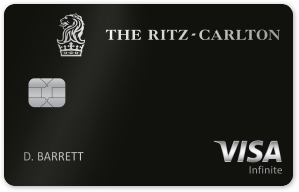
    Chase just dropped a pleasant surprise for existing Ritz-Carlton Credit Card holders, and if you’re among them, your wallet might be getting a bit heavier. Why? Because the metal version of the card is making a comeback, and you won’t need to lift a finger – all current cardholders will automatically receive the new design sometime this month.

    The card’s benefits remain unchanged for now, but the return of the metal design is likely to bring a sigh of relief to those who found the plastic version less than satisfying. Many complained that the plastic design made the card feel cheap, especially when most cards with comparable annual fees are now metal.

    For points and miles enthusiasts, the Ritz-Carlton card holds a special place in the hearts (and wallets) of many. It stands out as one of the very few, if not the only, cards offering unlimited guests when utilizing Priority Pass lounge access – a perk that’s hard to beat, and makes this card a favorite among those in the know.

    Although the card officially closed its doors to new applicants back in 2018, there’s a nifty workaround. While a direct application is a no-go, you can snag the lower-tier Marriott Bonvoy Boundless card by Chase. After holding it for a year, a call to Chase requesting a product change to the Ritz-Carlton card is all it takes.

    But does this subtle change hint at the card reopening for new applicants? Don’t get your hopes up. Marriott’s credit card partnerships have been complex since the SPG merger. The current arrangement seems to allocate the higher-tier cards, like the Bonvoy Brilliant, to AmEx for new applicants, while Chase handles the lower-tier cards such as the Bonvoy Boundless and Bold.

    Yet, as they say, never say never. In a curious turn of events in 2022, Marriott simultaneously introduced the Bonvoy Bevy and Bonvoy Bountiful. These two cards are nearly identical in every aspect, with the Bevy being an AmEx card and the Bountiful a Chase Visa.

    Oddly enough, the Bountiful seems to have been all but forgotten since its launch, overshadowed by the Bevy. However, it’s still available for new applications on Chase’s website. The Bountiful’s only potential edge over the Bevy? It might appeal to those who frequent Costco or need wider acceptance abroad, given Visa’s global footprint. Depending where you go in Europe, it seems like either everyone accepts AmEx, or nobody accepts it.

    Speculating on what would happen if the Ritz-Carlton card reopened to new applicants, my hunch is that there could be some adjustments to the Priority Pass benefits. The current unlimited guests feature, especially for those with families, might be too good to last. If the floodgates were to open for new applicants, a plausible scenario could involve capping Priority Pass guests at two per visit, mirroring the setup of the Sapphire Reserve. Chase has surprised us before, and it’s likely they’ll surprise us again, so stay tuned.

    (h/t Mike Jones)

  • Wow: Chase Brings Back Best-Ever 90,000 Point Offers for No Annual Fee Ink Cash and Ink Business Unlimited

    Wow: Chase Brings Back Best-Ever 90,000 Point Offers for No Annual Fee Ink Cash and Ink Business Unlimited

    Chase is turning up the heat once again with the return of the best-ever initial bonus offers on two of its no annual fee business credit cards – the Ink Business Unlimited® Credit Card and the Ink Business Cash® Credit Card. If you’re a savvy points collector, this news might just make your day.

    Both cards are throwing a whopping $900 your way, which translates to a cool 90,000 Ultimate Rewards points. All you need to do is spend a reasonable $6,000 on purchases within the first 3 months of opening your account. I’m willing to bet that’s a benchmark most of us are able to hit.

    Now, let’s talk about why these points are a big deal. Chase Ultimate Rewards points are some of the most valuable in the points and miles game. They’re versatile and pack a punch when it comes to value. You should always aim to redeem them for, at an absolute minimum, 2 cents per point. In fact, you’ll often find opportunities to get value well north of that, especially with valuable transfer partners like World of Hyatt and Air Canada.

    While this isn’t the first time we’ve seen a 90,000 point offer on these cards, it’s worth noting that this pretty rare, and is tied for the best-ever signup bonuses on these particular products. So, if you’ve been eyeing these cards, now might be the time to make your move.

    Let’s break down what each card brings to the table:

    Ink Business Unlimited® Credit Card:
    Earns a solid 1.5% back on all your purchases. Simple, straightforward, and effective.

    Ink Business Cash® Credit Card:
    This one’s a bit more nuanced. You’ll earn 5% on the first $25,000 spent in combined purchases at office supply stores and on internet, cable, and phone services each account anniversary year. Plus, you’ll get 2% on the first $25,000 spent in combined purchases at gas stations and restaurants each account anniversary year. It’s a strategic way to maximize your rewards based on your spending habits.

    But remember, in Chase’s world, 1% cash back equals 1x Ultimate Rewards points. Keep in mind, you’ll need at least one Ultimate Rewards card with an annual fee, like the Sapphire Preferred, Sapphire Reserve, or Ink Business Preferred, in your portfolio in order to be able to transfer these points to partners like Hyatt.

    Chase is known for its infamous 5/24 rule. If you’re not familiar, it’s pretty straightforward – if you’ve opened five or more personal credit cards (from any bank) in the past 24 months, you’re likely to face a rejection when applying for new Chase cards. However, some folks in the points and miles community have reported that the 5/24 rule isn’t being enforced as strictly as it once was. It’s not a guaranteed pass, but there’s a glimmer of hope for those who might be a tad over the limit.

    While Chase business cards won’t add to your 5/24 count, you generally still need to be under 5/24 to get approved for new Chase business cards. At least you don’t have to worry about Chase denying you for being too responsible with credit, like a certain other bank.

    These are phenomenal offers, especially considering they come with no annual fee. So, if you’re in the game and itching to boost your Ultimate Rewards balance, the Ink Cash and Ink Business Unlimited cards might just be your golden ticket right now. Grab those 90,000 points and start planning your next adventure.

  • Capital One Sends E-mail Threats, Escalates War on Responsible Credit Users

    Capital One Sends E-mail Threats, Escalates War on Responsible Credit Users

    Capital One, the financial behemoth often viewed as the dark horse in the credit card race, has been making some intriguing moves lately. On one hand, they’ve launched the Venture X, parading it as a challenger to the AmEx and Chase duopoly, and even venturing into the glamorous world of airport lounges. Yet, beneath this veneer of competition in a more prestigious arena, Capital One’s underwriting practices tell a different tale.

    Most credit card issuers neatly fit into two categories: those that are all about lending and those that thrive on spending. Chase and AmEx fall solidly into the spend-focused camp, attracting users who treat their cards like glorified debit cards, and making their profits primarily on interchange, or “swipe” fees. Capital One and Discover (do they even count?), on the other hand, remain steadfastly lend-focused. Their target? Consumers who carry balances and incur interest, padding Capital One’s coffers with the fruits of compounded interest.

    In fact, having an impeccable credit score may actually be a hindrance when seeking approval for Capital One’s credit card products. Tales abound of individuals boasting 800+ credit scores, effortlessly securing cards from the likes of Chase, Citi, and AmEx, only to face the unfamiliar sting of rejection from Capital One.

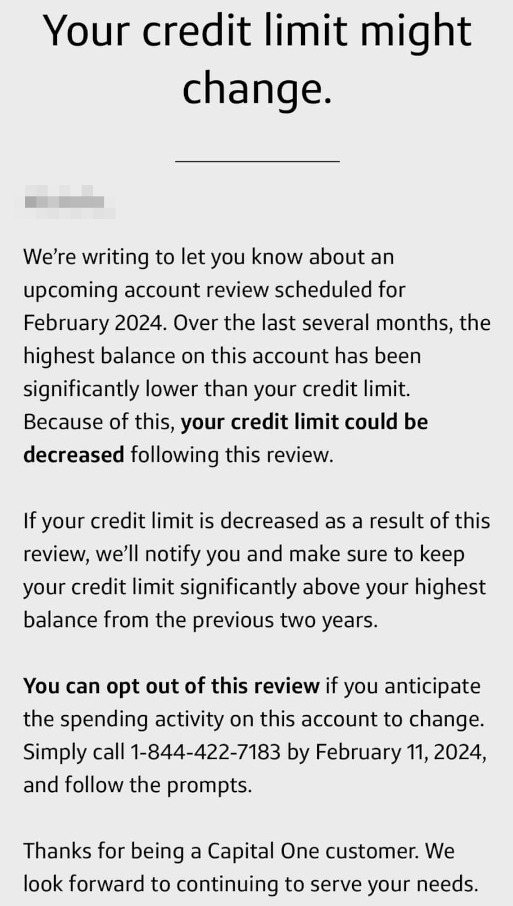
    Now, it seems Capital One has escalated its war on responsible credit users. A reader shared a snapshot of an ominous email from the issuer, threatening a decrease in their credit limit. The reason? They haven’t come close enough to maxing out their cards. In the stark words of the email, “Over the last several months, the highest balance on this account has been significantly lower than your credit limit. Because of this, your credit limit could be decreased following this review.” They want you toeing the line, and if you’re not, there are consequences.

    Screenshot of an email from Capital One, as shared by a reader.

    The email gives a 60-day heads-up, offering a choice: either ramp up your balance, or dial a toll-free number to plead your case. But why should you care about this? Even if you have no plans to need that large of a credit line, a decrease in your credit limit can wreak havoc on your credit score, particularly by increasing your credit utilization ratio. This is a percentage of your available credit being used; if the denominator goes down and the numerator remains constant, that percentage is going to soar, even if your spending habits don’t change.

    Now, why would Capital One want to lead people down the treacherous path of poor credit decisions? The answer is glaringly simple: interest rates are soaring. While some pundits predict the end of interest rate hikes, many credit cards are still flexing jaw-dropping interest rates of 30% or more. It’s a lucrative time for banks, and Capital One wants a slice of that high-interest pie. Most of us don’t even know the interest rates on our own credit cards, because we pay them off each month before interest begins accruing. If this describes you, you’re probably not in Capital One’s target audience.

    But, wouldn’t they be concerned about users defaulting? Not quite. From the bank’s perspective, it’s akin to making an investment with a jaw-dropping ~30% annual return, compounding. It’s a staggering return, and of course no investment carries that kind of return without risk. However, the banks are well aware of this, pricing it into their calculations. After all, when the potential gains are that substantial, a calculated risk becomes just another part of the game.

    As interest rates soar, the issuer’s tactics appear geared towards nudging users into carrying balances, transforming their credit cards into instruments of compounded returns for the bank. While Chase and AmEx focus on a customer base with pristine credit and good money management habits, Capital One seems intent on playing by its own rules.

  • Bilt Rewards Adds Marriott Bonvoy as Transfer Partner: Why You Should Think Twice Before Taking Advantage

    Bilt Rewards Adds Marriott Bonvoy as Transfer Partner: Why You Should Think Twice Before Taking Advantage

    The Bilt Rewards MasterCard has been gaining attention as one of the best no-annual-fee credit cards. Spearheaded by Richard Kerr, Bilt Rewards has swiftly established an impressive rewards network, boasting quality transfer partners such as World of Hyatt, Aeroplan, and Flying Blue. Notably, it’s the sole transferable points system that links to AAdvantage, a feat even Citi’s ThankYou points can’t boast about.

    Kerr, renowned in the points and miles realm, was a pivotal figure in formerly esteemed website that we’re not gonna name here – one which, in his absence, has devolved into a collection of AI-generated cruise “top 10” lists (seriously, what’s “GPT” spelled backwards?).

    While Bilt’s array of transfer partners is generally commendable, the recent addition of Marriott Bonvoy gives us some pause. Similar to Chase Ultimate Rewards, Bilt Reward points convert to Bonvoy at a 1:1 ratio. However, unlike other partners, Marriott Bonvoy points traditionally carry a lesser value (significantly so). To help sorta-kinda mitigate this discrepancy, Bilt introduced an additional incentive: a 25% bonus with every 20,000 Bilt points transferred in a single transaction, yielding an extra 5,000 Marriott Bonvoy points.

    While this measure is a noble gesture on the part of Bilt, despite the bonus, transferring points to Marriott Bonvoy may not be the most prudent choice. My valuation typically places Bonvoy points within the range of 0.6 to 0.8 cents per point (cpp). In contrast, World of Hyatt’s point value frequently exceeds 2.0 cpp; a judicious redemption strategy might even reach 4-5 cpp, though 2 cpp is a reasonable baseline for most redemptions.

    Should you just really need to use Bilt points for a Marriott property, utilizing the Bilt travel portal might still be your best bet here. Although you’ll forfeit any elite benefits or credits toward Bonvoy status, the fixed rate of 1.25 cpp might still make a lot more sense. If you are able to just pay cash and save your Bilt points for more valuable redemptions, that’s what I’d do.

    I suppose it’s good to have options. More options are (generally) better than fewer options. If you stumble upon a Bonvoy redemption with significant outsize value, this may be beneficial. In general though, I’d think very carefully before transferring to Marriott.

  • American Express “Refreshes” the Hilton Honors Aspire Card, Removes Key Benefits

    American Express “Refreshes” the Hilton Honors Aspire Card, Removes Key Benefits

    Today, we’re diving into the recent changes to the Hilton Honors Aspire Card from American Express. Unfortunately, I have to start by saying that these changes are, overall, less than thrilling, especially when we consider the devaluation of Hilton Honors Diamond status in recent years.

    Annual Fee Hike
    First up, the annual fee has undergone a substantial “refresh,” but it’s not the kind we typically celebrate. It’s shooting up from $450 to $550, marking a whopping $100 increase. This increase is already in effect for new applicants, and existing cardmembers will start feeling the pain from renewals on or after February 1, 2024.

    Priority Pass Lounge Access, Gone
    Perhaps the most significant loss with this refresh is the removal of Priority Pass membership. If you enrolled or renewed your Priority Pass membership before January 31, 2023, it’s valid until January 31, 2024. For those who did so between February 1, 2023, and January 31, 2024, your membership extends until October 31, 2024. Lounge access is a key feature many seek in a premium card, and it’s quite disappointing to see it go at this price point. Comparing this to its competition, the Marriott Bonvoy Brilliant card, also from AmEx, still offers Priority Pass membership. When consumers are paying $500+ a year for a credit card, they tend to expect some form of lounge access. Admittedly, just like Hilton’s domestic properties, Priority Pass lounges within the U.S. just aren’t up to par with the competition; regardless, Priority Pass is about the lowest common denominator of most $500+ cards, so seeing even that getting the axe is very disappointing.

    Resort Credit Expansion, with a Catch
    On the bright side, the resort credit has nearly doubled in size, going from $250 to $400. But, here’s the catch – it’s gotten more difficult to use, as it’s now split into two parts: $200 for January-June and another $200 for July-December. I hear Hilton’s resorts have really good towels, so there’s that.

    Changes in Airline Credits
    Starting on January 1, 2024, the card will no longer include the $250 airline incidental fee credit. Instead, it’s replaced by a $50 quarterly airfare statement credit, which you can already utilize for eligible flight purchases made directly with an airline or through amextravel.com. While this change doesn’t bode well for many, there are a couple of silver linings. You can use this credit with various airlines throughout the year, and it now seems to cover airfare, not just incidental fees.

    Extra Free Night Reward – at a Cost
    Cardholders now have the opportunity to earn a third annual free night reward, in addition to the ones upon renewal and after spending $60,000 in a calendar year. However, the opportunity cost of spending that much money on the Aspire card is quite substantial. The return on basic spend isn’t exactly anything to write home about; I value Hilton Honors points at around 0.5 cpp (cents per point), meaning at 3x for non-bonus spend, you’re pulling about 1.5% in return. Unless you’re finding redemptions with serious outsize value (likely international + using 5th night free), chances are even your local credit union’s cashback card provides a similar return, and we’d venture to guess they don’t charge $550 a year for it.

    CLEAR Plus Membership Credit
    This card offers a CLEAR Plus membership credit of up to $189 a year, enough to cover the annual membership for one person. It’s a nice perk but not groundbreaking, as several cards offer similar benefits. While CLEAR Plus can be useful at times and it’s nice to have options, oftentimes the standard TSA PreCheck line is shorter, and you’ll still need a PreCheck or Global Entry membership to avoid taking off your shoes or removing laptops and liquids. I do have a CLEAR Plus membership, as my AmEx Platinum includes it as a benefit. However, I wouldn’t get a card solely just to have CLEAR, nor would I spend my own money on a membership.

    Emerald Club Executive Status
    Like the Surpass Card, which also underwent a refresh, the Hilton Honors Aspire Card now comes with Emerald Club Executive status with National Car Rental. It’s a decent perk, but it’s likely a duplicate benefit for many of us, as many credit cards already offer this perk. You’ll get upgraded to a better rental car, usually an SUV. At airport locations with an Emerald Aisle, you’ll have more choices. That’s about it.

    New Design, Transition to Metal
    The Aspire card is getting a fresh makeover, shedding its old plastic attire for a sleek, new metal design. The previous blue and purple design left much to be desired, making this shift a small yet appreciated change.

    New Mobile Phone Protection
    There’s new mobile phone protection for cardmembers. You can get reimbursed for the repair or theft of a device, up to $800 per claim, when the wireless bill for the specific cellphone line is paid using the Hilton Aspire card. Keep in mind there’s a limit of two approved claims within a 12-month period, and each claim carries a $50 deductible. This benefit could be of limited utility, given some U.S. mobile carriers’ reluctance to accept credit card payments.

    Hilton Honors Diamond Status
    The card still includes complimentary Hilton Honors Diamond Status, and that’s a perk that’s remained constant. However, Hilton has been steadily devaluing this status, making it less of a standout feature. During the pandemic, Hilton gave the axe to some key Diamond benefits, like free breakfast at domestic properties and late checkout. It’s worth considering this before grabbing the card solely for Diamond status, unless you’re heavily into international travel where Diamond status still holds some value.

    No “Waterfall” Language – Yet
    AmEx is spreading its “waterfall” lifetime language to various card families, though Hilton cards have managed to escape unscathed, at least for now. However, it’s prudent to be strategic when it comes to the order and timing of your credit card applications, as the impact on Hilton cards may not be far off.

    Bottom Line
    All in all, it’s a tough sell to justify the higher annual fee with arguably fewer worthwhile perks. Unless I were just a die-hard Hilton loyalist, I’d be canceling the card if it were me. It’s essential to assess and evaluate what aligns best with your own travel habits and preferences. If you do decide to cancel the card, don’t forget to inquire about a retention offer to potentially squeeze out one more year of value.

  • Changes to the Hilton Honors Surpass Card: a Mixed Bag

    Changes to the Hilton Honors Surpass Card: a Mixed Bag

    Big news for fans of Hilton Honors and American Express – the Hilton Honors Surpass Card has recently undergone some significant changes. Some of these updates are positive, while others may leave you wondering if it’s still the right card for you. Let’s dive into the details.

    Annual Fee Increase; Quarterly Credits Added

    First up, the annual fee on the Surpass Card has seen a notable increase, jumping from $95 to $150. While this might seem like a step in the wrong direction, there’s a silver lining. AmEx is offsetting this fee hike with a $50 quarterly Hilton statement credit, which can be a boon for those who frequently do revenue stays at Hilton properties.

    Saying Goodbye to Priority Pass

    One significant change that might disappoint some cardholders is the removal of Priority Pass as a card benefit. Previously, you could enjoy up to 10 Priority Pass visits per year, with the option to purchase additional visits for $35 each. While many of us have a Priority Pass from other cards, a second Priority Pass could be used to bring additional guests into a lounge, extend your time at Minute Suites, or burn your one free annual visit to the Chase Sapphire Lounge network. It’s worth noting that the card’s big brother, the Aspire Card, has also lost Priority Pass access. This was one of the most economical ways for a points & miles beginner to dip their toes into lounge access for a low cost of entry, so it’s sad to see this removed. Notably, this was the only U.S. card from a major bank to offer a limited Priority Pass subscription.

    Exciting Welcome Offer

    Now, let’s talk about the good news. The Hilton Honors Surpass Card has launched its best-ever welcome offer. Earn a whopping 170,000 Hilton Honors points after spending $3,000 in the first six months. Keep in mind that the once-in-a-lifetime rule applies, and AmEx has been on a roll adding “waterfall” language to other card families, so make sure you time your application strategically.

    Earning Potential and Point Valuations

    The card has also upped its game when it comes to earning points. You’ll now earn 12x points on Hilton purchases, 6x points on U.S. restaurant, supermarket, and gas station purchases, and 4x points on U.S. online retail purchases. However, it’s worth noting that the value of Hilton points is relatively low (I value them around 0.5 cpp), which makes the 4x earning on online retail purchases less appealing when compared to other cards like the Chase Freedom Unlimited – even without a bonus category. Personal valuations vary, but it’s something to consider.

    National Car Rental Emerald Club Executive Status

    The Surpass Card has also thrown in National Car Rental Emerald Club Executive status as a new benefit. While it’s a nice addition, it’s worth mentioning that several other credit cards also offer this perk, especially if you’re already carrying something like the AmEx Platinum.

    Aesthetic Upgrade

    One thing that’s not just about numbers and benefits is the new card design. Let’s be fair; the new look is a welcome change and a visual upgrade from the previous design. The odd blue/purple design never did much for me, but the new design is vaguely reminiscent of the Marriott Bonvoy cards (in a good way).

    Elite Status and Spending Thresholds

    For those looking for elite status benefits, the Surpass Card offers Gold status for being a cardmember and an upgrade to Diamond status if you spend $40,000 on the card in a calendar year. Keep in mind that Diamonds aren’t promised suite upgrades or guaranteed late check-out. Additionally, spending $15,000 on the card in a year will earn you a free night certificate, which is a nice bonus.

    My Change in Perception

    Now, I have a nostalgic connection to this card as it was my very first travel rewards credit card and my gateway into the points and miles game. I still keep the card to this day, primarily to anchor my Average Age of Accounts, but its value to me has shifted over time, and it’s been largely relegated to my sock drawer.

    I used to champion the Surpass as one of the best starter cards for beginners – admittedly this was a rather contrarian opinion, but one I stood by at the time. It offered mid-tier elite benefits at Hilton properties (including breakfast at every single property which is no longer a benefit domestically), a substantial number of Hilton points, and a respectable return on everyday spending. Unfortunately, the landscape has changed, with Hilton cutting back on elite benefits and domestic service quality taking a hit. And while the earn rates remain the same, we’ve seen fewer good stackable promotions from Hilton, and the points have been devalued to the point where I wouldn’t actively chase after them anymore.

    Who Should Consider the Surpass Card?

    Despite the changes, the Hilton Honors Surpass Card still has a place for certain groups of people. If you already have Priority Pass through another card and will genuinely use the quarterly $50 Hilton credits, it’s worth considering. Also, if you can take advantage of the fantastic new signup bonus, it might be the right card for you.

    The Hilton Honors Surpass Card has evolved. Whether it’s a better fit for your wallet depends on your travel habits, elite status preferences, and how you plan to maximize the new benefits. The landscape of travel rewards cards is continually changing, so doing your research and staying informed is key to making the best choices for your wallet.

  • AmEx Introduces “Waterfall” Lifetime Language on Amex EveryDay Card

    AmEx Introduces “Waterfall” Lifetime Language on Amex EveryDay Card

    American Express, a key player in the credit card industry, recently introduced a concept known as “waterfall” lifetime language to its Amex EveryDay Card. This seemingly innocuous change has significant implications for those looking to maximize their rewards and enjoy the benefits of American Express’s Membership Rewards program.

    Understanding “Waterfall” Lifetime Language

    The term “waterfall” may conjure images of cascading streams, but in the world of credit card churners, it signifies something quite different. This new language is all about limiting your eligibility for signup bonuses based on your previous card history within the same family. To put it simply, if you currently hold or have ever held a higher-tier card in the same family, your eligibility for a signup bonus on a lower-tier card is restricted. The reverse, however, is not true.

    In practical terms, if you’ve had the Amex EveryDay Preferred Credit Card, you won’t be eligible for a signup bonus on the basic Amex EveryDay Card. This applies not only to the current moment but extends to any point in the future when you might consider reapplying for the Amex EveryDay Card.

    You may not be eligible to receive the welcome offer, intro APRs, and intro plan fees if you have or have had this Card, the Amex EveryDay Preferred Credit Card or previous versions of these Cards. You also may not be eligible to receive the welcome offer, intro APRs, and intro plan fees based on various factors, such as your history with credit card balance transfers, your history as an American Express Card Member, the number of credit cards that you have opened and closed and other factors.

    Fine print from AmEx (emphasis added is ours)

    The Evolution of “Waterfall” Language

    This trend began a few weeks ago with the personal Delta cards and was later expanded to include the Amex Gold and Platinum cards. However, business cards are yet to be affected, so if you’re yet to pick up bonuses on popular AmEx business cards, you still have time to do so.

    Historically, the EveryDay and EveryDay Preferred cards have not been known for their extravagant signup bonuses. Therefore, the impact of “waterfall” language on these cards may not be as alarming as it is on cards like the Delta card family and the AmEx Gold/Platinum. However, it’s crucial to acknowledge that this trend seems to be spreading rapidly throughout AmEx’s portfolio.

    Navigating the “Waterfall” Strategy

    If you’re an avid points collector and are starting from scratch, the best strategy is to progress sequentially within a specific card family. For instance, begin your journey with the AmEx Green Card, then move up to the Gold Card, and eventually set your sights on the Platinum Card. By following this order, you can maximize your signup bonuses “on the way up,” ensuring you receive the most value from your card applications.

    Bottom Line

    The introduction of “waterfall” lifetime language on the Amex EveryDay Card is part of a broader trend in the credit card industry, making signup bonuses more difficult to come by through churning. While these particular cards may not have an earth-shattering impact, the potential consequences for other card families and their associated signup bonuses should not be underestimated. As the credit card landscape continues to evolve, it’s essential for enthusiasts and churners to adapt and strategize, ensuring they make the most of the rewards available while staying one step ahead of the game. So, if you’re thinking about applying for an Amex EveryDay Card, make sure to read the fine print and consider your card progression carefully. Happy collecting!

  • Trifecta Under Threat? Recent Issues with UR Points Combining Raise Concerns

    Trifecta Under Threat? Recent Issues with UR Points Combining Raise Concerns

    For years, many of us in the points and miles game have reveled in the magic of the Chase trifecta or bifecta. The idea is simple: pair high-end Chase travel cards like the Chase Sapphire Reserve, Sapphire Preferred, or Ink Business Preferred with their “cashback” counterparts like the Chase Freedom Unlimited, Freedom Flex, or Ink Business Unlimited. It’s a wonderful ecosystem that has allowed us to maximize our rewards on mundane purchases over the years. But recent issues with the Combine Points tool have us questioning whether this ecosystem is on shaky ground.

    So, how does the Chase trifecta/bifecta work, and why is it so beloved by savvy travelers like you and me? Let’s break it down.

    Earning with Cashback Cards

    • The Freedom Unlimited, Freedom Flex, Ink Business Unlimited, and of course the OG Freedom card (no longer available to new applicants) all earn cashback in the form of Ultimate Rewards (UR) points. The conversion is straightforward: 1% cashback equals 1x UR points, 5% cashback equals 5x UR points, and so on.
    • For everyday purchases, this can result in a higher earning rate compared to using Chase’s high-end cards. For instance, the CFF offers a fantastic 5x bonus on rotating quarterly categories, while the CFU and CIBU earn a consistent 1.5x wherever Visa is accepted – which adds up quickly on substantial but mundane expenses like paying vendors or estimated taxes.
    • Typically, UR points on cashback cards are restricted, redeemable only for cash and cash equivalents like gift cards or Amazon purchases. There is simply no way to extract more than 1 cent per point (cpp) in value out of these restricted points. However, there’s a valuable loophole.

    Enter the Combine Points Tool

    • Chase’s “Combine Points” tool allows you to move those restricted UR points 1:1 to a travel card, liberating them from restrictions and enabling redemptions worth much more than 1 cpp. You can redeem these points for flights or hotel stays at a higher value by transferring them to Chase’s airline and hotel partners or using them through the Chase travel portal at a flat rate of 1.25 cpp on the CSP or 1.5 cpp on the CSR.
    • We usually recommend skipping the Chase travel portal and transferring directly to partners like World of Hyatt or Air Canada Aeroplan in order to obtain maximum value from your hard-earned points. While it’s tougher than it used to be, Hyatt objectively remains the best use for Chase UR points, and edge cases with redemption values north of 5 cpp are still well within reach of most of us.

    The beauty of this setup is that these cards are stronger together than they ever would be in isolation. The Chase Freedom cards are incredible for earning, but horrible for redemptions; this loophole overcomes the inherent weaknesses of the Freedom series, and is a big reason my Freedom Unlimited stays top-of-wallet whenever I’m not working on a new signup bonus. However, recent reports have left us wondering if this might be the end of the Chase trifecta/bifecta as we know it.

    Issues Come to Light

    • The initial report came from Zachary at Monkey Miles, and numerous other reports have since followed. While I haven’t personally experienced this issue yet, it’s concerning and makes me wonder if this is just a system issue, or if Chase is quietly piloting big changes here.
    • It appears that Chase has removed the Combine Points option from the UR portal for some cardmembers, particularly when viewing annual fee cards like the CSR.
    • As of now, cashback cards like CFU seem to be unaffected. So, if you need to transfer your points, it’s advisable to “push” them from your cashback card to your travel card rather than “pulling” them.

    This loophole has been incredibly valuable over the years, allowing us to extract more value from our cashback cards. Banks often market their bonus categories by focusing on the frequency of purchases, like dining out or parking & tolls, rather than the substantial but less frequent expenses like rent or utilities. Thus, the 50% bonus on a card like CFU can be a game-changer for travelers looking to amass points more quickly.

    Protecting Your Points
    If you’re reading this and use the Chase ecosystem in this manner, it’s time to take action. Don’t procrastinate; combine your points right now, just in case. We strongly recommend setting monthly reminders a few days after your statement closes, as this loophole has never been guaranteed and could be closed without notice. You wouldn’t want to be stuck holding thousands of cashback points when they could have been used as full-fledged UR points for epic travel adventures.

    The future of the Chase trifecta/bifecta is uncertain, but one thing is clear: we’ll keep a close eye on developments and hope that Chase continues to reward its loyal customers with the benefits they’ve come to love. Stay vigilant, and may your points continue to take you on incredible journeys.

  • AmEx Adds “Waterfall” Lifetime Language to Gold Card: What You Need to Know

    AmEx Adds “Waterfall” Lifetime Language to Gold Card: What You Need to Know

    American Express has been shaking things up in the credit card world lately, and not in a good way. They’re back with another curveball, this time targeting the AmEx Gold Card. If you’re a points & miles enthusiast who’s been eyeing that shiny Gold Card in your wallet, there’s some news you need to know – and it probably won’t be what you’re wanting to hear.

    Don’t Go Chasin’ Waterfalls

    First, let’s talk about what’s happening. AmEx has introduced new language on some of their cards in relation to who is eligible to receive a signup bonus. Aptly termed “waterfall language” by credit card churners, it’s all about preventing you from snatching up a signup bonus on a lower-tier card in a card family once you’ve held (or currently hold) a higher-tier card in that same family. In other words, if you hold (or have held) the AmEx Platinum, your ineligibility for a bonus “waterfalls” down to cards below it, but the inverse is not true.

    This language isn’t entirely new, but it is concerning. Waterfall language made its debut a few weeks ago on personal Delta cards. The idea behind it is to encourage cardmembers to keep progressing within a card family, from basic to premium, while making it less appealing to go “backwards.”

    This also comes on the heels of AmEx restricting welcome bonuses on Platinum Cards to count most variants as one product for the sake of the once-in-a-lifetime rule – and that’s reflected in the fine print we’ve quoted down below.

    The Impact on AmEx Gold Card

    So, how does this affect the AmEx Gold Card? Well, if you currently hold or have ever had any flavor of the personal AmEx Platinum card, you’re out of luck when it comes to scoring a signup bonus on the personal AmEx Gold. Ouch.

    This change is likely to disappoint current or former Platinum cardholders who were eyeing the Gold Card’s signup bonus. Fortunately, the rule doesn’t work the other way around, so Gold Card members can still chase that Platinum SUB if they desire.

    Here’s a snippet from the fine print on the Gold Card:

    You may not be eligible to receive a welcome offer if you have or have had this Card, the Premier Rewards Gold Card, the Platinum Card, the Platinum Card from American Express Exclusively for Charles Schwab, the Platinum Card from American Express Exclusively for Morgan Stanley or previous versions of these Cards.

    New language restricting welcome bonuses from AmEx

    What’s Safe (For Now)?

    Fortunately, not all AmEx cards are affected. As of now, the AmEx Green Card remains unscathed by this “waterfall” rule, and the same goes for all the business cards in the AmEx lineup. But the big question here is if AmEx will continue to expand this rule.

    It’s worth noting that when AmEx rolled out this rule on the Delta card family, they left the lower-tier Delta Blue card untouched. The Delta business cards also got a free pass. It’s uncertain if AmEx will cast a wider net in the future, but history suggests it’s a possibility. In other words, if you have your eye on a particular AmEx card, and are a current or former holder of a higher-tier card in that family, you might want to grab those signup bonuses while they’re still available. For example, if you’re a Hilton loyalist with an Aspire Card in your wallet, now would be a good time to go ahead and grab the Surpass Card for the signup bonus.

    Strategy Going Forward

    So, what’s the game plan if you’re chasing those juicy Membership Rewards points and starting from zero? It seems the strategy is clear: progress sequentially within a given card family. For example, start with the Green Card, then move on to the Gold, and eventually, reach for the Platinum – in that order. This way, you can collect all those sweet signup bonuses “on the way up.”

    In the world of credit card rewards, change is the only constant, and AmEx’s “waterfall” rule is just the latest twist. Keep your eye on the ever-evolving landscape, and always stay one step ahead in the game of maximizing your credit card rewards.