Blog

  • Delta SkyMiles Changes: Could a Partial Rollback be Announced Tomorrow?

    Delta SkyMiles Changes: Could a Partial Rollback be Announced Tomorrow?

    Last month, Delta Airlines made some significant changes to their popular SkyMiles loyalty program, and the response was far from positive. The sweeping alterations sent shockwaves through the airline’s loyal customer base, with many longtime Delta aficionados expressing their frustration and disappointment. The changes were anything but customer-friendly, and the backlash was swift and fierce.

    Disclaimer: I do not earn any stock in Delta, nor do I have any inside knowledge. This is all educated speculation.

    Here’s a quick recap of the alterations that left many Delta customers reeling:

    1. All About the Benjamins:
      Delta went all-in on a revenue-based status system, effectively making Medallion Qualifying Dollars (MQDs) the only metric for determining your elite status. The problem? The new thresholds were incredibly steep. To attain even the lowly Silver Medallion status, you’d need to spend a substantial $6,000. And for those aiming for the coveted Diamond Medallion status, prepare to shell out a whopping $35,000.
    2. SkyClub Access:
      Delta also scaled back access to its SkyClub network. Effective from February 1, 2025, Delta SkyMiles Reserve and Reserve Business American Express Card Members, who previously enjoyed unlimited visits, would be capped at just 10 visits per Medallion year. The Platinum Card and Business Platinum Card from American Express saw a reduction from unlimited to just 6 visits per year. There was a carve-out, however, for those who spent over $75,000 a year on their card, allowing them to retain unlimited visits. Also announced was the discontinuation of the $50-per-visit SkyClub access for Delta SkyMiles Platinum and Platinum Business American Express Cardholders starting from January 1, 2024; on the same date, the current carve-out allowing Basic Economy passengers to access the SkyClub when using an eligible AmEx card for access would be removed.
    3. Fast Eddie and His Regrets:
      Delta’s CEO Ed Bastian, now affectionately nicknamed “Fast Eddie” by some, acknowledged that the airline may have gone too far with these changes. He made this admission during a speech at an Atlanta Rotary Club event, where he promised that Delta would address the concerns and make modifications to the changes they’d announced. This was late September, and he promised an announcement “in the coming weeks…” Well, it’s been a few weeks, and Delta’s Q call is tomorrow.

    So, here’s the big question: what can we expect tomorrow when Delta Airlines announces these potential rollbacks? Let’s take a look at a few likely scenarios:

    1. Revenue-Based System Stays:
      It’s almost certain that Delta won’t reverse its course on the revenue-based status system – that’s been a long time coming, and follows competitors United and American. However, they might reconsider the steep thresholds that have drawn so much criticism. I expect an adjustment between 20-30%.
    2. MQD Earn Rate Adjustment:
      We might see a slightly improved MQD earn rate on Delta Platinum and Reserve American Express cards. This could be a step in the right direction to appease their loyal customers. Again, look for a change in the ballpark of about 20-30%
    3. SkyClub Access Tweaks:
      While we shouldn’t expect a return to unlimited access, Delta could make some changes regarding SkyClub access. This could come in the form of either an increased visit allowance (my guess is 40-60% more than the previously announced caps) for American Express cardholders or a lower spending threshold to “earn back” unlimited visits (currently set at $75,000 per year). I think it’s more likely we’ll see a higher number of complimentary visits than a lower spend threshold, as $75k happens to also be the magic number to unlock complimentary guest access to the Centurion Lounge.

    But the big question is, will these modifications be enough to rebuild the trust that has been broken with loyal Delta flyers? Many have already jumped ship to American or United, with American Airlines, in particular, having a great year under their new CEO, Robert Isom. Isom’s quiet success in fixing operational issues and improving service quality has not gone unnoticed. Meanwhile, Delta seems to be moving in the opposite direction, with increasing delays, cancellations, and declining service quality.

    As we eagerly await Delta’s Q call tomorrow, one thing is clear: the airline will need to make significant changes to win back the loyalty of their once-loyal customer base. Whether they can successfully navigate these challenges remains to be seen, but it’s clear that the ball is now in Delta’s court.

  • BA Diverts Tel Aviv Flight on Final Approach; BA, VS Suspend Israel Operations

    BA Diverts Tel Aviv Flight on Final Approach; BA, VS Suspend Israel Operations

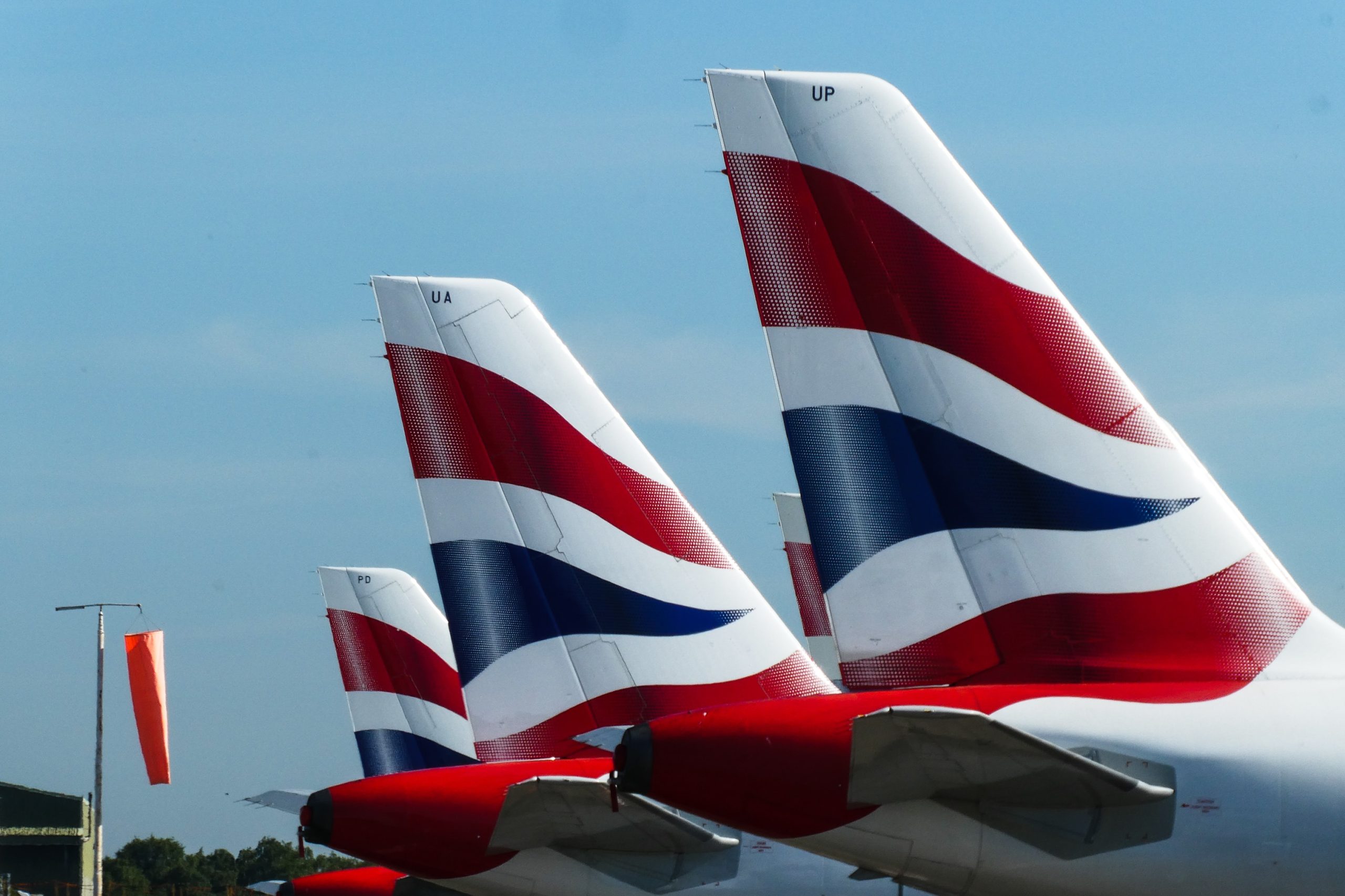
    A British Airways flight bound for Tel Aviv found itself diverting back to London Heathrow on Wednesday, just as it was on its final approach into Ben Gurion Airport (TLV). Flight BA165, operated on an Airbus A350-1000, touched down safely in London a little after 6:30 PM local time, after almost 10 hours airborne. The reason behind this unexpected change of course was the launch of a barrage of rockets by Hamas toward the city. While the Israel Airport Authority stated that the rocket attack didn’t pose an immediate threat to the airliner’s safety, British Airways decided to take no chances, and immediately suspended all its operations to Israel.

    This incident occurred amid escalating tensions in the region, with the conflict between Israel and Hamas intensifying. British Airways had been among the few airlines that continued to operate regular flights to Tel Aviv even after the hostilities began over the weekend. However, a spokesperson for the airline cited the “changing security environment” as the reason for discontinuing the flights.

    “Following the latest assessment of the situation, we’re suspending our flights to and from Tel Aviv,” the airline’s spokesperson confirmed. While Tel Aviv Airport had experienced sporadic rocket attacks in the days prior, British Airways had continued to operate non-stop flights from its Heathrow hub. BA had already pivoted towards daytime flights into Ben Gurion to prevent their crews from having overnight layovers in the country amid the ongoing war. Interestingly, fellow IAG-owned carrier Iberia Express still has flights scheduled for tomorrow between TLV and Madrid-Barajas (MAD), though it’s unclear if that will change amid this rapidly-evolving situation.

    Virgin Atlantic, another carrier operating flights to Tel Aviv from London Heathrow, initially indicated Wednesday that they intended to continue service to the region as scheduled. However, as the situation has continued to evolve, the airline has now suspended Israel service for at least the next 72 hours as they continue to re-assess conditions on the ground.

    Even Turkish Airlines, known for its high geopolitical risk tolerance and steadfast approach to serving conflict zones, has suspended its flights to Israel. Even amid the ongoing Russia-Ukraine conflict, TK has maintained its flights to Russia, providing about the only reliable link for essential travel to and from the region while most US and EU carriers have suspended their Russia operations indefinitely. However, the escalating tensions in Israel have proven too much even for Turkish, underscoring the gravity of the situation on the ground.

    As for British Airways, their services to Tel Aviv have been suspended for at least the remainder of the week. Given the current state of affairs, it’s highly likely that this suspension will extend well beyond that initial timeframe. It’s interesting to note that European carriers appear to have a higher geopolitical risk tolerance compared to their US counterparts. For instance, Delta Airlines has suspended its flights to Tel Aviv for at least the remainder of October.

    For those currently in Israel, especially tourists, the situation has become increasingly challenging as flight options out of Tel Aviv continue to dwindle. British Airways was once a reliable choice for exiting the region, but it’s no longer an option. In light of this, it’s essential for individuals to take proactive steps to ensure their safety and well-being. Registering with your country’s embassy (STEP program for American citizens) is a prudent move to ensure your government is aware of your whereabouts.

    For US and Canadian citizens, the most practical strategy may be to seek the soonest available means to get to Europe and then determine a game plan from there. Despite President Joe Biden’s pleas to the airline industry, it’s unlikely that we’ll see nonstop air service to North America from the region (except some limited service on El Al) until the conflict subsides. The situation is evolving rapidly, and travelers are advised to stay informed and make well-informed decisions based on the latest updates and guidance.

  • Air Canada Takes Swift Action Against Anti-Semitic Pilot

    Air Canada Takes Swift Action Against Anti-Semitic Pilot

    In a recent and disturbing incident, Air Canada has taken swift action to suspend a first officer, Mostafa Ezzo, after a series of hateful and anti-Semitic posts came to light. The posts, shared on a now-deleted Instagram account, depicted Ezzo in his pilot’s uniform, draped in a Palestinian flag, and accompanied by deeply offensive statements directed at Israel and its people.

    The timing of Ezzo’s hateful online outbursts coincided with escalating tensions in the Middle East. In response to a surprise attack on Israeli soil, resulting in the loss of hundreds of lives, including Israelis and tourists, with countless others taken hostage, Israeli Prime Minister Benjamin Netanyahu declared war on Hamas on Sunday.

    Ezzo’s Instagram posts, uncovered by StopAntiSemitism.org, included shocking comments such as his assertion that Hitler would be proud of Israel, and a picket sign depicting the disposal of an Israeli flag with caption “Keep the World Clean.” These comments not only displayed a shocking level of anti-Semitism but also raised alarming concerns about Ezzo’s judgment and soundness of mind as an airline pilot.

    In a statement on X (formerly Twitter), Air Canada made it clear that they were taking this issue seriously, removing Ezzo from service.

    Air Canada’s actions in this case are commendable for several reasons. Firstly, they recognize that there is no room for anti-Semitism or any form of racially or religiously motivated hatred, especially during a period of heightened tensions in the Middle East.

    Furthermore, being a pilot comes with a unique set of responsibilities. Passengers entrust their lives to these professionals when they board an aircraft, and that trust relies on both an incredibly high standard of training, as well as unquestionable professionalism at all times. Ezzo’s actions seriously undermined this trust. While nobody should ever be making statements like Ezzo did, a pilot needs to uphold a higher standard of integrity and professionalism than a typical individual. There cannot even be an appearance of a doubt as to whether a pilot can be entrusted to fly 289 passengers and keep them safe.

    While it is unclear which routes Ezzo operated, it’s worth noting that Air Canada’s Boeing 787s have the capability to serve international destinations, including Tel Aviv, Israel, from various points in Canada like Toronto (YYZ) and, of course, his home base of YUL, which offers seasonal TLV service. It’s a scary thought that there may have potentially been a time that Ezzo was at the controls of a Dreamliner headed into a country he publicly hates so much; after all, all the heightened security measures in the world are worthless if we can’t absolutely trust the pilots.

    Even with union contracts in place, airlines still maintain the authority to take action when their employees engage in behavior that threatens the company’s reputation or the safety and well-being of their passengers. Ezzo’s posts unquestionably fell into this category.

    Air Canada’s prompt suspension of Mostafa Ezzo serves as a reminder that bigotry and hatred must find no harbor within the aviation industry or within our broader society. The airline’s swift response underscores the fundamental principle that every passenger should feel safe and welcome when stepping on board an aircraft. This incident reinforces the enduring importance of upholding unquestionable professionalism in the world of aviation.

  • Aviation News Roundup: Israel-Hamas Conflict Impacts Air Travel

    Aviation News Roundup: Israel-Hamas Conflict Impacts Air Travel

    On Saturday, a tragic turn of events saw Hamas launch an unprecedented attack on Israel, leading to the loss of hundreds of lives, countless more taken hostage, and Israeli Prime Minister Benjamin Netanyahu declaring war.

    UA954’s Unexpected Detour: The whole world can change in an instant. UA954, a San Francisco to Tel Aviv flight, operated by a 777-300ER, found itself mid-air when the war began. The plane had to make a 180-degree turn over Greenland, embarking on a 13-hour “flight to nowhere” before landing safely back in SFO.

    Terrifying Moments at TLV: Passengers at Ben Gurion International Airport (TLV) were subjected to moments of sheer terror as rockets were intercepted nearby, forcing some to abandon their luggage and take cover as air raid sirens rang out. Surprisingly, this only briefly disrupted airport operations.

    Ben Gurion Still in Business: Despite the perilous situation, as per FlightAware data at the time of writing, TLV has only seen 65 canceled departures (20% of the total) and 70 canceled arrivals (23%) for the day. This defied our expectations, considering the circumstances. Then again, Ben Gurion is considered by many to be the world’s most secure airport – if I were in Israel right now, even despite the airport being named a target by Hamas, I still think the airport is likely the safest place to be.

    U.S. Airlines Play it Safe: Most U.S. and Canadian airlines have cancelled all flights in and out of Israel, limiting the options of Americans already in the country & trying to escape. The Allied Pilots Association (union for American Airlines) advised its pilots not to operate flights, citing safety concerns, and Delta just announced the cancellation of all TLV flights for the remainder of October. President Biden has publicly called upon U.S. carriers to resume service and facilitate the return of American citizens, but it remains uncertain if this will materialize. Meanwhile, we’ve heard anecdotal evidence of AA rebooking its customers on alliance partner British Airways to get them out via Heathrow; it’s unclear if United and Delta are using similar tactics, but I imagine SkyTeam is struggling, with KLM following Delta’s lead in suspending flights.

    Brave AA Pilots Step Up: In a remarkable show of solidarity, American Airlines pilots went against the advice of their own union, in order to take care of their own. They operated a special flight, AA9602 from TLV to JFK on a 777-200, exclusively for crew members and non-revenue passengers. United operated a similar flight for their crew, though details are unclear – and perhaps that’s a good thing, in the name of OPSEC. (h/t @xJonNYC)

    European Airlines’ Mixed Response: IAG group airlines, such as British Airways and Iberia, and low-cost carriers like EasyJet and Ryanair, appear to be largely operating normally, with a few flights cancelled and others operating as normal. According to a post in an unofficial AAdvantage members group, BA was even still serving PDBs in Club World… and I think a PDB would be the least of my worries while trying to escape a warzone. However, some carriers, like KLM, have suspended all flights. It’s interesting to note that European carriers seem to generally have a much higher risk tolerance when it comes to flying into geopolitically unstable regions compared to their U.S. counterparts.

    Even TK is Out: Turkish Airlines’ decision to suspend flights to Tel Aviv comes as a sobering indicator of the ongoing security concerns in the region. In an aviation landscape where many carriers are altering their routes and schedules in near-real time due to geopolitical tensions, Turkish Airlines has been known for its resilience, continuing to fly to destinations within Russia even amidst the ongoing Russia-Ukraine war. However, the situation in Tel Aviv has forced the airline to make this difficult choice, underscoring the seriousness of the circumstances in the area.

    El Al Bringing People… In?: El Al (LY) emerges as a crucial player during this turbulent period. While other carriers are reducing their services, El Al is bringing many into TLV. Why? Many Israelis are returning home from abroad to serve in the war, as Israel calls up an unprecedented 300,000 reservists. It’s worth noting that El Al is the only commercial air carrier to equip its aircraft with missile defense systems. These systems, like Elbit Systems’ C-MUSIC, are designed to throw off heat-seeking missiles with infrared or flares, ensuring the safety of passengers and crew.

    As the situation unfolds, those wishing to leave the region should do so as soon as possible, by any safe means possible, and let your home country’s embassy know of your whereabouts. For American travelers, this means enrolling in the STEP program. It’s worth repeating – and I can’t stress this enough – if you’re an American or Canadian, and you want out of Israel, your best bet by far right now is to get yourself to Europe as soon as safely possible and figure it out from there. Despite Biden’s plea to the airlines, there is no guarantee we will see another commercial flight to the U.S. from TLV for the duration of the war. Could it happen? Yes, but I’d much rather be figuring out my next move from the safety of Heathrow than waiting for the federal government to figure things out.

    In these challenging times, aviation takes on a role beyond its usual purview, providing an essential escape route for individuals affected by the ongoing conflict. The situation remains fluid, but we’ll continue to follow it and bring you info as we get it.

  • Skip Security Lines in Europe: CLEAR Reserve Tricks & Best Practices

    Skip Security Lines in Europe: CLEAR Reserve Tricks & Best Practices

    Travelers in the United States are no strangers to the convenience of fast lanes at airports. Many of us have experienced the bliss of breezing through security with TSA PreCheck or enjoying priority access as elite status holders. However, when it comes to going through security at airports in Europe and other parts of the world, we’ve all had our fair share of enduring punishing hours-long waits at airports like London Heathrow (LHR) or Paris Charles de Gaulle (CDG), giving us plenty of time to think about how much we miss air conditioning, ice in drinks, and of course, our trusted traveler programs.

    But what if I told you there’s a sneaky trick you can use to dodge those long security lines in Europe? Enter CLEAR Reserve, a timeslot-based service that can save you precious time and hassle.

    CLEAR Reserve: The Secret Weapon Against Long Security Lines

    CLEAR Reserve is a game-changer for savvy travelers. It operates on a simple premise: you make an appointment for a 20-minute window to go through security: you get to choose a time that suits your schedule, and you enjoy a 10-minute grace period on either side of your appointment. But here’s the kicker: it’s completely free and doesn’t require you to enroll in a membership, pay a fee, submit biometrics, or create an account.

    All you need is a valid email address – preferably one that’s readily accessible on your smartphone, because they’ll send you a QR code via email. This service can accommodate up to five passengers traveling together on a single appointment, making it perfect for families or groups. It’s unclear if everyone must be traveling on the same PNR, but experience suggests they won’t check.

    Appointments are limited, but here’s the best part: CLEAR Reserve is relatively unknown, so snagging an appointment is rarely an issue, even very close-in (as in, “standing outside the checkpoint” close-in). As of the time of writing, you can find this service at six European airports: Amsterdam Schiphol (AMS), Berlin Brandenburg (BER), Frankfurt (FRA), Hannover (HAJ), London Heathrow (pilot program, Terminal 3 only), and Rome Fiumicino (FCO). Additionally, it’s available at eight U.S. airports, although many of our readers probably already have TSA PreCheck, which is a much better and more flexible option.

    For those without Global Entry, CLEAR Reserve can be a savior at six Canadian airports: Toronto Pearson (YYZ), Vancouver (YVR), Montreal-Trudeau (YUL), Calgary (YYC), Edmonton (YEG), and Halifax Stanfield (YHZ). Some airports like LHR and FCO have branded the service under names like Heathrow Timeslot and QPass, but rest assured – the service is the same beneath the branding.

    Not Quite TSA PreCheck: Key Differences to Note

    It’s important to note that while CLEAR Reserve offers a line-skipping aspect similar to TSA PreCheck, there’s a key difference. Once you reach the front of the line, you must undergo the full screening process as per the rules of the country you happen to be in. This usually means removing liquids and laptops from your bag and going through a full-body scanner rather than a magnetometer. So, while CLEAR Reserve expedites your entry, you’ll still need to follow the local security procedures just like everyone else.

    A Handy Trick I Discovered at Amsterdam Schiphol

    Recently, during my visit to Amsterdam Schiphol (AMS), I stumbled upon a handy trick for using CLEAR Reserve, completely by accident. My Uber driver from the hotel kept getting lost, and it became clear (no pun intended) that I would miss my pre-booked 20-minute window.

    Here’s where it gets interesting: I found out that not only could I cancel my appointment (or simply not show up) with zero penalties, but also, due to the relative obscurity of CLEAR Reserve, appointment slots were wide open. So, without any hassle, I simply created a new appointment for just 10 minutes in the future. This immediately put me within the 10-minute grace period, allowing me to head straight to the security checkpoint the moment the QR code hit my email.

    In other words, CLEAR Reserve rewards those who plan ahead in advance, but how far in advance you plan is totally up to you (pending availability, of course). That could mean two days, or in my case, not even two minutes.

    Key Takeaways

    There are many variables at play en route to the airport – maybe a train gets cancelled, you encounter a long line at the airline counter (a big reason I try to never check a bag), or you just have a terrible Uber experience like I did. We can follow a few best practices to make the most of CLEAR Reserve and avoid security lines wherever feasible:

    1. Book an appointment even if you’re not 100% sure: Since there are no penalties for canceling, it’s a good practice to book an appointment if you think you might need it. It’s courteous to your fellow travelers to try to cancel if you won’t make it, but you won’t get in trouble or be charged if you miss it.
    2. Check for extremely close-in appointments: While this service does require a reservation in advance, that doesn’t necessarily mean very far in advance. Conventional wisdom is that is you didn’t plan ahead, you’re out of luck; you may find that’s not the case at all. If you find yourself staring at a snaking security queue, pull out your phone and check for open appointments within the next few minutes. Chances are, there will be one available. Say for example the current time is 7:02 AM – book an appointment on-the-spot for 7:10 and waltz through security almost immediately.

    When rushing to make your flight, every minute saved counts, and CLEAR Reserve is a valuable tool that can help you reclaim your time and avoid those dreaded airport security lines in Europe. Give it a try on your next trip, and you might just find yourself wondering why you didn’t start using it sooner. Safe travels!

  • Is a Massive World of Hyatt Devaluation and Dynamic Pricing on the Horizon?

    Is a Massive World of Hyatt Devaluation and Dynamic Pricing on the Horizon?

    In the ever-evolving world of hotel and airline loyalty programs, one program has stood as a beacon of consistency: World of Hyatt. As other major hotel chains switched to fully dynamic award pricing, Hyatt remained the last stronghold with its steadfast award chart, and a consistent dedication to its members and good customer service. As a Hyatt Globalist member, their program has been the only one I’ve ever participated in where “loyalty” truly feels like a two-way street; it’s a relationship built on trust, and they’ve simply always done right by me. There’s a lot to be said for that. However, recent developments have raised questions about the future of Hyatt’s award program. Could a massive devaluation and a shift to dynamic pricing be imminent? Let’s take a closer look.

    Hyatt’s Mini-Dynamic Shift
    Last year, Hyatt introduced a “mini dynamic” element to its award pricing by adding peak and off-peak redemption rates. While this signaled a shift away from the traditional fixed-price award chart, Hyatt managed to keep the number of nights classified as peak to a relatively fair percentage. This was a commendable effort, especially when compared to competitors like Hilton, whose dynamic pricing turned Hilton Honors points into the SkyPesos (SkyRubles?) of the hotel industry. Even with Hyatt’s changes, there are still plenty of opportunities to get outsize value out of your Hyatt points; just maybe not as plentiful as in 2021.

    Hyatt’s Relative Stability
    Despite the rapidly changing travel landscape in the wake of the COVID-19 pandemic, Hyatt has remained relatively steadfast in its loyalty program structure, while airlines and other hotel chains have largely devalued their programs to varying degrees, possibly to get liabilities off the books in the wake of COVID-induced financial losses. In the world of loyalty programs, prolonged periods without significant changes often foreshadow impending upheavals on the horizon.

    Signs of a Transition
    Several signs suggest that Hyatt may be on the brink of fully embracing dynamic pricing:

    • The introduction of peak and off-peak pricing in 2022 marked the beginning of this shift, signaling that Hyatt isn’t fully opposed to the concept of dynamic pricing.
    • Hyatt’s once simple award chart has now evolved into three separate charts, each with its own quirks (and of course, separate columns for peak, standard, and off-peak dates).
      • The original hotel award chart with numeric categories 1-8, where some properties, like Park Hyatt Paris Vendome, have moved up to category 8 for the first time. While category 8 isn’t technically a new category, it has historically been reserved for partners like Small Luxury Hotels of the World (SLH); only recently has Hyatt elevated any of its own properties to this category.
      • An all-inclusive award chart using lettered categories A-F, which also specifies pricing for additional guests.
      • Yet another award chart for Miraval resorts, based entirely on room type rather than any form of category system.
    • The addition of “Homes and Hideaways,” a short-term home rental platform similar to Marriott Homes & Villas and Airbnb. While earning & redeeming Hyatt points for home rentals sounds intriguing, it raises questions about how these unique accommodations fit into a traditional award chart. My guess? They won’t, and Hyatt likely never planned on that.

    The complexity of managing these multiple award charts and the introduction of Homes and Hideaways might indicate a transition away from fixed award charts to fully dynamic pricing. The award charts are just getting too messy and complex, which to me begs the question of not if, but when Hyatt will give up on adding additional layers of complexity and go all-in on dynamic pricing.

    Hyatt’s New Reservations System
    Keen observers have noted that Hyatt’s pending shift to the SABRE Global Distribution System (GDS) could play a pivotal role in facilitating a transition to a fully dynamic pricing model. This move to a more sophisticated and adaptable GDS system could provide Hyatt with the technological infrastructure needed to efficiently manage and update award pricing in real-time, enhancing the feasibility of dynamic pricing implementation. As the hospitality industry continues to evolve, this technological upgrade may indeed be a key component in Hyatt’s potential shift toward a more punitive flexible award pricing structure.

    The Fate of Category 1-4 Free Night Certificates
    If Hyatt were to adopt fully dynamic pricing, it raises questions about the fate of Category 1-4 (and Category 1-7) free night certificates. A likely outcome could be fixed cap on the value (in points) of each certificate, similar to what Marriott Bonvoy does with certificates. Marriott’s certificates tend to be capped at 35,000 points; however, as Hyatt points are much more valuable, it’s likely the caps would look more similar to today’s categories 4 and 7, respectively (the question is: will they follow standard or peak?).

    When Can We Expect These Changes?
    Historically, Hyatt has made category changes and devaluations every March, rarely straying from this pattern. While dynamic pricing may not be the most welcome change, we can hope that Hyatt, known for its fair practices and consistency in treating its members well, will implement it in a more equitable manner than some of its competitors.

    While Hyatt has held its ground as the last major hotel chain with an award chart, recent developments suggest that change may be on the horizon. As we move forward, it’s essential for Hyatt loyalists to keep a close eye on developments – and perhaps a speculative booking or two wouldn’t hurt, either.

  • AmEx Adds “Waterfall” Lifetime Language to Gold Card: What You Need to Know

    AmEx Adds “Waterfall” Lifetime Language to Gold Card: What You Need to Know

    American Express has been shaking things up in the credit card world lately, and not in a good way. They’re back with another curveball, this time targeting the AmEx Gold Card. If you’re a points & miles enthusiast who’s been eyeing that shiny Gold Card in your wallet, there’s some news you need to know – and it probably won’t be what you’re wanting to hear.

    Don’t Go Chasin’ Waterfalls

    First, let’s talk about what’s happening. AmEx has introduced new language on some of their cards in relation to who is eligible to receive a signup bonus. Aptly termed “waterfall language” by credit card churners, it’s all about preventing you from snatching up a signup bonus on a lower-tier card in a card family once you’ve held (or currently hold) a higher-tier card in that same family. In other words, if you hold (or have held) the AmEx Platinum, your ineligibility for a bonus “waterfalls” down to cards below it, but the inverse is not true.

    This language isn’t entirely new, but it is concerning. Waterfall language made its debut a few weeks ago on personal Delta cards. The idea behind it is to encourage cardmembers to keep progressing within a card family, from basic to premium, while making it less appealing to go “backwards.”

    This also comes on the heels of AmEx restricting welcome bonuses on Platinum Cards to count most variants as one product for the sake of the once-in-a-lifetime rule – and that’s reflected in the fine print we’ve quoted down below.

    The Impact on AmEx Gold Card

    So, how does this affect the AmEx Gold Card? Well, if you currently hold or have ever had any flavor of the personal AmEx Platinum card, you’re out of luck when it comes to scoring a signup bonus on the personal AmEx Gold. Ouch.

    This change is likely to disappoint current or former Platinum cardholders who were eyeing the Gold Card’s signup bonus. Fortunately, the rule doesn’t work the other way around, so Gold Card members can still chase that Platinum SUB if they desire.

    Here’s a snippet from the fine print on the Gold Card:

    You may not be eligible to receive a welcome offer if you have or have had this Card, the Premier Rewards Gold Card, the Platinum Card, the Platinum Card from American Express Exclusively for Charles Schwab, the Platinum Card from American Express Exclusively for Morgan Stanley or previous versions of these Cards.

    New language restricting welcome bonuses from AmEx

    What’s Safe (For Now)?

    Fortunately, not all AmEx cards are affected. As of now, the AmEx Green Card remains unscathed by this “waterfall” rule, and the same goes for all the business cards in the AmEx lineup. But the big question here is if AmEx will continue to expand this rule.

    It’s worth noting that when AmEx rolled out this rule on the Delta card family, they left the lower-tier Delta Blue card untouched. The Delta business cards also got a free pass. It’s uncertain if AmEx will cast a wider net in the future, but history suggests it’s a possibility. In other words, if you have your eye on a particular AmEx card, and are a current or former holder of a higher-tier card in that family, you might want to grab those signup bonuses while they’re still available. For example, if you’re a Hilton loyalist with an Aspire Card in your wallet, now would be a good time to go ahead and grab the Surpass Card for the signup bonus.

    Strategy Going Forward

    So, what’s the game plan if you’re chasing those juicy Membership Rewards points and starting from zero? It seems the strategy is clear: progress sequentially within a given card family. For example, start with the Green Card, then move on to the Gold, and eventually, reach for the Platinum – in that order. This way, you can collect all those sweet signup bonuses “on the way up.”

    In the world of credit card rewards, change is the only constant, and AmEx’s “waterfall” rule is just the latest twist. Keep your eye on the ever-evolving landscape, and always stay one step ahead in the game of maximizing your credit card rewards.

  • Qantas Club Membership Renewal for AA Flyers: A Steal at $260

    Qantas Club Membership Renewal for AA Flyers: A Steal at $260

    Last year, savvy American Airlines flyers leaped at the opportunity provided by Qantas, a member of the Oneworld alliance and AA’s strategic partner. For just USD $203, they secured Qantas Club memberships, which, in essence, doubled as quasi-Admirals Club memberships thanks to this alliance partnership. This unbeatable deal left many wondering if it would be just a one-time opportunity, but as it turns out, there’s more to celebrate for those who took the plunge.

    Renewal Reminder for Qantas Club Members

    If you were one of the savvy American Airlines flyers who seized the Qantas Club deal last year, it’s time to check your email. Qantas has sent out renewal notices, offering a fantastic deal for continuing your membership.

    Renewing your Qantas Club membership will only set you back AUD $410. As of this writing, that’s a mere USD $260, a fraction of the cost of an Admirals Club membership. What’s more, if you act promptly and renew before your listed expiration date, Qantas will waive the AUD $99 (USD $63) initiation fee, sweetening the deal even further. It goes without saying this fee should be paid with a card that doesn’t charge foreign transaction fees, even if the purchase is made from the US.

    Accessing the Admirals Club with Qantas Club Membership

    Although some Admirals Club agents may have initially scratched their heads at the sight of a Qantas card, the membership is valid for access to the Admirals Club when flying with American Airlines or Qantas same-day. This benefit drew many AA loyalists to purchase a cheaper Qantas Club membership. It’s worth carrying the physical membership card to help expedite your entry into the lounge – and remember, the IATA code for Qantas is “QF” if you’re ever asked.

    Bringing Along a Guest: Qantas Club vs. Admirals Club Membership

    One drawback of accessing the Admirals Club via Qantas is the reduced guest allowance. Qantas Club members can bring along one guest on the same Passenger Name Record (PNR) when accessing the Admirals Club. This is in contrast to purchasing Admirals Club membership directly from American Airlines or Citi, which typically provides access for the primary member and up to two additional guests, regardless of whether they are on the same PNR.

    Oneworld Acceptance Varies

    While Qantas Club membership has been a fantastic deal for accessing the Admirals Club, it’s important to note that this reciprocity doesn’t necessarily apply universally among Oneworld airlines. The Oneworld Alliance is built on reciprocity, where member airlines collaborate to provide mutual benefits to their passengers. However, not all airlines within the alliance offer the same level of lounge access privileges. For instance, British Airways doesn’t sell paid lounge memberships to its own members, and therefore, they aren’t obligated to honor paid memberships from other Oneworld carriers. To access BA lounges, travelers typically need to be flying business class or hold Oneworld Sapphire or Emerald status. So, while the Qantas Club membership might grant you access to the AA’s lounges, it’s essential to be aware of the specific policies of each Oneworld airline when it comes to lounge access.

    Admirals Club Costs Soar

    While Qantas Club members are enjoying low renewal rates, American Airlines is heading in the opposite direction. The airline has recently raised the cost of an Admirals Club membership from $650 to $850 per year. Additionally, the Citi / AAdvantage Executive World Elite Mastercard, which offers Admirals Club membership as one of its perks, has increased its annual fee from $450 to $595. To add salt to the wound, a new $175 fee has been introduced for up to three authorized users, a privilege that was previously free.

    Bottom Line

    For those who pounced on the Qantas Club deal last year, renewing your membership at just $260 is a no-brainer, especially when compared to the soaring costs of Admirals Club access through American Airlines. Keep an eye on your email for renewal notices, and don’t miss out on this incredible opportunity to continue enjoying Admirals Club access at a fraction of the price.

  • Hilton CEO Thinks Towels Are Guests’ Top Concern

    Hilton CEO Thinks Towels Are Guests’ Top Concern

    Hilton’s fearless leader, Chris Nassetta, recently took the stage at the Fast Company Innovation Festival in the bustling heart of New York City. What pearls of wisdom did he drop for the eager audience? Brace yourselves; it’s about towels.

    Yes, you read that right. Nassetta declared that the number one gripe among Hilton guests isn’t subpar breakfasts, noisy neighbors, gutted elite benefits, or rooms that could use a visit from the cleaning fairy. Nope, it’s the towels. Apparently, Hilton’s CEO believes that towels are the key to world-class hospitality. Well, color me surprised.

    In his discussion on Hilton’s “back-to-basics hospitality,” Nassetta shared his profound insight that even with all the fancy amenities and tech-savvy gadgets, guests will walk away disappointed if their basic needs aren’t met. Revolutionary, right? He goes on to explain, “The really important big trend is the same old, same old, which is people—what you guys want. You want it done maniacally well, consistently, with high quality, and in a friendly way.” Well, Chris, the only thing you’re doing “maniacally well” is selling guests on your competitors’ programs.

    Now, before we dive headfirst into Nassetta’s fascinating revelation, let’s take a moment to reflect. It seems that Nassetta might be living in some parallel universe where Hilton’s service matches his rhetoric. Or perhaps Mr. Nassetta hasn’t had the pleasure of staying in one of his own hotels recently.

    While Nassetta’s emphasis on getting the basics right is commendable, Hilton has fallen behind the competition in delivering on this promise, especially since the pandemic struck. Even Marriott, a brand notorious for questionable customer service following the implementation of the Bonvoy program in 2019, seems to outshine Hilton in terms of providing good service. Disillusioned Marriott loyalists have even turned “Bonvoy” into a verb! Yet, Hilton somehow manages to lag even further behind.

    It’s a classic case of talking the talk but not walking the walk. Many domestic Hilton properties have suffered from deferred maintenance and lax housekeeping under Nassetta’s leadership, resulting in rooms that are far from pristine. The decline in customer service quality at Hilton over the past few years has been disheartening; while it’s true that their competitors have also declined in this arena since the pandemic, it seems to be especially pronounced at Hilton.

    But hey, credit where it’s due: the towels have been quite nice during my last few Hilton stays, and there’s been no shortage of them. So, there’s that. While Nassetta might think that towels are the crux of the matter, it’s high time Hilton focuses on more than just fluffy white linens and works on nailing all the basics.

  • Skip the Lines with Heathrow’s Free Timeslot Service

    Skip the Lines with Heathrow’s Free Timeslot Service

    Heathrow Airport, one of the world’s busiest travel hubs, is no stranger to long security lines. Many a weary traveler has found themselves anxiously eyeing the clock, worried they might miss their flight while stuck in a seemingly endless queue. But now, there’s a glimmer of hope on the horizon, as Heathrow introduces a new way to beat those infamously long security lines – the Heathrow Timeslot service.

    This exciting development is currently in the trial phase, set to last for the next six months. And here’s the best part – it won’t cost you a penny. While the service is administered by CLEAR, you won’t need to enroll, submit biometrics, or pay a fee; all you need is a valid e-mail address – preferably one you can readily access on your smartphone.

    So, how does it work? Well, it’s surprisingly simple. Passengers can pre-book a designated time and security checkpoint in advance of their arrival at the airport, and receive a QR code via e-mail, granting access to a special line. If you’re familiar with CLEAR Reserve, the Timeslot platform appears to be a re-branded version of that, and the booking process should feel very familiar. The trial is currently limited to Terminal 3, available only to passengers flying with American Airlines, Delta, Emirates, and Virgin Atlantic. If the trial proves successful, it may expand to include more airlines during the testing period.

    It’s unclear if this service is available for connecting passengers using the transit security checkpoint, but given past fast-track programs and the layout of the T3 transit facility, I’d bet the answer is likely a no. However, most European and American passport holders can simply enter the UK via the border e-gates and take one of the local trains (Heathrow Express, Elizabeth Line, or Piccadilly Line) at no charge over to Heathrow Central – some claim that if you’re eligible to use the e-gates, it’s faster to clear passport control and take local transit than to wait for the shuttle buses that operate outside of customs. Bear in mind your connection may not be protected while you’re landside, so if you’re cutting it really close, it may be best to stay airside to ensure no issues rebooking.

    Here’s another convenient feature of the Timeslot service – you can book for up to five people at once, great for families or groups of friends traveling together (it’s unclear if you must all be on the same PNR, but experience suggests they won’t check). Keep in mind that these slots are subject to availability, so it’s a good idea to book ahead to secure your preferred time.

    Now, for those of you who are feeling left out, there’s some promising news. If the trial succeeds, the Timeslot service will be rolled out to additional terminals at Heathrow. As someone who frequents Terminal 5, the home of British Airways, I can’t help but hope that this service will soon be available there too.

    However, even with the convenience of pre-booking, Heathrow Airport advises travelers to give themselves more than 45 minutes before departure to pass through security. Why? Well, Heathrow operates under the UK’s somewhat infamous “conformance” scheme; at 35 minutes prior to departure, you won’t be able to pass through the turnstiles to enter the security checkpoint. So, while Timeslot can save you time, don’t cut it too close – arrive when you normally would, and use the extra time to visit one of T3’s many lounges.

    This concept of pre-booking time slots for security isn’t entirely new to European airports. Amsterdam Airport Schiphol (AMS) has been operating a similar scheme (also by CLEAR), and I recently had the chance to try it out during a trip. I must say, it worked quite well, but the security lines were so efficiently managed that it almost felt unnecessary. Still, it’s a handy option to have, and I imagine it will be a much bigger game-changer at Heathrow where the lines aren’t as well-managed.

    For many U.S. travelers accustomed to TSA PreCheck, the Heathrow Timeslot service will feel like a long-awaited dream come true. While you’ll still need to remove laptops and liquids from your bag, being able to skip the line is a game-changer. PreCheck is one of those things (like air conditioning and ice in drinks) that I always miss while abroad, so any opportunity to fast-track the security process at a major foreign hub is welcome news.

    So, if you find yourself headed to Heathrow in the coming months, consider giving the Timeslot service a try. It’s a promising step towards a smoother and less stressful airport experience, and who can say no to that?