Blog

  • What Would You Do? Global Entry Dilemma at DFW

    What Would You Do? Global Entry Dilemma at DFW

    It’s no secret that the airline industry has been a rollercoaster lately, with domestic travel taking a nosedive while international demand remains surprisingly robust. This incongruity is causing a conundrum for low-cost carriers like Spirit, who rely heavily on domestic routes. But let’s zoom in on a scene I encountered at Dallas/Fort Worth International Airport (DFW) during the Thanksgiving holiday that I don’t recall ever seeing before.

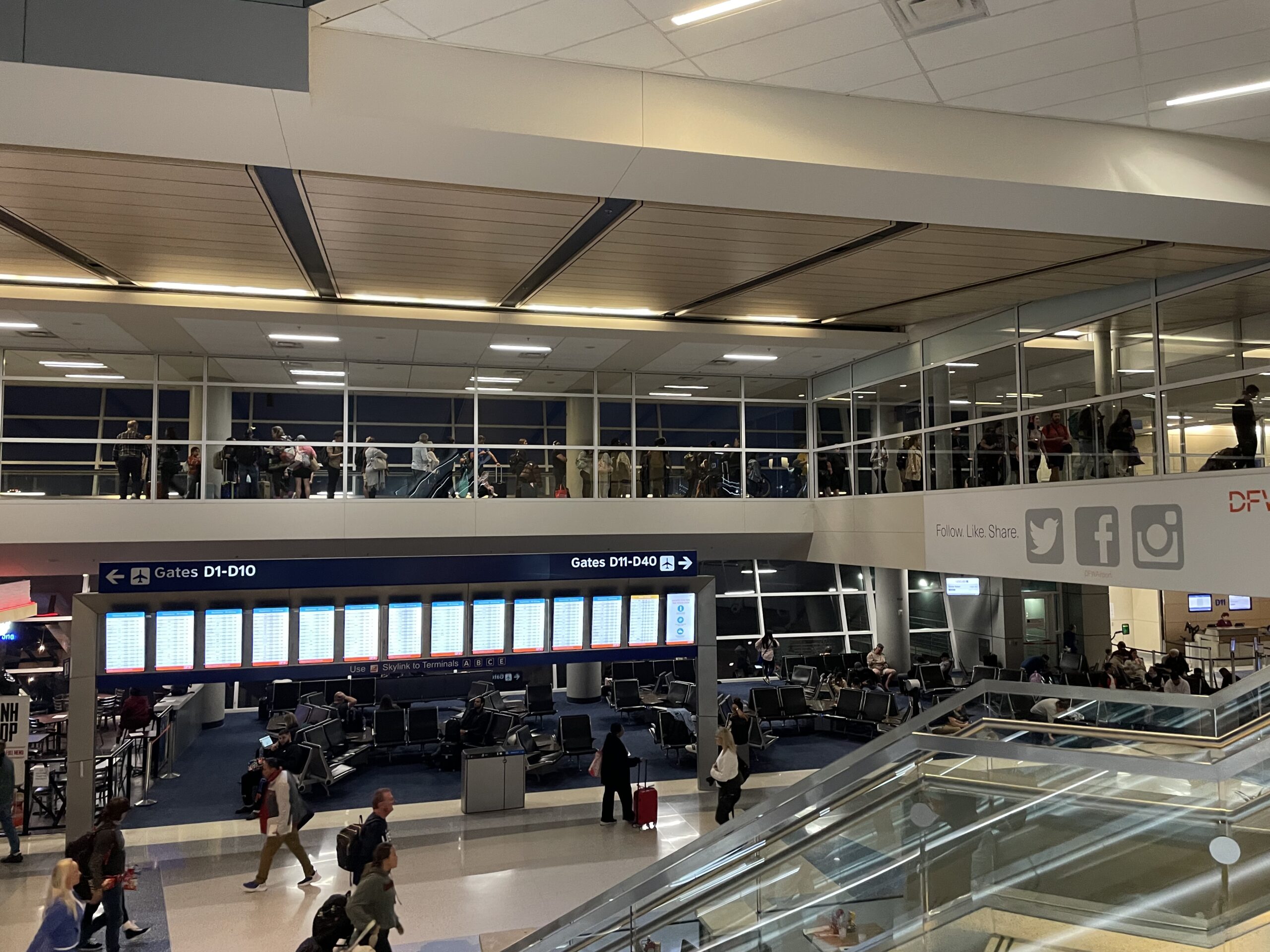
    Customs line at DFW backed up almost to the plane, (C) 2023 Points & PDBs
    That’s backed up almost to the plane!

    Now, the image I captured speaks volumes. The line for passport control snaked its way beyond the Customs and Border Protection (CBP) facility and into the sterile glass corridors used to separate arriving international passengers from those who have undergone TSA screening – really, almost to the plane passengers were getting off of (I was in a hurry and didn’t stop to figure out where they were coming from). It was a sight to behold, and it left me pondering a hypothetical scenario: What would you do in this situation?

    The line extended well before the point where it bifurcates into channels for Global Entry and Mobile Passport Control. Would you have queued up with the masses until you reached the split for Global Entry, or would you have boldly strolled past everyone straight to the Global Entry kiosks?

    Personally, I lean towards the latter. Sure, you might attract a few disapproving glances, but hear me out. The majority of those in line are likely waiting for standard screening involving an interview with a CBP officer. By skipping ahead to the Global Entry kiosks, you’re not usurping their position in the standard screening line; you’re just taking advantage of a time-saving tool – one that you’ve paid and undergone a background check and interview for. Of course, if a staff member intervenes, it’s important to comply, but don’t let the judgmental stares from fellow passengers deter you.

    Thankfully, I was a mere spectator in this spectacle (I saw this while coming down the escalator from the Skylink near gate ~D12) and didn’t have to grapple with the decision myself. DFW generally has a reputation for efficiency in both TSA and Customs screening, and I’ve never personally seen a line of this magnitude at the Texas mega-hub, whether returning to the country myself or observing from the concourse below.

    The only comparable scenario I recall was during the initial COVID lockdowns when people rushed to return home, causing delays amid heightened health screening measures. This line, however, takes the cake for its sheer length. It raises the question: Is the surge in international demand truly that substantial, or are CBP staffing issues over the holidays bottlenecking the process?

    During the pandemic, American Airlines retired numerous widebody aircraft, anticipating the delivery of new 787s to coincide with the expected rebound in demand. Unfortunately, Boeing’s delays in delivering the 787s have left AA with severely constrained international capacity at present. As most of AA’s international flights are already completely filled with either paid or standby passengers, it’s unlikely there’s suddenly a huge surge of additional passengers flying internationally on AA. It’s not like they have the ability to add a bunch of new capacity for the holiday season, save for some narrowbody flights to Mexico and the Caribbean (Canada has preclearance at most airports so that’s effectively domestic for this purpose).

    So, what would you have done in this situation?
  • This Admirals Club Features Dangerously Misleading Signage

    This Admirals Club Features Dangerously Misleading Signage

    You either love or hate the Admirals Club at DFW Terminal C. It’s giant, and it’s dated. If you ever wanted to know what it was like to be George Clooney’s character in Up in the Air, this club could likely give you a pretty good idea. The food selection is abysmal, but at least there are plenty of places to hide out, including full-height cubicles in the business center. Even though the terminal has largely been relegated to domestic flights to secondary markets like Oklahoma City (OKC), they’ve never removed the shower facilities from the terminal – something CLT doesn’t have at either of their Admirals Clubs.

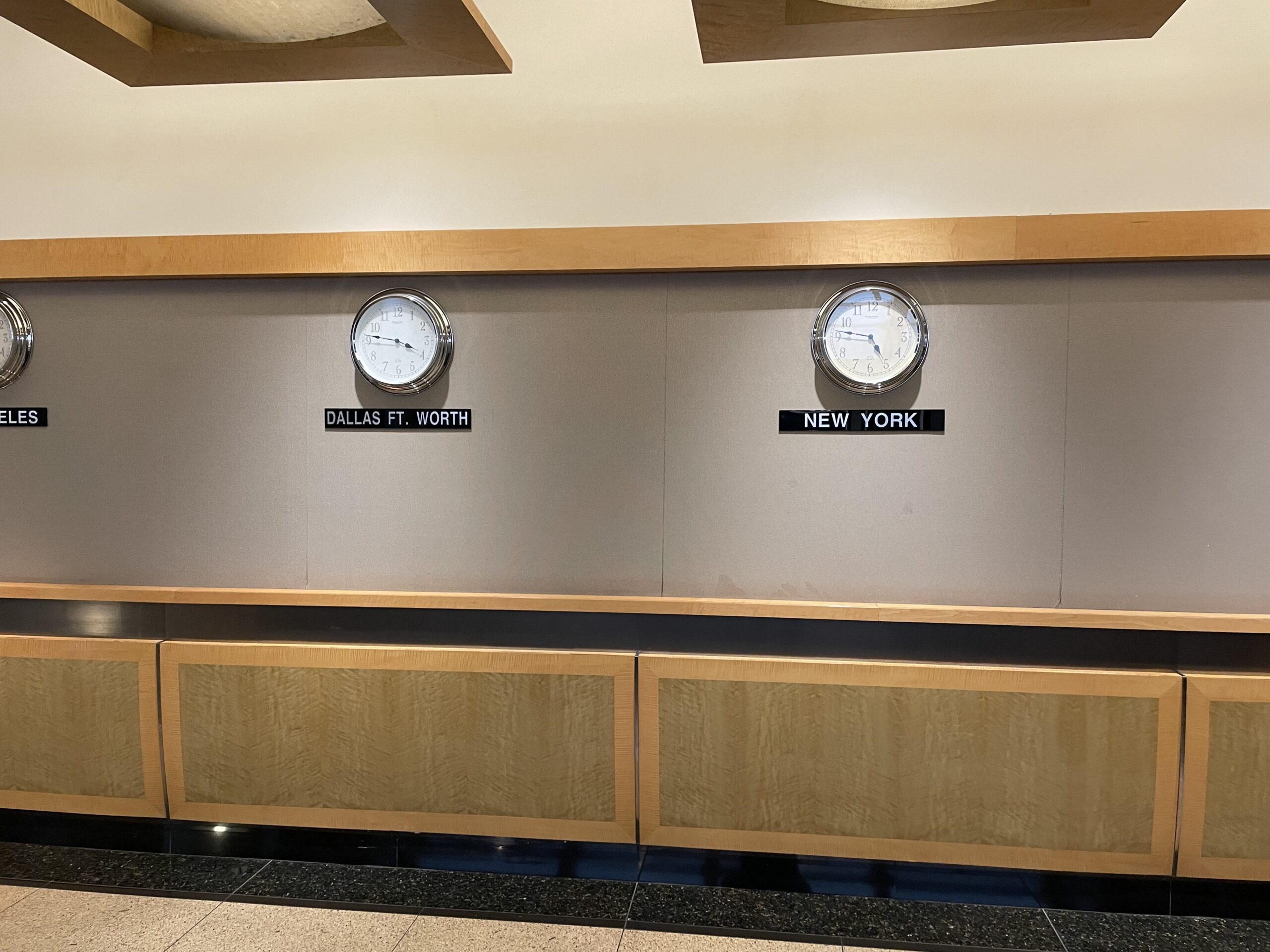
    World clocks… how very… retro!

    Well, there’s one interesting feature of this club that AA desperately needs to update. You see, it’s been years since AA changed its policy on gate closure, requiring passengers to be in the gate area available for boarding no later than 15 minutes, in its endless and well-documented quest to achieve D0 at all costs. However, signage at various points throughout the facility paints a different picture.

    What’s wrong with this picture? These signs state AA’s previous policy of gate closure at just 10 minutes prior to departure, not 15.

    This is dangerous to have posted prominently throughout the club. People like to enjoy the lounge until the last possible second, and 5 minutes can make all the difference between making your flight and missing it. I guess AA assumes most people enjoying an Admirals Club are probably frequent enough flyers to know better. But one has to wonder how many infrequent travelers have been burned by this; I’m imagining someone going on a once-in-a-lifetime trip on a business class ticket, or someone on a long delay purchasing a day pass when those are actually offered for sale.

    As that terminal is rebuilt piece by piece (and it will be stunning once complete), I can’t see AA investing another dime into that club unless absolutely necessary; everything is being rebuilt anyways, so why would they? Regardless, maybe if they don’t want to paint over the paint damage from removing these signs, maybe they can at least have some new ones printed? This would be forgivable if it hadn’t been many years since this change was made… but in 2023? C’mon, AA…

  • Is the A321XLR’s Range Worse Than the A321neo!?

    Is the A321XLR’s Range Worse Than the A321neo!?

    Many have been eagerly awaiting the Airbus A321XLR to rewrite the rules of trans-Atlantic flying. Crossing the Atlantic requires a longer range; in the good ol’ days, this typically meant using a widebody aircraft like the Boeing 777 or Airbus A330. This meant trans-Atlantic flights between North America and Europe have traditionally been confined to hub airports in major markets like Chicago (ORD) or Dallas-Fort Worth (DFW). The XLR promised to change that, ushering in a new era of point-to-point flying and enabling mid-sized US markets to see nonstop flights to Europe. It would also lower the barrier to entry, allowing low-cost carriers to compete on routes that have been the exclusive domain of legacy carriers like United or British Airways, lowering fares across the board via competitive pressure.

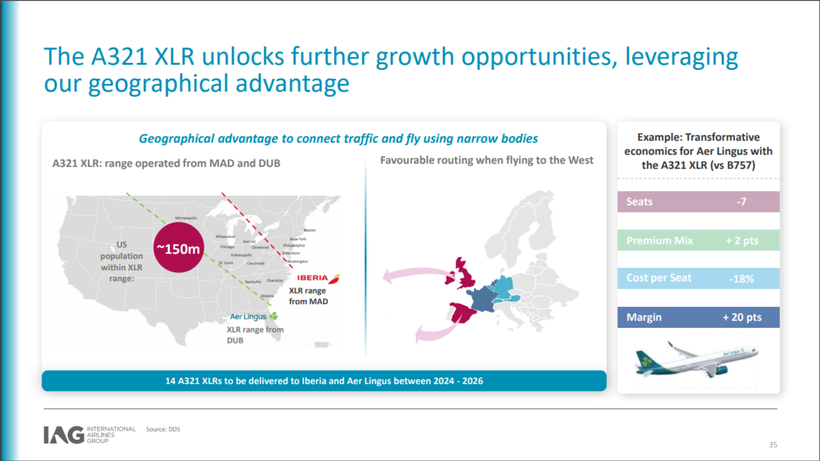
    Well, IAG may have just thrown cold water on that dream. According to Enilria’s report, IAG, parent to airlines like British Airways and Aer Lingus, believes that the A321XLR’s range isn’t as quite as “Xtra Long” as we once imagined. For instance, the Dublin (DUB) to St. Louis (STL) route is deemed to be right on the edge of the A321XLR’s capabilities in their configuration. That puts the range at approximately ~3,925 miles, a far cry from the lofty 4,700-mile talks circulating before. And to make matters worse, these Iberia and Aer Lingus planes won’t even have a super-dense configuration, meaning a low-cost carrier with more seats might be scraping the bottom at around 3,500 miles. Not exactly what we had in mind.

    A leaked PowerPoint slide from IAG adds some visual context to this revelation. Two color-coded lines supposedly represent the A321XLR range for Aer Lingus and Iberia, originating from DUB and MAD respectively. The range from DUB stretches along a line roughly from Atlanta to St. Louis, while the range from MAD falls considerably shorter, going from approximately Washington DC to just north of Detroit (remember that while Mercator projection makes Madrid appear closer, Dublin is actually one of the closest European capitals to most points in the US).

    Slide from IAG detailing hypothetical ranges of the A321XLR, obtained by Enilria
    Slide from IAG detailing hypothetical ranges of the A321XLR, obtained by Enilria

    Let’s put this into perspective. If DUB-STL is indeed the limit, then the longest A321XLR flight would clock in at 3921 miles. Coincidentally, the current longest 737 MAX 8 flight is from Kuala Lumpur to Melbourne, operated by Batik Air Malaysia, covers 3918 miles — just 3 miles shorter than the A321XLR’s theoretical maximum. That’s like… my drive to Target or Costco.

    Here’s the irony for you: the A321XLR, supposedly the “Xtra Long Range” variant, might end up with a range worse than its lesser sibling, the A321neo. The longest A321neo flight, such as SAS’s Copenhagen (CPH) to Washington Dulles (IAD) at 4074 miles, leaves the XLR lagging behind. Maybe “Xtra Large Remuneration” is what Airbus actually meant by “XLR,” since that’s what they’ll be getting from their customers?

    This revelation is no small matter. It severely caps the area that the XLRs can serve for trans-Atlantic flying, confining them predominantly to the northeast US and northwest Europe – you know, the kinds of routes already served by the A321neo. Airports like DUB or KEF, closer to the US on the “great circle,” might still be in the game for reaching parts of the Midwest, but the broader dreams of expansive point-to-point trans-Atlantic routes, especially favored by carriers like Aer Lingus, now face limitations.

    This is quite embarrassing for Airbus. The A321XLR was supposed to be a game-changer, and now we’re left wondering if it has much marginal utility at all compared to the Neo and the MAX. We’ll see how things look in practice once the XLR enters service.

  • London Calling: Hyatt Place Paddington to Open Doors Next Year

    London Calling: Hyatt Place Paddington to Open Doors Next Year

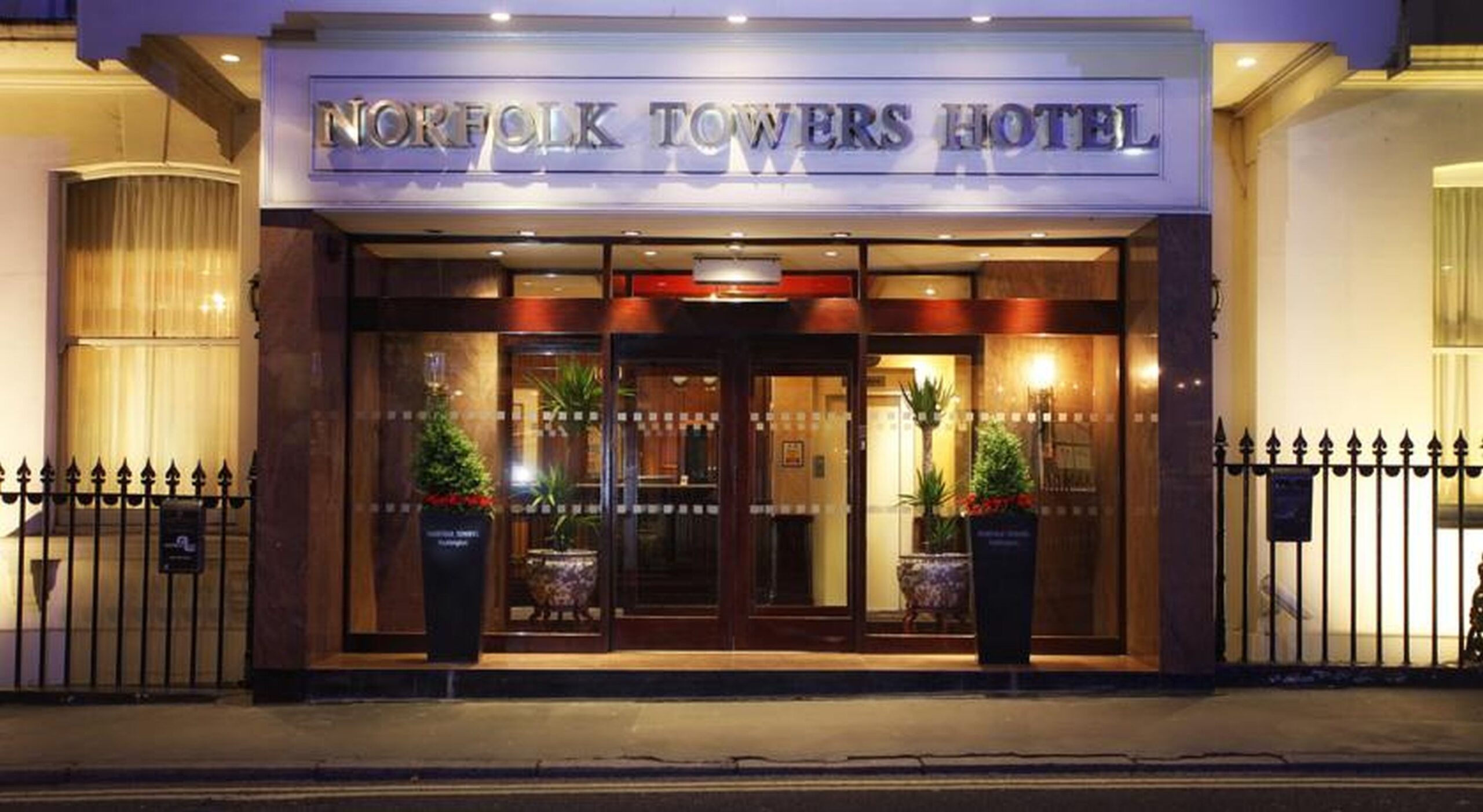
    Big news for Hyatt enthusiasts and London travelers alike: Hyatt is set to expand its footprint in the heart of London with the opening of Hyatt Place London Paddington in 2024. The discovery was made by the eagle-eyed team at Traveling for Miles, and even though it falls under the Hyatt Place banner, on the more modest end of the Hyatt spectrum, the implications are anything but modest.

    London has long been a haven for upscale Hyatt properties like the iconic Hyatt Regency Churchill, the stylish Hyatt Regency Blackfriars, the historic Great Scotland Yard, and the trendy Andaz Liverpool Street. However, the city has been severely lacking in select-service Hyatt options, catering to longer stays or trips where the property takes a back seat to the destination – and London offers no shortage of things to do outside the four walls of your hotel.

    This new addition will mark only the fourth select-service Hyatt property in the London area, joining the ranks of Hyatt Place London City East, Hyatt Place Heathrow Airport, and Hyatt House London Stratford.

    Location-wise, the Hyatt Place London Paddington boasts an enviable address at 29/23 Norfolk Square, just steps away from London Paddington Station. This central location is a strategic hub served by multiple Tube lines and the newly inaugurated Elizabeth Line. Not only does this make it convenient to explore various parts of London, but it’s also a boon for travelers to and from Heathrow. Paddington is home to the Heathrow Express, providing nonstop service to Heathrow Central, and the Elizabeth Line offers a direct connection to the airport. This is great risk mitigation against missing your flight; recent years have been marked by rampant strike action in the UK, and Paddington provides two easy ways to get to LHR, neither of which are reliant on the Tube, local buses, or connections to other services.

    The 87-room hotel is set to emerge from the conversion of the Norfolk Plaza Hotel, a 1970s-era hotel that has seen better days. While details about the amenities are scant, let’s face it – it’s a Hyatt Place. You’re getting a clean, comfortable place to stay the night while racking up elite nights towards World of Hyatt status. This isn’t necessarily a bad thing – on past visits to the city, I’ve made a bad habit of dropping a lot of points on a high-end property I didn’t want to leave despite there being an infinite amount of things to do in London. Maybe next time, I’ll give this Hyatt Place a shot, and use the savings in points to stay longer than I otherwise might have. London ain’t a cheap date, so this is a welcome option.

    The anticipated opening date is pegged for July 1, 2024, according to the property’s information page. However, as of the time of this writing, reservations have yet to be made available on Hyatt.com, and it’s unclear what award category the property will fall into (I’m betting category 3, allowing for use of those sweet, sweet Cat 1-4 free night certificates). Keep your eyes peeled for updates, and mark your calendars for a potential stay at the Hyatt Place London Paddington in the summer of 2024.

  • AA Flight Attendants Officially Request Strike Permission from Biden Administration

    AA Flight Attendants Officially Request Strike Permission from Biden Administration

    Last week, we told you about AA flight attendants’ plans for a potential strike during the busy Christmas travel season. Just as we expected, the Association of Professional Flight Attendants (APFA) today officially requested permission from the Biden administration to go on strike, as contract negotiations with American Airlines remain deadlocked. The president of the APFA made the announcement on Monday, stating that she had written to the National Mediation Board (NMB) seeking approval to enter a 30-day cooling-off period as mandated by the Railway Labor Act (which despite the name, also applies to air transport).

    Under the provisions of this act, flight attendants must secure permission to enter a cooling-off period before they can legally engage in any “self help” action, such as walking off the job. It’s uncertain when exactly we’ll see a formal response with a yay/nay decision from the NMB, but it’s highly unlikely we’ll see anything immediate, most likely foiling plans for the strike to take place during the busy Christmas travel season. Realistically, it could be early 2024 before we even see a formal response.

    Julie Hedrick, the APFA National President sent a letter to the National Mediation Board on Monday, November 20 requesting a release into a thirty day cooling off period. This represents the next phase in our comprehensive campaign for a new contract.

    The big question of course is when will the NMB act upon our request? The answer is we do not know. There is no set timeframe for the NMB to act on our request as the decision to release us is solely within the discretion of the mediation board. While we understand this can be frustrating it is the process under the Railway Labor Act.

    APFA Press Release

    It’s unlikely a strike would completely shut down the airline, if it’s even approved at all. Even if the NMB grants approval, the Biden administration could impose restrictions or mandate minimum service levels to mitigate the impact on the public. We expect disruptions to be more akin to that of a large weather system snarling travel across the US – only this disruption will only impact AA.

    AA flight attendants, while earning a base pay comparable to their Delta counterparts, face disparities in profit-sharing due to AA’s less robust financial performance. Factors such as AA’s substantial debt load from maintaining the youngest fleet among major carriers, and a less expansive international route network all contribute to the airline’s financial challenges. While AA is not a low-cost carrier, it currently faces some of the same financial challenges LCCs are up against.

    Namely, domestic travel is way off, while international demand remains robust. AA has a very strong domestic route network focused on fortress hubs such as Dallas-Fort Worth (DFW) and Charlotte-Douglas (CLT). However, they are severely lacking on international routes; during the pandemic, they retired older 757s and 767s, anticipating that the Boeing 787 Dreamliners they’d ordered would materialize by the time travel made a meaningful return. Boeing, however, has dropped the ball on delivering these 787s in a timely manner, giving an advantage to Delta and United, who have largely held onto their older widebodies.

    I’m honestly skeptical we will see a strike materialize at all, over Christmas or otherwise. Despite the Biden administration’s friendly stance towards unions, the administration has a track record of intervention at the 11th hour to prevent significant disruptions to essential services. We’ve already narrowly avoided a UPS strike, as well as a freight rail strike that would have made getting essential goods and even clean water extremely difficult. I don’t see why it would be different this time. That said, the uncertainty alone could impact AA’s bottom line, as passengers book travel with competitors for greater certainty of their plans.

    This labor dispute places President Biden in a delicate position, balancing his pro-union image with the need to avoid being associated with disrupting Christmas travel plans, especially after the challenges faced by that other Dallas-based airline during last year’s Christmas season. While concerns linger, historical patterns suggest that, if a strike becomes imminent, resolution may be reached at the eleventh hour.

    HT: Paddle Your Own Kanoo

  • Gomas Dragged on SNL, Seems to Take In Stride

    Gomas Dragged on SNL, Seems to Take In Stride

    I’ll be the first to admit I don’t normally watch SNL. They’ve gone downhill in recent years, putting out a large amount of political content that quite frankly just isn’t funny, regardless of who you voted for. It seems like they’ve generally run out of ideas after so many years on the air, and are putting out “fluff” to keep the show alive. However, occasionally SNL puts out a skit or two that is actually good; usually it’s airline-related, and I find it after the show has aired on my “platform formerly known as Twitter” feed. Last year, they hit a home run with their skit about Southwest Airlines following their holiday meltdown.

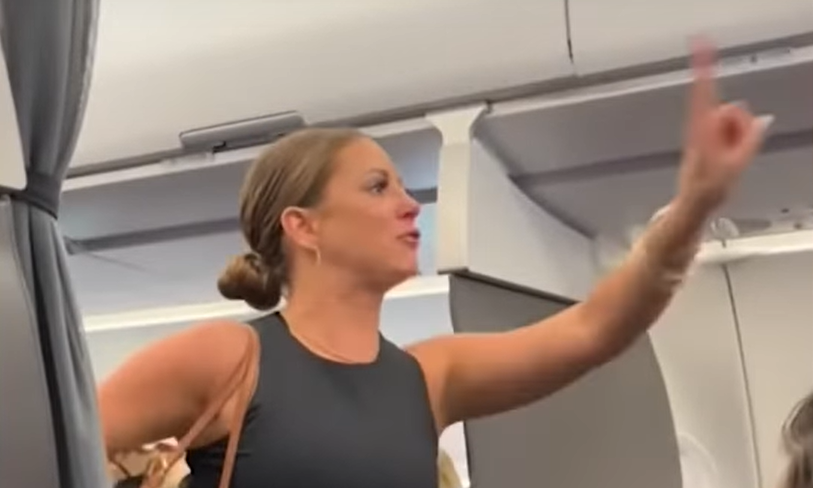
    SNL is back at it again, this time mocking everyone’s favorite airline passenger to mock, Tiffany Gomas – also known as the “that motherf***er is not real” lady. Gomas herself saw the clip, and while she seemed a bit embarrassed by SNL parodying her infamous July meltdown on an AA flight out of DFW, she seemed to take it in stride. User @byebyejack1 replied, reassuring Gomas that nobody saw it, because that would require actually watching SNL.

    Last week in an appearance on right-wing comedian Alex Stein’s show on The Blaze, Gomas admitted that the July incident earned her a ban from American Airlines, and it seems like she’s since become a United convert. Living in DFW, that really sucks for her; while everyone else is able to take nonstop flights to virtually anywhere from DFW, seems Gomas is going to be stuck taking a quick connecting flight to Houston (IAH) or one of United’s other hubs.

    Gomas is a marketing executive in the DFW area, and has been a good sport about her newfound infamy, leaning into it rather than remaining in hiding. As a fellow Oklahoma State grad, it’s good to see a fellow member of the Cowboy family making something good out of a bad situation. While I don’t hold a Marketing degree specifically, I did attend the Spears School of Business just like Gomas presumably did. Some of the best advice I’ve ever received about marketing myself has been from Spears Marketing professors, some of which I never formally enrolled in classes with. It seems she’s used her skills to turn what was likely one of the worst days of her life into something positive. Good on her.

    Gomas’ identity remained a mystery for weeks after the incident. However, as the DFW Airport Department of Public Safety got involved, I can’t see how she expected to keep her identity a secret for very long. As a government agency, the department got FOIA’ed by journalist Bree A. Dail several weeks later. You can read the full report in all its glory here.

  • Will AA Cabin Crews Actually Strike Over Christmas?

    Will AA Cabin Crews Actually Strike Over Christmas?

    American Airlines cabin crews have been deadlocked for quite some time in negotiations over a new contract. Recently, APFA union members voted overwhelmingly in favor of authorizing a strike. Now, the APFA plans to make an announcement on Monday, per an email blast sent out to its members and obtained by Gary over at View From the Wing.

    Negotiations Update #38:
    An Update on This Week’s Bargaining

    Your APFA Negotiating Committee met this week with the Company in federal mediation with the National Mediation Board (NMB).  

    As we indicated in our previous hotline, we have set this week as a deadline for the Company to make significant movement toward reaching an agreement. This afternoon, your APFA Negotiating Committee met with your Board of Directors to brief them on the status of negotiations, including the next step: a request to the National Mediation Board to release us into a thirty-day cooling-off period. 

    On Monday, November 20th, we will communicate information regarding this week’s negotiations and next steps, including the APFA Board of Director’s action on the request to the NMB to be released to strike. This will allow ample time to prepare communications for the various interested parties, including the National Mediation Board, the Membership, and the media.

    Email from APFA Negotiating Committee

    Let’s unpack this. First of all, AA flight attendants earn base pay comparable to Delta’s cabin crews. However, profit sharing is a very different story, and that’s simply because AA isn’t nearly as profitable. There are a few reasons behind this:

    • AA has the youngest fleet of any major US carrier. This is great in terms of passenger experience – I’d much rather fly aboard a 787 Dreamliner than a tired old 757 or 767, of which Delta has 121 and 65, respectively, still active in their fleet. That said, with all these new aircraft comes a much larger debt load, and that’s gotta be serviced.
    • Delta’s credit card partnership with AmEx sees 1% of the entire United States GDP spent on their cards. Their SkyMiles program is so popular that they’ve had to gut it severely as it has been a victim of its own success (though CEO “Fast Eddie” Bastian had to partially roll the changes back, as too many elites got spooked). US airlines don’t make the bulk of their profits from actually flying planes – they make it through credit card partnerships with AmEx, Citibank, JPMorgan Chase, and so on.
    • Domestic travel is basically evaporating before our eyes, while international remains robust. American has a really strong domestic route network, but their international network is far behind Delta’s. During the pandemic, AA got rid of a large chunk of their widebody fleet, expecting that by the time international travel returned in any meaningful way, they’d be taking deliveries of shiny new 787s from Boeing. Well, Boeing can’t seem to deliver on that, and until they do, AA’s international network will continue to be severely constrained. It seems like right now, you can fly AA metal to any destination in Europe, as long as it’s Heathrow.

    So will we actually see a Christmas strike materialize? The Biden administration has been more friendly to unions than perhaps any other presidency in recent memory. We have come dangerously close to a UPS strike and a freight rail strike, either of which would have made obtaining essential goods and even clean water significantly more difficult. However, in both cases, the strikes were averted at the 11th hour. Unlike in Europe, we are culturally much more averse to allowing essential infrastructure to be disrupted by a strike.

    Specifically for this case, it seems the APFA is aiming to formally ask the National Mediation Board on Monday to release them from negotiations, beginning a 30-day cooling off period. A few outcomes could come of this:

    • They’re asking this during another holiday period – Thanksgiving. I don’t forsee AA getting an answer until sometime in early December, which would push any possibility of a strike into the new year.
    • The NMB could decline to authorize the cooling-off period, requiring union members to stay at the bargaining table.
    • In the unlikely event the union obtains timely authorization from the NMB, the ball is in President Biden’s court. This puts Biden in a precarious position. Biden is up for re-election in less than a year, and primary season is coming much sooner than that. Biden needs to maintain his pro-union image going into election season. At the same time, he won’t want to be remembered for ruining Christmas, especially as many Christmases were ruined last year by another Dallas-based airline.

    It’s also important to note that it’s unlikely AA cabin crews will shut down the entire airline if and when they do go on strike. They will probably “walk out” on selected flights, causing disruption more akin to that of a major winter storm. Regardless, it would cause severe reputational harm to AA, prompting passengers to consider flying with competitors.

    Personally, I’m not too worried about this. History has shown that under the Biden administration, these strikes tend to get averted – albeit typically at the 11th hour. If nothing else, expect that if a strike does happen, it won’t be until early 2024.

    ht View From the Wing

  • Allegiant to Return to MCO in 2024

    Allegiant to Return to MCO in 2024

    Allegiant, the leisure-focused ULCC with a penchant for steering clear of major airports, is making a surprising return to Orlando International Airport (MCO). Known for its preference for smaller, out-of-the-way airports, Allegiant’s move back to MCO after a hiatus since 2011 has raised a few eyebrows.

    The airline has a history of choosing airports that aren’t exactly the most convenient for travelers, with some even located in different states than their advertised cities. Take, for instance, MidAmerica-St. Louis Airport (BLV), branded as a St. Louis airport but geographically situated pretty far into Illinois, in a rural area on the edge of an Air Force base. Other airports that are served either primarily or exclusively by Allegiant include St. Petersburg, FL (PIE) and Orlando Sanford (SFB). Allegiant’s aversion to major airports is attributed to the airline’s desire to avoid higher landing fees, forcing passengers to trek out to inconvenient locations with fewer options for rental cars and ground transportation.

    This aversion to major airports means the airline’s return to MCO is a fairly unexpected (and welcome) move. Starting in May 2024, the airline will operate three routes from MCO:

    • Allentown (ABE): Twice-weekly, commencing on May 16th.
    • Asheville (AVL): Flights ranging from twice to four times weekly, starting on May 3rd.
    • Knoxville (TYS): Twice-weekly, beginning on May 17th.

    It’s worth noting that Allegiant’s first foray into MCO back in 2010 didn’t go as planned, leading to the withdrawal of its operations just a year later. This return to MCO may slightly cannibalize Allegiant’s existing operations at Orlando Sanford International Airport (SFB), so it’ll be interesting to see if these three cities eventually get dropped from SFB.

    It’s possible Southwest started this trend of LCCs serving larger airports. For many years, Southwest eschewed major airports such as IAH, ORD, and DFW in favor of HOU, MDW, and DAL, respectively. However, they began serving IAH & ORD in recent years, and the airline is exploring DFW service as soon as 2025.

    In addition to the MCO routes, Allegiant has announced nine other new routes, seven of which are entirely new and have never been served by any carrier before. These routes, set to kick off in May 2024, include:

    • Austin (AUS) to Eugene (EUG): Twice-weekly, starting May 31st.
    • Appleton (ATW) to Newark (EWR): Twice-weekly, starting May 17th.
    • Billings (BIL) to Los Angeles (LAX): Twice-weekly, starting May 16th (Allegiant previously operated this route from 2009 to 2021).
    • Bismarck (BIS) to Tampa St Pete (PIE): Twice-weekly, beginning May 15th.
    • Chattanooga (CHA) to Las Vegas (LAS): Twice-weekly, starting May 16th.
    • Rapid City (RAP) to Orlando Sanford (SFB): Twice-weekly, beginning May 15th (Allegiant briefly served in August 2021).
    • Rockford (RFD) to Nashville (BNA): Twice-weekly, starting May 16th.
    • Traverse City (TVC) to Fort Lauderdale (FLL): Twice-weekly, starting May 17th.
    • Washington Dulles (IAD) to Punta Gorda (PGD): Twice-weekly, starting May 16th.

    HT: Simple Flying

  • Did I Encounter a Southwest Stowaway?

    Did I Encounter a Southwest Stowaway?

    Yesterday, I got a response from my home airport of Tulsa International (TUL) regarding the issues I had with the TUL Visitor Pass program. These issues appeared to be resolved, but I wasn’t sure when I’d be able to find the time to make it back to TUL and give it another go. Well, Tulsa’s traffic made that easy for me! A major wreck on my side of town decided to gift me some free time, giving me the choice between sitting in gridlock for potentially hours on end, or getting some quality planespotting time in at TUL while things cleared up. I opted for the more pleasant alternative—hanging out at the airport. This time, my experience with the Visitor Pass program was notably smoother, but that’s a story for another day.

    As I strolled towards the TSA checkpoint, a peculiar announcement echoed through the airport speakers. Someone was urgently summoned to the Southwest Airlines counter, being reminded in no uncertain terms that they were “in Tulsa, Oklahoma, NOT Philadelphia!” This announcement was repeated several times over the course of the coming minutes. Oops, someone took a wrong turn!

    I reached out to Southwest for some insight, but the airline’s response was predictably vague. All I got was a standard response acknowledging my concern, but declining to comment on individual passengers. Fair enough. The specifics of the incident remained elusive, but we can read between the lines here: someone, whether intentionally or unintentionally, likely boarded the wrong flight. It’s unclear which flight this occurred on, but my educated guess based on the time of the announcement points to WN2883 from Austin Bergstrom (AUS) as the misdirected traveler’s likely flight.

    Hi, Adam. While there may be many reasons that a Passenger may be paged to the counter, we are unable to provide information about a fellow Passenger. We apologize for any concern this may have caused.

    Response from “Sara” with Southwest Airlines

    This mishap brought me back to a September blog post where I delved into the case of a stowaway on a Southwest flight to MSY. In that instance, the passenger slipped through the cracks intentionally, only to be nabbed thanks to a completely full flight.

    Sure, boarding passes are designed to be electronically scanned, theoretically preventing such mix-ups. However, it ultimately falls on the gate agents to ensure that no one sneaks onto the jetbridge without a valid scan. And Southwest’s gate agents seem to have a hard time enforcing much of anything.

    It’s unlikely this qualified as a true security breach. TSA does a good job of securing the boundaries between sterile and non-sterile airport areas, and most airports now use automated exit lanes that provide no opportunity to slip past while the agent isn’t looking (AUS being one of those). However, airlines like Southwest seem to fall short in ensuring that those already in the sterile zone have the proper boarding pass for their specific flight. And while TSA does this well, there are legitimate ways to enter a sterile zone without a departing flight – someone could be a domestic arrival, utilize a fully refundable ticket, or be at an airport like TUL that gives gate passes to anyone who requests them. You still have to be screened by TSA, you just don’t necessarily need to fly out.

    The incident in September raised questions about how such slip-ups occur. Now that I’ve (potentially) encountered a similar situation firsthand, I really question how frequently this is happening and not being reported. It might be high time for some gate agent retraining or, dare I suggest, the introduction of automated turnstiles at the gate to streamline the process.

  • That MF is On… The Blaze? Alex Stein “Proposes” to Tiffany Gomas in Network Appearance; Gomas Reveals Ban

    That MF is On… The Blaze? Alex Stein “Proposes” to Tiffany Gomas in Network Appearance; Gomas Reveals Ban

    Many of us remember back in July when Tiffany Gomas had her outburst on an American Airlines flight out of DFW to Orlando (MCO). Well, Gomas is back at it, this time on… Glenn Beck’s The Blaze? Oh, and she’s apparently banned from AA, too.

    Gomas appeared on Prime Time with Alex Stein, and we’ll just let these video clips speak for themselves.

    Alex Stein, also known as Prime Time #99, is an interesting character. He’s a right-wing comedian, based in the Dallas-Fort Worth Metroplex. Stein rose to fame (infamy?) by trolling city council meetings, originally around the Metroplex and eventually around the country. Usually citizens are entitled to a set number of minutes to speak before a city council, and Stein would use his alotted time to perform politically-charged raps.

    Gomas conveniently also resides in the DFW area, having graduated from my alma mater, Oklahoma State. Assuming her degree is in Marketing, that would mean we both attended the Spears School of Business, and we likely had the same grouchy old Marketing professor at some point (this man also taught Garth Brooks).

    If you must, you can watch all 66 minutes of the episode in its full glory on YouTube.