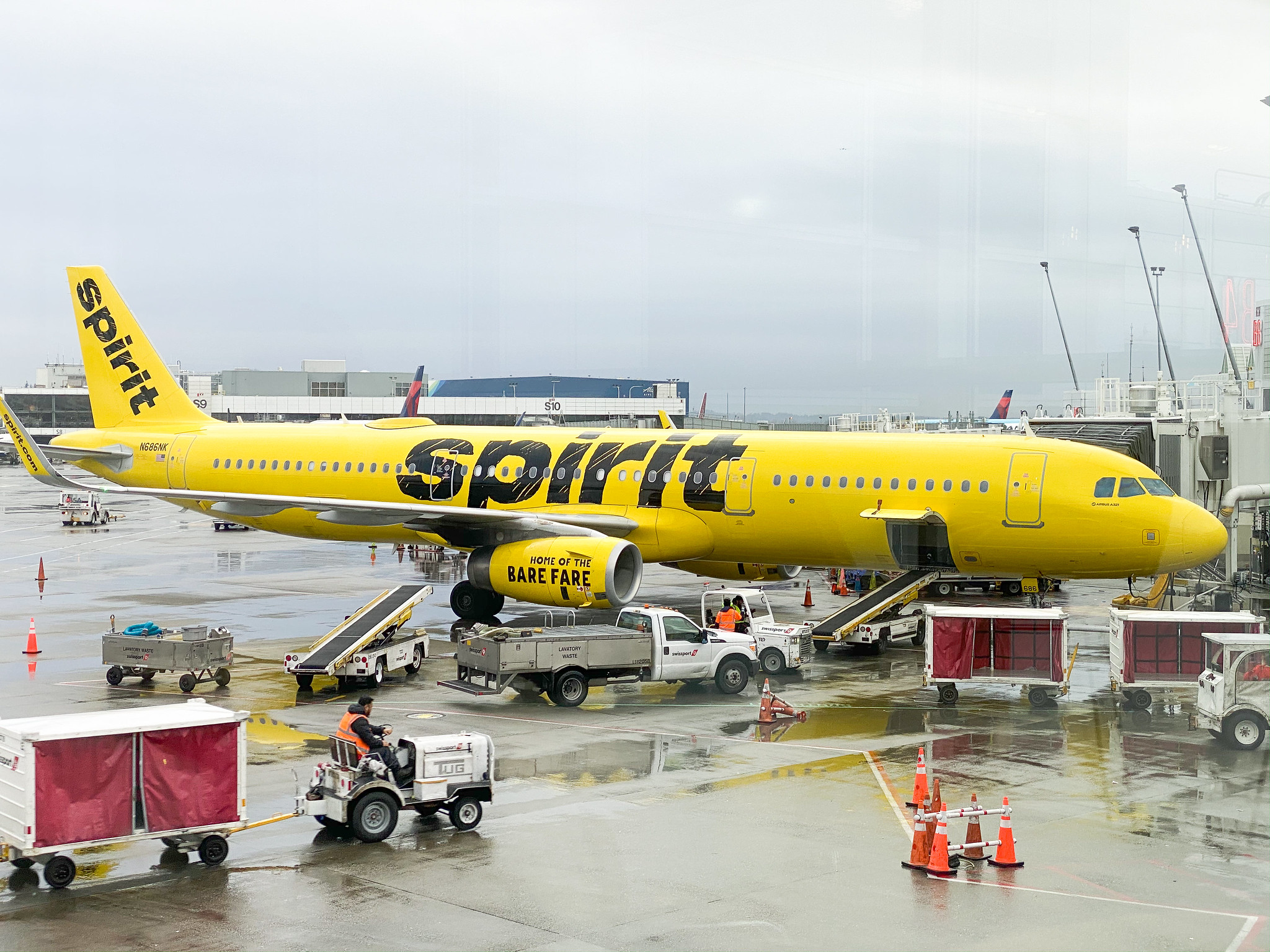
Just a few months ago, airlines were riding high on unprecedented post-COVID revenge travel demand. People were itching to get back in the skies and explore the world after a long hiatus. Airlines were expanding their routes, booking up planes, and staffing up. But, as they say, the only constant in the airline industry is change, and here we are – another day, another airline doing layoffs, hiring freezes, or exiting a market.
The latest to join this trend is none other than Spirit Airlines, which has announced its exit from Denver International Airport (DEN). The reasons cited for this decision include demand in the market and ongoing woes with Pratt & Whitney engines. The ultra low-cost carrier will be wrapping up its operations at DEN on January 9, 2024.
Denver, Colorado, is an intriguing market. It’s home to one of the largest airports in the world, and yet Spirit Airlines chose to serve only three cities from this bustling hub. Two of those cities, Fort Lauderdale (FLL) and Miami (MIA), are within close proximity to each other, and the third is Las Vegas (LAS). In total, that’s just 240 flights a month, with a daily rotation of one flight to FLL, one to MIA, and two to LAS. Even with strong competition from other ULCCs, one would expect Spirit’s presence at such a large airport to be just a little bigger, especially with DEN commanding a large amount of leisure travel during ski season.
One of the key factors contributing to Spirit Airlines’ decision is the ongoing trouble with Pratt & Whitney engines. In August, the Federal Aviation Authority (FAA) issued an Airworthiness Directive for aircraft equipped with Pratt & Whitney’s PW1100G engines. Approximately 20 of Spirit’s aircraft were affected by this directive, and they are expected to remain grounded for about six to eight weeks. These engine issues have hampered Spirit’s ability to operate its flights effectively.
Financially, Spirit Airlines has also been facing turbulent times. Last week, we brought you news about the airline enacting a hiring freeze, pausing training of new pilots and flight attendants indefinitely. In the Q3, the company reported a staggering $157.6 million loss. This loss is against the backdrop of $1.2 billion in revenue for Q3, with total revenue until September standing at $4 billion. The loss is attributed to several factors, including the engine problems we mentioned earlier and a shrinking domestic demand for air travel.
Low-cost carriers like Spirit have been hit especially hard because the bulk of their routes are domestic. International travel, particularly to Europe, remains relatively robust, but U.S.-based LCCs typically don’t venture across the Atlantic. The result of reduced demand is lower fares in the short to medium term, putting pressure on the profitability of these airlines – not only are they selling fewer seats, but the margins on the seats they do sell are considerably smaller. Some economic experts have been warning of an impending recession for a while now, and the rapidly shrinking demand for air travel could indeed be a leading indicator of broader economic trends.
And amidst these challenges, there’s an ongoing legal tussle at play. JetBlue Airways has been aggressively pursuing a takeover of Spirit Airlines. However, this attempt is currently being litigated in court. The outcome of this legal battle could potentially shape the future landscape of the airline industry, should the merger go through.
One might wonder if part of why Denver is such a challenging market for Spirit is the presence of their largest rival, Frontier Airlines, which is based at DEN. Frontier recently made headlines by launching a status match promotion that’s, well, quite wild. They’re allowing virtually any elite status, even from hotels, to be matched to their Frontier Miles program for a fee. Additionally, rival Southwest likely commands a disproportionate share of ski traffic, as the airline gives all passengers (regardless of elite status) a generous allowance of two free checked bags on every flight, no matter what. The airline also is more flexible with oversize and odd-shaped baggage, a boon to those bringing gear with them to the slopes.
The airline industry is a complex and ever-evolving beast. Spirit Airlines’ exit from Denver illustrates just how quickly things are changing in an industry that was riding high just a few short months ago. The ongoing engine problems and financial challenges are causing turbulence for this low-cost carrier. And with the domestic travel demand in flux, we’ll continue to keep a close eye on how these developments, including the JetBlue takeover attempt, affect the industry as a whole.
h/t KDVR – Fox 31