Tag: dfw

  • Sticker Shock: Gas Station Near DFW Airport Charges Over $5 a Gallon

    Sticker Shock: Gas Station Near DFW Airport Charges Over $5 a Gallon

    Traveling can be stressful enough without the added pressure of avoiding exorbitant gas prices near the airport. Unfortunately, if you’re refueling your rental car near Dallas/Fort Worth International Airport (DFW), you might encounter just that. A gas station near the airport is charging upwards of $5 a gallon, and it’s causing quite a stir among unsuspecting travelers.

    It’s no secret that gas stations located near airports tend to charge above-market prices. The principle of supply and demand is at play here, with lots of people needing to refuel their rental cars before returning them. Business travelers, often on their company’s dime, might not pay much attention to the price per gallon, making them an easy target for higher charges.

    The mantra “location, location, location” reigns supreme. Travelers are often in a hurry and prioritize convenience over cost, opting to fill up close to the airport even if it means paying more; after all, missing your flight could be significantly more expensive than overpaying a bit for fuel. Some gas stations take advantage of this urgency to an extreme, and that’s where the problem arises.

    If you need a notorious example, look no further than Suncoast Energys near Orlando International Airport (MCO). This gas station has become infamous for charging unsuspecting travelers upwards of $5.50 a gallon, earning it a one-star rating on Yelp. Such predatory pricing exploits travelers who might not have the time or knowledge to seek out more reasonably priced gas stations.

    The Valley View Shell: A Case of Overcharging at DFW

    Enter the Valley View Shell at 4900 W Airport Fwy (SH-183) in Irving, TX. Situated between the southern entrance to DFW Airport and the President George Bush Turnpike, this gas station has recently come under scrutiny. According to recent Google reviews and social media posts, the station is charging upwards of $5 (and in some cases closer to $5.50) for a gallon of regular unleaded fuel.

    Some reviews suggest that the station management is turning off their electronic signage, so you won’t know the price until you get to the pump. It’s a tactic that preys on hurried travelers who may simply pay the inflated price out of necessity.

    Comparing Prices in Irving

    To put this into perspective, at the time of writing, many stations in Irving are selling gas just below $3.00 a gallon, with the lowest prices ranging between $2.80-$2.90. Remarkably, the “DFW Mart” Shell station on airport property by the Rental Car Center was charging $3.29 a gallon, which while higher than prevailing prices in the local area, is still almost $2.00 per gallon cheaper than this station just outside the airport perimeter.

    While Shell stations are generally known for being slightly more expensive than their competitors, the prices at Valley View Shell are beyond the pale. Although this station is likely an independently-owned franchise, it’s surprising that Shell would allow its brand to be associated with such predatory pricing practices.

    Tips for Avoiding High Gas Prices Near Airports

    As always, be vigilant when refueling your rental car. If possible, use an app like GasBuddy to plan your refueling stop at a gas station away from the airport to avoid inflated prices. The complimentary Walmart+ subscription provided with certain Amex cards can help save money (and avoid having your card skimmed by using Walmart as an intermediary). If you can find a Costco near the airport you’re departing from, even better.
  • What Would You Do? Global Entry Dilemma at DFW

    What Would You Do? Global Entry Dilemma at DFW

    It’s no secret that the airline industry has been a rollercoaster lately, with domestic travel taking a nosedive while international demand remains surprisingly robust. This incongruity is causing a conundrum for low-cost carriers like Spirit, who rely heavily on domestic routes. But let’s zoom in on a scene I encountered at Dallas/Fort Worth International Airport (DFW) during the Thanksgiving holiday that I don’t recall ever seeing before.

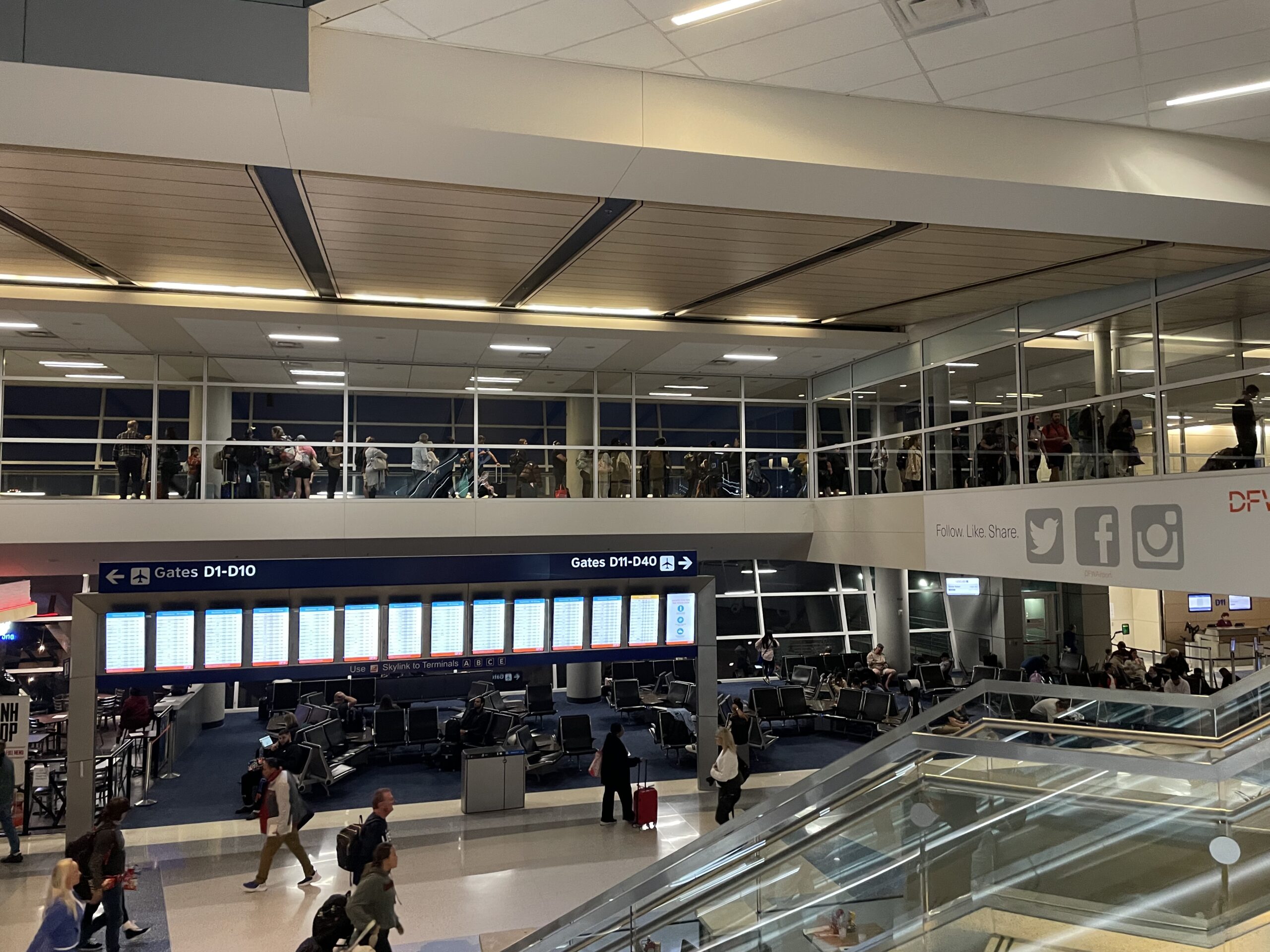
    Customs line at DFW backed up almost to the plane, (C) 2023 Points & PDBs
    That’s backed up almost to the plane!

    Now, the image I captured speaks volumes. The line for passport control snaked its way beyond the Customs and Border Protection (CBP) facility and into the sterile glass corridors used to separate arriving international passengers from those who have undergone TSA screening – really, almost to the plane passengers were getting off of (I was in a hurry and didn’t stop to figure out where they were coming from). It was a sight to behold, and it left me pondering a hypothetical scenario: What would you do in this situation?

    The line extended well before the point where it bifurcates into channels for Global Entry and Mobile Passport Control. Would you have queued up with the masses until you reached the split for Global Entry, or would you have boldly strolled past everyone straight to the Global Entry kiosks?

    Personally, I lean towards the latter. Sure, you might attract a few disapproving glances, but hear me out. The majority of those in line are likely waiting for standard screening involving an interview with a CBP officer. By skipping ahead to the Global Entry kiosks, you’re not usurping their position in the standard screening line; you’re just taking advantage of a time-saving tool – one that you’ve paid and undergone a background check and interview for. Of course, if a staff member intervenes, it’s important to comply, but don’t let the judgmental stares from fellow passengers deter you.

    Thankfully, I was a mere spectator in this spectacle (I saw this while coming down the escalator from the Skylink near gate ~D12) and didn’t have to grapple with the decision myself. DFW generally has a reputation for efficiency in both TSA and Customs screening, and I’ve never personally seen a line of this magnitude at the Texas mega-hub, whether returning to the country myself or observing from the concourse below.

    The only comparable scenario I recall was during the initial COVID lockdowns when people rushed to return home, causing delays amid heightened health screening measures. This line, however, takes the cake for its sheer length. It raises the question: Is the surge in international demand truly that substantial, or are CBP staffing issues over the holidays bottlenecking the process?

    During the pandemic, American Airlines retired numerous widebody aircraft, anticipating the delivery of new 787s to coincide with the expected rebound in demand. Unfortunately, Boeing’s delays in delivering the 787s have left AA with severely constrained international capacity at present. As most of AA’s international flights are already completely filled with either paid or standby passengers, it’s unlikely there’s suddenly a huge surge of additional passengers flying internationally on AA. It’s not like they have the ability to add a bunch of new capacity for the holiday season, save for some narrowbody flights to Mexico and the Caribbean (Canada has preclearance at most airports so that’s effectively domestic for this purpose).

    So, what would you have done in this situation?

  • This Admirals Club Features Dangerously Misleading Signage

    This Admirals Club Features Dangerously Misleading Signage

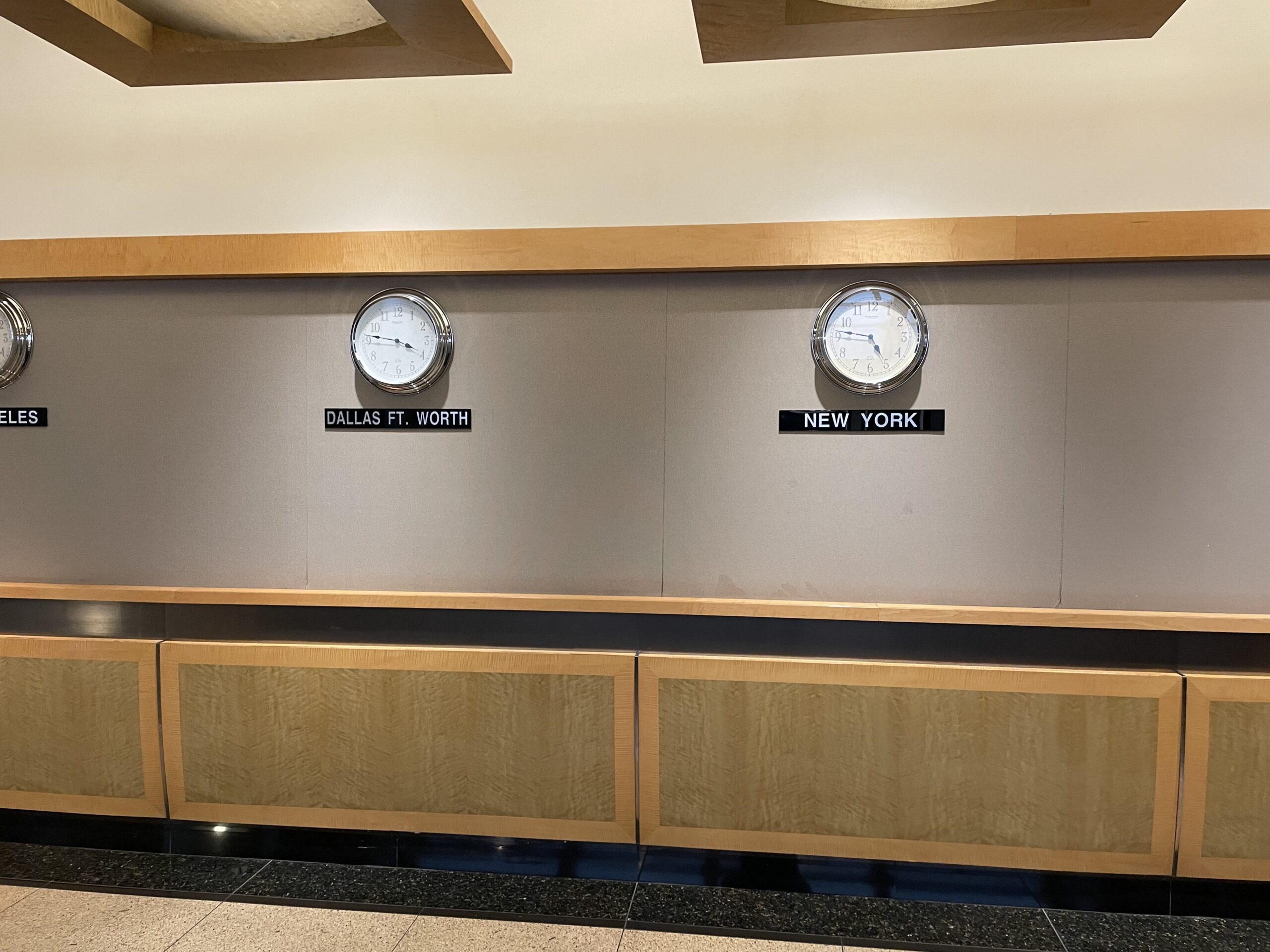
    You either love or hate the Admirals Club at DFW Terminal C. It’s giant, and it’s dated. If you ever wanted to know what it was like to be George Clooney’s character in Up in the Air, this club could likely give you a pretty good idea. The food selection is abysmal, but at least there are plenty of places to hide out, including full-height cubicles in the business center. Even though the terminal has largely been relegated to domestic flights to secondary markets like Oklahoma City (OKC), they’ve never removed the shower facilities from the terminal – something CLT doesn’t have at either of their Admirals Clubs.

    World clocks… how very… retro!

    Well, there’s one interesting feature of this club that AA desperately needs to update. You see, it’s been years since AA changed its policy on gate closure, requiring passengers to be in the gate area available for boarding no later than 15 minutes, in its endless and well-documented quest to achieve D0 at all costs. However, signage at various points throughout the facility paints a different picture.

    What’s wrong with this picture? These signs state AA’s previous policy of gate closure at just 10 minutes prior to departure, not 15.

    This is dangerous to have posted prominently throughout the club. People like to enjoy the lounge until the last possible second, and 5 minutes can make all the difference between making your flight and missing it. I guess AA assumes most people enjoying an Admirals Club are probably frequent enough flyers to know better. But one has to wonder how many infrequent travelers have been burned by this; I’m imagining someone going on a once-in-a-lifetime trip on a business class ticket, or someone on a long delay purchasing a day pass when those are actually offered for sale.

    As that terminal is rebuilt piece by piece (and it will be stunning once complete), I can’t see AA investing another dime into that club unless absolutely necessary; everything is being rebuilt anyways, so why would they? Regardless, maybe if they don’t want to paint over the paint damage from removing these signs, maybe they can at least have some new ones printed? This would be forgivable if it hadn’t been many years since this change was made… but in 2023? C’mon, AA…

  • DFW’s State of the Airport 2023: Terminal F and Terminal C Renderings Unveiled

    DFW’s State of the Airport 2023: Terminal F and Terminal C Renderings Unveiled

    Dallas/Fort Worth International Airport (DFW) has been making headlines recently, and for all the right reasons. The 2023 State of the Airport event shed light on some exciting developments, including impressive economic impacts and tantalizing glimpses into the future of this bustling hub, including a clearer idea of what to expect from the long-awaited sixth terminal, and reconstruction of the aging Terminal C. Let’s dive right in.

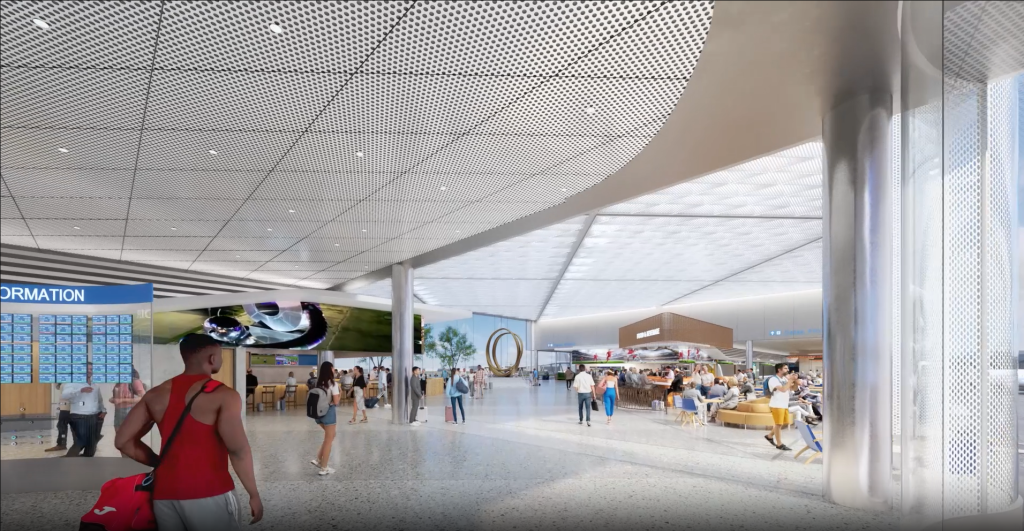
    The Terminal C of the future is dramatically different than the one we know today. (credit: DFW Airport)

    DFW Airport has been a powerhouse, a critical economic engine for North Texas and the entire country, and the 2023 SOTA highlights just how significant its impact is. According to an updated economic impact study by the Perryman Group, DFW contributes a jaw-dropping $38 billion in direct and indirect payroll support, $24 billion in visitor spending, and $5 billion in state and local tax revenue annually. That’s no small feat, and it doesn’t stop there. The airport also supports over 634,000 direct and indirect jobs across the region. Impressive, right?

    Dallas Mayor Eric L. Johnson couldn’t have put it better: “DFW Airport is an incredible asset driving the economic activity for our entire metro area.” It’s a sentiment shared by Fort Worth Mayor Mattie Parker, who emphasized DFW’s role as a job creator and economic engine, connecting the region to global audiences and enhancing opportunities for residents and businesses alike. “Airports are not just gateways to the world, they are gateways for our community’s prosperity and progress,” said Parker.

    I can’t tell if this is DFW or LaGuardia… and for the first time, that statement is a compliment to both (credit: DFW Airport)

    DFW’s CEO, Sean Donohue, expressed pride in the airport’s continued role as a Texas economic powerhouse and reaffirmed its commitment to growth and success. “We are proud to continue serving as one of the main economic engines not just in North Texas, but in the entire state of Texas,” said Donohue. The numbers don’t lie, and DFW’s impact on the local and state economy is undeniable.

    But let’s not forget what really piqued our interest during the SOTA event—those stunning new renderings of Terminal F and the much-needed reconstruction of Terminal C.

    DFW is rapidly evolving into a world-class airport, a standout among U.S. airports. In fact, it’s now the second-busiest airport on the planet, with the 10 busiest travel days in DFW history all happening this past summer. Moreover, during the tumultuous shutdowns of 2020, DFW briefly held the title of the world’s busiest airport. It appears poised to regain that position permanently in the coming years.

    DFW also already contains one of the highest lounge densities in the Western Hemisphere, with Chase set to open a new Sapphire Lounge in Terminal D next year. This is in addition to a bevy of quality dining and shopping options throughout the terminals (Pappasito’s, anyone?). Personally, it’s one of the few airports where I prefer longer layovers.

    Now, onto the star of the show—Terminal F. The renderings are nothing short of breathtaking, and this terminal promises to be a game-changer for transit passengers. However, it may pose some challenges for origin and destination (O&D) travelers due to its unique design. With just 15 gates, Terminal F will be the smallest of DFW’s terminals and breaks from the traditional horseshoe layout of the others. Interestingly, Terminal F’s construction was always part of DFW’s master plan, with the Express South parking lot making way for its future location.

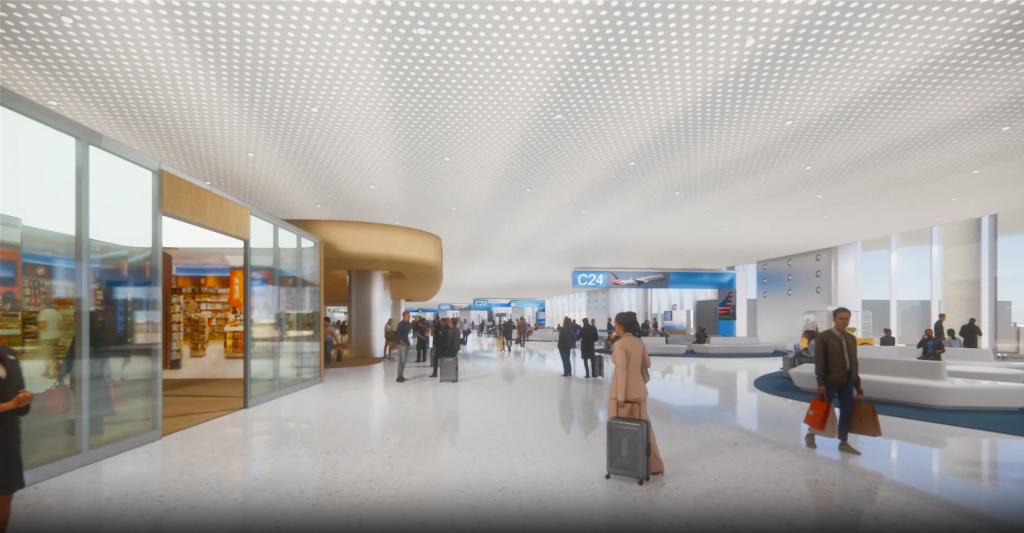
    Then there’s the much-anticipated reconstruction of Terminal C, which was initially slated for demolition and was therefore left out of the initial round of renovations. However, based on these renderings, the newly reimagined Terminal C will be worth the wait, going from one of America’s worst hub terminals to one of the best. Parts of the terminal have shown their age, but the renderings give us a glimpse of its future – and futuristic it is! What’s unique about this project is that it’s being reconstructed piece by piece in a modular fashion—a first for a U.S. airport. These modular components are so massive that they’re being constructed on-site in a remote part of the airfield. Gates C35-C39 are already open, so if you want to see the future in-person, stop by on your next visit!

    Terminal C Midpoint (courtesy: DFW Airport)

    DFW Airport is soaring to new heights, not only in terms of economic impact but also in the quality of its facilities. While U.S. airports typically lag behind those in other countries, I firmly believe DFW has the potential to hold its own against major hubs around the globe. The renderings of Terminal F and the reconstruction of Terminal C are tantalizing teasers of what’s to come, and it’s clear that DFW is making strides to solidify its position on the world stage. Stay tuned for more updates on these exciting developments as DFW continues to evolve and transform.