
Tag: lhr

  • Virgin Atlantic to End Austin-Heathrow Flights Amid Tech Bubble Burst

    Virgin Atlantic to End Austin-Heathrow Flights Amid Tech Bubble Burst

    Virgin Atlantic has announced its decision to end its service connecting Austin-Bergstrom International Airport (AUS) to London Heathrow (LHR). The British airline cites a “persistent softening in corporate demand, specifically within the tech sector,” as the primary reason for this strategic move.

    The last Virgin Atlantic flights to Austin are scheduled to operate on January 7, 2024. For those passengers affected by this decision, the airline has promised to provide various options, including the choice of a full refund. For now, Virgin’s UK rival, British Airways, continues to operate their AUS-LHR service, which has been in place since 2014.

    Juha Jarvinen, the chief commercial officer for Virgin Atlantic, expressed the airline’s sentiments, saying, “We’ve adored flying our customers to Austin and experiencing this wonderful city of music and culture, but demand in the tech sector is not set to improve in the near term, with corporate demand at only 70% of 2019 levels. Therefore, sadly, we made the tough decision to withdraw services. We’d like to thank everyone in Austin, our customers, teams, partners, and the authorities for their support over the past 18 months.”

    Virgin Atlantic had only launched its nonstop flights to Austin in May 2022, directly competing with British Airways on the same route. However, the numbers reveal a stark difference in the passenger counts, with Virgin Atlantic carrying only about a third of the passengers that British Airways was flying to and from Austin. The most recent figures from August, compiled by Bergstrom Airport administration, indicate that Virgin Atlantic transported approximately 4,800 passengers to and from Austin, compared to British Airways’ impressive 16,000 passengers – perhaps owing to the extremely high concentration of Oneworld elites in the Austin area.

    Austin-Bergstrom International Airport officials issued a statement expressing their gratitude for Virgin Atlantic’s ambitious route. They added, “We hope to welcome them back one day.”

    The suspension of the Austin-London route marks the second international route cancellation at AUS in recent months. Spirit Airlines had previously suspended its nonstop route to Monterrey, Mexico last month, citing low passenger demand (though, in fairness, Spirit has been facing larger financial difficulties). In response, Viva Aerobus has announced plans to launch its AUS-Monterrey route in March 2024.

    The tech industry has played a pivotal role in Austin’s rapid growth, with tech workers and companies flocking to the area from Silicon Valley and other parts of California. However, the tech bubble that fueled this expansion is now bursting, resulting in layoffs, hiring freezes, and a glut of applicants for tech-adjacent jobs. Even those with FAANG pedigrees are now scrambling to secure any tech-adjacent role they can get their hands on, including desktop support positions, often offering significantly lower pay, fewer business travel opportunities, and less time off compared to their previous positions.

    As Austin’s growth in recent years has been largely tech-driven, the bursting of the tech bubble has a disproportionately large impact on the city’s economy. This development could potentially affect the future of international routes from Austin, as well as domestic activity as that slows down across the board.

    Amid Austin’s rapid expansion in recent years, it has evolved into something of a “mini hub” for Southwest Airlines and American Airlines. Plans for a new midfield concourse had recently been announced, and were expedited by the Austin City Council just last month. However, with the uncertainty surrounding the tech bubble, the fate of these plans remains uncertain.

    The decision by Virgin Atlantic to suspend its Austin-London route reflects the challenges faced by the tech-driven economy of Austin and the broader impact of the tech bubble’s burst on the city’s small-but-mighty airport. We’ll have to keep a close eye on the developments at Austin-Bergstrom as it navigates through this period of transition.

    h/t KXAN
  • Skip the Lines with Heathrow’s Free Timeslot Service

    Skip the Lines with Heathrow’s Free Timeslot Service

    Heathrow Airport, one of the world’s busiest travel hubs, is no stranger to long security lines. Many a weary traveler has found themselves anxiously eyeing the clock, worried they might miss their flight while stuck in a seemingly endless queue. But now, there’s a glimmer of hope on the horizon, as Heathrow introduces a new way to beat those infamously long security lines – the Heathrow Timeslot service.

    This exciting development is currently in the trial phase, set to last for the next six months. And here’s the best part – it won’t cost you a penny. While the service is administered by CLEAR, you won’t need to enroll, submit biometrics, or pay a fee; all you need is a valid e-mail address – preferably one you can readily access on your smartphone.

    So, how does it work? Well, it’s surprisingly simple. Passengers can pre-book a designated time and security checkpoint in advance of their arrival at the airport, and receive a QR code via e-mail, granting access to a special line. If you’re familiar with CLEAR Reserve, the Timeslot platform appears to be a re-branded version of that, and the booking process should feel very familiar. The trial is currently limited to Terminal 3, available only to passengers flying with American Airlines, Delta, Emirates, and Virgin Atlantic. If the trial proves successful, it may expand to include more airlines during the testing period.

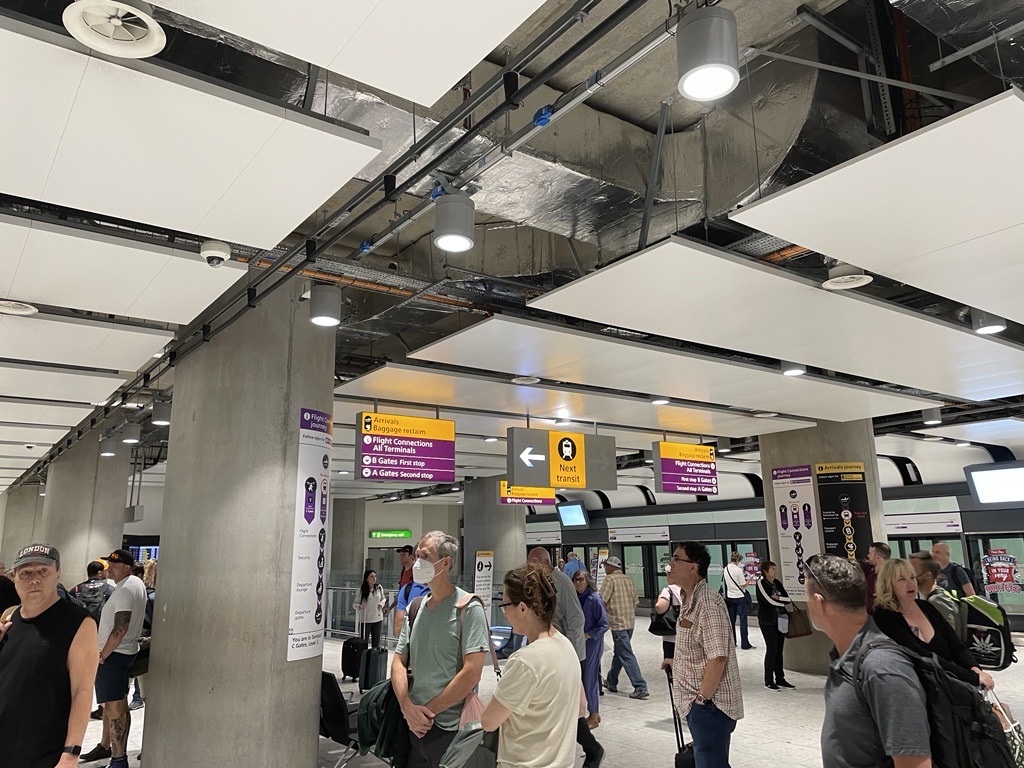
    It’s unclear if this service is available for connecting passengers using the transit security checkpoint, but given past fast-track programs and the layout of the T3 transit facility, I’d bet the answer is likely a no. However, most European and American passport holders can simply enter the UK via the border e-gates and take one of the local trains (Heathrow Express, Elizabeth Line, or Piccadilly Line) at no charge over to Heathrow Central – some claim that if you’re eligible to use the e-gates, it’s faster to clear passport control and take local transit than to wait for the shuttle buses that operate outside of customs. Bear in mind your connection may not be protected while you’re landside, so if you’re cutting it really close, it may be best to stay airside to ensure no issues rebooking.

    Here’s another convenient feature of the Timeslot service – you can book for up to five people at once, great for families or groups of friends traveling together (it’s unclear if you must all be on the same PNR, but experience suggests they won’t check). Keep in mind that these slots are subject to availability, so it’s a good idea to book ahead to secure your preferred time.

    Now, for those of you who are feeling left out, there’s some promising news. If the trial succeeds, the Timeslot service will be rolled out to additional terminals at Heathrow. As someone who frequents Terminal 5, the home of British Airways, I can’t help but hope that this service will soon be available there too.

    However, even with the convenience of pre-booking, Heathrow Airport advises travelers to give themselves more than 45 minutes before departure to pass through security. Why? Well, Heathrow operates under the UK’s somewhat infamous “conformance” scheme; at 35 minutes prior to departure, you won’t be able to pass through the turnstiles to enter the security checkpoint. So, while Timeslot can save you time, don’t cut it too close – arrive when you normally would, and use the extra time to visit one of T3’s many lounges.

    This concept of pre-booking time slots for security isn’t entirely new to European airports. Amsterdam Airport Schiphol (AMS) has been operating a similar scheme (also by CLEAR), and I recently had the chance to try it out during a trip. I must say, it worked quite well, but the security lines were so efficiently managed that it almost felt unnecessary. Still, it’s a handy option to have, and I imagine it will be a much bigger game-changer at Heathrow where the lines aren’t as well-managed.

    For many U.S. travelers accustomed to TSA PreCheck, the Heathrow Timeslot service will feel like a long-awaited dream come true. While you’ll still need to remove laptops and liquids from your bag, being able to skip the line is a game-changer. PreCheck is one of those things (like air conditioning and ice in drinks) that I always miss while abroad, so any opportunity to fast-track the security process at a major foreign hub is welcome news.

    So, if you find yourself headed to Heathrow in the coming months, consider giving the Timeslot service a try. It’s a promising step towards a smoother and less stressful airport experience, and who can say no to that?