
Tag: merger

  • Southwest Airlines Pilots Union Bracing for Potential Acquisition

    Southwest Airlines Pilots Union Bracing for Potential Acquisition

    The Southwest Airlines Pilots Association (SWAPA) is gearing up for what could be a significant move by the carrier. The union recently announced that it has retained several law firms in anticipation of Southwest Airlines potentially acquiring another airline. This move signals that SWAPA is taking proactive steps to protect its members’ interests in the event of a merger or acquisition. Does SWAPA know something we don’t?

    One of the law firms retained by SWAPA specializes in labor issues and would be tasked with ensuring that the pilots’ seniority list is integrated fairly. This is a crucial issue for pilots, as seniority determines many aspects of their career progression and benefits. The other firms would handle the business and equity side of the transaction, ensuring that pilots have a stake in the new entity’s capital.

    Last month, SWAPA made the decision to retain several law firms if Southwest attempts to acquire another carrier. One of those firms would be an experienced labor firm tasked with protecting SWAPA Pilots in a seniority list integration. The second — and possibly third — firm would handle the business and equity side of the transaction to ensure our Pilots were invested in the capital of the new entity. In 2010, then-SWAPA President Carl Kuwitsky and then-CEO Gary Kelly failed to follow Delta/Northwest’s lead in allowing the Pilots to be equity partners in the transaction when Southwest acquired AirTran. SWAPA will not make that mistake again.

    Message sent to Southwest pilots from SWAPA (h/t View from the Wing)

    This proactive approach by SWAPA is in response to past experiences. In 2010, when Southwest Airlines acquired AirTran, SWAPA was not involved in the decision-making process, and pilots were not given the opportunity to be equity partners in the transaction. SWAPA is determined not to repeat that mistake and is taking steps to ensure that pilots are involved in any future acquisitions or mergers.

    While SWAPA’s actions suggest that a merger or acquisition may be on the horizon for Southwest Airlines, the airline itself has not confirmed any such plans. In a message to pilots, SWAPA stated that neither the union nor its representatives have any knowledge of an acquisition or merger in Southwest Airlines’ future. However, the union emphasized that “hope is not a strategy,” indicating its belief that a merger or acquisition is a real possibility.

    One potential target for Southwest Airlines could be JetBlue. Once renowned for its reliability and quality of service, JetBlue has seen its reputation take a nosedive as it struggles financially. Despite limited non-stop overlap between the two carriers, a merger could have significant implications for the industry. Southwest Airlines is already the nation’s largest domestic carrier, and a merger with JetBlue could further solidify its position in key markets.

    Another perhaps less-likely target could be Sun Country Airlines. While much smaller, their all-Boeing 737 fleet would be a perfect fit for Southwest, as it would enable fleet commonality. I suppose time will reveal exactly what’s going on behind the scenes at Southwest.

    LCCs have had a rough time in the last year or so. Domestic travel has taken a nosedive, disproportionately affecting LCCs, while the relative stability of international travel has kept the engines running at legacy carriers like Delta and United. Southwest is struggling too, but they do have a very deep war chest and could still very easily purchase a competitor.

    However, any potential merger or acquisition involving Southwest Airlines would likely face scrutiny from the Department of Justice, especially under a Biden administration. The outcome of the presidential election could also play a role in the feasibility of such a deal; if Donald Trump returns to the White House, it’s likely we’d see the DOJ quickly become much more hands-off on antitrust matters such as this.

    As much as I wouldn’t want to actually fly on JetBlue right now, competition benefits us all by placing downward pressure on airfares across the board. I’d hate to see JetBlue be acquired, removing another competitor from the market; however it seems the alternative would be allowing the airline to collapse altogether.

    While the specifics of any potential merger or acquisition remain uncertain, SWAPA’s move here indicates that significant changes could be on the horizon for Southwest Airlines and the industry as a whole.
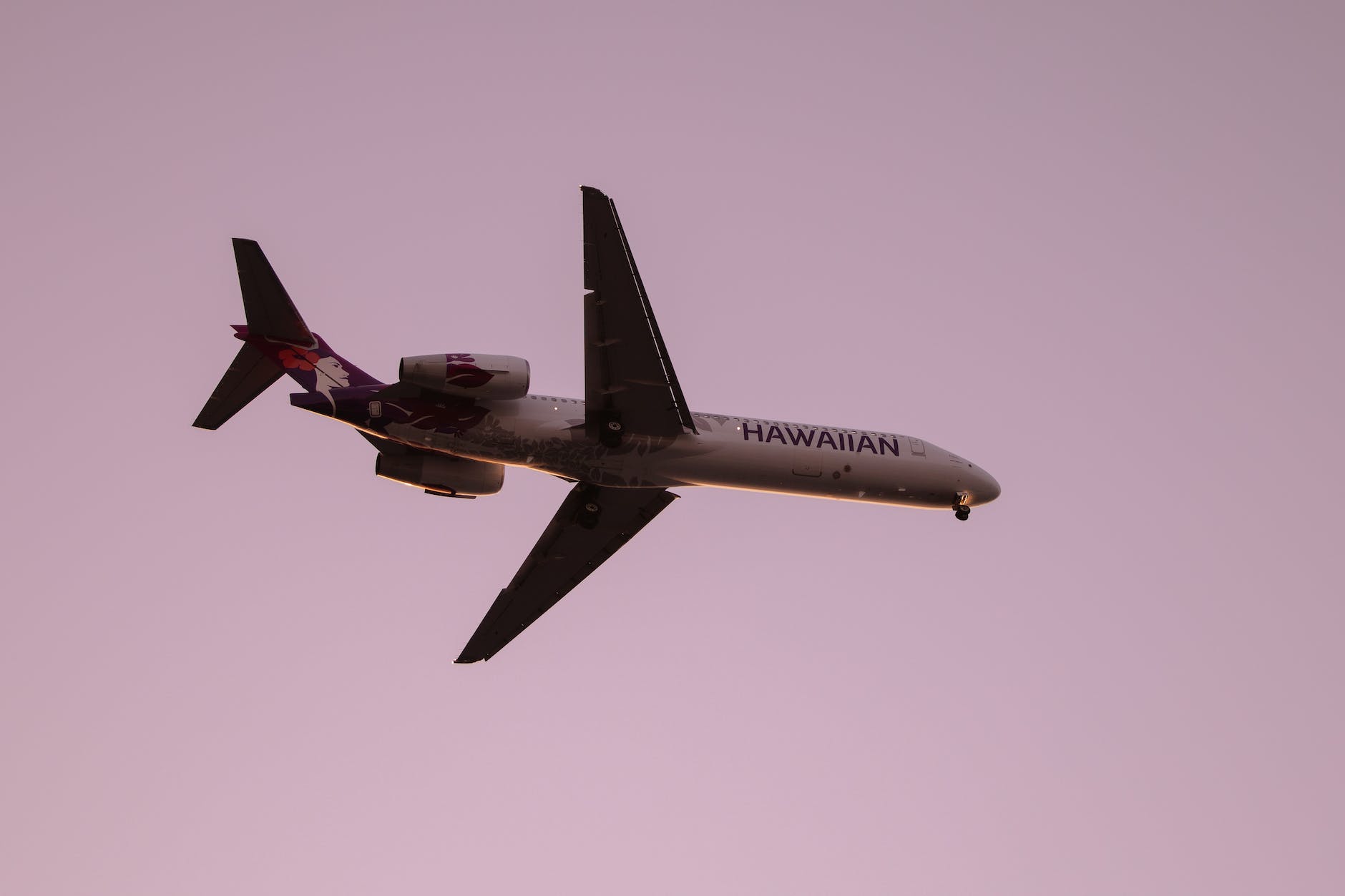
  • Sunday Surprise: Alaska Announces Intent to Purchase Hawaiian Airlines in $1.9 Billion Deal

    Sunday Surprise: Alaska Announces Intent to Purchase Hawaiian Airlines in $1.9 Billion Deal

    Alaska Airlines just dropped a Sunday bombshell: they went shopping and picked up a Hawaiian Airlines in a hefty $1.9 billion deal, subject to regulatory approval. The cash transaction values each Hawaiian Airlines share at $18.00, with the overall package including $0.9 billion of Hawaiian’ Airlines’s net debt.

    The Hawaiian brand isn’t going anywhere, however. The marriage of these two carriers will keep both the Alaska Airlines and Hawaiian Airlines brands intact, backed by a unified loyalty program. The resultant behemoth will boast a fleet of 365 aircraft, providing connections to 138 destinations on HA/AS metal, and hooking into the extensive Oneworld Alliance for access to over 1,200. This merger isn’t just about dollars and cents; it’s about establishing Honolulu (HNL) as a strategic hub for the combined airline. This move promises expanded services for Hawaii residents headed to the mainland U.S., and opens up fresh connections for Alaska to the Asia-Pacific market.

    Admittedly, airline mergers are generally bad for consumers, but dare I say that this one would be an overall good thing for most passengers? Currently, American and Alaska’s route networks to Hawaii and the Asia-Pacific market are… other than the best. While there is, of course, bound to be some overlap, the existing two US Oneworld carriers don’t really compete with Hawaiian in any substantial way. Rather, the addition of Hawaiian to the alliance will be a complement to American and Alaska’s existing route networks. Aside from a limited partnership with JetBlue (which we expect to be unwound), Hawaiian currently lacks a serious network of feeder flights within the mainland, making it tough to fly Hawaiian to/from secondary markets in the continental US.

    As an example, let’s say your home airport is Tulsa (TUL). Currently, in order to fly Hawaiian to HNL, your options are to either drive 7-8 hours to Austin (AUS) to catch a nonstop, or book a separate positioning flight (at your own risk) to a market that Hawaiian serves. Now that Hawaiian will be joining Oneworld, you could book a flight on Hawaiian to/from TUL, with AA acting as the “last mile.” The inverse applies as well, giving Hawaii residents new options to reach secondary markets on the mainland (and some large markets, too, like Dallas/Fort Worth (DFW)), driving down prices through competition.

    On the flip side, the news could be the final death knell for American Airlines’ dreams of establishing an international gateway at Seattle-Tacoma International Airport (SEA). If the recent confirmation that AA’s SEA-LHR route is permanently grounded didn’t already spell the end of that experiment, this Alaska-Hawaiian affair definitely seals the deal.

    Am I the only one who saw this coming? Hawaiian has been a perennial money-loser in the wake of Southwest Airlines barging into the Hawaii market (I wish I’d been blogging back then so I could link to the article where I called this). Hawaiian is essentially the mom-n-pop store in a battle with the Costco of airlines (okay, maybe Southwest is more like a Walmart than a Costco, but… you get the idea). Like ’em or not, Southwest’s scale is a huge competitive advantage for them, and you’re not going to be able to compete against them with a fleet of 62 aircraft. The only paths forward for Hawaiian were to merge with a larger player, or die out. The fact that Alaska is allowing Hawaiian to maintain their distinct brand identity makes this the airline’s best shot at continued survival amid mounting economic pressures. Both airlines generally have a good reputation, so I don’t foresee the level of service suffering on either side here. The pilots also are represented by the same union, so arguably this is a great match.

    But let’s not pop the champagne just yet. The Biden Administration might still rain on this parade. The Biden DOJ, notorious for its tough stance on mergers and antitrust cases (see also: JetBlue x Spirit), could throw a spanner in the works. So, while some are clinking glasses to celebrate, others are watching with a cautious eye, aware that the fate of this union ultimately rests in the hands of regulators.