Tag: southwest

  • Southwest Airlines Pilots Union Bracing for Potential Acquisition

    Southwest Airlines Pilots Union Bracing for Potential Acquisition

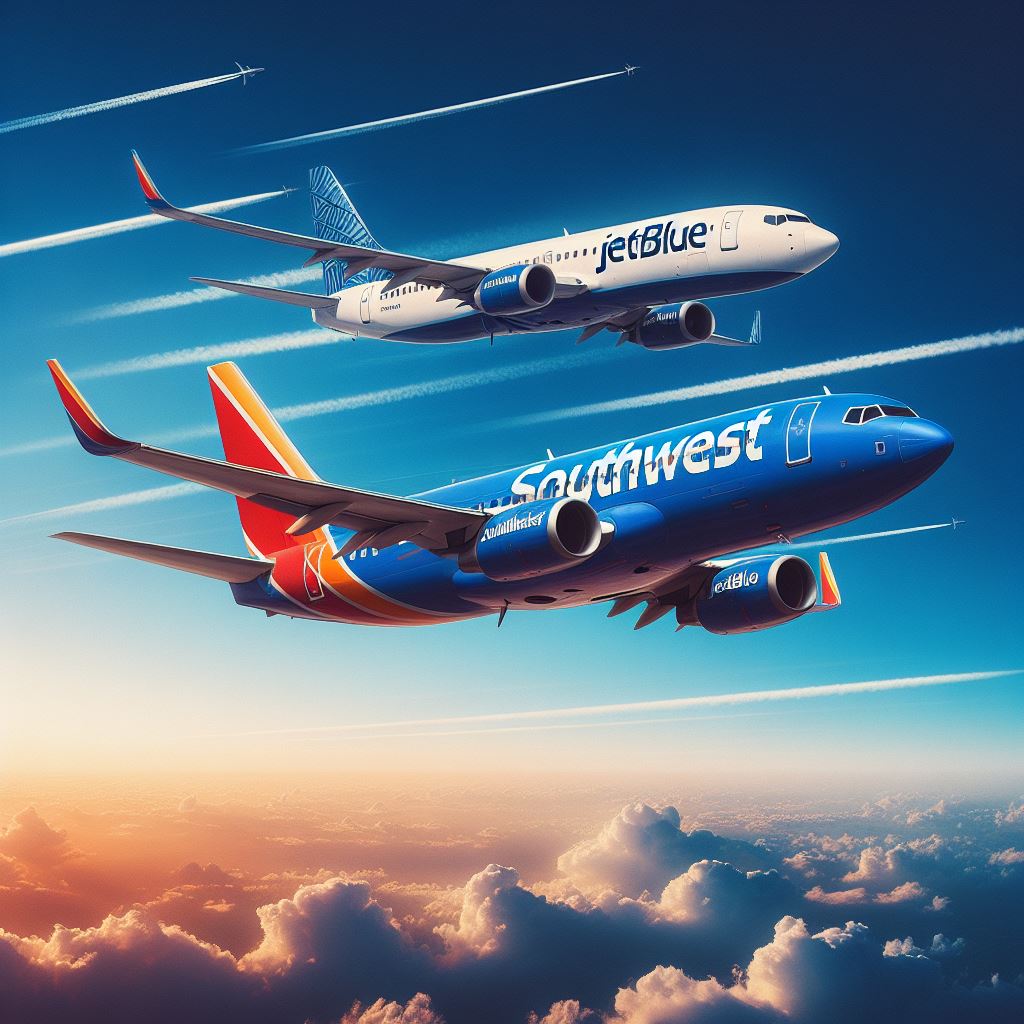
    The Southwest Airlines Pilots Association (SWAPA) is gearing up for what could be a significant move by the carrier. The union recently announced that it has retained several law firms in anticipation of Southwest Airlines potentially acquiring another airline. This move signals that SWAPA is taking proactive steps to protect its members’ interests in the event of a merger or acquisition. Does SWAPA know something we don’t?

    One of the law firms retained by SWAPA specializes in labor issues and would be tasked with ensuring that the pilots’ seniority list is integrated fairly. This is a crucial issue for pilots, as seniority determines many aspects of their career progression and benefits. The other firms would handle the business and equity side of the transaction, ensuring that pilots have a stake in the new entity’s capital.

    Last month, SWAPA made the decision to retain several law firms if Southwest attempts to acquire another carrier. One of those firms would be an experienced labor firm tasked with protecting SWAPA Pilots in a seniority list integration. The second — and possibly third — firm would handle the business and equity side of the transaction to ensure our Pilots were invested in the capital of the new entity. In 2010, then-SWAPA President Carl Kuwitsky and then-CEO Gary Kelly failed to follow Delta/Northwest’s lead in allowing the Pilots to be equity partners in the transaction when Southwest acquired AirTran. SWAPA will not make that mistake again.

    Message sent to Southwest pilots from SWAPA (h/t View from the Wing)

    This proactive approach by SWAPA is in response to past experiences. In 2010, when Southwest Airlines acquired AirTran, SWAPA was not involved in the decision-making process, and pilots were not given the opportunity to be equity partners in the transaction. SWAPA is determined not to repeat that mistake and is taking steps to ensure that pilots are involved in any future acquisitions or mergers.

    While SWAPA’s actions suggest that a merger or acquisition may be on the horizon for Southwest Airlines, the airline itself has not confirmed any such plans. In a message to pilots, SWAPA stated that neither the union nor its representatives have any knowledge of an acquisition or merger in Southwest Airlines’ future. However, the union emphasized that “hope is not a strategy,” indicating its belief that a merger or acquisition is a real possibility.

    One potential target for Southwest Airlines could be JetBlue. Once renowned for its reliability and quality of service, JetBlue has seen its reputation take a nosedive as it struggles financially. Despite limited non-stop overlap between the two carriers, a merger could have significant implications for the industry. Southwest Airlines is already the nation’s largest domestic carrier, and a merger with JetBlue could further solidify its position in key markets.

    Another perhaps less-likely target could be Sun Country Airlines. While much smaller, their all-Boeing 737 fleet would be a perfect fit for Southwest, as it would enable fleet commonality. I suppose time will reveal exactly what’s going on behind the scenes at Southwest.

    LCCs have had a rough time in the last year or so. Domestic travel has taken a nosedive, disproportionately affecting LCCs, while the relative stability of international travel has kept the engines running at legacy carriers like Delta and United. Southwest is struggling too, but they do have a very deep war chest and could still very easily purchase a competitor.

    However, any potential merger or acquisition involving Southwest Airlines would likely face scrutiny from the Department of Justice, especially under a Biden administration. The outcome of the presidential election could also play a role in the feasibility of such a deal; if Donald Trump returns to the White House, it’s likely we’d see the DOJ quickly become much more hands-off on antitrust matters such as this.

    As much as I wouldn’t want to actually fly on JetBlue right now, competition benefits us all by placing downward pressure on airfares across the board. I’d hate to see JetBlue be acquired, removing another competitor from the market; however it seems the alternative would be allowing the airline to collapse altogether.

    While the specifics of any potential merger or acquisition remain uncertain, SWAPA’s move here indicates that significant changes could be on the horizon for Southwest Airlines and the industry as a whole.
  • Stowaway Solutions: Should Southwest Take Notes From SWISS?

    Stowaway Solutions: Should Southwest Take Notes From SWISS?

    SWISS International Airlines is stepping into the future with plans to automate passenger counting using artificial intelligence (AI). The airline’s move to replace manual headcounts with AI-driven cameras aims to enhance efficiency during boarding. Now, the question arises: Should a certain Dallas-based low-cost carrier be taking notes from SWISS?

    Southwest has had well more than its fair share of stowaway incidents. In one case last September, a mystery passenger infiltrated a flight to New Orleans (MSY), only being discovered due to a fully occupied flight leaving more passengers than available seats. In September, I wrote about the potential stowaway I encountered at TUL, making me question if this is happening way more often than is being reported.

    TSA’s role primarily involves screening for prohibited items and ensuring individuals on the no-fly list don’t enter the sterile area. They don’t care where you go once you’re past the checkpoint (as long as you stay out of restricted areas). The responsibility of guarding the jet bridge door falls squarely on the airlines. Southwest seems to be falling short in this regard. There are several ways someone could (legally & legitimately) enter the sterile area to try this. You could buy a fully refundable ticket and cancel once beyond the TSA checkpoint (or just no-show if you don’t care about losing your money). You could arrive on a domestic flight. Or, at a growing number of US airports, you can obtain a gate pass simply by asking, for any reason (or none at all).

    Enter SWISS, pioneering the use of AI to automate passenger counting during boarding. The system, developed by Berlin-based startup Vion AI, utilizes cameras to accurately record the number of people boarding the plane. SWISS anticipates that this technological leap will streamline the boarding process, making it faster and more efficient. The airline asserts that all data will be handled in compliance with stringent European and Swiss data protection regulations (GDPR, anyone?).

    While SWISS is investing in cutting-edge technology, Southwest might want to consider whether it’s time to implement similar measures as part of a comprehensive set of checks and balances. Alternatively, Southwest could just, you know, train their employees to do their jobs, ensuring gate agents effectively monitor the boarding process.

    As SWISS takes a major step into the digital future, Southwest may need to reassess its approach to passenger security and boarding procedures. I disagree with the prognosticators saying that AI will upend everything, but there are a ton of opportunities to use AI to simultaneously secure our skies while actually improving passenger experience.

    h/t Paddle Your Own Kanoo

  • Another Day, Another Runway Incursion at AUS?

    Another Day, Another Runway Incursion at AUS?

    Monday night, Austin-Bergstrom International Airport (AUS) witnessed yet another incident that’s becoming all too familiar in recent times – a runway incursion. This time, it involved Southwest Airlines flight WN2959 from Nashville (BNA), adding to the growing list of near-misses at the Austin airport over the past year.

    According to FlightAware data, the flight commenced its descent to AUS a little after 6 p.m. local time. However, things took an unexpected turn when the aircraft, at a mere 600 feet above the ground, decided to climb back up to 2,850 feet. The flight then made a second attempt at landing, eventually touching down at 6:17 p.m.

    A Southwest spokesperson downplayed the incident, describing it as a “standard go-around procedure” and emphasizing that pilots are well-trained to handle such scenarios, encountering them somewhat regularly. While the airline aims to reassure the public, this latest event has raised eyebrows in light of the increasing number of similar incidents at AUS in recent times.

    The Federal Aviation Administration (FAA) provided its official stance, stating that an air traffic controller instructed Southwest Airlines Flight 2959 to perform a go-around at 6:06 p.m. local time on Monday. The reason cited was the presence of another aircraft that had not yet exited the runway. Importantly, the FAA asserted that there was no compromise to the safe separation between the Southwest flight and any other aircraft.

    An air traffic controller instructed Southwest Airlines Flight 2959 to perform a go-around at Austin-Bergstrom International Airport at 6:06 p.m. local time on Monday, December 4, because another aircraft had not yet exited the runway. There was no loss of safe separation between the Southwest flight and any other aircraft.

    FAA Statement

    This incident comes on the heels of heightened concerns about safety at Austin’s airport, with a series of near-miss incidents in the past year, including another serious runway incursion earlier this year, prompting regulatory agencies to intervene. Just last week, the National Transportation Safety Board (NTSB) released a comprehensive 3,000-page report detailing that near-miss at AUS back in February.

    I can’t help but wonder if this is happening more often than is making news. Last September, I experienced a go-around on an American Airlines flight from Dallas/Fort Worth (DFW) into AUS. I was never able to figure out why, so I’m unsure if it was a runway incursion, or something related to the 8-hour series of events (including not one but two deplanings and a visit from DFW Airport PD) leading up to this aborted landing. Maybe someday I’ll write a post about that, but suffice to say it was by far the worst AA experience I’ve ever had, and had there been a single rental car available at DFW, I’d have just driven (this was a connecting flight). Luckily, I had a great seatmate that kept me sane through the ordeal; she and I still keep in touch to this day.

    The repeated occurrences of runway incursions and near misses underscore the importance of addressing safety measures at Austin-Bergstrom International Airport. It remains to be seen how authorities will implement and enforce measures to prevent such incidents in the future. The need for heightened vigilance and stringent safety protocols has never been more apparent in the skies over Austin.

    ht KXAN

  • Did I Encounter a Southwest Stowaway?

    Did I Encounter a Southwest Stowaway?

    Yesterday, I got a response from my home airport of Tulsa International (TUL) regarding the issues I had with the TUL Visitor Pass program. These issues appeared to be resolved, but I wasn’t sure when I’d be able to find the time to make it back to TUL and give it another go. Well, Tulsa’s traffic made that easy for me! A major wreck on my side of town decided to gift me some free time, giving me the choice between sitting in gridlock for potentially hours on end, or getting some quality planespotting time in at TUL while things cleared up. I opted for the more pleasant alternative—hanging out at the airport. This time, my experience with the Visitor Pass program was notably smoother, but that’s a story for another day.

    As I strolled towards the TSA checkpoint, a peculiar announcement echoed through the airport speakers. Someone was urgently summoned to the Southwest Airlines counter, being reminded in no uncertain terms that they were “in Tulsa, Oklahoma, NOT Philadelphia!” This announcement was repeated several times over the course of the coming minutes. Oops, someone took a wrong turn!

    I reached out to Southwest for some insight, but the airline’s response was predictably vague. All I got was a standard response acknowledging my concern, but declining to comment on individual passengers. Fair enough. The specifics of the incident remained elusive, but we can read between the lines here: someone, whether intentionally or unintentionally, likely boarded the wrong flight. It’s unclear which flight this occurred on, but my educated guess based on the time of the announcement points to WN2883 from Austin Bergstrom (AUS) as the misdirected traveler’s likely flight.

    Hi, Adam. While there may be many reasons that a Passenger may be paged to the counter, we are unable to provide information about a fellow Passenger. We apologize for any concern this may have caused.

    Response from “Sara” with Southwest Airlines

    This mishap brought me back to a September blog post where I delved into the case of a stowaway on a Southwest flight to MSY. In that instance, the passenger slipped through the cracks intentionally, only to be nabbed thanks to a completely full flight.

    Sure, boarding passes are designed to be electronically scanned, theoretically preventing such mix-ups. However, it ultimately falls on the gate agents to ensure that no one sneaks onto the jetbridge without a valid scan. And Southwest’s gate agents seem to have a hard time enforcing much of anything.

    It’s unlikely this qualified as a true security breach. TSA does a good job of securing the boundaries between sterile and non-sterile airport areas, and most airports now use automated exit lanes that provide no opportunity to slip past while the agent isn’t looking (AUS being one of those). However, airlines like Southwest seem to fall short in ensuring that those already in the sterile zone have the proper boarding pass for their specific flight. And while TSA does this well, there are legitimate ways to enter a sterile zone without a departing flight – someone could be a domestic arrival, utilize a fully refundable ticket, or be at an airport like TUL that gives gate passes to anyone who requests them. You still have to be screened by TSA, you just don’t necessarily need to fly out.

    The incident in September raised questions about how such slip-ups occur. Now that I’ve (potentially) encountered a similar situation firsthand, I really question how frequently this is happening and not being reported. It might be high time for some gate agent retraining or, dare I suggest, the introduction of automated turnstiles at the gate to streamline the process.

  • Eww: “Wet” Seats On Southwest Raise Eyebrows

    Eww: “Wet” Seats On Southwest Raise Eyebrows

    Alright, fellow flyers, buckle up (just maybe not in this particular pair of seats). Southwest, the airline with the seating policy that’s a cross between a lottery and the Hunger Games, has found a new way to make your flying experience a tad more, umm, interesting.

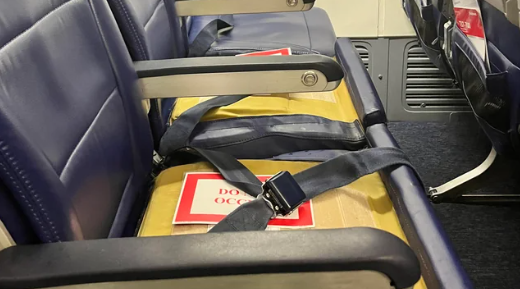
    A Reddit post by u/Zorbaing shows a row on a Southwest flight with a clear “do not occupy” placard on both the aisle and middle seats. Why? Well, according to the post, these seats are apparently “wet.” And sure, the window seat is technically up for grabs, but who knows what olfactory adventure awaits next to the damp duo? Cue the collective “eww.”

    Personally, I’m all for personal space, but even I would have to draw the line at this lone window seat. Call me a germaphobe, but I’d rather not play detective with mysterious liquids at cruising altitude. In the golden age of wipeable, pleather seats, a spilled drink should be a quick cleanup job. Taking a seat out of commission is no small matter, and leads me to believe that this was likely a biohazard situation rather than a simple spill.

    And while this “wet” seat saga might be an exceptional outlier case, it’s hard not to wonder if Southwest is keeping its planes as spick and span as they should be. Remember the pandemic? Even during the height of airlines and airports taking extreme measures to mitigate the spread of the virus, Southwest seemed to miss the memo on the whole “cleaning” thing, continuing to prioritize quick turns and cost savings over cleanliness. Pandemic or not, I don’t think not being forced to sit in someone’s mess for hours on end is too big of an ask.

    So, what’s your take on this soggy situation? Would you have risked the lone window seat, or is personal space more precious than a row to yourself? Share your thoughts below.

  • Southwest Airlines Braces for DOT Fine Following 2022 Holiday Fiasco

    Southwest Airlines Braces for DOT Fine Following 2022 Holiday Fiasco

    Southwest Airlines is bracing itself for a hefty fine from the U.S. Department of Transportation (DOT) in the wake of the notorious Christmas 2022 travel chaos that left a staggering 16,700 flights canceled, impacting over 2 million passengers. According to reports from Reuters based on a Southwest SEC filing, the DOT has pinpointed several shortcomings on the part of Southwest, citing inadequate customer service, delayed flight status notifications, and sluggish refund processes as grounds for a looming civil penalty.

    Based on the wide-scale operational disruption for the Company, which led to the cancelation of a significant number of flights between December 21 and December 29, 2022, the Company could be subject to fines and/or penalties resulting from investigations by the Department of Transportation or other government agencies. See Note 1. On October 27, 2023, the Department of Transportation notified the Company that it has determined the Company had failed to provide adequate customer service assistance, prompt flight status notifications, and proper and prompt refunds and that the assessment of a civil penalty is warranted. The Company could also face monetary damages or other costs resulting from litigation initiated by Customers and/or Shareholders. The Company is currently not able to estimate a range of possible loss for such items.

    Disclosure on Southwest Airlines Form 10-Q, as filed with SEC on Oct 30, 2023

    While weather-related disruptions affected multiple airlines during mid-December, Southwest’s operational woes stood out as it disproportionately bore the brunt of cancellations. For three consecutive days, the airline axed over 60% of its flights, all due to its antiquated internal scheduling system—a major setback earning it the unfortunate moniker “Southworst” among some frequent travelers, and even causing SNL to take aim at the airline in the form of a scathing skit.

    I wonder if this skit was written by an AA loyalist?

    CEO Bob Jordan tried to appease critics by highlighting the compensation efforts made—promising refunds, travel credits, free tickets, rewards points, and reimbursements for additional expenses incurred by passengers. However, reports surfaced about the lack of availability and untimely delivery of this compensation, leaving many passengers angered.

    Uncle Sam isn’t alone in looking to throw the book at WN; Southwest found itself embroiled in legal troubles as well. Shareholders rallied with a class action lawsuit, accusing the airline of disseminating “materially false and misleading” information over a two-year period that contributed to the holiday meltdown.

    Attempting damage control, Southwest emphasized improvements, including upgraded de-icing capacity and increased staffing to better handle winter weather. The airline also took steps towards rebuilding its image, introducing advancements like baggage tracking, a feature that was sorely missed during the Christmas 2022 debacle, when numerous bags went missing. Positive changes were made to their Rapid Rewards program, making elite status more attainable, yet the lingering question remains: will these efforts be sufficient to win back customer trust?

    Southwest Airlines seems to be acknowledging its need to step into the 21st century, making strides towards remedying past failures. As they try to restore their reputation and regain the confidence of their customer base, the airline faces an uphill battle to prove that these changes are more than mere cosmetic adjustments. Whether the measures taken will be enough to regain the loyalty of passengers, only time will tell.

  • Southwest Airlines’ Boarding Anarchy: When Rules Don’t Rule the Gates

    Southwest Airlines’ Boarding Anarchy: When Rules Don’t Rule the Gates

    If you’ve ever flown Southwest, you’re probably familiar with their rather unique approach to boarding. It’s a free-for-all, where you’re assigned a boarding position (A, B, or C) and a number, and you’re left to fend for yourself when it’s time to claim your seat. There are no seat assignments, so whoever physically gets to a seat first can sit down and claim it. Sometimes people try to save seats for friends and family with later boarding positions, or they’ll “save” the middle seat in hopes of keeping it empty. Now, I’ll be the first to admit that I’m not a fan of this “Hunger Games” style scramble for a seat, but it’s the price you pay for the airline’s (allegedly) low fares and free checked bags (despite the fact most other airlines will give you this for simply holding a $95 credit card). You either love it or you hate it. I tend to fall into the latter category.

    One of the main reasons I avoid flying Southwest is their obnoxious first-come, first-served seating policy. You have to check in EXACTLY at T-24 to avoid the dreaded C boarding group and the possibility of a middle seat. Even if you do manage to check in at the right time, the notion of a true first-come, first-served setup isn’t entirely accurate. You’re still positioned after Business Select, Elite Members, and those who paid up for EarlyBird check-in. And good luck with that, because it’s only offered on select flights now. You can’t win.

    But let’s talk about the real issue here – Southwest’s gate agents and their enforcement of the boarding process. According to a recent Reddit thread, it seems that some passengers are taking matters into their own hands. People with B and even C boarding positions are sneaking into the A line and getting away with it. How is this happening? Do gate agents just assume everyone is lined up where they belong, and only listen for the scan beep? It’s a valid question. Clearly their gate agents have an issue not going to la la land during the boarding process, as a stowaway recently got past Southwest gate agents, only getting caught as a result of the flight being completely full.

    Some travelers have reported instances of gate agents actually checking and enforcing the boarding order. So, it’s clear that there are still some gate agents out there who are doing their jobs. But the real problem is the inconsistency. Some gate agents follow the rules, and others seem to let things slide. The honor system simply does not work in this setting – people will take advantage of it.

    To be sure, Southwest is far from the only airline with lax enforcement of boarding order. However, the impact on passengers is much more severe on Southwest, as combined with its open seating policy, boarding order determines not when you’ll reach your preferred seat, but if you’ll get a desirable seat at all. On airlines with more civilized boarding procedures, I actually prefer to be one of the last to board, and take the “now boarding” push notification as a sign I should finish up one more drink at the lounge. Doing this on Southwest, however, would all but guarantee a dreaded middle seat near the aft lavatories.

    Southwest’s unique boarding system isn’t the only thing that’s been causing headaches for passengers lately. The airline has faced operational challenges, including a full-scale network meltdown over Christmas 2022. They’ve tried to make amends with changes to their Rapid Rewards program and joining us in the 21st century with baggage tracking, but it’s clear that there are still issues that need to be addressed.

    So, what’s the solution here? Either gate agents need to do their jobs and enforce the boarding order consistently, or the software used to scan boarding passes needs to be changed to deny premature scans. It’s not rocket science. If you try to board before your group is called, you shouldn’t get that loud chime indicating it’s okay to board. And for those passengers who think they can game the system, shame on you.

    Southwest’s boarding process is chaotic, and it’s exacerbated by inconsistent enforcement. It’s time for the airline to step up and ensure that the rules are followed, or they risk alienating even more passengers. After all, if you wanted to play games, you’d go to the casino, not the airport (I suppose it’s fitting that LAS is a quasi-hub for WN?).

  • Southwest Introduces Baggage Tracking: Better Late Than Never?

    Southwest Introduces Baggage Tracking: Better Late Than Never?

    Well, well, well, ladies and gentlemen, it seems that Southwest Airlines is finally joining the 21st century. In a groundbreaking announcement, they revealed that you can now track your checked baggage in their mobile app or on Southwest.com. Cue the applause and confetti, right?

    Southwest proudly declared this game-changing development on a platform that used to be called Twitter, but now goes by the name “X” because, you know, keeping up with the times is not really their thing.

    Now, let’s not give them too much credit for this technological leap. Delta, the airline that was ahead of the curve, introduced this nifty feature way back in 2011. Yes, you read that correctly, 2011. And even American Airlines managed to catch up, albeit a bit late to the party, in October 2015.

    But hey, at least Southwest is making some effort, and you have to give them credit for that. Earlier this month, the airline unveiled some customer-friendly updates to its popular Rapid Rewards loyalty program. Maybe they’re finally attempting to clean up their act and polish their image after enduring years of operational challenges and customer complaints. Or maybe they just realized it’s time to get with the program. Either way, it’s nice to see them making an effort to join us here in 2011… uh, I mean 2023.

  • Southwest Airlines Unveils Major Updates to Rapid Rewards Program

    Southwest Airlines Unveils Major Updates to Rapid Rewards Program

    Southwest Airlines is shaking up its Rapid Rewards program with a series of changes that aim to enhance the experience for its loyal customers. These enhancements come at a crucial time for the airline, which has been grappling with operational challenges and striving to regain the trust of its passengers. Let’s dive into what these changes mean for Southwest’s Rapid Rewards members.

    Earning Elite Status Just Got Easier

    One of the most significant changes is the adjustment to the requirements for earning A-List and A-List Preferred status. Starting on January 1, 2024, Rapid Rewards members will need to complete fewer qualifying flights to qualify or requalify for status. Interestingly, the thresholds for those qualifying by tier-qualifying points remain unchanged, though earning TQPs from a cobranded credit card becomes easier.

    For A-List status, the bar has been lowered from 25 one-way qualifying flights to just 20 flights, or 35,000 tier-qualifying points. This change makes it more attainable for frequent Southwest flyers to enjoy the benefits of A-List status, which include priority boarding, priority check-in, bonus points, and even same-day confirmed changes with no difference in base fare (pending availability).

    A-List Preferred status, which offers even more perks, will also be more accessible. The requirements have been reduced from 50 one-way qualifying flights to 40 flights or 70,000 tier-qualifying points. Achieving A-List Preferred status brings additional benefits such as free inflight WiFi. Again, the TQP thresholds remain the same, so this primarily helps those who qualify by number of flights taken.

    Boosting Your Status with Credit Card Spending

    The Rapid Rewards program’s tie-in with Southwest’s cobranded credit cards from Chase has also received a facelift. Cardmembers will now earn 1,500 tier-qualifying points for every $5,000 spent, previously $10,000. This change encourages credit card users to accelerate their progress toward elite status by making everyday purchases on their cobranded Chase cards.

    In-Flight Perks for A-List Preferred Members

    For A-List Preferred Members, starting November 6, 2023, there’s a new perk on the horizon: up to two complimentary premium drinks per flight. These drink coupons will be seamlessly added to their mobile boarding passes to redeem onboard.

    Flexibility in Booking with Cash and Points

    In spring 2024, Rapid Rewards Members will enjoy increased flexibility when booking flights. They will have the option to pay for their flights using a combination of cash and Rapid Rewards points, starting with as few as 1,000 points. This may prove to be a much better option than purchasing points to top off your account when you fall just short of a redemption.

    Southwest’s Road to Recovery

    While these changes to the Rapid Rewards program may seem like a welcome improvement, they come at a time when Southwest is working diligently to regain the trust of its customers. The airline has faced operational challenges and customer service issues in recent years that have earned it the unfortunate moniker “Southworst” by some passengers.

    It’s important to note that Southwest’s business model of point-to-point flights without large hubs has, at times, made it more vulnerable to operational issues. Unlike major hub airports where replacement aircraft and crew can be more readily available, point-to-point models can face greater challenges when issues arise. Additionally, when a single flight number is used for many stops, and passengers are thru-ticketed on it, any issue from A-B creates a domino effect on B-C, C-D, and so on.

    Furthermore, while the offer of complimentary premium drinks for A-List Preferred Members is a nice touch, it may not be a game-changer for everyone, especially when compared to the perks offered by legacy carriers. For instance, American’s entry-level Gold elites enjoy complimentary access to Main Cabin Extra seating, which includes complimentary alcoholic beverages without a stated limit. Additionally, if an elite passenger is upgraded, complimentary drinks are a standard offering.

    As for earning tier status, American’s Loyalty Points scheme still makes it considerably easier to earn elite status via credit card spend alone, offering a straight $1 = 1 LP ratio. Earning low-tier A-list elite status will still require over $116k of credit card spend to earn on Southwest, while AAdvantage Gold requires only $40k (and that’s assuming you don’t partake in the myriad of other ways to earn LPs).

    A Tough Competitive Landscape

    Southwest’s decision to revamp its loyalty program is occurring in a competitive landscape where low-cost carriers are facing headwinds. The post-pandemic “revenge travel” boom appears to be fizzling out amid mass layoffs and rising inflation, and those who are traveling tend to favor European destinations, where Southwest does not operate. It theoretically could reach northwest Europe from the northeast US using the Boeing 737 MAX 8, but that would require obtaining costly landing slots at level 3 airports, and convincing passengers to spend 7 hours on a single-aisle narrowbody with limited catering.

    Legacy carriers, on the other hand, are expanding their fleets, matching fares, and offering more international routes. This increased competition puts pressure on Southwest to adapt and make changes to keep its loyal customer base.

    The changes to the Rapid Rewards program are undoubtedly a positive step for Southwest and its loyal passengers. It aims to make elite status more attainable, offers in-flight perks, and provides greater flexibility in booking flights. However, the airline still faces challenges on its path to recovery and must navigate a fiercely competitive aviation landscape. These enhancements to the Rapid Rewards program are a significant step in the right direction for Southwest, but the road ahead remains challenging.

  • Southwest Stowaway: The Mystery Passenger Who Defied the Odds

    Southwest Stowaway: The Mystery Passenger Who Defied the Odds

    A recent Southwest Airlines flight to New Orleans (MSY) encountered an unexpected passenger that left everyone scratching their heads for over 40 minutes. It’s a tale that highlights the quirks of the airline’s unique open seating policy and raises some questions about airport security.

    Picture this: The flight’s manifest showed one fewer passenger than there were individuals physically present on the plane. To make things even more puzzling, reports suggest that the flight was completely sold out, so there weren’t enough seats for everyone on the aircraft. So, how did this happen? Well, it turns out there was a stowaway among the passengers, and she wasn’t exactly eager to come forward. After all, she apparently had a Beyoncé concert to get to.

    With Southwest Airlines’ open seating policy, identifying the rogue passenger wasn’t as straightforward as comparing occupied seats to seat assignments. There were no assigned seats in the first place. So, the airline had to resort to a more labor-intensive process. They enlisted the help of the cabin crew to get to the bottom of this perplexing situation, but the stowaway remained tight-lipped.

    https://twitter.com/Cee_dot_Moody/status/1706891808347689394

    As a result of the lack of assigned seating, it took a whopping 40 minutes of ID checks for the airline to finally pinpoint the mysterious woman nestled in the back of the plane – a passenger who was, in fact, not supposed to be there. It’s certainly interesting they appear to have carried this process out on the plane itself; on the (very) rare occasion I’ve been on a plane where there was any question as to the passenger manifest, it’s been handled by having everyone deplane, and scanning back onto the aircraft one-by-one. Perhaps with the first-come, first-served seating policy, the airline didn’t want to anger anybody by taking away the seat they rushed to snag?

    Now, you might be wondering how this individual managed to slip through the airport security checkpoint in the first place. After all, she would have had to show her ID and possibly her boarding pass, right? It’s not entirely clear how she navigated this hurdle. There are few ways this could have happened, but the most plausible answer is that she entered the TSA checkpoint on a valid reservation, and cancelled once inside; many fare classes on US airlines allow changes, cancellations, and even refunds until the door is closed, even if you’ve already checked in & cleared TSA. While it’s unclear where the flight departed from, some airports like MCO and TUL also offer free visitor passes, allowing the general public to proceed through TSA like a normal passenger to planespot, accompany family, or explore the terminal.

    However, the real head-scratcher is how she managed to board the Southwest flight without a boarding pass for that specific flight. Normally, you’re required to show your boarding pass, have it scanned, and the system is supposed to electronically validate that you’re indeed on the flight you’re trying to board. Yet, somehow, this woman slipped through the cracks and blended in with passengers who had successfully cleared this hurdle.

    One also has to wonder, especially with an open seating policy, how often this kind of incident occurs on Southwest and never gets detected. My hunch is had the flight not been completely full, this passenger likely would have gotten away with this unnoticed. Clearly, this woman did her homework in order to get as far as she did – perhaps she would have done well to at least check the load factors to make sure the flight wasn’t, you know, completely full? Either way, Southwest has some room to learn from this incident and implement new measures to make sure similar incidents can’t happen in the future – perhaps through turnstiles at boarding gates, or simply counting the number of empty seats as soon as boarding ends. Or maybe, just maybe, they end their open seating policy once and for all.

    The incident leaves us with more questions than answers. How did she get past security? How did she manage to board the plane without the necessary documents? And why did it take a whole 40 minutes to sort out this bewildering situation? One thing’s for sure; this unusual tale from the friendly skies raises serious concerns about airport security and the potential for gaps in the system that allow unexpected passengers to join the journey.

    (h/t: View From the Wing)