Tag: terrorism

  • “Blinking Red Lights Everywhere:” Why You Should Arrive Earlier for Your Next Flight

    “Blinking Red Lights Everywhere:” Why You Should Arrive Earlier for Your Next Flight

    We’ve all been there – cutting it close, racing against the clock to make it to the airport just in the nick of time, especially for domestic flights. It’s a habit many of us share, but it might be time to reconsider, especially with the looming possibility of additional TSA screenings this holiday season. Why? Well, it’s a reality we haven’t had to face in years – terrorism.

    FBI Director Christopher Wray recently dropped a bombshell during a Senate Judiciary Committee hearing, revealing that the terror threat facing the United States has skyrocketed since the October 7th attack on Israel. In response to Senator Lindsey Graham’s inquiry about the current “threat matrix,” Wray emphasized the unprecedented nature of the situation, stating, “I’ve never seen a time where all the threats or so many of the threats are all elevated, all at exactly the same time.” According to Wray, “blinking red lights are everywhere,” signaling a heightened state of alert.

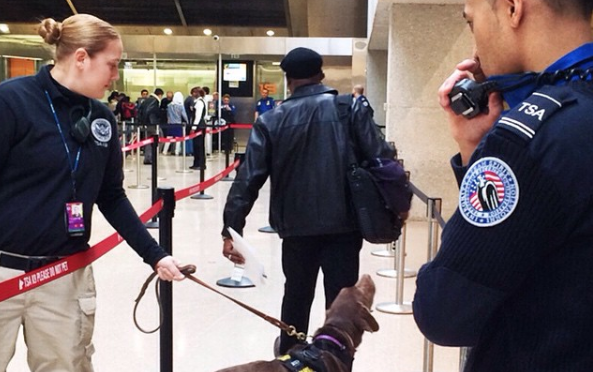
    While the TSA doesn’t disclose specifics about their screening procedures, frequent flyers I’ve spoken with are reporting a marked increase in random secondary screenings at airports. Even if you’re enrolled in TSA PreCheck or Global Entry, it isn’t a foolproof shield against these additional checks (though it could mitigate to some extent). I won’t name the airports where this seems to be most prevalent, as that would be bordering on sensitive info, but be prepared to allow an extra 15 minutes or so in case you find yourself selected for additional screening. You should probably be doing that anyways, thanks to the introduction of those horrific Analogic CT scanners.

    TSA’s official stance, as stated on their website, reinforces the notion that all travelers are subject to screening, and no one is guaranteed expedited processing. Unpredictable security measures, both seen and unseen, are being implemented throughout airports to ensure safety.

    TSA uses unpredictable security measures, both seen and unseen, throughout the airport. All travelers will be screened, and no individual is guaranteed expedited screening.

    Transportation Security Administration

    Despite these heightened security measures, it’s crucial to remember that air travel remains statistically safe. Fear shouldn’t dictate your decisions, as succumbing to it only means the terrorists have achieved their goal. The U.S. intelligence apparatus has vastly improved since 9/11, and advancements in screening technology, reinforced cockpit doors, and enhanced training for airline crews contribute to a safer travel environment. And remember that security isn’t a spectator sport – if you see something, say something. And of course, leave a little extra time for enhanced screening before your next flight; if you don’t end up needing it, that’s time for another drink at the lounge.

  • U.S. State Department Issues Worldwide Caution Against International Travel

    U.S. State Department Issues Worldwide Caution Against International Travel

    The U.S. State Department issued a worldwide caution against international travel on Thursday, citing increased tensions in various locations around the world and the potential for terrorist attacks, demonstrations, or violent actions against U.S. citizens and interests. While this advisory might raise some eyebrows, it’s worth noting that the advice given isn’t a huge departure from what the Feds typically advise even in “normal” times.

    The backdrop for this alert includes a series of events that have shaken the international community. First and foremost, Israel finds itself in the midst of a conflict with Hamas following an unprovoked attack that saw terrorists rushing Israel’s border fence with Gaza. Tragically, this act of aggression resulted in the killing and kidnapping of thousands of Israeli civilians and numerous tourists from the U.S. and Europe. The gravity of the situation was highlighted when President Joe Biden, in only his second address to the nation during his presidency, discussed these hostilities in the Middle East.

    The situation in the Middle East isn’t the only cause for concern. The ongoing war between Russia and Ukraine continues to simmer, further adding to the global unease. While these conflicts may feel far away, they contribute to the overall atmosphere of uncertainty that prompted the State Department’s caution. I’d be primarily concerned about this if I were traveling to regions like Poland or any of the former Soviet states.

    In addition to these international conflicts, tourist attractions in France have been routinely evacuated in previous weeks due to threats of terrorism. Iconic sites like the Louvre and the Palace of Versailles have not been immune to these evacuations, underscoring the need for vigilance in crowded tourist areas. Additionally, flights in/out of Hamburg (HAM) were halted for several hours due to a threat against an aircraft inbound from Iran.

    So, what should you make of the State Department’s worldwide caution? Well, it’s not a call to cancel your international travel plans, but rather a nudge to exercise a little more caution than usual. Here are some steps to consider:

    1. Enroll in the Smart Traveler Enrollment Program (STEP): If you have upcoming international travel, it’s a good idea to enroll in this free program. It can provide you with valuable information and alerts and make it easier for the U.S. government to locate you in case of an emergency overseas.
    2. Do Your Homework: Before traveling, research the situation on the ground at your destination. Stay informed about local news and any travel advisories specific to that area.
    3. Be Aware of Your Surroundings: When you’re abroad, always keep an eye on your surroundings. The old adage, “If you see something, say something,” holds true. Reporting suspicious activity to local authorities can contribute to your safety and the safety of others.

    This advice is roughly equivalent to a “Level 2” travel advisory – the same level assigned to many traditionally “safe” countries like the UK and Germany just prior to the outbreak of the ongoing conflict in the Middle East. It shouldn’t scare you away from travel, but you should do a little more homework and exercise a general sense of awareness of your surroundings. What I probably wouldn’t do is go make a bunch of new bookings more than a few months into the future; the situation is constantly evolving, and I wouldn’t want to be stuck with a bunch of non-refundable reservations if things go south in the coming months.

    The State Department’s worldwide caution is a reminder that, while international travel is still very much doable at this juncture, it’s essential to be vigilant and prepared. Keep a watchful eye on the global situation, stay informed, and take sensible precautions to ensure your safety while abroad. Safe travels, and stay informed.