Tag: tsa

  • TSA Fees for Long Layovers: Double Trouble for Your Wallet

    TSA Fees for Long Layovers: Double Trouble for Your Wallet

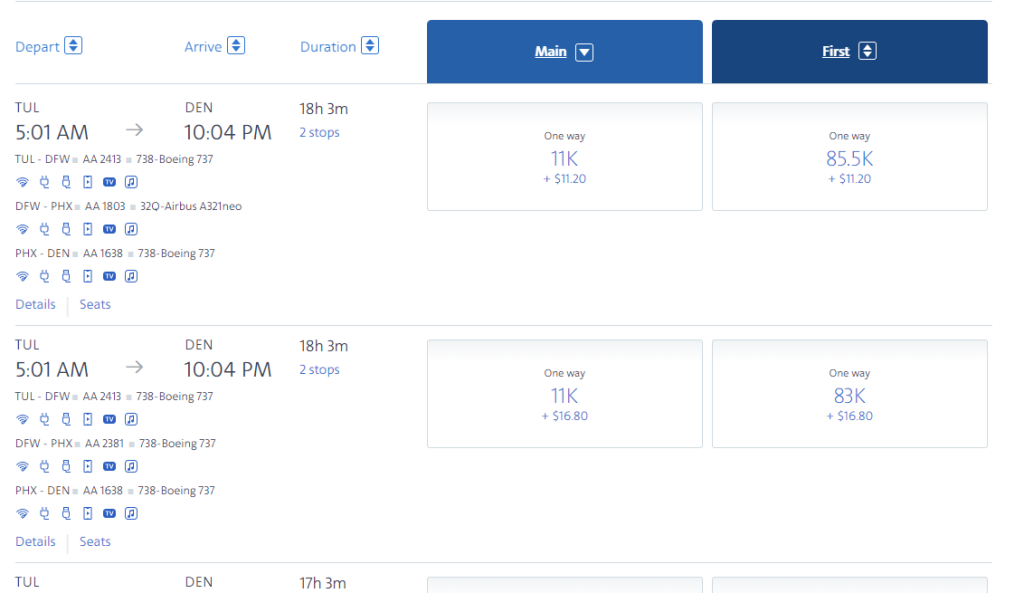
    In my recent quest for some (relatively) close-in American Airlines tickets to Denver (DEN), I stumbled upon a curious discovery that left me scratching my head. I always advise booking domestic itineraries as a pair of one-way flights, in order to retain the maximum possible flexibility. This is doubly true with AAdvantage award flights, owing to AA’s asinine policies preventing changes on most award tickets without canceling the entire PNR and starting over. By booking two one-ways, you can cancel your (separate) outbound PNR without touching your return, or vice versa. I practice what I preach, so I was doing just that in my search.

    What caught my attention was the price breakdown. One of the supposedly cheaper options came with a not-so-welcome surprise: 11,000 AAdvantage miles plus a hefty $16.80 in taxes and fees. Similar search results sported taxes and fees amounting to $11.20 for a one-way ticket. That’s 3x and 2x the normal $5.60 TSA security fee, respectively, for domestic and outbound segments originating in the USA. So what gives?
    TSA Fees on One-Way Domestic Itineraries

    Curiosity piqued, so I delved into the intricacies of TSA fees and found my answers in the depths of 49 CFR § 1510.3. It turns out that the fee is charged per “one-way trip,” but the devil is in the details of exactly how a “one-way trip” is defined.

    According to the regulation, a “one-way trip” is continuous air transportation without a stopover, where a stopover is defined as a break in travel exceeding four hours for continental flights and twelve hours for non-continental or international flights.

    In plain English, if your layover surpasses these thresholds, your “one-way trip” is split into two separate trips for TSA security fee purposes. Brace yourself for an additional $5.60 fee per passenger for each layover that breaches these limits.

    The rationale behind this distinction seems a bit questionable. The assumption is that anyone with a four-hour layover might venture outside the airport, necessitating a second round of TSA screening. While this logic may hold water in smaller hubs like Dallas-Love Field (DAL), leaving the airport on just a four hour layover feels like playing with fire in major hubs like Denver (DEN) or Atlanta (ATL), where even the TSA PreCheck & CLEAR lines routinely exceed a half hour wait.

    And let’s not forget, this fee is assessed based on the itinerary as booked. So, if your layover extends beyond four hours due to airline mishaps (such as IRROPS), you catch a break and avoid these extra charges. Conversely, if your layover shortens due to a delayed inbound flight to your layover point, there’s no refund coming your way.

    Now, nitpicking an extra $5.60 might seem like a trivial matter, but for a family of four making a roundtrip, that’s an extra $44.80 in fees. And here’s the kicker—you’re paying for a service you might not even use, especially if you’re not planning on leaving the secure area during your layover.

    I can’t help but wonder if I’m the only one just now catching onto this peculiarity. Perhaps it’s the infrequent budget travelers, who don’t have a stash of airline miles and rely on cash fares, bearing the brunt of these fees. These travelers likely wouldn’t realize it, as with cash fares, these fees are bundled into the fare shown at booking.

    And if you think these TSA fees are a headache, spare a thought for our neighbors to the north. In Canada, airports like Toronto Pearson International Airport (YYZ) tack on “airport improvement fees,” a range that spans from CAD$7 to CAD$40 (approximately USD$5 to USD$30 at the time of writing). Passengers with layovers under four hours get off relatively easy, facing charges on the lower end of the scale. However, for those unfortunate souls with layovers exceeding four hours, brace yourself for a significant hit to your wallet— as much as CAD$40 per passenger each way, the same amount charged to passengers originating at the airport. OUCH!

    Ironically, as President Joe Biden and Transportation Secretary Pete Buttigieg wage war on travel industry junk fees, the TSA seems to be exempt from their scrutiny. It’s a bit rich for the administration to target private industry while turning a blind eye to an agency under its command that’s doing the exact same thing.

    So, here’s a call to the administration: if you’re serious about eradicating junk fees, start by setting an example from the top down. The mirror may reveal more than you bargained for.
  • TSA Weighs In on Viral Video: Shrimp and Potatoes, or Security Breach?

    TSA Weighs In on Viral Video: Shrimp and Potatoes, or Security Breach?

    The TSA often gets a bad rap in the court of public opinion, but I’ve gotta say, my experiences with them have been mostly smooth sailing. Sure, there’s the occasional grumpy agent or a line that seems to stretch to eternity, but overall, I find the screening process here in the U.S. more friendly and efficient than in many foreign countries.

    Call me crazy, but I actually miss the TSA when I’m traveling abroad. Maybe it’s because I’m a Global Entry member, enjoying the perks of expedited screening, but there’s a certain (dare I say) charm to the TSA that other federal agencies just don’t have. They’ve got personality – just check out their social media feeds. Honestly, they’re one of the funnier accounts I follow online.

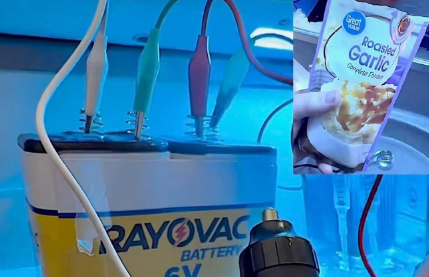
    In a previous post, we dished out the deets on a Delta passenger who took culinary creativity to new heights by cooking shrimp and mashed potatoes in an airplane lavatory sink. Yep, you read that right. He rigged up a contraption involving a 6v battery pack, a beverage warmer, and some alligator clips – a setup that could easily be mistaken for something you wouldn’t want to encounter at 30,000 feet.

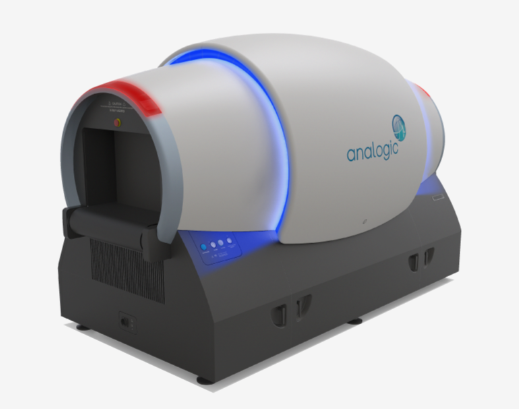
    Now, the TSA itself has weighed in on the viral video, sharing a close-up of the man’s alligator clip-laden masterpiece. Believe it or not, he’s not packing any prohibited items, which explains how he got past those awful Analogic scanners. However, the way he’s utilizing his gear might cross into a gray area when it comes to FAA regulations.

    https://www.instagram.com/p/C0umsV0Saa4/

    According to the official word from the FAA, “Dry batteries are only permitted to be carried by passengers on aircraft when protected against damage and short circuit.” And here’s the kicker – a person who knowingly or recklessly violates hazardous materials regulations could be slapped with fines up to a whopping $96K for each violation and face up to five years behind bars. Youch.

    So, the advice from the authorities is crystal clear – stick to the standard inflight snacks like pretzels and Biscoff cookies. Leave the impromptu shrimp scampi experiments to the professionals, and don’t try this at home (or, in this case, inflight).

  • “Blinking Red Lights Everywhere:” Why You Should Arrive Earlier for Your Next Flight

    “Blinking Red Lights Everywhere:” Why You Should Arrive Earlier for Your Next Flight

    We’ve all been there – cutting it close, racing against the clock to make it to the airport just in the nick of time, especially for domestic flights. It’s a habit many of us share, but it might be time to reconsider, especially with the looming possibility of additional TSA screenings this holiday season. Why? Well, it’s a reality we haven’t had to face in years – terrorism.

    FBI Director Christopher Wray recently dropped a bombshell during a Senate Judiciary Committee hearing, revealing that the terror threat facing the United States has skyrocketed since the October 7th attack on Israel. In response to Senator Lindsey Graham’s inquiry about the current “threat matrix,” Wray emphasized the unprecedented nature of the situation, stating, “I’ve never seen a time where all the threats or so many of the threats are all elevated, all at exactly the same time.” According to Wray, “blinking red lights are everywhere,” signaling a heightened state of alert.

    While the TSA doesn’t disclose specifics about their screening procedures, frequent flyers I’ve spoken with are reporting a marked increase in random secondary screenings at airports. Even if you’re enrolled in TSA PreCheck or Global Entry, it isn’t a foolproof shield against these additional checks (though it could mitigate to some extent). I won’t name the airports where this seems to be most prevalent, as that would be bordering on sensitive info, but be prepared to allow an extra 15 minutes or so in case you find yourself selected for additional screening. You should probably be doing that anyways, thanks to the introduction of those horrific Analogic CT scanners.

    TSA’s official stance, as stated on their website, reinforces the notion that all travelers are subject to screening, and no one is guaranteed expedited processing. Unpredictable security measures, both seen and unseen, are being implemented throughout airports to ensure safety.

    TSA uses unpredictable security measures, both seen and unseen, throughout the airport. All travelers will be screened, and no individual is guaranteed expedited screening.

    Transportation Security Administration

    Despite these heightened security measures, it’s crucial to remember that air travel remains statistically safe. Fear shouldn’t dictate your decisions, as succumbing to it only means the terrorists have achieved their goal. The U.S. intelligence apparatus has vastly improved since 9/11, and advancements in screening technology, reinforced cockpit doors, and enhanced training for airline crews contribute to a safer travel environment. And remember that security isn’t a spectator sport – if you see something, say something. And of course, leave a little extra time for enhanced screening before your next flight; if you don’t end up needing it, that’s time for another drink at the lounge.

  • What Happens to TSA PreCheck When I Apply For Global Entry?

    What Happens to TSA PreCheck When I Apply For Global Entry?

    So, you’ve decided to level up your travel game and make the leap from a standalone TSA PreCheck membership to Global Entry. Smart move. But reader Mike Jones wanted to know: what exactly happens to your beloved TSA PreCheck membership during the application process? Let’s break it down.

    Global Entry: The Upgrade You Didn’t Know You Needed

    Global Entry is the ultimate trusted traveler program, offering a slew of benefits that go beyond the perks of TSA PreCheck. Think of it as TSA PreCheck on steroids. You still enjoy the hassle-free airport security experience, keeping your shoes on and liquids in your bag. But the perks extend to Customs & Border Protection at airports and land borders, as well as Canadian airport security (CATSA). That way, you won’t have to wait in a line like this one after a long-haul flight.

    But here’s the burning question: What happens to your trusty TSA PreCheck membership when you embark on the Global Entry application journey, which for most people takes 4-6 months to complete? (CBP allows up to two years because it does take longer for some people)

    The Simple Answer: Nothing Changes for TSA PreCheck

    Your TSA PreCheck membership remains untouched and fully functional until your membership’s original expiration date. Both programs provide the same streamlined benefits at TSA screening checkpoints, making your journey through security a breeze. However, it’s worth noting that TSA PreCheck and Global Entry are completely separate programs, offered by different, independent agencies (one by TSA and the other by CBP, respectively). Upon approval, you will be assigned a PASS ID number, which doubles as a new Known Traveler Number (KTN).

    It’s on you to keep both memberships up-to-date, but let’s be real—once you’ve tasted the efficiency of Global Entry, maintaining both might feel a tad redundant. Think of it kind of like continuing to use the Priority Pass from your AmEx Platinum while waiting for Chase to process your Sapphire Reserve application. Once the Chase-issued Priority Pass arrives, the AmEx one still functions, as it’s issued by a completely different entity. You can pay for both as long as you want, but aside from some overlap to ensure a smooth transition, you probably wouldn’t do that long-term.

    Known Traveler Numbers (KTN): The Key to Smooth Travels

    Now, let’s talk about Known Traveler Numbers, the secret sauce to your seamless travel experience. Much like having multiple credit cards, you can possess more than one active KTN. And just as you strategically choose which credit card to use, the same applies to your KTN.

    According to the TSA, feel free to use any active KTN you’ve been assigned. However, once you receive your Global Entry approval, consider switching to your Global Entry PASS ID as your KTN when making flight reservations. Why? Because it not only grants you TSA PreCheck privileges at US airports, but it will expedite your re-entry into the US. Also consider the expiration date of each KTN; if you’re allowing your TSA PreCheck KTN to expire, consider if that KTN will still be active by the time you fly.

    I reached out to the TSA for a bit of clarity, and received the following reply:

    You’re correct, Adam! You may use any active KTN that you have been assigned.
    However, if you’re traveling to a foreign country, please consider using your Global Entry PASS ID as your KTN when you make your flight reservation. With Global Entry, you’ll receive expedited customs processing when entering the U.S., plus you’ll receive TSA PreCheck® when flying from U.S. airports.
    Please let us know if you have any other questions. – Faith

    Reply from Transportation Security Administration

    KTNs from Various Agencies

    TSA is far from the only avenue to obtain Known Traveler Numbers. Here are a few ways to obtain them from various agencies:

    1. TSA PreCheck: Apply directly through TSA, and you’ll receive a TSA-issued KTN, a 9-character alphanumeric string starting with “TT.”
    2. Global Entry: Your Global Entry card’s PassID number doubles as a KTN, a 9-digit number that begins with “98,” “99,” or “1.”
    3. TWIC Card Holders: If you hold a valid TWIC card, the CIN number on it serves as a valid KTN. No need to do anything but add it to your reservations.
    4. Active-duty Military: For those serving our country, your 10-digit DoD ID number doubles as a KTN without the need to apply to anything else.

    You can change the KTN on your frequent flyer profiles or existing reservations at any time. Keep in mind – generally when adding a KTN to your frequent flyer profiles, it will be applied to any new reservations, but you’ll need to work with the airline to switch KTNs on any existing reservations. If you like to live dangerously, this can even be done at the airport on day of travel, but I’d probably just message the airline on your platform of choice. Oh, and don’t add any Lord or Lady titles, or TSA won’t be amused.

    There you have it—your guide to smoothly transitioning from TSA PreCheck to Global Entry. Now, go forth and skip those lines!

  • TSA’s New CT Scanners: The End of a Popular Travel Hack?

    TSA’s New CT Scanners: The End of a Popular Travel Hack?

    The recent introduction of Analogic CT scanners by the TSA has left many frequent travelers fuming (particularly TSA PreCheck and Global Entry members). While the convenience of leaving everything in your bag is a boon to infrequent travelers who don’t have TSA PreCheck, those of us who have PreCheck have enjoyed this benefit long before the introduction of the new scanners. We have to put up with much longer screening times at checkpoints equipped with CT scanners, and unlike for those in the general screening lanes, we get zero added benefit in exchange for the much slower screening.

    In my opinion, a potential solution would be to reserve the CT scanners for general screening lanes, preserving the efficiency of the old-school X-ray machines for the benefit of PreCheck members. In general screening lanes, the added time to screen each bag is likely canceled out by the time saved not waiting for frazzled, infrequent travelers to remove laptops and liquids from their bags prior to sending them through. But in PreCheck lanes, this is a huge loss with zero positive trade-off.

    A recent post on Reddit’s /r/TSA made me realize yet another unintended consequence of these new CT scanners—they effectively eliminate a popular travel hack.

    Traditionally, savvy travelers without elite airline status have utilized a simple hack to save $30-40 on bag fees: bring a bag you intend to check through TSA, then “volunteer” to check it at the gate. Gate agents, more often than not, have been accommodating of this practice, especially with legacy carriers. Rarely would anybody be told no or charged a fee; you’re volunteering to perform a kind and selfess act by checking your luggage and giving up your overhead bin space for another passenger! (This, however, doesn’t work on low-cost carriers that charge for carry-ons.)

    The TSA’s role, as they saw it, has solely been to prevent prohibited items from making their way onto flights, leaving the decision of whether a bag fits in the bag sizer up to the airlines to enforce. They don’t get paid enough to argue with you over your bag being half an inch too wide. As long as you’re in compliance with 3-1-1 and other security regs, you’re good.

    For travelers like me, who occasionally push the limits of punctuality when departing from airports lacking a lounge, this hack has been a reliable workaround for strict bag check cutoffs. If you miss the standard bag check cutoff time, you could simply follow these same steps at the gate; not only do bag fees typically not apply at the gate, but the cutoff times are significantly more lenient. While the FAA no longer really cares about voluntary separation of passenger and baggage on domestic flights, the airlines still seem to enforce this pretty strictly; if your checked luggage can’t make the flight, neither will you – even if you can still make it to the gate prior to closing. While I rarely check bags anymore, when I do, I’ve always packed them for 3-1-1 compliance just in case I needed to do this.

    The introduction of the new CT scanners has shifted the dynamic here. Unlike the old X-ray machines where you could slide your bag directly onto the conveyor, the CT machines mandate that everything, including luggage, must go into a plastic bin. If your luggage doesn’t fit, TSA won’t permit it through. Full stop.

    This change puts the TSA in the unexpected role of determining whether your bag meets the size criteria. It adds an extra layer of scrutiny to the screening process, potentially complicating this once straightforward strategy of gate-checking a bag.

    Let’s just hope TSA backtracks on this little CT scanner experiment, at least for PreCheck members.

  • I Tried Out the Visitor Pass Program at TUL. It Didn’t Exactly Go Smoothly.

    I Tried Out the Visitor Pass Program at TUL. It Didn’t Exactly Go Smoothly.

    Update 11/15/2023: TAIT wrote me back via email. They have apologized for inconvenience and shared a customer service number for any issues with visitor passes. That number is (918) 838-5090. My hope is that the airport will update their instructions with this information, as I was unable to find it online. I’ll try again someday relatively soon when I have the time to make the trek out to the airport without a flight to catch.


    In a recent post, I explored the revival of visitor pass programs at US airports, a throwback to the pre-9/11 days when non-ticketed folks could roam freely through the sterile area, or meet loved ones at the gate (though now with some guardrails and vetting beforehand). My home airport, Tulsa International Airport (TUL), launched such a program this year, but I’m there often enough as a ticketed passenger that I hadn’t really felt a need to try the new program out for myself.

    That changed yesterday. I’ve been all over the state of Oklahoma this week, including (but not limited to) a day trip to OKC, and an evening back at my alma mater in Stillwater watching the Cowboys narrowly lose to Abilene Christian in basketball. Luckily cheap(ish) rental cars are still a thing if you know where to look, so I snagged one from Avis in an effort to limit the mileage I was putting on my personal vehicle. Upon returning my rental car, I realized I’d be facing significant rush hour traffic to get home, so I decided to wait traffic out and give the very creatively-named TUL Visitor Pass Program a whirl and watch the evening departure/arrival bank go in and out of KTUL. Spoiler alert: it didn’t quite go as expected.

    The application process seemed straightforward enough. The airport claims to process same-day applications within 15 minutes, and advance applications shortly after midnight on the day of your visit. So, armed with optimism, I filled out the necessary details on my mobile device while wrapping up my business with Avis. Legal name, date of birth, gender – the basics for a quick background check against the TSA Secure Flight database. You choose a one-hour timeslot in which you expect to arrive at the TSA checkpoint. You also need a valid email address, as that’s how you’re supposed to receive your pass (more on that in a sec). The program is totally free-of-charge, so no need for credit card details.

    The program does limit participants to 100 guests per hour, but we’re not exactly talking about Taylor Swift concert tickets here. Even during the day’s busiest timeslot, there were still 91 visitor passes up for grabs. The airport’s promotion efforts are a bit lackluster, with only digital signage near the TSA checkpoint, urging loved ones to not “say goodbye just yet” and flaunting a QR code to apply on-the-spot. It seems the general public isn’t fully aware that this visitor pass option exists at all.

    Even though you’re not catching a flight, the system generates a Passenger Name Record (PNR) number for you, which appears to be internal to the airport. This seems to be a precaution against any potential hiccups with TSA’s Credential Authentication Technology (CAT) machines.

    Now, here’s where the issues begin. Despite the promise of a 15-minute processing time, I received no email response, not even in my junk folder. Patiently, I explored the airport’s recent updates to the landside facilities while I waited. As TUL lacks any lounges, the airport lends itself to cutting it extremely close; I usually find myself rushing to the gate, rolling up around group 5 or 6. It had been a while since I’d been bored enough at TUL to give the landside facilities a proper exploration, and there’s been a remodel since then. As the top of the hour neared, meaning the end of the window I’d selected, I decided to reapply for the next timeslot using an email account on a totally different provider. Yet, the result remained the same – no response, not even in the dreaded junk/spam folder.

    I don’t think it’s at all plausible that I was outright rejected. I’ve been a longtime TSA PreCheck member, and just underwent another round of vetting by Uncle Sam for Global Entry. The only trusted traveler programs I’m not part of are SENTRI/NEXUS, so I think it’s safe to say I’m not on any lists with TSA or DHS. It’s plausible that the web app responsible for issuing visitor passes isn’t properly configured with an SMTP server for firing off confirmation emails. Alternatively, the FAQs do imply that each application may be manually reviewed by the TSA; maybe they had more pressing matters on their plate, prioritizing ticketed passengers over pass-seeking visitors.

    I eventually ended up throwing in the towel and retrieving my personal vehicle from the airport parking facility. Could I have used a fully-refundable ticket to enter the terminal if I’d really wanted to? Of course I could have. But aside from returning my rental car (and test-driving the visitor program), I really didn’t have a compelling reason to be there, so I didn’t find it to be worth the effort of giving Southwest a (very) short-term loan. I’ve seen what’s on the other side of that TSA checkpoint countless times, and it’s not going anywhere. Maybe if there’d been a lounge, I would have thought differently.

    In an attempt to get some clarity, I reached out to the airport for a comment. As of press time, I haven’t yet received a response. If they do decide to share their side of the story, I’ll be sure to keep you updated (and possibly give the program a second chance). Until then, my TUL Visitor Pass adventure remains a somewhat frustrating mystery.

  • AI-Powered Employee Screening Trialed at DEN: Should it be Piloted for PreCheck Passengers, Too?

    AI-Powered Employee Screening Trialed at DEN: Should it be Piloted for PreCheck Passengers, Too?

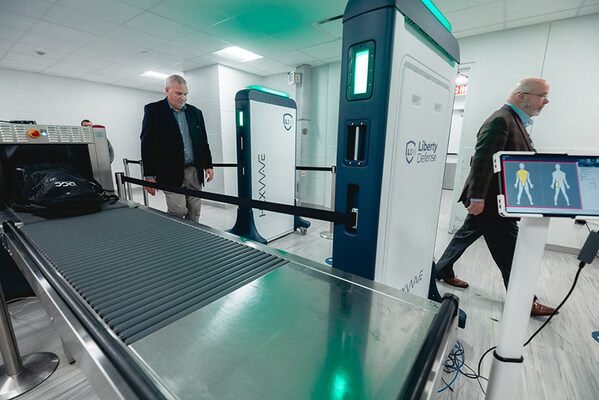
    Denver International Airport (DEN) is stepping into the future of airport security, announcing a trial run of the HEXWAVE system for employee screening. Developed by Canadian company Liberty Defense Holdings Ltd., this cutting-edge technology integrates AI, millimeter wave technology (similar to what’s currently used in the Leidos full-body scanners for non-PreCheck passengers), and advanced 3D imaging to detect both metallic and non-metallic threats without requiring individuals to remove common items like phones or keys. The trial will take place at the south employee checkpoint in the Great Hall, and marks a significant shift in aviation worker screening, who traditionally are only pulled aside for screening at random under the Known Crewmember (KCM) program.

    This initiative comes amid a broader reassessment of the KCM program, and several recent disturbing incidents involving crew members. These incidents, notably the alarming attempt by an off-duty Alaska Airlines pilot to bring down a Horizon Air E175 midflight and a Delta pilot brandishing a gun during a disagreement over a medical diversion, have raised critical questions about the effectiveness of security procedures pertaining to crew members. Admittedly, these portals likely wouldn’t have done much to stop either incident; the Delta pilot was authorized to carry a weapon on board under the voluntary Federal Flight Deck Officer (FFDO) scheme – one we expect will be closely looked at over the coming weeks and months.

    While details of the specifics of the pilot program are, of course, under wraps, it’s likely we’ll see this technology used to pivot from random screenings of crew to consistently (but efficiently) screening them upon every entry. While obviously crew are in control of the aircraft whether they possess a weapon or not, this could prevent a scenario where a threat actor enlists an airline employee as an accomplice to smuggle something into the sterile area, handing it over post-security.

    While the introduction of these advanced detection portals is poised to potentially revolutionize airport security, their impact on crew members, if implemented more widely, is expected to be minimal. Comparable to the Evolv Express platform used at Walt Disney World, these AI-based detection systems offer efficient screening without the need to stop moving, line up single-file, or divest personal items. The only time there’s a need to stop is if a potential threat is identified, at which point the individual in question is pulled aside by nearby officers; otherwise, you pretty much get waved through.

    https://youtu.be/ZEt_-ak2YQI
    The Evolv Express platform, currently used by Disney, is comparable to the HEXWAVE system being trialled at DEN. While filled with marketing speak, this provides a pretty good idea of how it works.

    Currently, this screening technology is solely for workers. However, it begs the question if these portals could potentially one day be extended to TSA PreCheck passengers – which would be a win-win for both safety and passenger experience. It could enhance safety by effectively detecting non-metallic weapons such as those produced by 3D printers, which conventional magnetometers struggle to identify. Moreover, it promises a smoother, faster screening process for passengers, eliminating the hassle of removing personal items and even small bags. If that were implemented, all they’d need to do to significantly increase throughput would be to do something about those horrendously slow Analogic CT scanners (maybe the technology will reach a point where conveyor-based systems are rendered obsolete altogether?).

    The trial at Denver International Airport presents a glimpse into the future of airport security. While it may not directly address all the concerns surrounding recent crew incidents, the implementation of such innovative technology could potentially reshape the landscape of airport security for both employees and passengers alike.

  • Why You Shouldn’t Use “Lord” or “Lady” on Your Frequent Flyer Accounts: TSA Doesn’t Find It Amusing

    Why You Shouldn’t Use “Lord” or “Lady” on Your Frequent Flyer Accounts: TSA Doesn’t Find It Amusing

    In the world of travel, we’ve all witnessed our fair share of unique requests and peculiar passenger stories. From passengers trying to bring emotional support peacocks on board to the endless battle over reclining seats, the airline industry is a treasure trove of oddities. But here’s a tale that takes the cake – a traveler’s decision to flaunt his recently acquired title of “Lord” led to some unintended consequences with the Transportation Security Administration (TSA).

    You see, thanks to the magic of the internet, you can now purchase a minuscule plot of land in Scotland or Ireland, measuring just one square foot, and be dubbed a “Lord” or “Lady” for the princely sum of approximately $35-50. The idea might sound like harmless fun, but when you decide to incorporate that honorary title into your frequent flyer account, you’re playing with fire.

    One adventurous American gentleman, whom we’ll call John Doe for the sake of anonymity, thought it would be a splendid idea to adopt the title of “Lord” on his British Airways Executive Club profile. BA, being the good sport it is, accepted this grandiose moniker as the man’s title/salutation without a fuss. However, when Mr. Doe encountered the TSA, they weren’t quite so accommodating.

    The TSA, renowned for its ironclad adherence to security theater procedures, wasn’t quite amused by the passenger’s newfound nobility. This seemingly frivolous title had created a mismatch with his Known Traveler Number (KTN) for TSA PreCheck. On his boarding pass, he appeared as “John Lord Doe,” and the TSA, well, they don’t appreciate any deviation from the script. Your name on the ticket must be an exact match with what you submitted when applying for trusted traveler programs like TSA PreCheck or Global Entry, as well as a match to government-issued ID. Even if you don’t use these programs, the new credential authentication (CAT) machines at the airport likely won’t be able to locate your reservation when your ID is inserted.

    What followed were hours of phone calls and negotiations with British Airways to rectify the situation. All for a fanciful title that probably had the opposite end result of what he intended.

    But here’s the kicker – these purchased titles of “Lord” or “Lady” may not hold much, if any, legal weight at all. The scheme has drawn the scrutiny of members of the Scottish Parliament who are quick to point out the sheer absurdity of it. As former Green Party Member of the Scottish Parliament, Andy Wightman, eloquently put it, “First and foremost, you are not the owner of any land in Scotland despite what this company might have led you to believe. You have also not been given any right to style yourself Lord or Lady of Glencoe. Highland Titles has no authority or power to bestow such a title on you.”

    Highland Titles, one of the companies behind this entertaining charade, insists that purchasing a plot of land grants you a “personal right” to that land, claiming it’s a “settled legal position.” However, with the backlash and the fine print now being amended on their website, they describe the whole affair as “harmless fun.” Over 300,000 “Lords and Ladies of Glencoe” exist, each having paid at least £30 (a little over $36 USD at time of writing) for their square foot of land in Scotland.

    So, while you’re welcome to play the lordly game and acquire your own square foot of Scottish soil, it’s probably best to leave your noble title off anything official enough (like an airline reservation) that might cause you unnecessary headaches with security or immigration.

    In the world of travel, the creative things people will try know no bounds, and this title fiasco serves as a humorous reminder that when it comes to air travel, simplicity (and humility) are often the best policy.

  • Visitor Pass Programs Make a Comeback in US Airports: XNA Joins the Trend

    Visitor Pass Programs Make a Comeback in US Airports: XNA Joins the Trend

    It’s an exciting time for aviation enthusiasts, as visitor pass programs are making a triumphant return to airport terminals across the United States, becoming available in far more airports than ever before. These programs, which allow non-travelers to explore airport terminals, watch planes take off and land, accompany family members to their gate, and enjoy most terminal amenities, were largely suspended during the height of the pandemic. However, now they are back in full swing, with many airports embracing this trend for the first time. Today marks a milestone on this front as Northwest Arkansas National Airport (XNA) officially launches its new visitor pass program.

    The Resurgence of Visitor Pass Programs

    Before we dive into the details of XNA’s program, it’s worth noting the resurgence of visitor pass programs nationwide. While a few airports offered these passes pre-pandemic, most had to suspend them due to health and safety concerns. But as travel steadily recovers, these programs are coming back stronger (and more numerous) than ever before, offering members of the general public an airport experience reminiscent of the pre-9/11 days, where anyone – not just ticketed passengers – could proceed through the security checkpoint and enjoy all the airport had to offer. Considering many U.S. airports have improved dramatically in terms of amenities and quality since then, this is a great trend we hope to see spread across the country.

    U.S. airports are uniquely positioned to offer an experience like this; while it’s great that many major airports in other parts of the world like Amsterdam Schiphol (AMS) offer sterile international-to-international transit, this would make a visitor pass program logistically impossible in much of the terminal, as that would mean comingling with individuals who have not been processed through customs.

    What You Need to Know About Visitor Pass Programs

    Visitor pass programs typically share some common characteristics, although rules may vary slightly from one airport to another:

    1. Advance Registration: Usually, visitors must register between 24 hours and up to 7 days in advance, with a few exceptions like TUL (Tulsa International Airport), which permits same-day registration.
    2. Restrictions on Entry: Most airports limit entry to designated hours, typically not permitting entry after about 7-9 p.m. local time. Some restrict visitors to only certain terminals or checkpoints, or require visitors to leave by a certain time (though it’s unclear how this could be enforced).
    3. Limited Capacity: To maintain a comfortable experience, airports often cap the number of visitors per terminal per day, typically ranging from 25 to 75 individuals. Interestingly, these programs are often not widely advertised, so capacity is often a non-issue.
    4. Security Measures: Safety is, of course, always the #1 priority. All visitors are vetted against the SECURE FLIGHT database and must pass through TSA screening, just like ticketed passengers. This process ensures that visitor pass holders are not on any no-fly lists, and can’t bring prohibited items into the sterile area.
    5. QR Code for Entry: Once successfully vetted, visitors typically receive a QR code via email to present instead of a boarding pass when going through TSA screening. You still need to present a valid form of government-issued ID along with this QR code, just as if you were flying.
    6. PreCheck No Good: Non-ticketed visitors usually need to use the general screening lane, and cannot take advantage of TSA PreCheck or CLEAR when entering the security checkpoint.

    It goes without saying that you should always check the details of your local airport’s program beforehand, as each airport has its own rules and procedures.

    Airports Offering Visitor Pass Programs

    Several airports across the country are currently offering visitor pass programs, and here are some of them:

    • MCO (Orlando International Airport) – Available only at the recently-opened Terminal C.
    • DTW (Detroit Metropolitan Wayne County Airport) – One of the oldest programs, reinstated post-pandemic.
    • TUL (Tulsa International Airport) – My home airport, which recently implemented a visitor program.
    • XNA (Northwest Arkansas National Airport) – Today marks the launch of this new program.
    • SEA (Seattle-Tacoma International Airport)
    • FNT (Flint Bishop International Airport)
    • ONT (Ontario International Airport)
    • SNA (John Wayne Airport)
    • MSY (Louis Armstrong New Orleans International Airport)

    Before the pandemic, a few other airports also offered visitor pass programs:

    • TPA (Tampa International Airport) – Although TPA All Access was previously available, there’s no indication of it returning. TPA’s website states the program is suspended as passenger numbers are being evaluated, and has said this for well over a year.
    • DFW (Dallas/Fort Worth International Airport) – This program, previously only available to registered guests of the Grand Hyatt DFW, seems to have quietly disappeared.

    XNA’s New Guest Pass Program

    Now, let’s turn our attention to the newest addition to the visitor pass program family – XNA. After months of anticipation, XNA has officially launched its “guest pass” system, allowing non-flying guests to enjoy the airport’s restaurants and shops while being in the secure area.

    Unlike many airports which require pre-registration online, XNA has opted for a registration via a kiosk. The guest pass kiosk is conveniently located next to the baggage claim in the airport lobby. To obtain a pass, guests simply answer a few questions and scan their photo IDs. Once the kiosk generates the pass, visitors can proceed through airport security.

    In an article on 5NewsOnline.com, Olivia Moore, spokesperson for XNA, emphasizes that guest pass holders get access to all the amenities that boarding pass holders do, except they don’t board a plane. This includes exploring vendor options, plane-spotting, and trying out the new coffee robot, “Bionics by Onyx,” set to be operational in the coming weeks. This innovative robot will serve specialty drinks using Onyx coffee 24/7, adding a local touch to the airport experience (and if you’ve never had Onyx coffee, it’s probably the best I’ve ever tasted domestically). “When we announced it, a lot of people were extremely excited. I mean, it’s not every day that you get to say goodbye to your family members while seeing them get on the plane to say goodbye,” Moore said.

    In conclusion, the return of visitor pass programs in U.S. airports is a welcome development for travelers and aviation enthusiasts. With XNA joining the ranks, it’s clear that airports are increasingly recognizing the value of offering unique experiences to the non-traveling public. So, if you’re looking for a new way to spend a day at the airport, or want to see off a loved one, consider exploring a visitor pass program at a participating airport near you.