Tag: tul

  • Did I Encounter a Southwest Stowaway?

    Did I Encounter a Southwest Stowaway?

    Yesterday, I got a response from my home airport of Tulsa International (TUL) regarding the issues I had with the TUL Visitor Pass program. These issues appeared to be resolved, but I wasn’t sure when I’d be able to find the time to make it back to TUL and give it another go. Well, Tulsa’s traffic made that easy for me! A major wreck on my side of town decided to gift me some free time, giving me the choice between sitting in gridlock for potentially hours on end, or getting some quality planespotting time in at TUL while things cleared up. I opted for the more pleasant alternative—hanging out at the airport. This time, my experience with the Visitor Pass program was notably smoother, but that’s a story for another day.

    As I strolled towards the TSA checkpoint, a peculiar announcement echoed through the airport speakers. Someone was urgently summoned to the Southwest Airlines counter, being reminded in no uncertain terms that they were “in Tulsa, Oklahoma, NOT Philadelphia!” This announcement was repeated several times over the course of the coming minutes. Oops, someone took a wrong turn!

    I reached out to Southwest for some insight, but the airline’s response was predictably vague. All I got was a standard response acknowledging my concern, but declining to comment on individual passengers. Fair enough. The specifics of the incident remained elusive, but we can read between the lines here: someone, whether intentionally or unintentionally, likely boarded the wrong flight. It’s unclear which flight this occurred on, but my educated guess based on the time of the announcement points to WN2883 from Austin Bergstrom (AUS) as the misdirected traveler’s likely flight.

    Hi, Adam. While there may be many reasons that a Passenger may be paged to the counter, we are unable to provide information about a fellow Passenger. We apologize for any concern this may have caused.

    Response from “Sara” with Southwest Airlines

    This mishap brought me back to a September blog post where I delved into the case of a stowaway on a Southwest flight to MSY. In that instance, the passenger slipped through the cracks intentionally, only to be nabbed thanks to a completely full flight.

    Sure, boarding passes are designed to be electronically scanned, theoretically preventing such mix-ups. However, it ultimately falls on the gate agents to ensure that no one sneaks onto the jetbridge without a valid scan. And Southwest’s gate agents seem to have a hard time enforcing much of anything.

    It’s unlikely this qualified as a true security breach. TSA does a good job of securing the boundaries between sterile and non-sterile airport areas, and most airports now use automated exit lanes that provide no opportunity to slip past while the agent isn’t looking (AUS being one of those). However, airlines like Southwest seem to fall short in ensuring that those already in the sterile zone have the proper boarding pass for their specific flight. And while TSA does this well, there are legitimate ways to enter a sterile zone without a departing flight – someone could be a domestic arrival, utilize a fully refundable ticket, or be at an airport like TUL that gives gate passes to anyone who requests them. You still have to be screened by TSA, you just don’t necessarily need to fly out.

    The incident in September raised questions about how such slip-ups occur. Now that I’ve (potentially) encountered a similar situation firsthand, I really question how frequently this is happening and not being reported. It might be high time for some gate agent retraining or, dare I suggest, the introduction of automated turnstiles at the gate to streamline the process.

  • I Tried Out the Visitor Pass Program at TUL. It Didn’t Exactly Go Smoothly.

    I Tried Out the Visitor Pass Program at TUL. It Didn’t Exactly Go Smoothly.

    Update 11/15/2023: TAIT wrote me back via email. They have apologized for inconvenience and shared a customer service number for any issues with visitor passes. That number is (918) 838-5090. My hope is that the airport will update their instructions with this information, as I was unable to find it online. I’ll try again someday relatively soon when I have the time to make the trek out to the airport without a flight to catch.


    In a recent post, I explored the revival of visitor pass programs at US airports, a throwback to the pre-9/11 days when non-ticketed folks could roam freely through the sterile area, or meet loved ones at the gate (though now with some guardrails and vetting beforehand). My home airport, Tulsa International Airport (TUL), launched such a program this year, but I’m there often enough as a ticketed passenger that I hadn’t really felt a need to try the new program out for myself.

    That changed yesterday. I’ve been all over the state of Oklahoma this week, including (but not limited to) a day trip to OKC, and an evening back at my alma mater in Stillwater watching the Cowboys narrowly lose to Abilene Christian in basketball. Luckily cheap(ish) rental cars are still a thing if you know where to look, so I snagged one from Avis in an effort to limit the mileage I was putting on my personal vehicle. Upon returning my rental car, I realized I’d be facing significant rush hour traffic to get home, so I decided to wait traffic out and give the very creatively-named TUL Visitor Pass Program a whirl and watch the evening departure/arrival bank go in and out of KTUL. Spoiler alert: it didn’t quite go as expected.

    The application process seemed straightforward enough. The airport claims to process same-day applications within 15 minutes, and advance applications shortly after midnight on the day of your visit. So, armed with optimism, I filled out the necessary details on my mobile device while wrapping up my business with Avis. Legal name, date of birth, gender – the basics for a quick background check against the TSA Secure Flight database. You choose a one-hour timeslot in which you expect to arrive at the TSA checkpoint. You also need a valid email address, as that’s how you’re supposed to receive your pass (more on that in a sec). The program is totally free-of-charge, so no need for credit card details.

    The program does limit participants to 100 guests per hour, but we’re not exactly talking about Taylor Swift concert tickets here. Even during the day’s busiest timeslot, there were still 91 visitor passes up for grabs. The airport’s promotion efforts are a bit lackluster, with only digital signage near the TSA checkpoint, urging loved ones to not “say goodbye just yet” and flaunting a QR code to apply on-the-spot. It seems the general public isn’t fully aware that this visitor pass option exists at all.

    Even though you’re not catching a flight, the system generates a Passenger Name Record (PNR) number for you, which appears to be internal to the airport. This seems to be a precaution against any potential hiccups with TSA’s Credential Authentication Technology (CAT) machines.

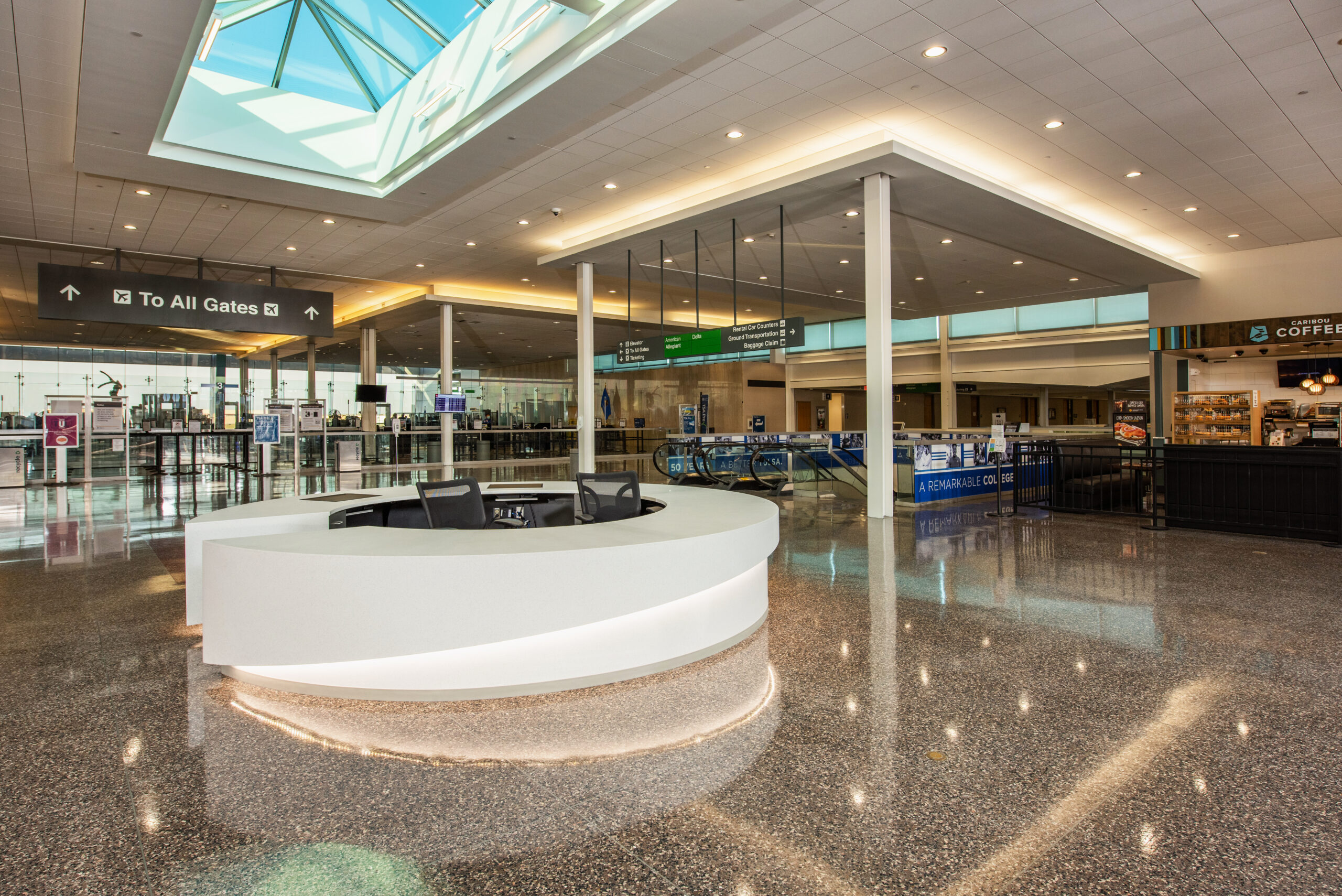
    Now, here’s where the issues begin. Despite the promise of a 15-minute processing time, I received no email response, not even in my junk folder. Patiently, I explored the airport’s recent updates to the landside facilities while I waited. As TUL lacks any lounges, the airport lends itself to cutting it extremely close; I usually find myself rushing to the gate, rolling up around group 5 or 6. It had been a while since I’d been bored enough at TUL to give the landside facilities a proper exploration, and there’s been a remodel since then. As the top of the hour neared, meaning the end of the window I’d selected, I decided to reapply for the next timeslot using an email account on a totally different provider. Yet, the result remained the same – no response, not even in the dreaded junk/spam folder.

    I don’t think it’s at all plausible that I was outright rejected. I’ve been a longtime TSA PreCheck member, and just underwent another round of vetting by Uncle Sam for Global Entry. The only trusted traveler programs I’m not part of are SENTRI/NEXUS, so I think it’s safe to say I’m not on any lists with TSA or DHS. It’s plausible that the web app responsible for issuing visitor passes isn’t properly configured with an SMTP server for firing off confirmation emails. Alternatively, the FAQs do imply that each application may be manually reviewed by the TSA; maybe they had more pressing matters on their plate, prioritizing ticketed passengers over pass-seeking visitors.

    I eventually ended up throwing in the towel and retrieving my personal vehicle from the airport parking facility. Could I have used a fully-refundable ticket to enter the terminal if I’d really wanted to? Of course I could have. But aside from returning my rental car (and test-driving the visitor program), I really didn’t have a compelling reason to be there, so I didn’t find it to be worth the effort of giving Southwest a (very) short-term loan. I’ve seen what’s on the other side of that TSA checkpoint countless times, and it’s not going anywhere. Maybe if there’d been a lounge, I would have thought differently.

    In an attempt to get some clarity, I reached out to the airport for a comment. As of press time, I haven’t yet received a response. If they do decide to share their side of the story, I’ll be sure to keep you updated (and possibly give the program a second chance). Until then, my TUL Visitor Pass adventure remains a somewhat frustrating mystery.

  • Breeze Airways Pulls the Plug on TUL

    Breeze Airways Pulls the Plug on TUL

    Breeze Airways, the brainchild of JetBlue founder David Neeleman, took off in 2021 with grand aspirations. They aimed to disrupt the airline industry with their point-to-point, leisure-focused routes. Yet, it’s safe to say they’ve had a rocky start.

    Earlier this year, One Mile at a Time sounded the alarm bells, hinting that Breeze might be in deep financial trouble. Their Q1 2023 financial report painted a grim picture, with revenue at $67,378,610 and expenses soaring to $115,400,500, resulting in a staggering loss of $48,021,890 and an operating margin of -71%. A year ago, in Q1 2022, the airline wasn’t faring any better, with a loss of $21,026,850 and an operating margin of -122%. Ouch.

    Now, I’m no CPA, but even I can see that these numbers are concerning. Sure, it takes time for an airline to find its wings, but these margins are, to put it mildly, horrendous. It’s likely that Breeze has already burned through a considerable chunk of their startup capital, and it’ll be interesting to see if Neeleman’s airline can continue to stay afloat amid strong economic headwinds.

    The latest news in the Breeze saga is the discontinuation of their service to my home airport, Tulsa International Airport (TUL). I was actually at dinner when the announcement broke, and my phone started blowing up with texts from friends and colleagues about an article from The Bulkhead Seat breaking the news.

    At the time of the announcement, Breeze had only one route out of TUL, which they’d started less than a month ago. This route was operating twice-weekly service to Louis Armstrong New Orleans International Airport (MSY), with a “BreezeThru” to Orlando International Airport (MCO). It seems like they barely gave the service a chance to spread its wings before pulling the plug.

    Now, to be honest, I can’t say that I’m too surprised. I only personally know one person who has ever flown Breeze into or out of TUL, and that was on a TUL-BNA route that doesn’t even exist anymore. If there’s not enough demand to sustain a route, then it’s understandable that Breeze would cut it loose.

    TUL isn’t the only city that’s seen Breeze pull the plug recently. They’ve also bid adieu to BNA, OKC, and SAT. This airline is developing a reputation for adding and removing routes at a staggering pace. So, while it might seem like a goodbye now, it could very well be a “see you later.” TUL has already played this game with Breeze several times, and who’s to say we won’t see them back in a few months? It’s hard to rely on an airline that seems to throw darts at the wall to see what sticks, rather than taking a more measured and carefully-researched approach to route planning.

    Breeze Airways certainly has a lot to prove, both to its investors and to travelers like us. The airline industry is notorious for its ups and downs, and Breeze appears to be experiencing both in quick succession. The future for this leisure-focused carrier remains uncertain, but in the aviation world, anything can happen. Time will tell if Breeze can soar to new heights or if they’ll find themselves grounded for good.