Tag: united airlines

  • United Makes Changes to Elite Status Qualification… and It’s Good News?

    United Makes Changes to Elite Status Qualification… and It’s Good News?

    United MileagePlus unveiled some changes to its Premier status program for the upcoming year – and they’re actually good news for most flyers. While the fundamental elite requirements remain unaltered, there’s an expansion in the avenues to qualify for status. Notably, United is clearly directing focus towards encouraging members to increase spending on co-branded credit cards, which is arguably a bigger cash cow for most US airlines than actual flying.

    To reiterate the elite requirements for 2024, which remain unchanged from 2023 (keeping in mind that one PQP is equivalent to a dollar spent on United airfare):

    • Premier Silver necessitates 12 PQF and 4,000 PQP or simply 5,000 PQP
    • Premier Gold calls for 24 PQF and 8,000 PQP or merely 10,000 PQP
    • Premier Platinum requires 36 PQF and 12,000 PQP or just 15,000 PQP
    • Premier 1K demands 54 PQF and 18,000 PQP or merely 24,000 PQP

    Existing MileagePlus elite members get a nice little bonus, too. United will proactively inject PQPs into their accounts at the beginning of 2024, determined by the status achieved in 2023. This applies to all elites, except those engaged in a status challenge or trial.

    The PQP jumpstart for 2024 will be allocated as follows:

    • Premier Silver members will receive a boost of 250 PQPs
    • Premier Gold members will enjoy a jumpstart of 500 PQPs
    • Premier Platinum members will be granted an added 750 PQPs
    • Premier 1K members will get a princely sum of 1,250 PQPs

    Moreover, MileagePlus elite status is becoming more attainable through credit card usage. Cardmembers can now earn 25 PQPs for every $500 in qualifying credit card transactions, enabling a 20% quicker accumulation of PQPs, in smaller increments than before. These PQPs earned through credit card spending will count towards all elite tiers, including Premier 1K. The United Club Infinite Card from Chase previously capped out at 8,000 PQPs annually, but that’s increasing to 10,000 PQPs per year. Notably, there will no longer be a cap on the total number of combined PQPs that can be earned across United cards.

    The rationale behind these changes is apparent—airlines are facing a less favorable landscape compared to a year ago. Business travel hasn’t fully rebounded to pre-pandemic levels. Post-COVID “revenge travel” has all but evaporated, with domestic leisure travel falling off a cliff, and airfares dropping considerably vs. a year ago even in the face of rampant inflation. Nevertheless, this development is indeed welcome news, especially when juxtaposed with the changes in Delta SkyMiles.

    Surprisingly, this adjustment comes from United, which is arguably in a stronger position compared to many other US airlines, primarily due to its robust international route network. Despite post-COVID domestic travel falling off a cliff in the face of a slowing economy and rising interest rates, international demand remains robust, and United is arguably in the strongest position of any US airline to rise to the occasion; compare this to low-cost carriers like Spirit who primarily fly domestically, and are disproportionately feeling the brunt of the current economic headwinds. United also only has a singular A321neo currently in service, largely shielding it from the Pratt & Whitney engine issues.

    Southwest also recently made positive changes to its popular Rapid Rewards program, however, they are arguably in a much weaker position than United with their domestic-focused route network, as well as the fact they’re still trying to repair their tarnished reputation from the full-scale nuclear meltdown of their network during Christmas 2022. It seems logical that Southwest would throw their customers a bone to drum up some business at a time they’re trying to turn things around.

    I imagine 2025 will probably see much more drastic changes to simplify the MileagePlus program, but I sincerely doubt it will be that bad. The program right now is unnecessarily complex. Not everyone cares to learn the ins and outs of a program like that. However, I don’t see United going down the same path Delta has gone down. Rather, I expect these changes will more closely resemble AAdvantage’s “Loyalty Points” scheme, which has turned out to be a positive for everyone except those who earn status organically through flying AA metal in economy. Let’s not forget that United CEO Scott Kirby is an ex-American guy. He worked under Doug Parker for years, just like current AA CEO Robert Isom. I expect the next few years will be marked by AA and United following each other relatively closely, while Delta does its own thing.

    h/t One Mile at a Time

  • Flight Attendants Advised to Gear Up for Bedbug Hunt: United Union’s Unusual Travel Advice

    Flight Attendants Advised to Gear Up for Bedbug Hunt: United Union’s Unusual Travel Advice

    Amidst a bedbug infestation in France that’s sent shockwaves across Europe, the AFA-CWA, the union representing United flight attendants, is offering some rather unorthodox advice. They’re suggesting flight attendants pack disposable latex gloves and a flashlight for an unexpected mission – the hunt for bedbugs in hotel rooms. While it might sound like a scene from a horror movie, there’s a method to this madness, and it’s not just about avoiding bringing these creepy crawlers home; there’s an unspoken concern here – preventing bedbugs from hitching a ride on commercial aircraft.

    In a recent press release, the AFA-CWA points out that bedbugs can be anywhere, anytime. These pests are notorious for their ability to hide in the tiniest of spaces and their stealthy nocturnal feeding habits. Plus, not everyone reacts to their bites, making it challenging to spot an infestation until it’s too late. Aside from the physical discomfort, bedbugs can take a heavy emotional and psychological toll on their victims, between loss of sleep and scarring.

    While some hotel chains have better housekeeping protocols than others, even the most trustworthy hotel chains aren’t 100% immune to bedbugs. Earlier this year, a friend of mine encountered an infestation at a Hyatt-branded property in the U.S. – a chain many of us (myself included) place an extremely high degree of trust in. To be completely fair, the staff handled the situation very appropriately, even laundering their clothes at no charge – which is exactly what you’d expect from a brand like Hyatt. I won’t disclose the name of the specific property, as they handled the situation well, and clearly had robust protocols in place to deal with such a situation.

    So, what can you do to protect yourself from these unwelcome roommates? Here are some key takeaways:

    1. Pack disposable latex gloves and a flashlight to inspect your hotel room thoroughly. Bedbugs love to hide in cracks and crevices.
    2. Opt for luggage with smooth, hard surfaces. Fabric, pockets, seams, and flaps provide hiding spots for these tiny invaders. I exclusively use hard-sided luggage, and this is one of many reasons why.
    3. Keep your luggage away from sleep and rest areas in the hotel room. Glass tables and luggage racks are your friends, and plastic is better than wood.
    4. Inspect the mattress and box spring for signs of bedbugs, such as tar-like splotches and shed skin fragments. Pay close attention to the corners, seams, and labels.
    5. Notify hotel staff ASAP if you suspect an infestation and take photos for evidence. The union even suggests bagging and keeping the pests in case you need additional evidence later… I’m not sure I have enough faith in Ziploc to put that into practice, but you do you.
    6. If you’re bitten or find bedbugs, get out of that room immediately. If changing hotels isn’t an option, move as far away from the infested room as possible.
    7. Upon returning home, unpack your luggage outside or on a garage floor and inspect your belongings carefully. Wash anything washable in hot water and dry at a high temperature. For extremely frequent travelers, you can purchase a unit to bake your luggage and its contents at a high temperature to ensure it’s clear of pests.
    8. Remember that eliminating an infestation can be a long process, and you may need multiple pest control visits. Bedbug-proof mattress encasements can help salvage infested bedding.

    This advice isn’t just for flight attendants; it’s sage wisdom for all travelers, particularly those visiting Europe, where bedbug incidents are on the rise. Fortunately, the situation may not have as much of an impact in the United States due to more modern building structures and our tendency to drive places in our own cars.

    However, if you’re considering heating your luggage to eliminate any potential bedbugs, here’s a crucial warning: Remove any lithium-ion battery packs before attempting it. We’re after bedbugs, not fireworks displays.

  • United Airlines Adopts “WILMA” Boarding Order

    United Airlines Adopts “WILMA” Boarding Order

    United Airlines is taking a step back to the past in an effort to streamline their boarding process. Starting on October 26, 2023, they will be reintroducing a previously-trialed boarding system known as “WILMA.” Now, you might be wondering what WILMA stands for, and trust me, you’re not the only one scratching your head over this acronym. It stands for Window, Middle, and Aisle, though the origin of that “L” remains somewhat unclear.

    Why the switch? Well, United Airlines has noticed that it takes them an average of two minutes longer to board a flight now compared to 2019. You might think that two minutes isn’t much, but when multiplied across their entire network, that time can quickly add up. Oddly, this lag in boarding time has happened at a time when United has been expanding its basic economy fare class, which, notably, doesn’t include a carry-on bag.

    Why could this be? With business travel still lagging behind pre-pandemic levels, leisure travelers and families, who might not be as accustomed to the boarding process, now make up a significant chunk of their passenger roster, slowing down boarding.

    So, United is making a change, but what exactly does this mean for travelers? In a nutshell, the idea is to seat passengers in the window, middle, and aisle seats in that order. Starting with Group 3, the new system is as follows:

    • Preboarding remains the same and includes customers with disabilities, unaccompanied minors, active military members, Global Services members, travelers with children 2 years and younger, and Premier 1K members.
    • Group 1 continues to include Premier Platinum and Gold members, Star Alliance Gold members, and travelers in United Polaris, United First, and United Business cabins.
    • Group 2 still consists of Premier Silver members, Star Alliance Silver members, travelers with Premier Access or priority boarding, and select cobranded credit card holders.
    • Group 3 encompasses window seats, exit row seats, and non-revenue travelers.
    • Group 4 is for the middle seats.
    • Group 5 is for passengers in aisle seats.
    • Group 6 is for basic economy customers, though it’s important to note that for long-haul flights and select Central American routes, there won’t be a Group 6. This exception is due to United allowing carry-on bags for passengers with intercontinental basic economy tickets.

    At first glance, it might seem like a lot of groups, but keep in mind that United’s competitors like American Airlines and Delta both have a whopping 10 boarding groups, making United’s seven seem relatively tame. United also has one of the most punitive Basic Economy products in the business, placing even their MileagePlus elite members in Group 6 when flying on a Basic Economy ticket; on competing airlines, many of the restrictions of BE fares can be defeated with elite status or the right credit card.

    In my opinion, if an airline really wants to speed the boarding process, the current fee structure of charging most passengers to check a bag should be flipped. Carry-on bags slow the boarding process immensely, especially towards the end of the process as overhead bins fill, and people have to get creative as to where to stow their bags. This slowdown plays out in reverse upon landing, creating frustrating delays in getting off the aircraft. Road warriors and business travelers recognize the huge time suck involved in checking a bag, and I imagine most would be willing to pay a premium for the ability to bring a full-size carry-on. As an AA elite, I’m entitled to free checked bags, yet I rarely utilize this benefit based on the inconvenience factor alone. United seems to recognize this reality, as they already require Basic Economy passengers to check their bags (and pay for the privilege). Perhaps airlines should consider a fee structure charging non-elites to bring a full-size carry-on into the cabin, and incentivize more passengers to check their bags by making those free of charge.

    Ultimately, the airline industry is fiercely competitive, and with razor-thin margins, carriers are constantly seeking ways to shave precious minutes off their boarding times. There are countless academic studies all centered around shaving minutes and seconds off the boarding process. For airlines like Southwest, their open-seating policy allows for fast boarding, as passengers can just sit down wherever they see a seat and space for their carryon; this is especially crucial as their business model has long relied on quick turns. United’s reversion to the “WILMA” system might be just the ticket to streamline the process and get passengers on board a bit faster, even if we’re still pondering the mysterious “L” in the acronym.

  • Aviation News Roundup: Israel-Hamas Conflict Impacts Air Travel

    Aviation News Roundup: Israel-Hamas Conflict Impacts Air Travel

    On Saturday, a tragic turn of events saw Hamas launch an unprecedented attack on Israel, leading to the loss of hundreds of lives, countless more taken hostage, and Israeli Prime Minister Benjamin Netanyahu declaring war.

    UA954’s Unexpected Detour: The whole world can change in an instant. UA954, a San Francisco to Tel Aviv flight, operated by a 777-300ER, found itself mid-air when the war began. The plane had to make a 180-degree turn over Greenland, embarking on a 13-hour “flight to nowhere” before landing safely back in SFO.

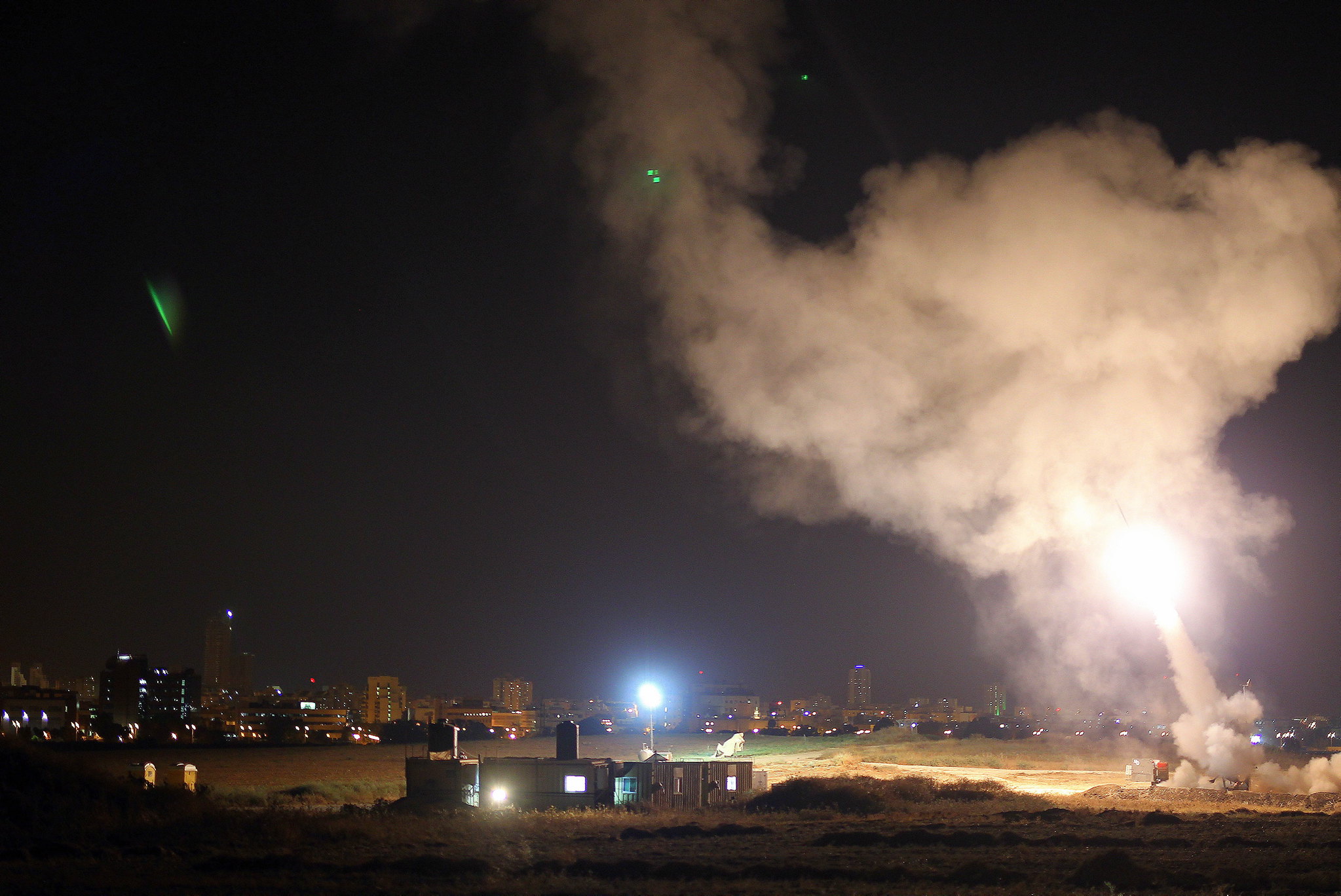
    Terrifying Moments at TLV: Passengers at Ben Gurion International Airport (TLV) were subjected to moments of sheer terror as rockets were intercepted nearby, forcing some to abandon their luggage and take cover as air raid sirens rang out. Surprisingly, this only briefly disrupted airport operations.

    Ben Gurion Still in Business: Despite the perilous situation, as per FlightAware data at the time of writing, TLV has only seen 65 canceled departures (20% of the total) and 70 canceled arrivals (23%) for the day. This defied our expectations, considering the circumstances. Then again, Ben Gurion is considered by many to be the world’s most secure airport – if I were in Israel right now, even despite the airport being named a target by Hamas, I still think the airport is likely the safest place to be.

    U.S. Airlines Play it Safe: Most U.S. and Canadian airlines have cancelled all flights in and out of Israel, limiting the options of Americans already in the country & trying to escape. The Allied Pilots Association (union for American Airlines) advised its pilots not to operate flights, citing safety concerns, and Delta just announced the cancellation of all TLV flights for the remainder of October. President Biden has publicly called upon U.S. carriers to resume service and facilitate the return of American citizens, but it remains uncertain if this will materialize. Meanwhile, we’ve heard anecdotal evidence of AA rebooking its customers on alliance partner British Airways to get them out via Heathrow; it’s unclear if United and Delta are using similar tactics, but I imagine SkyTeam is struggling, with KLM following Delta’s lead in suspending flights.

    Brave AA Pilots Step Up: In a remarkable show of solidarity, American Airlines pilots went against the advice of their own union, in order to take care of their own. They operated a special flight, AA9602 from TLV to JFK on a 777-200, exclusively for crew members and non-revenue passengers. United operated a similar flight for their crew, though details are unclear – and perhaps that’s a good thing, in the name of OPSEC. (h/t @xJonNYC)

    European Airlines’ Mixed Response: IAG group airlines, such as British Airways and Iberia, and low-cost carriers like EasyJet and Ryanair, appear to be largely operating normally, with a few flights cancelled and others operating as normal. According to a post in an unofficial AAdvantage members group, BA was even still serving PDBs in Club World… and I think a PDB would be the least of my worries while trying to escape a warzone. However, some carriers, like KLM, have suspended all flights. It’s interesting to note that European carriers seem to generally have a much higher risk tolerance when it comes to flying into geopolitically unstable regions compared to their U.S. counterparts.

    Even TK is Out: Turkish Airlines’ decision to suspend flights to Tel Aviv comes as a sobering indicator of the ongoing security concerns in the region. In an aviation landscape where many carriers are altering their routes and schedules in near-real time due to geopolitical tensions, Turkish Airlines has been known for its resilience, continuing to fly to destinations within Russia even amidst the ongoing Russia-Ukraine war. However, the situation in Tel Aviv has forced the airline to make this difficult choice, underscoring the seriousness of the circumstances in the area.

    El Al Bringing People… In?: El Al (LY) emerges as a crucial player during this turbulent period. While other carriers are reducing their services, El Al is bringing many into TLV. Why? Many Israelis are returning home from abroad to serve in the war, as Israel calls up an unprecedented 300,000 reservists. It’s worth noting that El Al is the only commercial air carrier to equip its aircraft with missile defense systems. These systems, like Elbit Systems’ C-MUSIC, are designed to throw off heat-seeking missiles with infrared or flares, ensuring the safety of passengers and crew.

    As the situation unfolds, those wishing to leave the region should do so as soon as possible, by any safe means possible, and let your home country’s embassy know of your whereabouts. For American travelers, this means enrolling in the STEP program. It’s worth repeating – and I can’t stress this enough – if you’re an American or Canadian, and you want out of Israel, your best bet by far right now is to get yourself to Europe as soon as safely possible and figure it out from there. Despite Biden’s plea to the airlines, there is no guarantee we will see another commercial flight to the U.S. from TLV for the duration of the war. Could it happen? Yes, but I’d much rather be figuring out my next move from the safety of Heathrow than waiting for the federal government to figure things out.

    In these challenging times, aviation takes on a role beyond its usual purview, providing an essential escape route for individuals affected by the ongoing conflict. The situation remains fluid, but we’ll continue to follow it and bring you info as we get it.