Category: Uncategorized

  • TSA’s New CT Scanners: The End of a Popular Travel Hack?

    TSA’s New CT Scanners: The End of a Popular Travel Hack?

    The recent introduction of Analogic CT scanners by the TSA has left many frequent travelers fuming (particularly TSA PreCheck and Global Entry members). While the convenience of leaving everything in your bag is a boon to infrequent travelers who don’t have TSA PreCheck, those of us who have PreCheck have enjoyed this benefit long before the introduction of the new scanners. We have to put up with much longer screening times at checkpoints equipped with CT scanners, and unlike for those in the general screening lanes, we get zero added benefit in exchange for the much slower screening.

    In my opinion, a potential solution would be to reserve the CT scanners for general screening lanes, preserving the efficiency of the old-school X-ray machines for the benefit of PreCheck members. In general screening lanes, the added time to screen each bag is likely canceled out by the time saved not waiting for frazzled, infrequent travelers to remove laptops and liquids from their bags prior to sending them through. But in PreCheck lanes, this is a huge loss with zero positive trade-off.

    A recent post on Reddit’s /r/TSA made me realize yet another unintended consequence of these new CT scanners—they effectively eliminate a popular travel hack.

    Traditionally, savvy travelers without elite airline status have utilized a simple hack to save $30-40 on bag fees: bring a bag you intend to check through TSA, then “volunteer” to check it at the gate. Gate agents, more often than not, have been accommodating of this practice, especially with legacy carriers. Rarely would anybody be told no or charged a fee; you’re volunteering to perform a kind and selfess act by checking your luggage and giving up your overhead bin space for another passenger! (This, however, doesn’t work on low-cost carriers that charge for carry-ons.)

    The TSA’s role, as they saw it, has solely been to prevent prohibited items from making their way onto flights, leaving the decision of whether a bag fits in the bag sizer up to the airlines to enforce. They don’t get paid enough to argue with you over your bag being half an inch too wide. As long as you’re in compliance with 3-1-1 and other security regs, you’re good.

    For travelers like me, who occasionally push the limits of punctuality when departing from airports lacking a lounge, this hack has been a reliable workaround for strict bag check cutoffs. If you miss the standard bag check cutoff time, you could simply follow these same steps at the gate; not only do bag fees typically not apply at the gate, but the cutoff times are significantly more lenient. While the FAA no longer really cares about voluntary separation of passenger and baggage on domestic flights, the airlines still seem to enforce this pretty strictly; if your checked luggage can’t make the flight, neither will you – even if you can still make it to the gate prior to closing. While I rarely check bags anymore, when I do, I’ve always packed them for 3-1-1 compliance just in case I needed to do this.

    The introduction of the new CT scanners has shifted the dynamic here. Unlike the old X-ray machines where you could slide your bag directly onto the conveyor, the CT machines mandate that everything, including luggage, must go into a plastic bin. If your luggage doesn’t fit, TSA won’t permit it through. Full stop.

    This change puts the TSA in the unexpected role of determining whether your bag meets the size criteria. It adds an extra layer of scrutiny to the screening process, potentially complicating this once straightforward strategy of gate-checking a bag.

    Let’s just hope TSA backtracks on this little CT scanner experiment, at least for PreCheck members.
  • What Would You Do? Global Entry Dilemma at DFW

    What Would You Do? Global Entry Dilemma at DFW

    It’s no secret that the airline industry has been a rollercoaster lately, with domestic travel taking a nosedive while international demand remains surprisingly robust. This incongruity is causing a conundrum for low-cost carriers like Spirit, who rely heavily on domestic routes. But let’s zoom in on a scene I encountered at Dallas/Fort Worth International Airport (DFW) during the Thanksgiving holiday that I don’t recall ever seeing before.

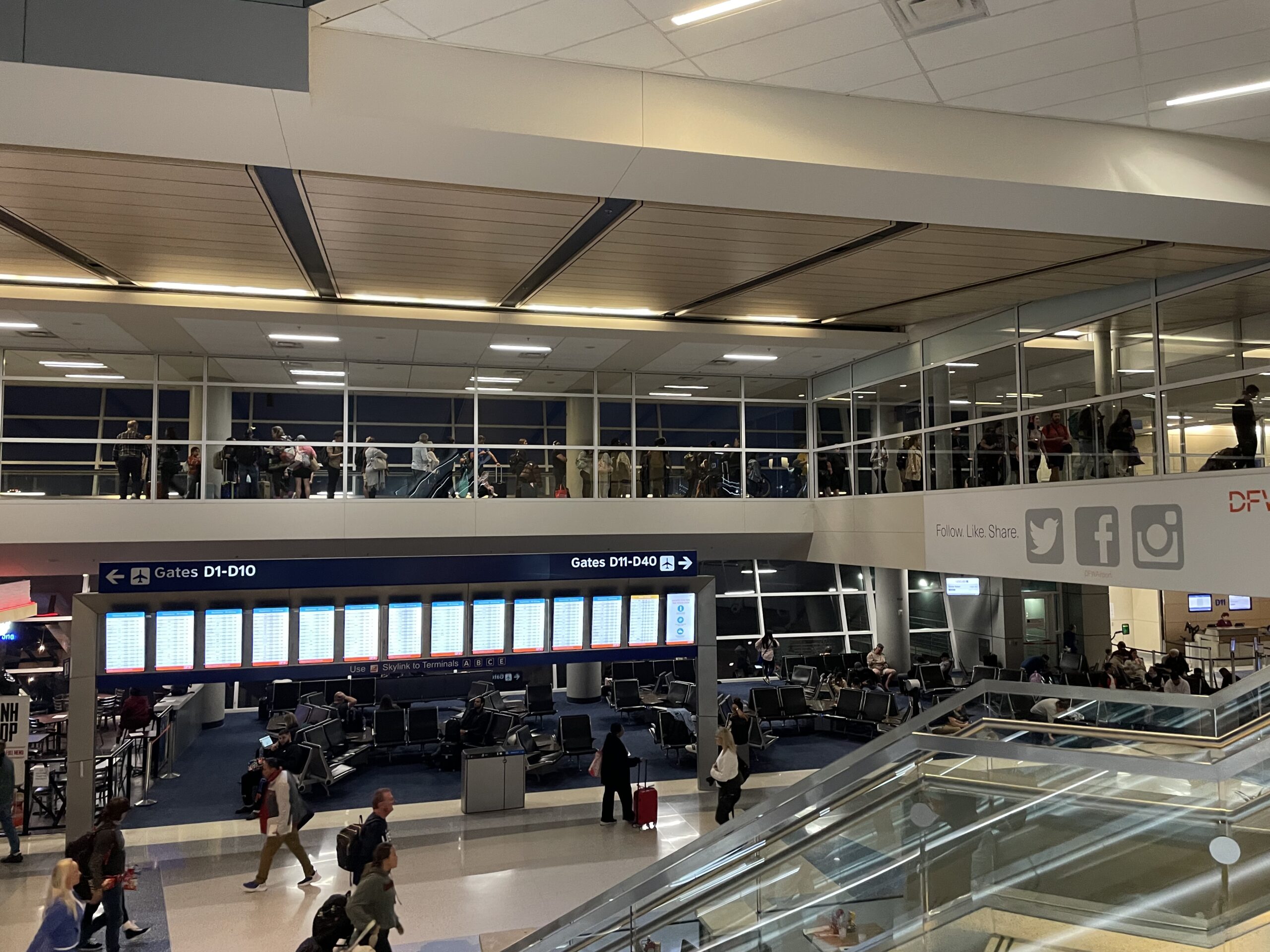
    Customs line at DFW backed up almost to the plane, (C) 2023 Points & PDBs
    That’s backed up almost to the plane!

    Now, the image I captured speaks volumes. The line for passport control snaked its way beyond the Customs and Border Protection (CBP) facility and into the sterile glass corridors used to separate arriving international passengers from those who have undergone TSA screening – really, almost to the plane passengers were getting off of (I was in a hurry and didn’t stop to figure out where they were coming from). It was a sight to behold, and it left me pondering a hypothetical scenario: What would you do in this situation?

    The line extended well before the point where it bifurcates into channels for Global Entry and Mobile Passport Control. Would you have queued up with the masses until you reached the split for Global Entry, or would you have boldly strolled past everyone straight to the Global Entry kiosks?

    Personally, I lean towards the latter. Sure, you might attract a few disapproving glances, but hear me out. The majority of those in line are likely waiting for standard screening involving an interview with a CBP officer. By skipping ahead to the Global Entry kiosks, you’re not usurping their position in the standard screening line; you’re just taking advantage of a time-saving tool – one that you’ve paid and undergone a background check and interview for. Of course, if a staff member intervenes, it’s important to comply, but don’t let the judgmental stares from fellow passengers deter you.

    Thankfully, I was a mere spectator in this spectacle (I saw this while coming down the escalator from the Skylink near gate ~D12) and didn’t have to grapple with the decision myself. DFW generally has a reputation for efficiency in both TSA and Customs screening, and I’ve never personally seen a line of this magnitude at the Texas mega-hub, whether returning to the country myself or observing from the concourse below.

    The only comparable scenario I recall was during the initial COVID lockdowns when people rushed to return home, causing delays amid heightened health screening measures. This line, however, takes the cake for its sheer length. It raises the question: Is the surge in international demand truly that substantial, or are CBP staffing issues over the holidays bottlenecking the process?

    During the pandemic, American Airlines retired numerous widebody aircraft, anticipating the delivery of new 787s to coincide with the expected rebound in demand. Unfortunately, Boeing’s delays in delivering the 787s have left AA with severely constrained international capacity at present. As most of AA’s international flights are already completely filled with either paid or standby passengers, it’s unlikely there’s suddenly a huge surge of additional passengers flying internationally on AA. It’s not like they have the ability to add a bunch of new capacity for the holiday season, save for some narrowbody flights to Mexico and the Caribbean (Canada has preclearance at most airports so that’s effectively domestic for this purpose).

    So, what would you have done in this situation?

  • Gomas Dragged on SNL, Seems to Take In Stride

    Gomas Dragged on SNL, Seems to Take In Stride

    I’ll be the first to admit I don’t normally watch SNL. They’ve gone downhill in recent years, putting out a large amount of political content that quite frankly just isn’t funny, regardless of who you voted for. It seems like they’ve generally run out of ideas after so many years on the air, and are putting out “fluff” to keep the show alive. However, occasionally SNL puts out a skit or two that is actually good; usually it’s airline-related, and I find it after the show has aired on my “platform formerly known as Twitter” feed. Last year, they hit a home run with their skit about Southwest Airlines following their holiday meltdown.

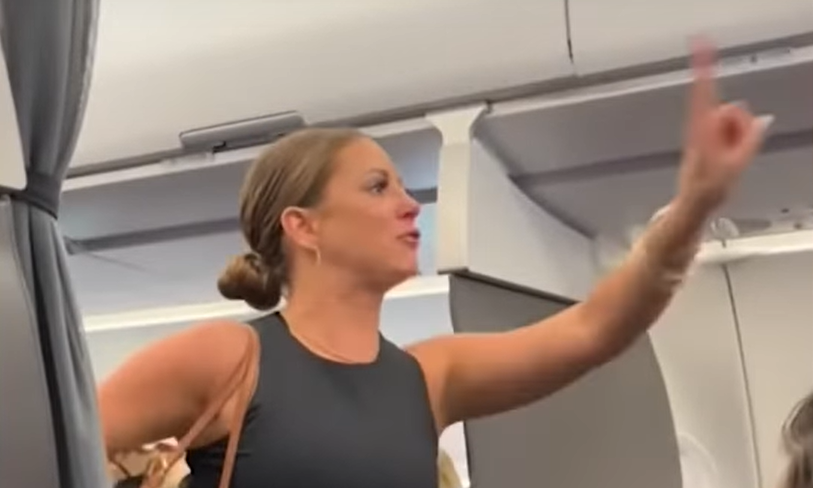
    SNL is back at it again, this time mocking everyone’s favorite airline passenger to mock, Tiffany Gomas – also known as the “that motherf***er is not real” lady. Gomas herself saw the clip, and while she seemed a bit embarrassed by SNL parodying her infamous July meltdown on an AA flight out of DFW, she seemed to take it in stride. User @byebyejack1 replied, reassuring Gomas that nobody saw it, because that would require actually watching SNL.

    Last week in an appearance on right-wing comedian Alex Stein’s show on The Blaze, Gomas admitted that the July incident earned her a ban from American Airlines, and it seems like she’s since become a United convert. Living in DFW, that really sucks for her; while everyone else is able to take nonstop flights to virtually anywhere from DFW, seems Gomas is going to be stuck taking a quick connecting flight to Houston (IAH) or one of United’s other hubs.

    Gomas is a marketing executive in the DFW area, and has been a good sport about her newfound infamy, leaning into it rather than remaining in hiding. As a fellow Oklahoma State grad, it’s good to see a fellow member of the Cowboy family making something good out of a bad situation. While I don’t hold a Marketing degree specifically, I did attend the Spears School of Business just like Gomas presumably did. Some of the best advice I’ve ever received about marketing myself has been from Spears Marketing professors, some of which I never formally enrolled in classes with. It seems she’s used her skills to turn what was likely one of the worst days of her life into something positive. Good on her.

    Gomas’ identity remained a mystery for weeks after the incident. However, as the DFW Airport Department of Public Safety got involved, I can’t see how she expected to keep her identity a secret for very long. As a government agency, the department got FOIA’ed by journalist Bree A. Dail several weeks later. You can read the full report in all its glory here.

  • That MF is On… The Blaze? Alex Stein “Proposes” to Tiffany Gomas in Network Appearance; Gomas Reveals Ban

    That MF is On… The Blaze? Alex Stein “Proposes” to Tiffany Gomas in Network Appearance; Gomas Reveals Ban

    Many of us remember back in July when Tiffany Gomas had her outburst on an American Airlines flight out of DFW to Orlando (MCO). Well, Gomas is back at it, this time on… Glenn Beck’s The Blaze? Oh, and she’s apparently banned from AA, too.

    Gomas appeared on Prime Time with Alex Stein, and we’ll just let these video clips speak for themselves.

    Alex Stein, also known as Prime Time #99, is an interesting character. He’s a right-wing comedian, based in the Dallas-Fort Worth Metroplex. Stein rose to fame (infamy?) by trolling city council meetings, originally around the Metroplex and eventually around the country. Usually citizens are entitled to a set number of minutes to speak before a city council, and Stein would use his alotted time to perform politically-charged raps.

    Gomas conveniently also resides in the DFW area, having graduated from my alma mater, Oklahoma State. Assuming her degree is in Marketing, that would mean we both attended the Spears School of Business, and we likely had the same grouchy old Marketing professor at some point (this man also taught Garth Brooks).

    If you must, you can watch all 66 minutes of the episode in its full glory on YouTube.

  • I Tried Out the Visitor Pass Program at TUL. It Didn’t Exactly Go Smoothly.

    I Tried Out the Visitor Pass Program at TUL. It Didn’t Exactly Go Smoothly.

    Update 11/15/2023: TAIT wrote me back via email. They have apologized for inconvenience and shared a customer service number for any issues with visitor passes. That number is (918) 838-5090. My hope is that the airport will update their instructions with this information, as I was unable to find it online. I’ll try again someday relatively soon when I have the time to make the trek out to the airport without a flight to catch.


    In a recent post, I explored the revival of visitor pass programs at US airports, a throwback to the pre-9/11 days when non-ticketed folks could roam freely through the sterile area, or meet loved ones at the gate (though now with some guardrails and vetting beforehand). My home airport, Tulsa International Airport (TUL), launched such a program this year, but I’m there often enough as a ticketed passenger that I hadn’t really felt a need to try the new program out for myself.

    That changed yesterday. I’ve been all over the state of Oklahoma this week, including (but not limited to) a day trip to OKC, and an evening back at my alma mater in Stillwater watching the Cowboys narrowly lose to Abilene Christian in basketball. Luckily cheap(ish) rental cars are still a thing if you know where to look, so I snagged one from Avis in an effort to limit the mileage I was putting on my personal vehicle. Upon returning my rental car, I realized I’d be facing significant rush hour traffic to get home, so I decided to wait traffic out and give the very creatively-named TUL Visitor Pass Program a whirl and watch the evening departure/arrival bank go in and out of KTUL. Spoiler alert: it didn’t quite go as expected.

    The application process seemed straightforward enough. The airport claims to process same-day applications within 15 minutes, and advance applications shortly after midnight on the day of your visit. So, armed with optimism, I filled out the necessary details on my mobile device while wrapping up my business with Avis. Legal name, date of birth, gender – the basics for a quick background check against the TSA Secure Flight database. You choose a one-hour timeslot in which you expect to arrive at the TSA checkpoint. You also need a valid email address, as that’s how you’re supposed to receive your pass (more on that in a sec). The program is totally free-of-charge, so no need for credit card details.

    The program does limit participants to 100 guests per hour, but we’re not exactly talking about Taylor Swift concert tickets here. Even during the day’s busiest timeslot, there were still 91 visitor passes up for grabs. The airport’s promotion efforts are a bit lackluster, with only digital signage near the TSA checkpoint, urging loved ones to not “say goodbye just yet” and flaunting a QR code to apply on-the-spot. It seems the general public isn’t fully aware that this visitor pass option exists at all.

    Even though you’re not catching a flight, the system generates a Passenger Name Record (PNR) number for you, which appears to be internal to the airport. This seems to be a precaution against any potential hiccups with TSA’s Credential Authentication Technology (CAT) machines.

    Now, here’s where the issues begin. Despite the promise of a 15-minute processing time, I received no email response, not even in my junk folder. Patiently, I explored the airport’s recent updates to the landside facilities while I waited. As TUL lacks any lounges, the airport lends itself to cutting it extremely close; I usually find myself rushing to the gate, rolling up around group 5 or 6. It had been a while since I’d been bored enough at TUL to give the landside facilities a proper exploration, and there’s been a remodel since then. As the top of the hour neared, meaning the end of the window I’d selected, I decided to reapply for the next timeslot using an email account on a totally different provider. Yet, the result remained the same – no response, not even in the dreaded junk/spam folder.

    I don’t think it’s at all plausible that I was outright rejected. I’ve been a longtime TSA PreCheck member, and just underwent another round of vetting by Uncle Sam for Global Entry. The only trusted traveler programs I’m not part of are SENTRI/NEXUS, so I think it’s safe to say I’m not on any lists with TSA or DHS. It’s plausible that the web app responsible for issuing visitor passes isn’t properly configured with an SMTP server for firing off confirmation emails. Alternatively, the FAQs do imply that each application may be manually reviewed by the TSA; maybe they had more pressing matters on their plate, prioritizing ticketed passengers over pass-seeking visitors.

    I eventually ended up throwing in the towel and retrieving my personal vehicle from the airport parking facility. Could I have used a fully-refundable ticket to enter the terminal if I’d really wanted to? Of course I could have. But aside from returning my rental car (and test-driving the visitor program), I really didn’t have a compelling reason to be there, so I didn’t find it to be worth the effort of giving Southwest a (very) short-term loan. I’ve seen what’s on the other side of that TSA checkpoint countless times, and it’s not going anywhere. Maybe if there’d been a lounge, I would have thought differently.

    In an attempt to get some clarity, I reached out to the airport for a comment. As of press time, I haven’t yet received a response. If they do decide to share their side of the story, I’ll be sure to keep you updated (and possibly give the program a second chance). Until then, my TUL Visitor Pass adventure remains a somewhat frustrating mystery.

  • AI-Powered Employee Screening Trialed at DEN: Should it be Piloted for PreCheck Passengers, Too?

    AI-Powered Employee Screening Trialed at DEN: Should it be Piloted for PreCheck Passengers, Too?

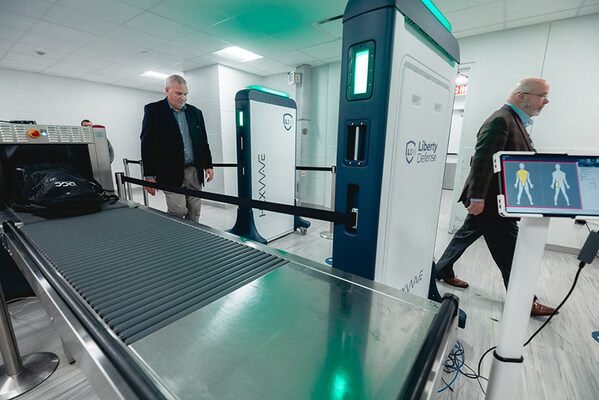
    Denver International Airport (DEN) is stepping into the future of airport security, announcing a trial run of the HEXWAVE system for employee screening. Developed by Canadian company Liberty Defense Holdings Ltd., this cutting-edge technology integrates AI, millimeter wave technology (similar to what’s currently used in the Leidos full-body scanners for non-PreCheck passengers), and advanced 3D imaging to detect both metallic and non-metallic threats without requiring individuals to remove common items like phones or keys. The trial will take place at the south employee checkpoint in the Great Hall, and marks a significant shift in aviation worker screening, who traditionally are only pulled aside for screening at random under the Known Crewmember (KCM) program.

    This initiative comes amid a broader reassessment of the KCM program, and several recent disturbing incidents involving crew members. These incidents, notably the alarming attempt by an off-duty Alaska Airlines pilot to bring down a Horizon Air E175 midflight and a Delta pilot brandishing a gun during a disagreement over a medical diversion, have raised critical questions about the effectiveness of security procedures pertaining to crew members. Admittedly, these portals likely wouldn’t have done much to stop either incident; the Delta pilot was authorized to carry a weapon on board under the voluntary Federal Flight Deck Officer (FFDO) scheme – one we expect will be closely looked at over the coming weeks and months.

    While details of the specifics of the pilot program are, of course, under wraps, it’s likely we’ll see this technology used to pivot from random screenings of crew to consistently (but efficiently) screening them upon every entry. While obviously crew are in control of the aircraft whether they possess a weapon or not, this could prevent a scenario where a threat actor enlists an airline employee as an accomplice to smuggle something into the sterile area, handing it over post-security.

    While the introduction of these advanced detection portals is poised to potentially revolutionize airport security, their impact on crew members, if implemented more widely, is expected to be minimal. Comparable to the Evolv Express platform used at Walt Disney World, these AI-based detection systems offer efficient screening without the need to stop moving, line up single-file, or divest personal items. The only time there’s a need to stop is if a potential threat is identified, at which point the individual in question is pulled aside by nearby officers; otherwise, you pretty much get waved through.

    https://youtu.be/ZEt_-ak2YQI
    The Evolv Express platform, currently used by Disney, is comparable to the HEXWAVE system being trialled at DEN. While filled with marketing speak, this provides a pretty good idea of how it works.

    Currently, this screening technology is solely for workers. However, it begs the question if these portals could potentially one day be extended to TSA PreCheck passengers – which would be a win-win for both safety and passenger experience. It could enhance safety by effectively detecting non-metallic weapons such as those produced by 3D printers, which conventional magnetometers struggle to identify. Moreover, it promises a smoother, faster screening process for passengers, eliminating the hassle of removing personal items and even small bags. If that were implemented, all they’d need to do to significantly increase throughput would be to do something about those horrendously slow Analogic CT scanners (maybe the technology will reach a point where conveyor-based systems are rendered obsolete altogether?).

    The trial at Denver International Airport presents a glimpse into the future of airport security. While it may not directly address all the concerns surrounding recent crew incidents, the implementation of such innovative technology could potentially reshape the landscape of airport security for both employees and passengers alike.

  • No-Show on a Hertz Reservation? That Will Now Cost You… Dearly

    No-Show on a Hertz Reservation? That Will Now Cost You… Dearly

    Rental car giant Hertz has discreetly rolled out a significant change in their policies, introducing the imposition of no-show fees across a wide swath of bookings. In the world of rental cars, it’s been a long-standing tradition that direct bookings seldom entail no-show fees, except for prepaid reservations where cancellation or changes are off the table, and the full amount is non-refundable.

    However, Hertz has very quietly changed the rules in a very big way, now requiring payment for a complete day at the base rate if a customer fails to show up. The recently added language in the fine print at checkout unequivocally states, “Reservations must be cancelled prior to pick-up time or will be subject to a $111.29 USD No-Show Fee. A valid credit card must be presented at the time of rental to complete the reservation.” (Substitute the $111.29 with 1x the daily rate)

    An additional blow comes for those utilizing Hertz Gold Plus Rewards points for their bookings. In the event of a no-show, the points are refunded, but the customer is charged at the prevailing cash base rate—ouch.

    One might argue, “Well, I won’t find myself in that situation. I’m responsible and would never no-show on a rental car reservation.” But consider this scenario: imagine being stuck on a delayed flight without reliable Wi-Fi, unable to cancel your reservation before the no-show fee kicks in. Or maybe your travel day was hectic, and your rental car was the last thing on your mind. It’s a risk not worth taking.

    The prevalence of rental car shortages during the pandemic led many to get in the habit of securing backup reservations with alternative rental companies in case their preferred choice failed to come through for them. However, I’d now advise to end that practice to avoid being charged a potentially significant amount of money.

    Seinfeld was ahead of his time here.

    We normally advise against using an OTA to book most travel. However, an interim solution here could be booking through an OTA like Costco Travel or Autoslash, currently exempt from this policy shift. Yet, a word of caution: this exemption might change without notice, so always check carefully during the booking process.

    Notably, Hertz’s subsidiaries Dollar and Thrifty have yet to implement this policy change. Thrifty’s website explicitly states, “No cancellation fees apply if you choose the ‘Most Flexible’ payment option.” However, it wouldn’t be surprising if this policy change permeates across these entities in the future.

    The implications of this move by Hertz raise questions about the industry as a whole. Will competitors like AvisBudget Group and Enterprise Holdings Mobility follow suit? Again, it’s critical to read carefully while booking, as policies can shift rapidly without warning – and if Hertz is any indication, it’s unlikely these policies will exactly be announced via a flashing neon sign.

    The decline in Hertz’s services has been a topic of discussion, particularly after the company was sold to Apollo Global Management amidst pandemic-induced financial struggles. Instances of renters being wrongfully arrested due to Hertz renting out cars previously reported stolen, as well as difficulties in honoring reservations, have marred the company’s reputation. The recent alteration in points expiration policy from 18 to 12 months, without prior notice, further highlights the tumultuous changes within the company.

    h/t Dave from MilesTalk

  • Enterprise Holdings Rebrands, But Does Anyone Really Care?

    Enterprise Holdings Rebrands, But Does Anyone Really Care?

    I received this recent missive from the fine folks at National, and let me tell you, it’s a masterclass in corporate hoopla.

    Dear Adam,

    We’d like to thank you for your loyalty as a valued Emerald Club® member – and we’d also like to share with you an exciting announcement regarding our business.

    National Car Rental® not only helps you Go Like A Pro®: It’s also part of a global portfolio of mobility solutions. Now, as we look to help shape the future of mobility, we are connecting our full portfolio under a new corporate brand — Enterprise Mobility.

    This portfolio includes car rental, fleet management, flexible vehicle hire, carsharing, vanpooling, car sales, truck rental, vehicle subscriptions, luxury rentals, technology solutions and more.

    While we are introducing a new corporate brand, the Enterprise Mobility portfolio of brands, including National Car Rental and the Emerald Club program, will remain unchanged.

    There are no changes for you and no actions you need to take.


    Although the corporate brand is changing, who we are is not.

    We will continue to deliver you exceptional service, innovate with intention to help meet your mobility needs, and invest in and reward our loyal members like you.

    Thank you for helping us shape the future of mobility.

    Email from National Emerald Club

    They want to let us know that they’re part of this grand Enterprise Mobility™ rebrand. According to the email, nothing changes for us—no actions required, no adjustments, just the same ol’ same ol’.

    In the press release, the Enterprise bigwigs are making a big deal about “ushering in a new era” and “moving mobility forward.” They’re throwing around phrases like “purpose-led” and “people first.” But essentially, it seems like a renaming party for a bunch of services they already had.

    Chrissy Taylor, President & CEO of Enterprise Mobility, waxes poetic about the company’s evolution. She’s mentioning a new visual identity, a refreshed corporate purpose, and a lot of sentimental musing about their history, which is all nice and dandy. But let’s face it, it’s a rebranding exercise – a facelift for a business that’s been around the block for a while. You can read the full press release here if you choose – but be warned, it’s a lot of fluff and not much substance.

    What’s my take on all this hullabaloo? Well, it seems like Enterprise might be trying to dip their toes into other mobility markets beyond just car rental. Maybe they’re eyeing a slice of the rideshare pie dominated by Uber and Lyft? Time will tell if this move will amount to anything significant. Consider that Marriott and, more recently, Hyatt have both dipped their toes into the short-term vacation rental space, going head-to-head with Airbnb and VRBO, perhaps in a move to lure in Millenial and Gen Z travelers who tend to eschew traditional hotels in favor of non-traditional alternatives. Could Enterprise be trying to do the same with Uber and Lyft? I’m not sure it’d be smart, but it would sound good in a boardroom – seriously, the blueprint for every college Entrepreneurship class project (and most actual tech startups for that matter) seems to boil down to “it’s like Uber, but for _________.”

    But my concern is whether this will impact the trusty old National brand and the Emerald Club program over the long-term. The email and press release don’t give many concrete answers about much of anything. While National is arguably still the best car rental loyalty program out there, it’s slowly declined over the years both in selection of cars and customer service quality. Hopefully Enterprise doesn’t use this little reorg as a means by which to infuse even more Enterprise culture into National, or bring the Emerald Club any closer to its sister program, Enterprise Plus (which only offers its top-tier Platinum members a whopping four upgrades per year… meanwhile I can probably count on one hand the number of times National didn’t upgrade me).

    Also, let’s just take a moment to consider just how bad this new name is. If I had no prior knowledge of Enterprise, I’d have to ask myself: “what does this company actually do?” They say they’re in the business of mobility. Does that mean they manufacture wheelchairs and crutches? Have they pivoted to selling mobile phone plans? Can an international traveler visit the Enterprise Mobility booth at O’Hare and buy a local SIM card before leaving the airport? The name just doesn’t tell me a lot. If virtually everyone didn’t already recognize the Enterprise name and logo, this would be terrible marketing.

    For now, this rebranding doesn’t seem to be more than a corporate shuffling of the deck. Let’s hope it doesn’t lead to any drastic changes that would ruffle the feathers of frequent travelers down the road.

  • U.S. State Department Issues Worldwide Caution Against International Travel

    U.S. State Department Issues Worldwide Caution Against International Travel

    The U.S. State Department issued a worldwide caution against international travel on Thursday, citing increased tensions in various locations around the world and the potential for terrorist attacks, demonstrations, or violent actions against U.S. citizens and interests. While this advisory might raise some eyebrows, it’s worth noting that the advice given isn’t a huge departure from what the Feds typically advise even in “normal” times.

    The backdrop for this alert includes a series of events that have shaken the international community. First and foremost, Israel finds itself in the midst of a conflict with Hamas following an unprovoked attack that saw terrorists rushing Israel’s border fence with Gaza. Tragically, this act of aggression resulted in the killing and kidnapping of thousands of Israeli civilians and numerous tourists from the U.S. and Europe. The gravity of the situation was highlighted when President Joe Biden, in only his second address to the nation during his presidency, discussed these hostilities in the Middle East.

    The situation in the Middle East isn’t the only cause for concern. The ongoing war between Russia and Ukraine continues to simmer, further adding to the global unease. While these conflicts may feel far away, they contribute to the overall atmosphere of uncertainty that prompted the State Department’s caution. I’d be primarily concerned about this if I were traveling to regions like Poland or any of the former Soviet states.

    In addition to these international conflicts, tourist attractions in France have been routinely evacuated in previous weeks due to threats of terrorism. Iconic sites like the Louvre and the Palace of Versailles have not been immune to these evacuations, underscoring the need for vigilance in crowded tourist areas. Additionally, flights in/out of Hamburg (HAM) were halted for several hours due to a threat against an aircraft inbound from Iran.

    So, what should you make of the State Department’s worldwide caution? Well, it’s not a call to cancel your international travel plans, but rather a nudge to exercise a little more caution than usual. Here are some steps to consider:

    1. Enroll in the Smart Traveler Enrollment Program (STEP): If you have upcoming international travel, it’s a good idea to enroll in this free program. It can provide you with valuable information and alerts and make it easier for the U.S. government to locate you in case of an emergency overseas.
    2. Do Your Homework: Before traveling, research the situation on the ground at your destination. Stay informed about local news and any travel advisories specific to that area.
    3. Be Aware of Your Surroundings: When you’re abroad, always keep an eye on your surroundings. The old adage, “If you see something, say something,” holds true. Reporting suspicious activity to local authorities can contribute to your safety and the safety of others.

    This advice is roughly equivalent to a “Level 2” travel advisory – the same level assigned to many traditionally “safe” countries like the UK and Germany just prior to the outbreak of the ongoing conflict in the Middle East. It shouldn’t scare you away from travel, but you should do a little more homework and exercise a general sense of awareness of your surroundings. What I probably wouldn’t do is go make a bunch of new bookings more than a few months into the future; the situation is constantly evolving, and I wouldn’t want to be stuck with a bunch of non-refundable reservations if things go south in the coming months.

    The State Department’s worldwide caution is a reminder that, while international travel is still very much doable at this juncture, it’s essential to be vigilant and prepared. Keep a watchful eye on the global situation, stay informed, and take sensible precautions to ensure your safety while abroad. Safe travels, and stay informed.

  • Aviation News Roundup: Israel-Hamas Conflict Impacts Air Travel

    Aviation News Roundup: Israel-Hamas Conflict Impacts Air Travel

    On Saturday, a tragic turn of events saw Hamas launch an unprecedented attack on Israel, leading to the loss of hundreds of lives, countless more taken hostage, and Israeli Prime Minister Benjamin Netanyahu declaring war.

    UA954’s Unexpected Detour: The whole world can change in an instant. UA954, a San Francisco to Tel Aviv flight, operated by a 777-300ER, found itself mid-air when the war began. The plane had to make a 180-degree turn over Greenland, embarking on a 13-hour “flight to nowhere” before landing safely back in SFO.

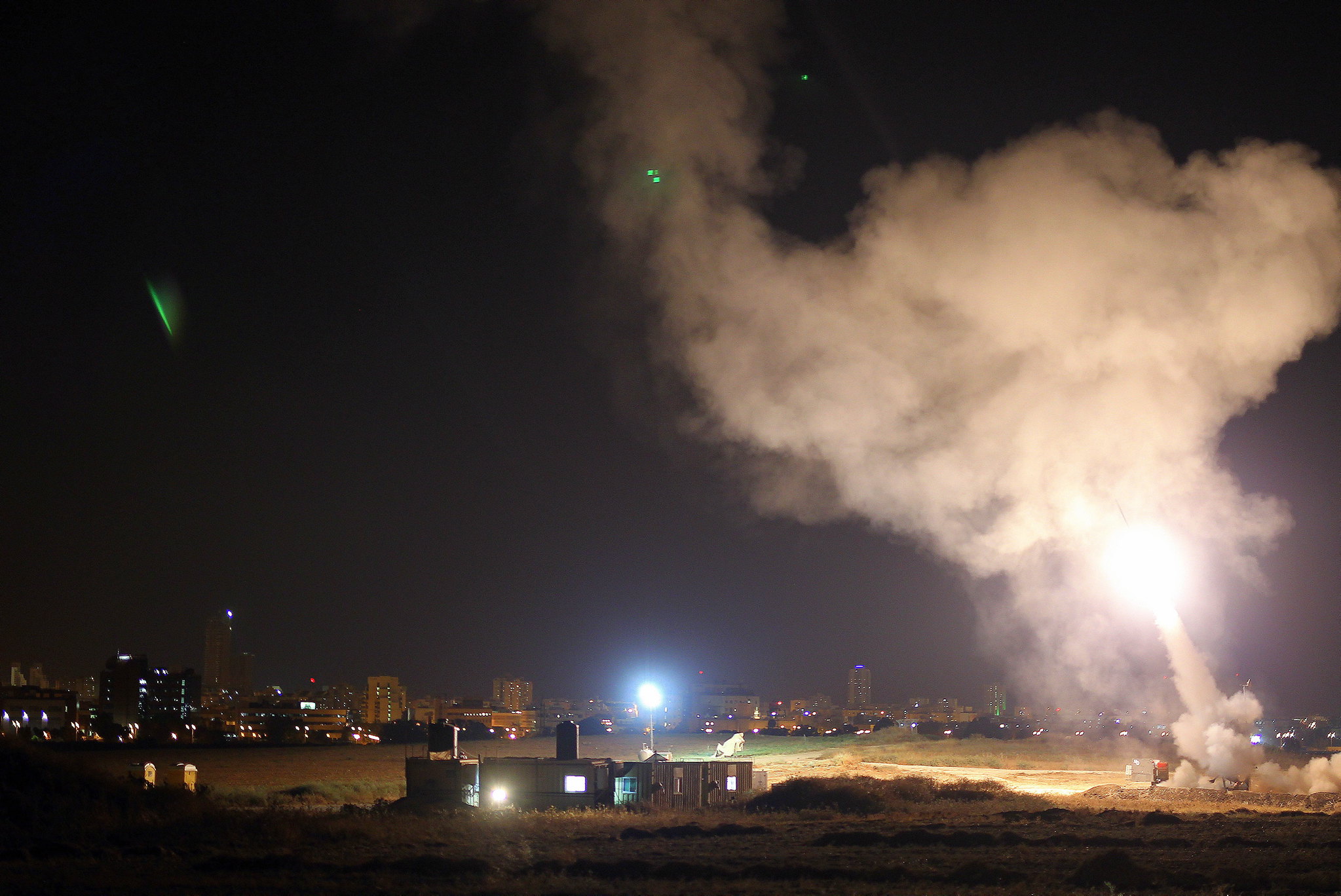
    Terrifying Moments at TLV: Passengers at Ben Gurion International Airport (TLV) were subjected to moments of sheer terror as rockets were intercepted nearby, forcing some to abandon their luggage and take cover as air raid sirens rang out. Surprisingly, this only briefly disrupted airport operations.

    Ben Gurion Still in Business: Despite the perilous situation, as per FlightAware data at the time of writing, TLV has only seen 65 canceled departures (20% of the total) and 70 canceled arrivals (23%) for the day. This defied our expectations, considering the circumstances. Then again, Ben Gurion is considered by many to be the world’s most secure airport – if I were in Israel right now, even despite the airport being named a target by Hamas, I still think the airport is likely the safest place to be.

    U.S. Airlines Play it Safe: Most U.S. and Canadian airlines have cancelled all flights in and out of Israel, limiting the options of Americans already in the country & trying to escape. The Allied Pilots Association (union for American Airlines) advised its pilots not to operate flights, citing safety concerns, and Delta just announced the cancellation of all TLV flights for the remainder of October. President Biden has publicly called upon U.S. carriers to resume service and facilitate the return of American citizens, but it remains uncertain if this will materialize. Meanwhile, we’ve heard anecdotal evidence of AA rebooking its customers on alliance partner British Airways to get them out via Heathrow; it’s unclear if United and Delta are using similar tactics, but I imagine SkyTeam is struggling, with KLM following Delta’s lead in suspending flights.

    Brave AA Pilots Step Up: In a remarkable show of solidarity, American Airlines pilots went against the advice of their own union, in order to take care of their own. They operated a special flight, AA9602 from TLV to JFK on a 777-200, exclusively for crew members and non-revenue passengers. United operated a similar flight for their crew, though details are unclear – and perhaps that’s a good thing, in the name of OPSEC. (h/t @xJonNYC)

    European Airlines’ Mixed Response: IAG group airlines, such as British Airways and Iberia, and low-cost carriers like EasyJet and Ryanair, appear to be largely operating normally, with a few flights cancelled and others operating as normal. According to a post in an unofficial AAdvantage members group, BA was even still serving PDBs in Club World… and I think a PDB would be the least of my worries while trying to escape a warzone. However, some carriers, like KLM, have suspended all flights. It’s interesting to note that European carriers seem to generally have a much higher risk tolerance when it comes to flying into geopolitically unstable regions compared to their U.S. counterparts.

    Even TK is Out: Turkish Airlines’ decision to suspend flights to Tel Aviv comes as a sobering indicator of the ongoing security concerns in the region. In an aviation landscape where many carriers are altering their routes and schedules in near-real time due to geopolitical tensions, Turkish Airlines has been known for its resilience, continuing to fly to destinations within Russia even amidst the ongoing Russia-Ukraine war. However, the situation in Tel Aviv has forced the airline to make this difficult choice, underscoring the seriousness of the circumstances in the area.

    El Al Bringing People… In?: El Al (LY) emerges as a crucial player during this turbulent period. While other carriers are reducing their services, El Al is bringing many into TLV. Why? Many Israelis are returning home from abroad to serve in the war, as Israel calls up an unprecedented 300,000 reservists. It’s worth noting that El Al is the only commercial air carrier to equip its aircraft with missile defense systems. These systems, like Elbit Systems’ C-MUSIC, are designed to throw off heat-seeking missiles with infrared or flares, ensuring the safety of passengers and crew.

    As the situation unfolds, those wishing to leave the region should do so as soon as possible, by any safe means possible, and let your home country’s embassy know of your whereabouts. For American travelers, this means enrolling in the STEP program. It’s worth repeating – and I can’t stress this enough – if you’re an American or Canadian, and you want out of Israel, your best bet by far right now is to get yourself to Europe as soon as safely possible and figure it out from there. Despite Biden’s plea to the airlines, there is no guarantee we will see another commercial flight to the U.S. from TLV for the duration of the war. Could it happen? Yes, but I’d much rather be figuring out my next move from the safety of Heathrow than waiting for the federal government to figure things out.

    In these challenging times, aviation takes on a role beyond its usual purview, providing an essential escape route for individuals affected by the ongoing conflict. The situation remains fluid, but we’ll continue to follow it and bring you info as we get it.