Category: Uncategorized

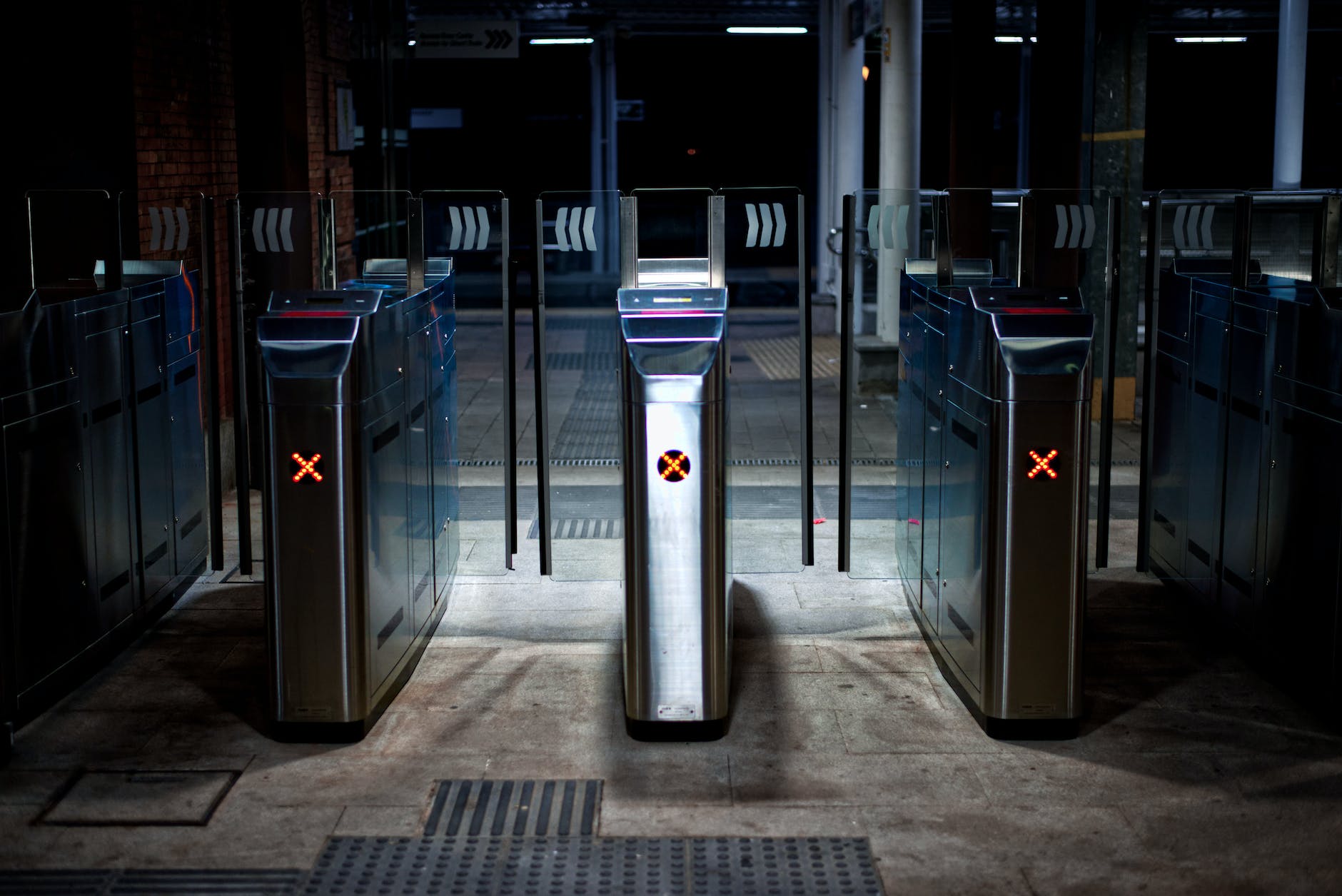
  • Skip Security Lines in Europe: CLEAR Reserve Tricks & Best Practices

    Skip Security Lines in Europe: CLEAR Reserve Tricks & Best Practices

    Travelers in the United States are no strangers to the convenience of fast lanes at airports. Many of us have experienced the bliss of breezing through security with TSA PreCheck or enjoying priority access as elite status holders. However, when it comes to going through security at airports in Europe and other parts of the world, we’ve all had our fair share of enduring punishing hours-long waits at airports like London Heathrow (LHR) or Paris Charles de Gaulle (CDG), giving us plenty of time to think about how much we miss air conditioning, ice in drinks, and of course, our trusted traveler programs.

    But what if I told you there’s a sneaky trick you can use to dodge those long security lines in Europe? Enter CLEAR Reserve, a timeslot-based service that can save you precious time and hassle.

    CLEAR Reserve: The Secret Weapon Against Long Security Lines

    CLEAR Reserve is a game-changer for savvy travelers. It operates on a simple premise: you make an appointment for a 20-minute window to go through security: you get to choose a time that suits your schedule, and you enjoy a 10-minute grace period on either side of your appointment. But here’s the kicker: it’s completely free and doesn’t require you to enroll in a membership, pay a fee, submit biometrics, or create an account.

    All you need is a valid email address – preferably one that’s readily accessible on your smartphone, because they’ll send you a QR code via email. This service can accommodate up to five passengers traveling together on a single appointment, making it perfect for families or groups. It’s unclear if everyone must be traveling on the same PNR, but experience suggests they won’t check.

    Appointments are limited, but here’s the best part: CLEAR Reserve is relatively unknown, so snagging an appointment is rarely an issue, even very close-in (as in, “standing outside the checkpoint” close-in). As of the time of writing, you can find this service at six European airports: Amsterdam Schiphol (AMS), Berlin Brandenburg (BER), Frankfurt (FRA), Hannover (HAJ), London Heathrow (pilot program, Terminal 3 only), and Rome Fiumicino (FCO). Additionally, it’s available at eight U.S. airports, although many of our readers probably already have TSA PreCheck, which is a much better and more flexible option.

    For those without Global Entry, CLEAR Reserve can be a savior at six Canadian airports: Toronto Pearson (YYZ), Vancouver (YVR), Montreal-Trudeau (YUL), Calgary (YYC), Edmonton (YEG), and Halifax Stanfield (YHZ). Some airports like LHR and FCO have branded the service under names like Heathrow Timeslot and QPass, but rest assured – the service is the same beneath the branding.

    Not Quite TSA PreCheck: Key Differences to Note

    It’s important to note that while CLEAR Reserve offers a line-skipping aspect similar to TSA PreCheck, there’s a key difference. Once you reach the front of the line, you must undergo the full screening process as per the rules of the country you happen to be in. This usually means removing liquids and laptops from your bag and going through a full-body scanner rather than a magnetometer. So, while CLEAR Reserve expedites your entry, you’ll still need to follow the local security procedures just like everyone else.

    A Handy Trick I Discovered at Amsterdam Schiphol

    Recently, during my visit to Amsterdam Schiphol (AMS), I stumbled upon a handy trick for using CLEAR Reserve, completely by accident. My Uber driver from the hotel kept getting lost, and it became clear (no pun intended) that I would miss my pre-booked 20-minute window.

    Here’s where it gets interesting: I found out that not only could I cancel my appointment (or simply not show up) with zero penalties, but also, due to the relative obscurity of CLEAR Reserve, appointment slots were wide open. So, without any hassle, I simply created a new appointment for just 10 minutes in the future. This immediately put me within the 10-minute grace period, allowing me to head straight to the security checkpoint the moment the QR code hit my email.

    In other words, CLEAR Reserve rewards those who plan ahead in advance, but how far in advance you plan is totally up to you (pending availability, of course). That could mean two days, or in my case, not even two minutes.

    Key Takeaways

    There are many variables at play en route to the airport – maybe a train gets cancelled, you encounter a long line at the airline counter (a big reason I try to never check a bag), or you just have a terrible Uber experience like I did. We can follow a few best practices to make the most of CLEAR Reserve and avoid security lines wherever feasible:

    1. Book an appointment even if you’re not 100% sure: Since there are no penalties for canceling, it’s a good practice to book an appointment if you think you might need it. It’s courteous to your fellow travelers to try to cancel if you won’t make it, but you won’t get in trouble or be charged if you miss it.
    2. Check for extremely close-in appointments: While this service does require a reservation in advance, that doesn’t necessarily mean very far in advance. Conventional wisdom is that is you didn’t plan ahead, you’re out of luck; you may find that’s not the case at all. If you find yourself staring at a snaking security queue, pull out your phone and check for open appointments within the next few minutes. Chances are, there will be one available. Say for example the current time is 7:02 AM – book an appointment on-the-spot for 7:10 and waltz through security almost immediately.

    When rushing to make your flight, every minute saved counts, and CLEAR Reserve is a valuable tool that can help you reclaim your time and avoid those dreaded airport security lines in Europe. Give it a try on your next trip, and you might just find yourself wondering why you didn’t start using it sooner. Safe travels!
  • Skip the Lines with Heathrow’s Free Timeslot Service

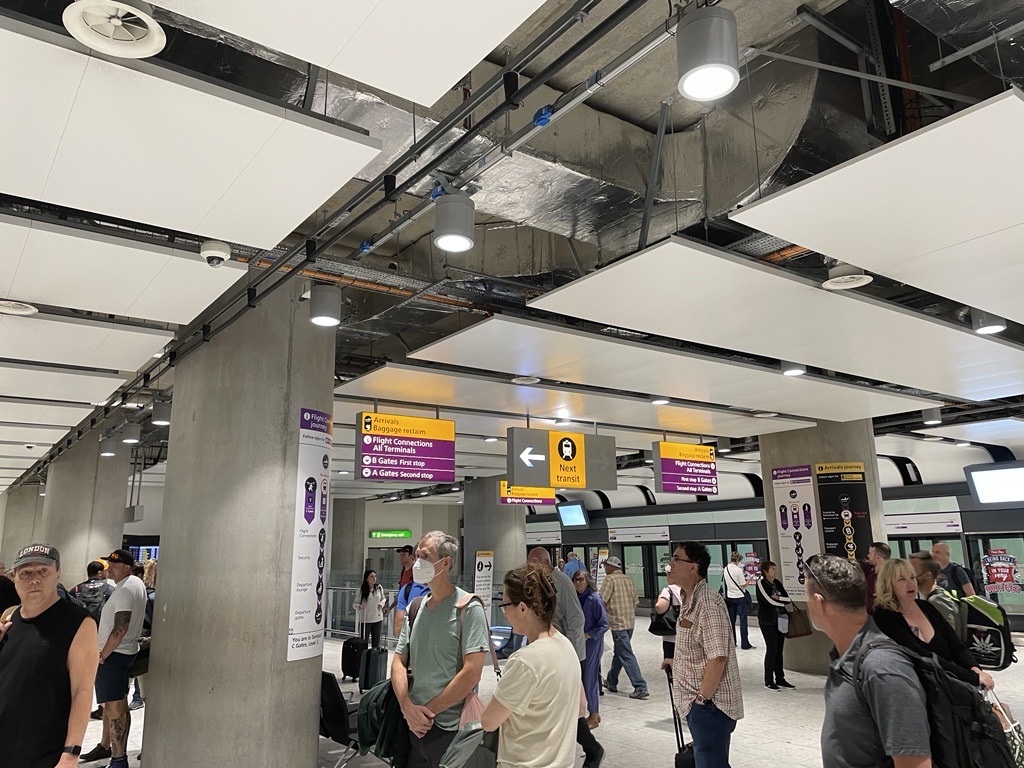
    Skip the Lines with Heathrow’s Free Timeslot Service

    Heathrow Airport, one of the world’s busiest travel hubs, is no stranger to long security lines. Many a weary traveler has found themselves anxiously eyeing the clock, worried they might miss their flight while stuck in a seemingly endless queue. But now, there’s a glimmer of hope on the horizon, as Heathrow introduces a new way to beat those infamously long security lines – the Heathrow Timeslot service.

    This exciting development is currently in the trial phase, set to last for the next six months. And here’s the best part – it won’t cost you a penny. While the service is administered by CLEAR, you won’t need to enroll, submit biometrics, or pay a fee; all you need is a valid e-mail address – preferably one you can readily access on your smartphone.

    So, how does it work? Well, it’s surprisingly simple. Passengers can pre-book a designated time and security checkpoint in advance of their arrival at the airport, and receive a QR code via e-mail, granting access to a special line. If you’re familiar with CLEAR Reserve, the Timeslot platform appears to be a re-branded version of that, and the booking process should feel very familiar. The trial is currently limited to Terminal 3, available only to passengers flying with American Airlines, Delta, Emirates, and Virgin Atlantic. If the trial proves successful, it may expand to include more airlines during the testing period.

    It’s unclear if this service is available for connecting passengers using the transit security checkpoint, but given past fast-track programs and the layout of the T3 transit facility, I’d bet the answer is likely a no. However, most European and American passport holders can simply enter the UK via the border e-gates and take one of the local trains (Heathrow Express, Elizabeth Line, or Piccadilly Line) at no charge over to Heathrow Central – some claim that if you’re eligible to use the e-gates, it’s faster to clear passport control and take local transit than to wait for the shuttle buses that operate outside of customs. Bear in mind your connection may not be protected while you’re landside, so if you’re cutting it really close, it may be best to stay airside to ensure no issues rebooking.

    Here’s another convenient feature of the Timeslot service – you can book for up to five people at once, great for families or groups of friends traveling together (it’s unclear if you must all be on the same PNR, but experience suggests they won’t check). Keep in mind that these slots are subject to availability, so it’s a good idea to book ahead to secure your preferred time.

    Now, for those of you who are feeling left out, there’s some promising news. If the trial succeeds, the Timeslot service will be rolled out to additional terminals at Heathrow. As someone who frequents Terminal 5, the home of British Airways, I can’t help but hope that this service will soon be available there too.

    However, even with the convenience of pre-booking, Heathrow Airport advises travelers to give themselves more than 45 minutes before departure to pass through security. Why? Well, Heathrow operates under the UK’s somewhat infamous “conformance” scheme; at 35 minutes prior to departure, you won’t be able to pass through the turnstiles to enter the security checkpoint. So, while Timeslot can save you time, don’t cut it too close – arrive when you normally would, and use the extra time to visit one of T3’s many lounges.

    This concept of pre-booking time slots for security isn’t entirely new to European airports. Amsterdam Airport Schiphol (AMS) has been operating a similar scheme (also by CLEAR), and I recently had the chance to try it out during a trip. I must say, it worked quite well, but the security lines were so efficiently managed that it almost felt unnecessary. Still, it’s a handy option to have, and I imagine it will be a much bigger game-changer at Heathrow where the lines aren’t as well-managed.

    For many U.S. travelers accustomed to TSA PreCheck, the Heathrow Timeslot service will feel like a long-awaited dream come true. While you’ll still need to remove laptops and liquids from your bag, being able to skip the line is a game-changer. PreCheck is one of those things (like air conditioning and ice in drinks) that I always miss while abroad, so any opportunity to fast-track the security process at a major foreign hub is welcome news.

    So, if you find yourself headed to Heathrow in the coming months, consider giving the Timeslot service a try. It’s a promising step towards a smoother and less stressful airport experience, and who can say no to that?

  • DFW’s State of the Airport 2023: Terminal F and Terminal C Renderings Unveiled

    DFW’s State of the Airport 2023: Terminal F and Terminal C Renderings Unveiled

    Dallas/Fort Worth International Airport (DFW) has been making headlines recently, and for all the right reasons. The 2023 State of the Airport event shed light on some exciting developments, including impressive economic impacts and tantalizing glimpses into the future of this bustling hub, including a clearer idea of what to expect from the long-awaited sixth terminal, and reconstruction of the aging Terminal C. Let’s dive right in.

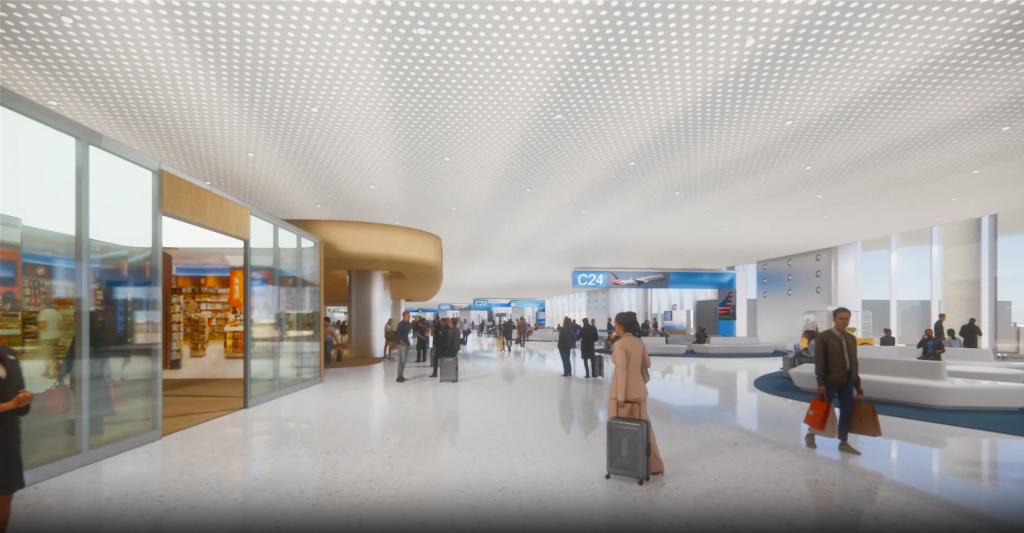
    The Terminal C of the future is dramatically different than the one we know today. (credit: DFW Airport)

    DFW Airport has been a powerhouse, a critical economic engine for North Texas and the entire country, and the 2023 SOTA highlights just how significant its impact is. According to an updated economic impact study by the Perryman Group, DFW contributes a jaw-dropping $38 billion in direct and indirect payroll support, $24 billion in visitor spending, and $5 billion in state and local tax revenue annually. That’s no small feat, and it doesn’t stop there. The airport also supports over 634,000 direct and indirect jobs across the region. Impressive, right?

    Dallas Mayor Eric L. Johnson couldn’t have put it better: “DFW Airport is an incredible asset driving the economic activity for our entire metro area.” It’s a sentiment shared by Fort Worth Mayor Mattie Parker, who emphasized DFW’s role as a job creator and economic engine, connecting the region to global audiences and enhancing opportunities for residents and businesses alike. “Airports are not just gateways to the world, they are gateways for our community’s prosperity and progress,” said Parker.

    I can’t tell if this is DFW or LaGuardia… and for the first time, that statement is a compliment to both (credit: DFW Airport)

    DFW’s CEO, Sean Donohue, expressed pride in the airport’s continued role as a Texas economic powerhouse and reaffirmed its commitment to growth and success. “We are proud to continue serving as one of the main economic engines not just in North Texas, but in the entire state of Texas,” said Donohue. The numbers don’t lie, and DFW’s impact on the local and state economy is undeniable.

    But let’s not forget what really piqued our interest during the SOTA event—those stunning new renderings of Terminal F and the much-needed reconstruction of Terminal C.

    DFW is rapidly evolving into a world-class airport, a standout among U.S. airports. In fact, it’s now the second-busiest airport on the planet, with the 10 busiest travel days in DFW history all happening this past summer. Moreover, during the tumultuous shutdowns of 2020, DFW briefly held the title of the world’s busiest airport. It appears poised to regain that position permanently in the coming years.

    DFW also already contains one of the highest lounge densities in the Western Hemisphere, with Chase set to open a new Sapphire Lounge in Terminal D next year. This is in addition to a bevy of quality dining and shopping options throughout the terminals (Pappasito’s, anyone?). Personally, it’s one of the few airports where I prefer longer layovers.

    Now, onto the star of the show—Terminal F. The renderings are nothing short of breathtaking, and this terminal promises to be a game-changer for transit passengers. However, it may pose some challenges for origin and destination (O&D) travelers due to its unique design. With just 15 gates, Terminal F will be the smallest of DFW’s terminals and breaks from the traditional horseshoe layout of the others. Interestingly, Terminal F’s construction was always part of DFW’s master plan, with the Express South parking lot making way for its future location.

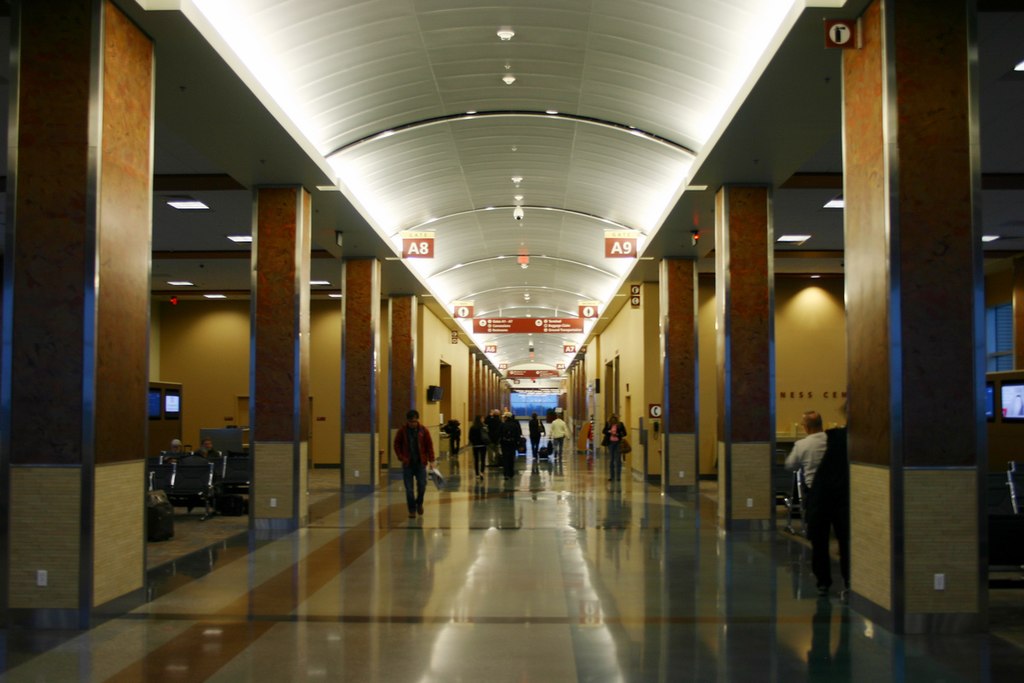
    Then there’s the much-anticipated reconstruction of Terminal C, which was initially slated for demolition and was therefore left out of the initial round of renovations. However, based on these renderings, the newly reimagined Terminal C will be worth the wait, going from one of America’s worst hub terminals to one of the best. Parts of the terminal have shown their age, but the renderings give us a glimpse of its future – and futuristic it is! What’s unique about this project is that it’s being reconstructed piece by piece in a modular fashion—a first for a U.S. airport. These modular components are so massive that they’re being constructed on-site in a remote part of the airfield. Gates C35-C39 are already open, so if you want to see the future in-person, stop by on your next visit!

    Terminal C Midpoint (courtesy: DFW Airport)

    DFW Airport is soaring to new heights, not only in terms of economic impact but also in the quality of its facilities. While U.S. airports typically lag behind those in other countries, I firmly believe DFW has the potential to hold its own against major hubs around the globe. The renderings of Terminal F and the reconstruction of Terminal C are tantalizing teasers of what’s to come, and it’s clear that DFW is making strides to solidify its position on the world stage. Stay tuned for more updates on these exciting developments as DFW continues to evolve and transform.

  • Visitor Pass Programs Make a Comeback in US Airports: XNA Joins the Trend

    Visitor Pass Programs Make a Comeback in US Airports: XNA Joins the Trend

    It’s an exciting time for aviation enthusiasts, as visitor pass programs are making a triumphant return to airport terminals across the United States, becoming available in far more airports than ever before. These programs, which allow non-travelers to explore airport terminals, watch planes take off and land, accompany family members to their gate, and enjoy most terminal amenities, were largely suspended during the height of the pandemic. However, now they are back in full swing, with many airports embracing this trend for the first time. Today marks a milestone on this front as Northwest Arkansas National Airport (XNA) officially launches its new visitor pass program.

    The Resurgence of Visitor Pass Programs

    Before we dive into the details of XNA’s program, it’s worth noting the resurgence of visitor pass programs nationwide. While a few airports offered these passes pre-pandemic, most had to suspend them due to health and safety concerns. But as travel steadily recovers, these programs are coming back stronger (and more numerous) than ever before, offering members of the general public an airport experience reminiscent of the pre-9/11 days, where anyone – not just ticketed passengers – could proceed through the security checkpoint and enjoy all the airport had to offer. Considering many U.S. airports have improved dramatically in terms of amenities and quality since then, this is a great trend we hope to see spread across the country.

    U.S. airports are uniquely positioned to offer an experience like this; while it’s great that many major airports in other parts of the world like Amsterdam Schiphol (AMS) offer sterile international-to-international transit, this would make a visitor pass program logistically impossible in much of the terminal, as that would mean comingling with individuals who have not been processed through customs.

    What You Need to Know About Visitor Pass Programs

    Visitor pass programs typically share some common characteristics, although rules may vary slightly from one airport to another:

    1. Advance Registration: Usually, visitors must register between 24 hours and up to 7 days in advance, with a few exceptions like TUL (Tulsa International Airport), which permits same-day registration.
    2. Restrictions on Entry: Most airports limit entry to designated hours, typically not permitting entry after about 7-9 p.m. local time. Some restrict visitors to only certain terminals or checkpoints, or require visitors to leave by a certain time (though it’s unclear how this could be enforced).
    3. Limited Capacity: To maintain a comfortable experience, airports often cap the number of visitors per terminal per day, typically ranging from 25 to 75 individuals. Interestingly, these programs are often not widely advertised, so capacity is often a non-issue.
    4. Security Measures: Safety is, of course, always the #1 priority. All visitors are vetted against the SECURE FLIGHT database and must pass through TSA screening, just like ticketed passengers. This process ensures that visitor pass holders are not on any no-fly lists, and can’t bring prohibited items into the sterile area.
    5. QR Code for Entry: Once successfully vetted, visitors typically receive a QR code via email to present instead of a boarding pass when going through TSA screening. You still need to present a valid form of government-issued ID along with this QR code, just as if you were flying.
    6. PreCheck No Good: Non-ticketed visitors usually need to use the general screening lane, and cannot take advantage of TSA PreCheck or CLEAR when entering the security checkpoint.

    It goes without saying that you should always check the details of your local airport’s program beforehand, as each airport has its own rules and procedures.

    Airports Offering Visitor Pass Programs

    Several airports across the country are currently offering visitor pass programs, and here are some of them:

    • MCO (Orlando International Airport) – Available only at the recently-opened Terminal C.
    • DTW (Detroit Metropolitan Wayne County Airport) – One of the oldest programs, reinstated post-pandemic.
    • TUL (Tulsa International Airport) – My home airport, which recently implemented a visitor program.
    • XNA (Northwest Arkansas National Airport) – Today marks the launch of this new program.
    • SEA (Seattle-Tacoma International Airport)
    • FNT (Flint Bishop International Airport)
    • ONT (Ontario International Airport)
    • SNA (John Wayne Airport)
    • MSY (Louis Armstrong New Orleans International Airport)

    Before the pandemic, a few other airports also offered visitor pass programs:

    • TPA (Tampa International Airport) – Although TPA All Access was previously available, there’s no indication of it returning. TPA’s website states the program is suspended as passenger numbers are being evaluated, and has said this for well over a year.
    • DFW (Dallas/Fort Worth International Airport) – This program, previously only available to registered guests of the Grand Hyatt DFW, seems to have quietly disappeared.

    XNA’s New Guest Pass Program

    Now, let’s turn our attention to the newest addition to the visitor pass program family – XNA. After months of anticipation, XNA has officially launched its “guest pass” system, allowing non-flying guests to enjoy the airport’s restaurants and shops while being in the secure area.

    Unlike many airports which require pre-registration online, XNA has opted for a registration via a kiosk. The guest pass kiosk is conveniently located next to the baggage claim in the airport lobby. To obtain a pass, guests simply answer a few questions and scan their photo IDs. Once the kiosk generates the pass, visitors can proceed through airport security.

    In an article on 5NewsOnline.com, Olivia Moore, spokesperson for XNA, emphasizes that guest pass holders get access to all the amenities that boarding pass holders do, except they don’t board a plane. This includes exploring vendor options, plane-spotting, and trying out the new coffee robot, “Bionics by Onyx,” set to be operational in the coming weeks. This innovative robot will serve specialty drinks using Onyx coffee 24/7, adding a local touch to the airport experience (and if you’ve never had Onyx coffee, it’s probably the best I’ve ever tasted domestically). “When we announced it, a lot of people were extremely excited. I mean, it’s not every day that you get to say goodbye to your family members while seeing them get on the plane to say goodbye,” Moore said.

    In conclusion, the return of visitor pass programs in U.S. airports is a welcome development for travelers and aviation enthusiasts. With XNA joining the ranks, it’s clear that airports are increasingly recognizing the value of offering unique experiences to the non-traveling public. So, if you’re looking for a new way to spend a day at the airport, or want to see off a loved one, consider exploring a visitor pass program at a participating airport near you.

  • Indefinite Closure of MIA’s SkyTrain Leaves Passengers with a Long Hike Ahead

    Indefinite Closure of MIA’s SkyTrain Leaves Passengers with a Long Hike Ahead

    Miami International Airport (MIA) has long been a hub for American Airlines and for years, passengers have relied on the SkyTrain to ease their journey through the infamously large Concourse D. However, in a new development, this convenient mode of transport has been indefinitely sidelined due to structural concerns. Let’s dive into the details.

    The SkyTrain: A Brief Introduction

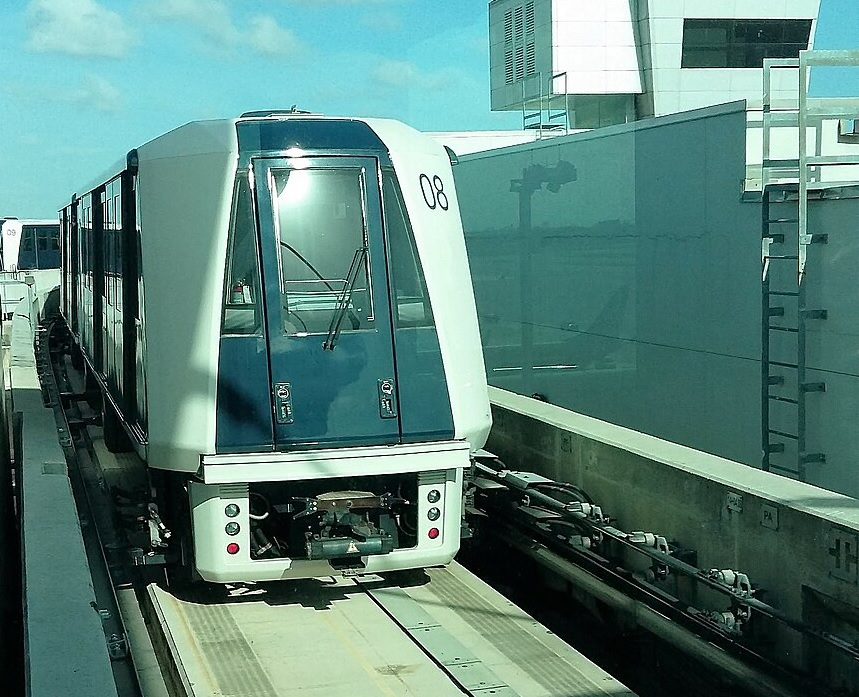
    The SkyTrain has been a fixture at MIA since 2010, part of a massive $3 billion expansion project that consolidated four concourses into Concourse D. This ambitious endeavor was aimed at optimizing space for planes, with the drawback of increasing walking distances for passengers. For the past decade, the SkyTrain has been a lifeline for travelers, ferrying them across the sprawling concourse and mitigating the additional distance between gates. The service, operated by Crystal Mover Services, a subsidiary of Japanese train-maker Mitsubishi, has been the go-to choice for those looking to traverse the expansive concourse with ease.

    The Abrupt Closure

    Early in September, engineers working on behalf of Miami-Dade County stumbled upon what they called “accelerated deterioration” in several concrete structures supporting the SkyTrain tracks. Specifically, Pier 106 displayed significant structural issues, with extensive cracking along the pier cap perimeter. Faced with this alarming discovery, Miami-Dade County took immediate action and decided to halt the SkyTrain operations indefinitely.

    Greg Chin, an MIA spokesperson, shared that the analysis of the problem alone is expected to continue until at least mid-October. After that, MIA decision makers will have to pore over the findings and determine the best path forward. Given the gravity of the situation, it’s probably safe to assume that the SkyTrain may remain non-operational through the rest of 2023, if not even longer. While not everyone can easily avoid MIA, if you’re booking new reservations for the next several months (or can easily rebook existing ones without a huge fare difference), you might give some thought to connecting at other AA hubs like CLT or DFW (where it makes sense to do so) if you’re not prepared to walk significant distances.

    Questions Remain Unanswered

    One pressing question remains: why were these cracks not addressed earlier? Miami-Dade County has not yet released the inspection report from HNTB or provided an explanation for the delayed repairs. According to Chin, the SkyTrain structure undergoes inspection every two years, in accordance with Florida transportation regulations. Minor cracks in the three piers in question were identified during the 2021 inspection but were merely monitored.

    It was during a subsequent May inspection that the issues seemed more significant, leading to the in-depth analysis by HNTB and, ultimately, the shutdown in September.

    The Long Walk Ahead

    For now, passengers in Concourse D find themselves without the SkyTrain as their trusty ally. The closure has left most travelers with no choice but to resort to the traditional method of walking. With each end of the concourse separated by over a mile of terminal space, this could be quite a trek for many.

    MIA has introduced a limited alternative: two six-seat golf carts that run between 9:30 a.m. and 7 p.m. Passengers in need can flag down one of these carts to assist with their journey, but the availability is extremely limited. These carts aim to help those who might struggle with the extended walking distance.

    Bottom Line

    The unexpected and indefinite closure of the SkyTrain at MIA’s Concourse D is undoubtedly a significant inconvenience for travelers. With the analysis alone expected to continue through mid-October, it’s clear that we’ll have to do without this automated mover for the foreseeable future. If you’re planning to pass through MIA, it might be wise to prepare for a long walk ahead, especially if your journey extends into 2023 and beyond.

    Source: Miami Herald

  • EU ETIAS Implementation Delayed to 2025: What Travelers Need to Know

    EU ETIAS Implementation Delayed to 2025: What Travelers Need to Know

    The European Travel Information and Authorisation System (ETIAS) has been making waves in the travel community, with its looming implementation raising eyebrows among currently visa-exempt visitors to the European Union. Initially set to roll out in mid-2024, this system has reportedly been pushed back to May 2025. So, if you’ve got travel plans for the coming year, breathe easy – no need to fret about visa requirements just yet.

    ETIAS, sometimes referred to as the “not a visa” visa, represents a significant change for American, Canadian, and British travelers, especially post-Brexit. In the pre-ETIAS era, a European jaunt simply meant showing up at the border with your passport in hand. But once ETIAS is fully operational, you’ll need to jump through a few more hoops.

    First things first, this system isn’t as daunting as it may sound. Applications are submitted electronically, and most applicants will receive their approval or rejection within minutes, with the majority processed within 96 hours. However, it’s worth noting that some travelers might experience a waiting period of up to 34 days (96 hours + an “additional” 30 days), possibly even involving an interview with national authorities.

    Additionally, a modest fee of EUR €7 (about USD $7.40 at the time of writing) is required to apply for the ETIAS. But there’s a silver lining for travelers under 18 or over 70 – you’re exempt from this fee. Many have compared this scheme to DHS’s Electronic System for Travel Authorization (ESTA) that foreign visitors to the US have already been subject to for years, although the European scheme is significantly cheaper to apply for and grants 50% more validity time than the ESTA.

    Now, let’s dive into the nitty-gritty of ETIAS. When you apply, you’ll need to declare which EU country you intend to visit first. While it’s important to give your best educated guess here, this decision is non-binding; you won’t need to update paperwork if you change your mind later, or add a layover that changes your first port of entry into the EU. Once it’s granted, ETIAS is your ticket to the EU for three years or until your passport expires, whichever comes first. It’s like a golden key, granting you unlimited entries as long as you play by the EU’s rules, including the “90 in 180” rule.

    Here’s a travel tip for maximum flexibility: considering the relatively nominal amount it costs (EUR €7), it’s a good idea to keep an active ETIAS at all times once the system is up and running. Why? Well, imagine stumbling upon a last-minute flight deal to Europe. You wouldn’t want to be stuck twiddling your thumbs during a potential 34-day waiting period, right? At time of writing, this equates to less than $2.50 a year for the ability to take advantage whenever a good deal strikes.

    So, there you have it – for another year, travelers can breathe easy and enjoy visa-free entry to Europe without the need for ETIAS. So, make the most of your upcoming travel plans, knowing that the additional paperwork and planning can wait just a little while longer.

  • Navigating the Storm: How a Government Shutdown Could Impact Travel

    Navigating the Storm: How a Government Shutdown Could Impact Travel

    As the clock ticks towards October 1st, 2023, at 12:01 am, the possibility of a federal government shutdown looms ominously on the horizon, unless Congress can swiftly reach an agreement. While we typically steer clear of politics here at The Exit Row, the potential repercussions for travelers warrant discussion of this potentially impactful topic.

    Understanding the Shutdown Game

    First things first, what exactly is a government shutdown? It occurs when Congress fails to pass the necessary funding legislation, which then must be signed into law by the President. Ideally, lawmakers are supposed to pass 12 different spending bills to fund various government agencies. However, due to the time-consuming nature of the process, they often resort to temporary extensions known as continuing resolutions (CRs) to keep the government running.

    In the absence of funding legislation, federal agencies are forced to cease all non-essential operations, including issuing paychecks. The duration of a shutdown is unpredictable, with the longest in history lasting a grueling 34 days from 2018 to 2019.

    Who Keeps the Lights On?

    When it comes to travel, some federal employees are deemed essential and must continue working during a shutdown. This includes air traffic controllers, safety inspectors, TSA agents, and CBP officials. Their dedication ensures the essential functions of travel remain intact. These employees don’t receive their paychecks during this time, but a 2019 law guarantees backpay for furloughed federal workers once the funding deadlock is resolved.

    Past Shutdowns: Usually a Minor Inconvenience

    Historically, government shutdowns have had minimal impacts on travel. In 2019, it took approximately two weeks of no pay for FAA controllers and TSA agents to begin missing work, leading to long security checkpoint lines and flight delays. Eventually, the government reached an agreement, and normalcy was restored. During the same shutdown, some national parks either closed entirely or operated without the necessary staff to maintain them, leading to disarray, with trash piling up and toilets overflowing.

    One recurring challenge during a shutdown is the FAA’s inability to train new air traffic controllers. Secretary of Transportation Pete Buttigieg emphasized the perilous timing, citing the already existing shortage of ATC controllers. “We cannot afford that kind of politically driven disruption at the very moment when we finally have those air traffic control report numbers headed in the right direction,” Buttigieg said at a House Committee hearing on September 20. Any further disruptions could exacerbate an already precarious situation.

    A Gathering Storm

    Adding to the potential turbulence is the looming expiration of the FAA’s authorization, with Congress yet to pass a reauthorization bill. To prevent further chaos at the FAA, Congress would need to pass a temporary extension of FAA programs. Failure to do so could amplify the challenges the FAA faces due to a government shutdown and a lack of reauthorization.

    Additionally, while some services like passport & visa processing are funded in such a way that these may be processed for a while, it’s likely we’ll see severe delays, progressively getting worse as the shutdown drags on. As for trusted traveler programs like Global Entry and TSA PreCheck, existing members should be able to continue to use their current membership until it expires, but it’s likely we’ll see a halt to processing any new applications or renewals.

    Finally, a government shutdown could also impede infrastructure projects, causing potential delays in airport construction and maintenance.

    Don’t Be Scared – Be Prepared

    Many readers are likely already members of popular trusted traveler programs like Global Entry and TSA PreCheck, which could significantly mitigate the additional wait times you may face at TSA and passport control. While it’s likely too late to become a member of Global Entry before October 1, you may still have time to join TSA PreCheck if you apply ASAP and face no hurdles in getting your application approved (though admittedly, it’s a stretch). Remember, a Global Entry membership includes TSA PreCheck privileges – simply add your PassID to your airline reservations to get the designation on your boarding pass. With PreCheck more important than ever over the coming weeks, I’d advise double checking any upcoming reservations for a trusted traveler ID number to avoid any snags at security.

    While government shutdowns have historically had limited immediate impacts on travel, the potential perfect storm brewing on the horizon warrants attention. The intersecting issues of FAA challenges, pending reauthorization, and delays in essential services could create a more turbulent travel environment than we’ve seen in the past. We expect the severity of the impact to be directly tied to how long this lasts. A few days, no big deal; however, if this shutdown drags on, we’d expect more severe impacts. Travelers should stay informed and prepared for possible disruptions, even as we hope for a swift resolution to this looming crisis.

  • Hidden in “Plane” Sight: Secret Planespotting Destination at OKC Airport

    Hidden in “Plane” Sight: Secret Planespotting Destination at OKC Airport

    Welcome to Will Rogers World Airport (OKC), a gem of an airport that often flies under the radar. If you’re a fan of aviation, especially the behind-the-scenes action that typically requires a boarding pass and a TSA search to see, then you’re in for a treat. Nestled within this unassuming airport terminal lies a spot designed with AvGeeks in mind, perfect for planespotting while you await an arriving passenger.

    As you step into the main atrium of WRWA, your eyes might catch a glimpse of an intriguing glass hallway on the level above. It’s a sight that’s common in many larger airports – reminiscent of the sterile passageways used to prevent comingling of international arrivals with TSA-screened passengers. Curiously, though, this airport doesn’t currently offer scheduled international passenger service. So why the setup?

    If you’re arriving on any of OKC’s zero weekly international flights, they’ve got a beautiful setup for you!

    The answer becomes apparent when you read between the lines. One can simply look at how that part of the terminal is laid out and easily conclude that this clever infrastructure was put in place to future-proof the airport, ready to welcome international flights whenever the time comes. A keen observer might note that several nearby gates are already set up to be closed off to funnel arriving passengers upstairs.

    But the airport wasn’t content with just letting that space collect dust in the meantime, so instead, they’ve done something really cool with it: amidst the ongoing airport remodeling, this hidden space was unveiled to the general public as an observation area. This unique space allows access to a vantage point typically reserved for ticketed passengers, while maintaining separation from the sterile area below.

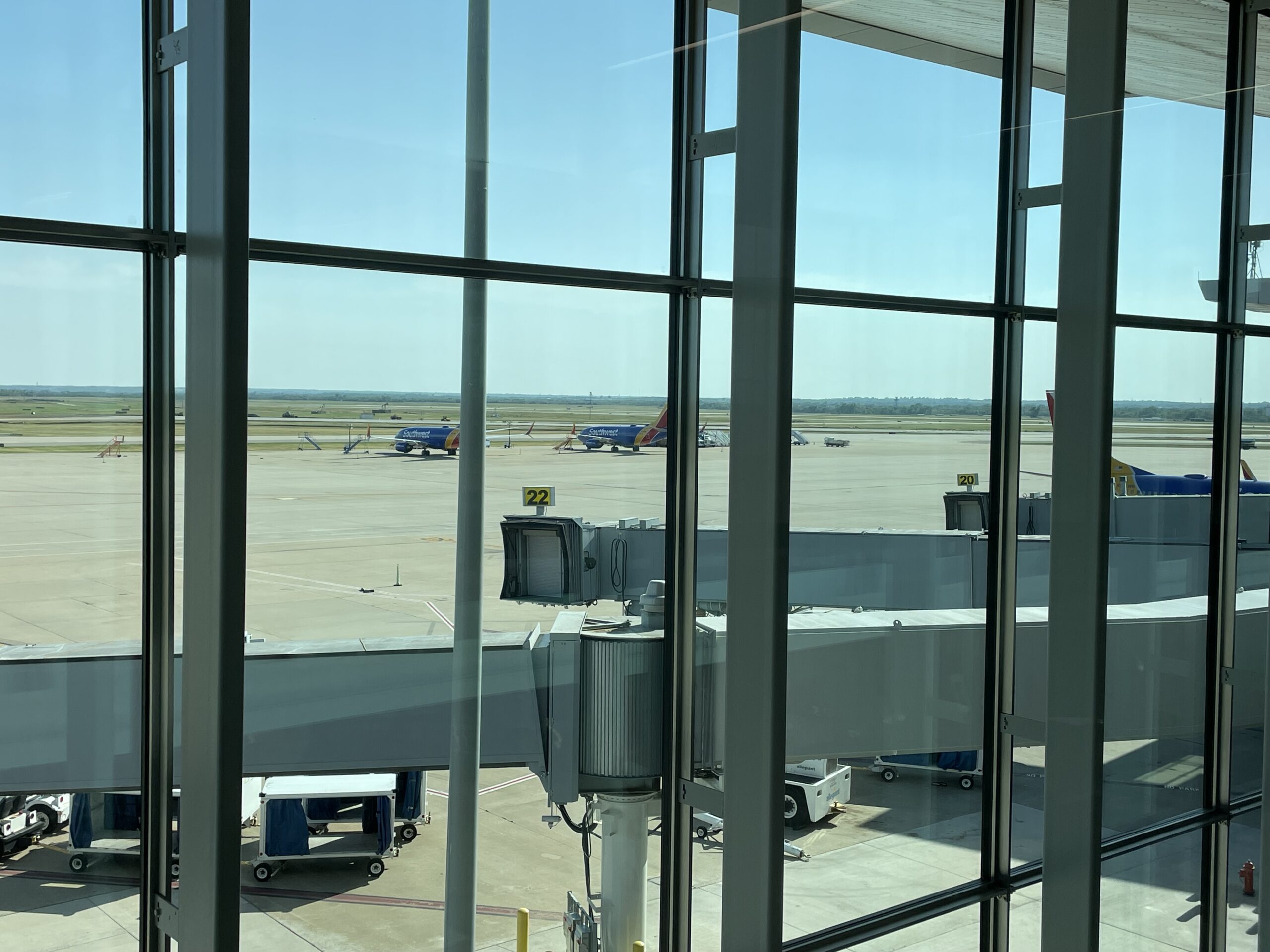
    Now, here’s the kicker – almost nobody knows about this hidden treasure. It’s like a secret sanctuary for aviation enthusiasts, a space that’s camouflaged in plain sight. If you’re up for the adventure, here’s how you can find it: before heading through TSA, take a left and ascend the staircase in the glass lobby. Alternatively, you can reach it by an elevator located near the exit from the sterile area near gate 22 (press the button for level “M”). Once you’re on the upper level, follow the signs for the Mezzanine Observation Gallery. No, you won’t get in trouble for being up here, despite the off-limits feel to the place.

    Take that staircase, adjacent to TSA, upstairs to reach the observation deck.

    One level above the airside concourse, you’ll have your very own vantage point of the tarmac and two of OKC’s runways. Whether you’re seeking a cozy spot to relax or a quiet corner to catch up on work, the observation area has a variety of seating options to suit your needs. And the best part? You might just have the place to yourself. TWD has a video tour on YouTube. Bear in mind that all food and beverage vendors at WRWA are airside, so if you aren’t ticketed, it’s best to plan ahead on that front.

    For a public space, it feels nicer & more exclusive than some Priority Pass lounges!

    You can even wave (through the glass, of course) at your loved ones as they make their way through TSA – a rarity in a post-9/11 world. It’s a bit like discovering a hidden clubhouse, exclusively for AvGeeks who know where to find it.

    But, as with all good things, change is inevitable. If and when international service arrives at OKC, it’s likely that this area will be walled off, and transformed into the purpose it appears to have been built for. So, enjoy this spot while you still can, as it likely won’t be forever.

    As aviation enthusiasts, we often seek out the hidden gems. Will Rogers World Airport’s observation area is one such gem, a place where you can soak in the airport ambiance, watch planes take off and land, and wonder about the future of travel. So, next time you find yourself at WRWA, go upstairs and take it all in.