Category: Airlines

  • Eww: Delta Passenger Cooks Shrimp and Potatoes à la Lavatory

    Eww: Delta Passenger Cooks Shrimp and Potatoes à la Lavatory

    Some people take the concept of “cooking on the go” to a whole new level, and it’s not exactly a Michelin-starred affair. Remember the guy who cooked baby back ribs in a hotel bathroom? Well, he’s back at it, and this time, it involves garlic shrimp and instant mashed potatoes at 30,000 feet. You know, the ideal setting for a preparing a gourmet meal.

    In a video that redefines the term “terrible idea,” a culinary pioneer with the TikTok handle @barfly7777 showcases his skills in the art of airplane lavatory cooking. After his previous hotel bathroom stunt, he decided to elevate his game by taking his talents to the skies.

    https://twitter.com/ATDrummond/status/1732855305761939672

    The video begins with our protagonist boldly declaring his intention to embark on this culinary adventure. He navigates the TSA checkpoint, fully aware that his battery-powered setup might raise a few eyebrows. No worries, though, as he proceeds to the lavatory of his Delta Air Lines flight, armed with a 6-volt battery pack that, at least on the surface, appears more fitting for jumpstarting a car.

    Once inside the lavatory, he unveils his cooking apparatus, connecting it to a makeshift power source resembling a cigarette lighter. Forget airplane etiquette; this maverick chef powers up the lavatory sink, utilizing the diaper changing table as a makeshift kitchen counter. Yuck!

    As he submerges raw shrimp into the sink water, you can’t help but question the life choices that led this man to attempt this. The climax of this culinary saga involves the addition of instant mashed potatoes to the shrimp-infused water, resulting in a barf bag of garlic mashed potato-coated shrimp. Seems you might be needing that barf bag later, sir.

    Now, I’m no culinary expert, but I can’t help but cringe at the thought of consuming anything concocted in the unsanitary confines of an airplane lavatory sink. Bravo to this man with the iron stomach, but for the rest of us, the inflight meal options seem a tad more appetizing.

    And a quick word of advice – while @barfly7777 might have discovered the secret to lavatory haute cuisine, it’s probably best not to attempt such feats at home or inflight. Safety concerns, anyone? The last thing you’d want is a fire breaking out at FL370 due to an impromptu kitchen experiment. Stick to the peanuts and pretzels, folks. Bon appétit… I guess.
  • Another Day, Another Runway Incursion at AUS?

    Another Day, Another Runway Incursion at AUS?

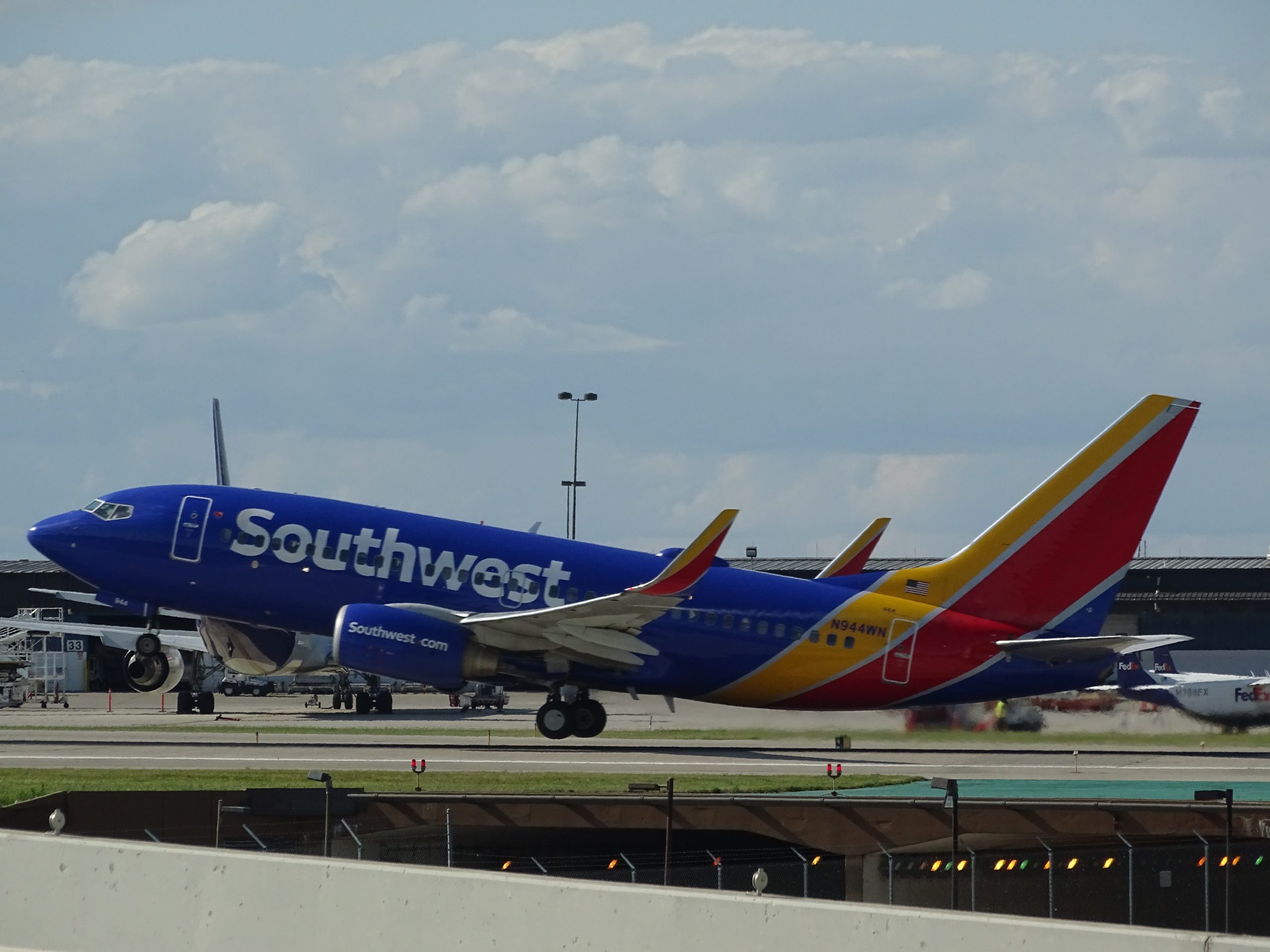
    Monday night, Austin-Bergstrom International Airport (AUS) witnessed yet another incident that’s becoming all too familiar in recent times – a runway incursion. This time, it involved Southwest Airlines flight WN2959 from Nashville (BNA), adding to the growing list of near-misses at the Austin airport over the past year.

    According to FlightAware data, the flight commenced its descent to AUS a little after 6 p.m. local time. However, things took an unexpected turn when the aircraft, at a mere 600 feet above the ground, decided to climb back up to 2,850 feet. The flight then made a second attempt at landing, eventually touching down at 6:17 p.m.

    A Southwest spokesperson downplayed the incident, describing it as a “standard go-around procedure” and emphasizing that pilots are well-trained to handle such scenarios, encountering them somewhat regularly. While the airline aims to reassure the public, this latest event has raised eyebrows in light of the increasing number of similar incidents at AUS in recent times.

    The Federal Aviation Administration (FAA) provided its official stance, stating that an air traffic controller instructed Southwest Airlines Flight 2959 to perform a go-around at 6:06 p.m. local time on Monday. The reason cited was the presence of another aircraft that had not yet exited the runway. Importantly, the FAA asserted that there was no compromise to the safe separation between the Southwest flight and any other aircraft.

    An air traffic controller instructed Southwest Airlines Flight 2959 to perform a go-around at Austin-Bergstrom International Airport at 6:06 p.m. local time on Monday, December 4, because another aircraft had not yet exited the runway. There was no loss of safe separation between the Southwest flight and any other aircraft.

    FAA Statement

    This incident comes on the heels of heightened concerns about safety at Austin’s airport, with a series of near-miss incidents in the past year, including another serious runway incursion earlier this year, prompting regulatory agencies to intervene. Just last week, the National Transportation Safety Board (NTSB) released a comprehensive 3,000-page report detailing that near-miss at AUS back in February.

    I can’t help but wonder if this is happening more often than is making news. Last September, I experienced a go-around on an American Airlines flight from Dallas/Fort Worth (DFW) into AUS. I was never able to figure out why, so I’m unsure if it was a runway incursion, or something related to the 8-hour series of events (including not one but two deplanings and a visit from DFW Airport PD) leading up to this aborted landing. Maybe someday I’ll write a post about that, but suffice to say it was by far the worst AA experience I’ve ever had, and had there been a single rental car available at DFW, I’d have just driven (this was a connecting flight). Luckily, I had a great seatmate that kept me sane through the ordeal; she and I still keep in touch to this day.

    The repeated occurrences of runway incursions and near misses underscore the importance of addressing safety measures at Austin-Bergstrom International Airport. It remains to be seen how authorities will implement and enforce measures to prevent such incidents in the future. The need for heightened vigilance and stringent safety protocols has never been more apparent in the skies over Austin.

    ht KXAN

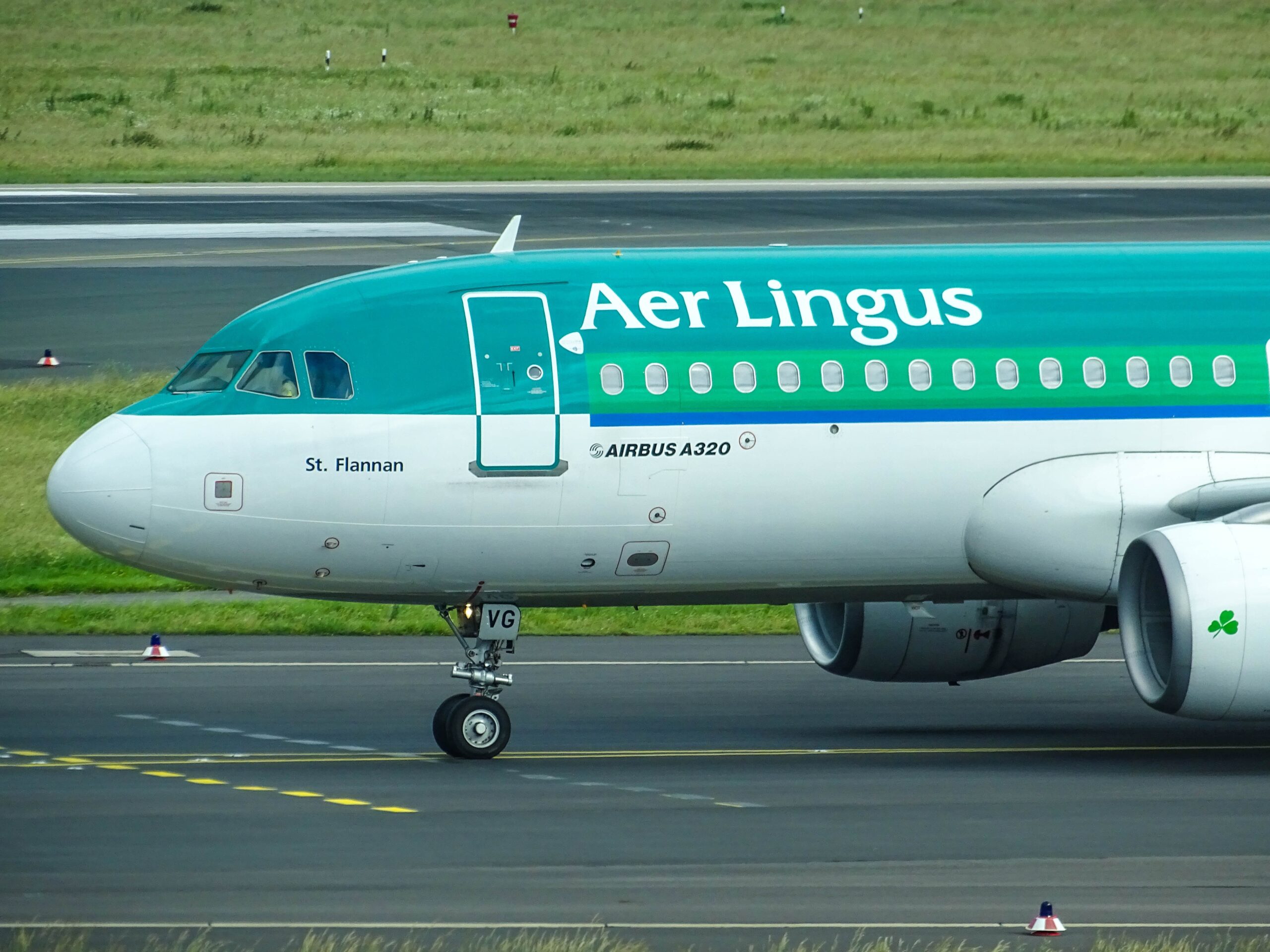
  • Aer Lingus Added as Earn-Only AA Partner; Will They Rejoin Oneworld?

    Aer Lingus Added as Earn-Only AA Partner; Will They Rejoin Oneworld?

    American Airlines and Aer Lingus forged a partnership early in 2022. This move followed the Irish flag carrier’s entry into the Oneworld transatlantic joint venture in 2020.

    The partnership initiated a codeshare agreement aimed at enhancing the travel experience between the United States and Ireland. This agreement allowed American Airlines and Aer Lingus to place their codes on each other’s flights, streamlining the booking process for passengers on either airline’s website.

    Despite the promising start, the journey to full integration faced challenges, particularly in the area of frequent flyer reciprocity. For nearly two years after the launch of the partnership, passengers had no opportunities to earn or redeem miles, and certainly didn’t receive reciprocal elite benefits.

    However, as of December 2023 (in other words, now), a breakthrough has emerged with the introduction of reciprocal mileage earning. Let’s be clear: this is currently an earn-only partnership at this time. American AAdvantage members can now earn miles for flights marketed and operated by Aer Lingus, with an earning rate of 5x miles per dollar spent. Additional elite bonuses are available for higher-tier AAdvantage members.

    While reciprocal award redemptions are anticipated in the future, the timeline for this development remains uncertain. Moreover, there is no indication of reciprocal elite perks at this point.

    The integration process has not been without its challenges, and concerns have been raised about the slow progress and lack of metal neutrality in the oneworld transatlantic joint venture. Despite Aer Lingus’s membership in the joint venture for almost three years, the reciprocity between the airlines took time to materialize, leaving observers perplexed about the reasons behind the delayed and limited integration.

    Adding to the complexity of the situation is Aer Lingus’s historical partnership with United, which recently came to an end, as previously discussed in an October blog post. The severed ties with United seem to be a push to align the airline even further with Oneworld.

    Looking beyond the immediate developments, industry observers are left speculating about Aer Lingus’s potential return to the Oneworld alliance. The airline was a member of Oneworld until it departed in 2007 but has maintained strong connections to the alliance despite its official neutrality (possibly owing to its ownership by IAG). Rumors circulating on FlyerTalk earlier in the year suggested that Aer Lingus might be considering a return, possibly as early as Q2 2025.

    Aer Lingus’s unique position within International Airlines Group (IAG) adds to the intrigue. It stands as the only full-service airline under the IAG umbrella that is not a member of any alliance, let alone Oneworld. With IAG’s other legacy carriers, including British Airways and Iberia, holding longstanding Oneworld memberships, the recent severing of ties with United, and now this new development, the speculation about Aer Lingus’s return to the alliance gains momentum.

    While it’s unclear exactly what the future holds, let’s all cross our fingers for a big announcement sometime in early to mid 2024.

  • Sunday Surprise: Alaska Announces Intent to Purchase Hawaiian Airlines in $1.9 Billion Deal

    Sunday Surprise: Alaska Announces Intent to Purchase Hawaiian Airlines in $1.9 Billion Deal

    Alaska Airlines just dropped a Sunday bombshell: they went shopping and picked up a Hawaiian Airlines in a hefty $1.9 billion deal, subject to regulatory approval. The cash transaction values each Hawaiian Airlines share at $18.00, with the overall package including $0.9 billion of Hawaiian’ Airlines’s net debt.

    The Hawaiian brand isn’t going anywhere, however. The marriage of these two carriers will keep both the Alaska Airlines and Hawaiian Airlines brands intact, backed by a unified loyalty program. The resultant behemoth will boast a fleet of 365 aircraft, providing connections to 138 destinations on HA/AS metal, and hooking into the extensive Oneworld Alliance for access to over 1,200. This merger isn’t just about dollars and cents; it’s about establishing Honolulu (HNL) as a strategic hub for the combined airline. This move promises expanded services for Hawaii residents headed to the mainland U.S., and opens up fresh connections for Alaska to the Asia-Pacific market.

    Admittedly, airline mergers are generally bad for consumers, but dare I say that this one would be an overall good thing for most passengers? Currently, American and Alaska’s route networks to Hawaii and the Asia-Pacific market are… other than the best. While there is, of course, bound to be some overlap, the existing two US Oneworld carriers don’t really compete with Hawaiian in any substantial way. Rather, the addition of Hawaiian to the alliance will be a complement to American and Alaska’s existing route networks. Aside from a limited partnership with JetBlue (which we expect to be unwound), Hawaiian currently lacks a serious network of feeder flights within the mainland, making it tough to fly Hawaiian to/from secondary markets in the continental US.

    As an example, let’s say your home airport is Tulsa (TUL). Currently, in order to fly Hawaiian to HNL, your options are to either drive 7-8 hours to Austin (AUS) to catch a nonstop, or book a separate positioning flight (at your own risk) to a market that Hawaiian serves. Now that Hawaiian will be joining Oneworld, you could book a flight on Hawaiian to/from TUL, with AA acting as the “last mile.” The inverse applies as well, giving Hawaii residents new options to reach secondary markets on the mainland (and some large markets, too, like Dallas/Fort Worth (DFW)), driving down prices through competition.

    On the flip side, the news could be the final death knell for American Airlines’ dreams of establishing an international gateway at Seattle-Tacoma International Airport (SEA). If the recent confirmation that AA’s SEA-LHR route is permanently grounded didn’t already spell the end of that experiment, this Alaska-Hawaiian affair definitely seals the deal.

    Am I the only one who saw this coming? Hawaiian has been a perennial money-loser in the wake of Southwest Airlines barging into the Hawaii market (I wish I’d been blogging back then so I could link to the article where I called this). Hawaiian is essentially the mom-n-pop store in a battle with the Costco of airlines (okay, maybe Southwest is more like a Walmart than a Costco, but… you get the idea). Like ’em or not, Southwest’s scale is a huge competitive advantage for them, and you’re not going to be able to compete against them with a fleet of 62 aircraft. The only paths forward for Hawaiian were to merge with a larger player, or die out. The fact that Alaska is allowing Hawaiian to maintain their distinct brand identity makes this the airline’s best shot at continued survival amid mounting economic pressures. Both airlines generally have a good reputation, so I don’t foresee the level of service suffering on either side here. The pilots also are represented by the same union, so arguably this is a great match.

    But let’s not pop the champagne just yet. The Biden Administration might still rain on this parade. The Biden DOJ, notorious for its tough stance on mergers and antitrust cases (see also: JetBlue x Spirit), could throw a spanner in the works. So, while some are clinking glasses to celebrate, others are watching with a cautious eye, aware that the fate of this union ultimately rests in the hands of regulators.

  • Is the A321XLR’s Range Worse Than the A321neo!?

    Is the A321XLR’s Range Worse Than the A321neo!?

    Many have been eagerly awaiting the Airbus A321XLR to rewrite the rules of trans-Atlantic flying. Crossing the Atlantic requires a longer range; in the good ol’ days, this typically meant using a widebody aircraft like the Boeing 777 or Airbus A330. This meant trans-Atlantic flights between North America and Europe have traditionally been confined to hub airports in major markets like Chicago (ORD) or Dallas-Fort Worth (DFW). The XLR promised to change that, ushering in a new era of point-to-point flying and enabling mid-sized US markets to see nonstop flights to Europe. It would also lower the barrier to entry, allowing low-cost carriers to compete on routes that have been the exclusive domain of legacy carriers like United or British Airways, lowering fares across the board via competitive pressure.

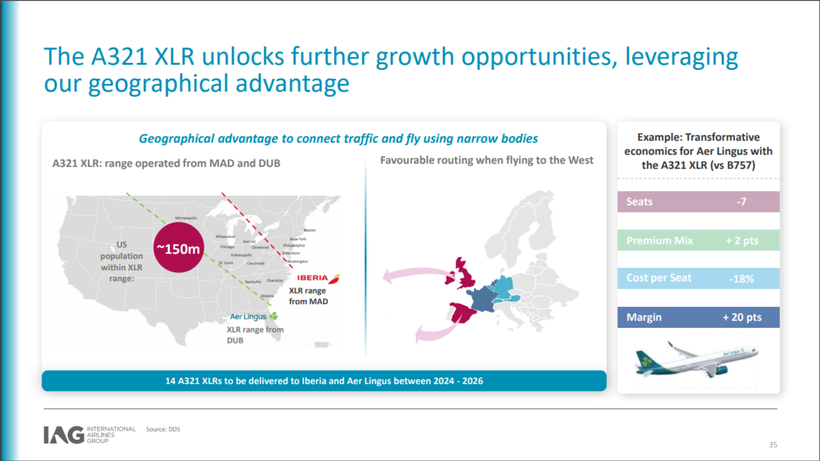
    Well, IAG may have just thrown cold water on that dream. According to Enilria’s report, IAG, parent to airlines like British Airways and Aer Lingus, believes that the A321XLR’s range isn’t as quite as “Xtra Long” as we once imagined. For instance, the Dublin (DUB) to St. Louis (STL) route is deemed to be right on the edge of the A321XLR’s capabilities in their configuration. That puts the range at approximately ~3,925 miles, a far cry from the lofty 4,700-mile talks circulating before. And to make matters worse, these Iberia and Aer Lingus planes won’t even have a super-dense configuration, meaning a low-cost carrier with more seats might be scraping the bottom at around 3,500 miles. Not exactly what we had in mind.

    A leaked PowerPoint slide from IAG adds some visual context to this revelation. Two color-coded lines supposedly represent the A321XLR range for Aer Lingus and Iberia, originating from DUB and MAD respectively. The range from DUB stretches along a line roughly from Atlanta to St. Louis, while the range from MAD falls considerably shorter, going from approximately Washington DC to just north of Detroit (remember that while Mercator projection makes Madrid appear closer, Dublin is actually one of the closest European capitals to most points in the US).

    Slide from IAG detailing hypothetical ranges of the A321XLR, obtained by Enilria
    Slide from IAG detailing hypothetical ranges of the A321XLR, obtained by Enilria

    Let’s put this into perspective. If DUB-STL is indeed the limit, then the longest A321XLR flight would clock in at 3921 miles. Coincidentally, the current longest 737 MAX 8 flight is from Kuala Lumpur to Melbourne, operated by Batik Air Malaysia, covers 3918 miles — just 3 miles shorter than the A321XLR’s theoretical maximum. That’s like… my drive to Target or Costco.

    Here’s the irony for you: the A321XLR, supposedly the “Xtra Long Range” variant, might end up with a range worse than its lesser sibling, the A321neo. The longest A321neo flight, such as SAS’s Copenhagen (CPH) to Washington Dulles (IAD) at 4074 miles, leaves the XLR lagging behind. Maybe “Xtra Large Remuneration” is what Airbus actually meant by “XLR,” since that’s what they’ll be getting from their customers?

    This revelation is no small matter. It severely caps the area that the XLRs can serve for trans-Atlantic flying, confining them predominantly to the northeast US and northwest Europe – you know, the kinds of routes already served by the A321neo. Airports like DUB or KEF, closer to the US on the “great circle,” might still be in the game for reaching parts of the Midwest, but the broader dreams of expansive point-to-point trans-Atlantic routes, especially favored by carriers like Aer Lingus, now face limitations.

    This is quite embarrassing for Airbus. The A321XLR was supposed to be a game-changer, and now we’re left wondering if it has much marginal utility at all compared to the Neo and the MAX. We’ll see how things look in practice once the XLR enters service.

  • AA Flight Attendants Officially Request Strike Permission from Biden Administration

    AA Flight Attendants Officially Request Strike Permission from Biden Administration

    Last week, we told you about AA flight attendants’ plans for a potential strike during the busy Christmas travel season. Just as we expected, the Association of Professional Flight Attendants (APFA) today officially requested permission from the Biden administration to go on strike, as contract negotiations with American Airlines remain deadlocked. The president of the APFA made the announcement on Monday, stating that she had written to the National Mediation Board (NMB) seeking approval to enter a 30-day cooling-off period as mandated by the Railway Labor Act (which despite the name, also applies to air transport).

    Under the provisions of this act, flight attendants must secure permission to enter a cooling-off period before they can legally engage in any “self help” action, such as walking off the job. It’s uncertain when exactly we’ll see a formal response with a yay/nay decision from the NMB, but it’s highly unlikely we’ll see anything immediate, most likely foiling plans for the strike to take place during the busy Christmas travel season. Realistically, it could be early 2024 before we even see a formal response.

    Julie Hedrick, the APFA National President sent a letter to the National Mediation Board on Monday, November 20 requesting a release into a thirty day cooling off period. This represents the next phase in our comprehensive campaign for a new contract.

    The big question of course is when will the NMB act upon our request? The answer is we do not know. There is no set timeframe for the NMB to act on our request as the decision to release us is solely within the discretion of the mediation board. While we understand this can be frustrating it is the process under the Railway Labor Act.

    APFA Press Release

    It’s unlikely a strike would completely shut down the airline, if it’s even approved at all. Even if the NMB grants approval, the Biden administration could impose restrictions or mandate minimum service levels to mitigate the impact on the public. We expect disruptions to be more akin to that of a large weather system snarling travel across the US – only this disruption will only impact AA.

    AA flight attendants, while earning a base pay comparable to their Delta counterparts, face disparities in profit-sharing due to AA’s less robust financial performance. Factors such as AA’s substantial debt load from maintaining the youngest fleet among major carriers, and a less expansive international route network all contribute to the airline’s financial challenges. While AA is not a low-cost carrier, it currently faces some of the same financial challenges LCCs are up against.

    Namely, domestic travel is way off, while international demand remains robust. AA has a very strong domestic route network focused on fortress hubs such as Dallas-Fort Worth (DFW) and Charlotte-Douglas (CLT). However, they are severely lacking on international routes; during the pandemic, they retired older 757s and 767s, anticipating that the Boeing 787 Dreamliners they’d ordered would materialize by the time travel made a meaningful return. Boeing, however, has dropped the ball on delivering these 787s in a timely manner, giving an advantage to Delta and United, who have largely held onto their older widebodies.

    I’m honestly skeptical we will see a strike materialize at all, over Christmas or otherwise. Despite the Biden administration’s friendly stance towards unions, the administration has a track record of intervention at the 11th hour to prevent significant disruptions to essential services. We’ve already narrowly avoided a UPS strike, as well as a freight rail strike that would have made getting essential goods and even clean water extremely difficult. I don’t see why it would be different this time. That said, the uncertainty alone could impact AA’s bottom line, as passengers book travel with competitors for greater certainty of their plans.

    This labor dispute places President Biden in a delicate position, balancing his pro-union image with the need to avoid being associated with disrupting Christmas travel plans, especially after the challenges faced by that other Dallas-based airline during last year’s Christmas season. While concerns linger, historical patterns suggest that, if a strike becomes imminent, resolution may be reached at the eleventh hour.

    HT: Paddle Your Own Kanoo

  • Will AA Cabin Crews Actually Strike Over Christmas?

    Will AA Cabin Crews Actually Strike Over Christmas?

    American Airlines cabin crews have been deadlocked for quite some time in negotiations over a new contract. Recently, APFA union members voted overwhelmingly in favor of authorizing a strike. Now, the APFA plans to make an announcement on Monday, per an email blast sent out to its members and obtained by Gary over at View From the Wing.

    Negotiations Update #38:
    An Update on This Week’s Bargaining

    Your APFA Negotiating Committee met this week with the Company in federal mediation with the National Mediation Board (NMB).  

    As we indicated in our previous hotline, we have set this week as a deadline for the Company to make significant movement toward reaching an agreement. This afternoon, your APFA Negotiating Committee met with your Board of Directors to brief them on the status of negotiations, including the next step: a request to the National Mediation Board to release us into a thirty-day cooling-off period. 

    On Monday, November 20th, we will communicate information regarding this week’s negotiations and next steps, including the APFA Board of Director’s action on the request to the NMB to be released to strike. This will allow ample time to prepare communications for the various interested parties, including the National Mediation Board, the Membership, and the media.

    Email from APFA Negotiating Committee

    Let’s unpack this. First of all, AA flight attendants earn base pay comparable to Delta’s cabin crews. However, profit sharing is a very different story, and that’s simply because AA isn’t nearly as profitable. There are a few reasons behind this:

    • AA has the youngest fleet of any major US carrier. This is great in terms of passenger experience – I’d much rather fly aboard a 787 Dreamliner than a tired old 757 or 767, of which Delta has 121 and 65, respectively, still active in their fleet. That said, with all these new aircraft comes a much larger debt load, and that’s gotta be serviced.
    • Delta’s credit card partnership with AmEx sees 1% of the entire United States GDP spent on their cards. Their SkyMiles program is so popular that they’ve had to gut it severely as it has been a victim of its own success (though CEO “Fast Eddie” Bastian had to partially roll the changes back, as too many elites got spooked). US airlines don’t make the bulk of their profits from actually flying planes – they make it through credit card partnerships with AmEx, Citibank, JPMorgan Chase, and so on.
    • Domestic travel is basically evaporating before our eyes, while international remains robust. American has a really strong domestic route network, but their international network is far behind Delta’s. During the pandemic, AA got rid of a large chunk of their widebody fleet, expecting that by the time international travel returned in any meaningful way, they’d be taking deliveries of shiny new 787s from Boeing. Well, Boeing can’t seem to deliver on that, and until they do, AA’s international network will continue to be severely constrained. It seems like right now, you can fly AA metal to any destination in Europe, as long as it’s Heathrow.

    So will we actually see a Christmas strike materialize? The Biden administration has been more friendly to unions than perhaps any other presidency in recent memory. We have come dangerously close to a UPS strike and a freight rail strike, either of which would have made obtaining essential goods and even clean water significantly more difficult. However, in both cases, the strikes were averted at the 11th hour. Unlike in Europe, we are culturally much more averse to allowing essential infrastructure to be disrupted by a strike.

    Specifically for this case, it seems the APFA is aiming to formally ask the National Mediation Board on Monday to release them from negotiations, beginning a 30-day cooling off period. A few outcomes could come of this:

    • They’re asking this during another holiday period – Thanksgiving. I don’t forsee AA getting an answer until sometime in early December, which would push any possibility of a strike into the new year.
    • The NMB could decline to authorize the cooling-off period, requiring union members to stay at the bargaining table.
    • In the unlikely event the union obtains timely authorization from the NMB, the ball is in President Biden’s court. This puts Biden in a precarious position. Biden is up for re-election in less than a year, and primary season is coming much sooner than that. Biden needs to maintain his pro-union image going into election season. At the same time, he won’t want to be remembered for ruining Christmas, especially as many Christmases were ruined last year by another Dallas-based airline.

    It’s also important to note that it’s unlikely AA cabin crews will shut down the entire airline if and when they do go on strike. They will probably “walk out” on selected flights, causing disruption more akin to that of a major winter storm. Regardless, it would cause severe reputational harm to AA, prompting passengers to consider flying with competitors.

    Personally, I’m not too worried about this. History has shown that under the Biden administration, these strikes tend to get averted – albeit typically at the 11th hour. If nothing else, expect that if a strike does happen, it won’t be until early 2024.

    ht View From the Wing

  • Allegiant to Return to MCO in 2024

    Allegiant to Return to MCO in 2024

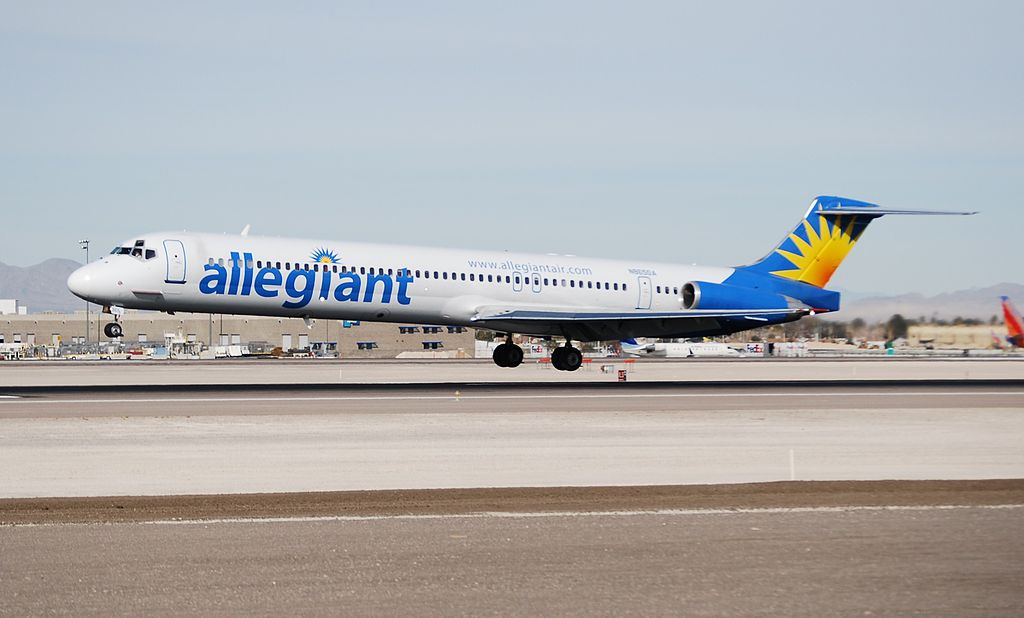
    Allegiant, the leisure-focused ULCC with a penchant for steering clear of major airports, is making a surprising return to Orlando International Airport (MCO). Known for its preference for smaller, out-of-the-way airports, Allegiant’s move back to MCO after a hiatus since 2011 has raised a few eyebrows.

    The airline has a history of choosing airports that aren’t exactly the most convenient for travelers, with some even located in different states than their advertised cities. Take, for instance, MidAmerica-St. Louis Airport (BLV), branded as a St. Louis airport but geographically situated pretty far into Illinois, in a rural area on the edge of an Air Force base. Other airports that are served either primarily or exclusively by Allegiant include St. Petersburg, FL (PIE) and Orlando Sanford (SFB). Allegiant’s aversion to major airports is attributed to the airline’s desire to avoid higher landing fees, forcing passengers to trek out to inconvenient locations with fewer options for rental cars and ground transportation.

    This aversion to major airports means the airline’s return to MCO is a fairly unexpected (and welcome) move. Starting in May 2024, the airline will operate three routes from MCO:

    • Allentown (ABE): Twice-weekly, commencing on May 16th.
    • Asheville (AVL): Flights ranging from twice to four times weekly, starting on May 3rd.
    • Knoxville (TYS): Twice-weekly, beginning on May 17th.

    It’s worth noting that Allegiant’s first foray into MCO back in 2010 didn’t go as planned, leading to the withdrawal of its operations just a year later. This return to MCO may slightly cannibalize Allegiant’s existing operations at Orlando Sanford International Airport (SFB), so it’ll be interesting to see if these three cities eventually get dropped from SFB.

    It’s possible Southwest started this trend of LCCs serving larger airports. For many years, Southwest eschewed major airports such as IAH, ORD, and DFW in favor of HOU, MDW, and DAL, respectively. However, they began serving IAH & ORD in recent years, and the airline is exploring DFW service as soon as 2025.

    In addition to the MCO routes, Allegiant has announced nine other new routes, seven of which are entirely new and have never been served by any carrier before. These routes, set to kick off in May 2024, include:

    • Austin (AUS) to Eugene (EUG): Twice-weekly, starting May 31st.
    • Appleton (ATW) to Newark (EWR): Twice-weekly, starting May 17th.
    • Billings (BIL) to Los Angeles (LAX): Twice-weekly, starting May 16th (Allegiant previously operated this route from 2009 to 2021).
    • Bismarck (BIS) to Tampa St Pete (PIE): Twice-weekly, beginning May 15th.
    • Chattanooga (CHA) to Las Vegas (LAS): Twice-weekly, starting May 16th.
    • Rapid City (RAP) to Orlando Sanford (SFB): Twice-weekly, beginning May 15th (Allegiant briefly served in August 2021).
    • Rockford (RFD) to Nashville (BNA): Twice-weekly, starting May 16th.
    • Traverse City (TVC) to Fort Lauderdale (FLL): Twice-weekly, starting May 17th.
    • Washington Dulles (IAD) to Punta Gorda (PGD): Twice-weekly, starting May 16th.

    HT: Simple Flying

  • Did I Encounter a Southwest Stowaway?

    Did I Encounter a Southwest Stowaway?

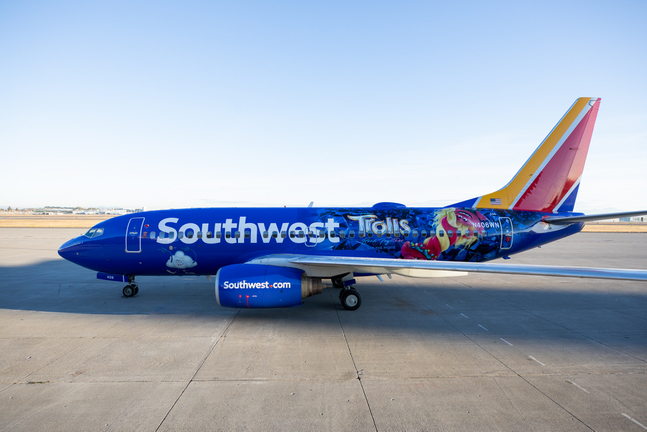
    Yesterday, I got a response from my home airport of Tulsa International (TUL) regarding the issues I had with the TUL Visitor Pass program. These issues appeared to be resolved, but I wasn’t sure when I’d be able to find the time to make it back to TUL and give it another go. Well, Tulsa’s traffic made that easy for me! A major wreck on my side of town decided to gift me some free time, giving me the choice between sitting in gridlock for potentially hours on end, or getting some quality planespotting time in at TUL while things cleared up. I opted for the more pleasant alternative—hanging out at the airport. This time, my experience with the Visitor Pass program was notably smoother, but that’s a story for another day.

    As I strolled towards the TSA checkpoint, a peculiar announcement echoed through the airport speakers. Someone was urgently summoned to the Southwest Airlines counter, being reminded in no uncertain terms that they were “in Tulsa, Oklahoma, NOT Philadelphia!” This announcement was repeated several times over the course of the coming minutes. Oops, someone took a wrong turn!

    I reached out to Southwest for some insight, but the airline’s response was predictably vague. All I got was a standard response acknowledging my concern, but declining to comment on individual passengers. Fair enough. The specifics of the incident remained elusive, but we can read between the lines here: someone, whether intentionally or unintentionally, likely boarded the wrong flight. It’s unclear which flight this occurred on, but my educated guess based on the time of the announcement points to WN2883 from Austin Bergstrom (AUS) as the misdirected traveler’s likely flight.

    Hi, Adam. While there may be many reasons that a Passenger may be paged to the counter, we are unable to provide information about a fellow Passenger. We apologize for any concern this may have caused.

    Response from “Sara” with Southwest Airlines

    This mishap brought me back to a September blog post where I delved into the case of a stowaway on a Southwest flight to MSY. In that instance, the passenger slipped through the cracks intentionally, only to be nabbed thanks to a completely full flight.

    Sure, boarding passes are designed to be electronically scanned, theoretically preventing such mix-ups. However, it ultimately falls on the gate agents to ensure that no one sneaks onto the jetbridge without a valid scan. And Southwest’s gate agents seem to have a hard time enforcing much of anything.

    It’s unlikely this qualified as a true security breach. TSA does a good job of securing the boundaries between sterile and non-sterile airport areas, and most airports now use automated exit lanes that provide no opportunity to slip past while the agent isn’t looking (AUS being one of those). However, airlines like Southwest seem to fall short in ensuring that those already in the sterile zone have the proper boarding pass for their specific flight. And while TSA does this well, there are legitimate ways to enter a sterile zone without a departing flight – someone could be a domestic arrival, utilize a fully refundable ticket, or be at an airport like TUL that gives gate passes to anyone who requests them. You still have to be screened by TSA, you just don’t necessarily need to fly out.

    The incident in September raised questions about how such slip-ups occur. Now that I’ve (potentially) encountered a similar situation firsthand, I really question how frequently this is happening and not being reported. It might be high time for some gate agent retraining or, dare I suggest, the introduction of automated turnstiles at the gate to streamline the process.

  • Eww: “Wet” Seats On Southwest Raise Eyebrows

    Eww: “Wet” Seats On Southwest Raise Eyebrows

    Alright, fellow flyers, buckle up (just maybe not in this particular pair of seats). Southwest, the airline with the seating policy that’s a cross between a lottery and the Hunger Games, has found a new way to make your flying experience a tad more, umm, interesting.

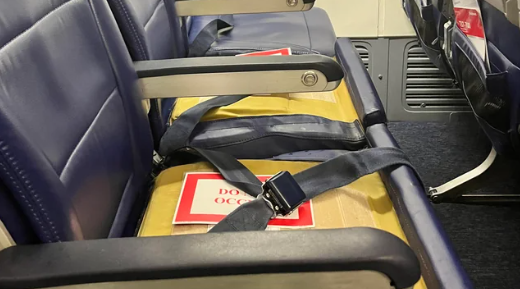
    A Reddit post by u/Zorbaing shows a row on a Southwest flight with a clear “do not occupy” placard on both the aisle and middle seats. Why? Well, according to the post, these seats are apparently “wet.” And sure, the window seat is technically up for grabs, but who knows what olfactory adventure awaits next to the damp duo? Cue the collective “eww.”

    Personally, I’m all for personal space, but even I would have to draw the line at this lone window seat. Call me a germaphobe, but I’d rather not play detective with mysterious liquids at cruising altitude. In the golden age of wipeable, pleather seats, a spilled drink should be a quick cleanup job. Taking a seat out of commission is no small matter, and leads me to believe that this was likely a biohazard situation rather than a simple spill.

    And while this “wet” seat saga might be an exceptional outlier case, it’s hard not to wonder if Southwest is keeping its planes as spick and span as they should be. Remember the pandemic? Even during the height of airlines and airports taking extreme measures to mitigate the spread of the virus, Southwest seemed to miss the memo on the whole “cleaning” thing, continuing to prioritize quick turns and cost savings over cleanliness. Pandemic or not, I don’t think not being forced to sit in someone’s mess for hours on end is too big of an ask.

    So, what’s your take on this soggy situation? Would you have risked the lone window seat, or is personal space more precious than a row to yourself? Share your thoughts below.