Category: Airlines

  • United Announces Israel Service Resumption, Then Promptly Retracts

    United Announces Israel Service Resumption, Then Promptly Retracts

    Amidst the eruption of the ongoing conflict in Israel, major airlines swiftly halted their services to the region. United, in particular, found itself in a peculiar situation as one of its flights from SFO became a unintentional “flight to nowhere” when it had to turn back mid-air due to the eruption of hostilities during the course of the flight. The rapid escalation saw thousands of rockets launched towards Israel, including at Ben-Gurion Airport (TLV), prompting a suspension of flights to the country by most foreign airlines.

    United Airlines announced the resumption of its EWR-TLV service starting on November 24, a day after Thanksgiving. However, this announcement was promptly retracted, with the airline clarifying that flights to Tel Aviv would remain suspended until conditions permit their safe resumption.

    In the midst of this uncertainty, El Al, Israel’s flag carrier, emerged as one of the only airlines maintaining services to and from Israel. Notably, they continued operations even during the Sabbath, something which the carrier hasn’t done in decades. I previously delved into El Al’s utilization of C-MUSIC, a system designed to protect passengers from heat-seeking anti-aircraft missiles.

    While Delta tentatively scheduled the return of its JFK-TLV route from November 21, no formal announcement has been made. Given the unpredictable nature of the war situation, it’s anticipated that scheduling adjustments may continue until there’s a substantial change.

    Live and Let’s Fly reported American Airlines listing TLV flights starting December 4, but it seems that’s already been pulled down from AA.com. While tickets were offered for that date, they all involved connecting flights with Oneworld alliance partners like British Airways in Europe, without direct options from the U.S. on AA metal.

    The situation remains fluid, but my prediction is that we won’t see any service resumption by U.S. carriers until the conflict subsides, and potentially much longer. It’s likely we’ll see widebody equipment, already in short supply, re-allocated to other routes such as those to Europe. Once those schedules are built and equipment committed, it could potentially take significant time to organize service to TLV again.

  • United Makes Changes to Elite Status Qualification… and It’s Good News?

    United Makes Changes to Elite Status Qualification… and It’s Good News?

    United MileagePlus unveiled some changes to its Premier status program for the upcoming year – and they’re actually good news for most flyers. While the fundamental elite requirements remain unaltered, there’s an expansion in the avenues to qualify for status. Notably, United is clearly directing focus towards encouraging members to increase spending on co-branded credit cards, which is arguably a bigger cash cow for most US airlines than actual flying.

    To reiterate the elite requirements for 2024, which remain unchanged from 2023 (keeping in mind that one PQP is equivalent to a dollar spent on United airfare):

    • Premier Silver necessitates 12 PQF and 4,000 PQP or simply 5,000 PQP
    • Premier Gold calls for 24 PQF and 8,000 PQP or merely 10,000 PQP
    • Premier Platinum requires 36 PQF and 12,000 PQP or just 15,000 PQP
    • Premier 1K demands 54 PQF and 18,000 PQP or merely 24,000 PQP

    Existing MileagePlus elite members get a nice little bonus, too. United will proactively inject PQPs into their accounts at the beginning of 2024, determined by the status achieved in 2023. This applies to all elites, except those engaged in a status challenge or trial.

    The PQP jumpstart for 2024 will be allocated as follows:

    • Premier Silver members will receive a boost of 250 PQPs
    • Premier Gold members will enjoy a jumpstart of 500 PQPs
    • Premier Platinum members will be granted an added 750 PQPs
    • Premier 1K members will get a princely sum of 1,250 PQPs

    Moreover, MileagePlus elite status is becoming more attainable through credit card usage. Cardmembers can now earn 25 PQPs for every $500 in qualifying credit card transactions, enabling a 20% quicker accumulation of PQPs, in smaller increments than before. These PQPs earned through credit card spending will count towards all elite tiers, including Premier 1K. The United Club Infinite Card from Chase previously capped out at 8,000 PQPs annually, but that’s increasing to 10,000 PQPs per year. Notably, there will no longer be a cap on the total number of combined PQPs that can be earned across United cards.

    The rationale behind these changes is apparent—airlines are facing a less favorable landscape compared to a year ago. Business travel hasn’t fully rebounded to pre-pandemic levels. Post-COVID “revenge travel” has all but evaporated, with domestic leisure travel falling off a cliff, and airfares dropping considerably vs. a year ago even in the face of rampant inflation. Nevertheless, this development is indeed welcome news, especially when juxtaposed with the changes in Delta SkyMiles.

    Surprisingly, this adjustment comes from United, which is arguably in a stronger position compared to many other US airlines, primarily due to its robust international route network. Despite post-COVID domestic travel falling off a cliff in the face of a slowing economy and rising interest rates, international demand remains robust, and United is arguably in the strongest position of any US airline to rise to the occasion; compare this to low-cost carriers like Spirit who primarily fly domestically, and are disproportionately feeling the brunt of the current economic headwinds. United also only has a singular A321neo currently in service, largely shielding it from the Pratt & Whitney engine issues.

    Southwest also recently made positive changes to its popular Rapid Rewards program, however, they are arguably in a much weaker position than United with their domestic-focused route network, as well as the fact they’re still trying to repair their tarnished reputation from the full-scale nuclear meltdown of their network during Christmas 2022. It seems logical that Southwest would throw their customers a bone to drum up some business at a time they’re trying to turn things around.

    I imagine 2025 will probably see much more drastic changes to simplify the MileagePlus program, but I sincerely doubt it will be that bad. The program right now is unnecessarily complex. Not everyone cares to learn the ins and outs of a program like that. However, I don’t see United going down the same path Delta has gone down. Rather, I expect these changes will more closely resemble AAdvantage’s “Loyalty Points” scheme, which has turned out to be a positive for everyone except those who earn status organically through flying AA metal in economy. Let’s not forget that United CEO Scott Kirby is an ex-American guy. He worked under Doug Parker for years, just like current AA CEO Robert Isom. I expect the next few years will be marked by AA and United following each other relatively closely, while Delta does its own thing.

    h/t One Mile at a Time

  • Right to jAAil? Kids Allegedly Left Overnight in “Jail-Like” Room at CLT

    Right to jAAil? Kids Allegedly Left Overnight in “Jail-Like” Room at CLT

    A recent incident reported in the New York Post involving American Airlines has stirred outrage and allegations as a Florida mother, Amber Vencill, took legal action against the airline, claiming they mishandled the travel of her two young sons. According to a lawsuit filed on October 31, Vencill’s 10- and 12-year-old sons, identified as RV and JV in court documents, were left in distressing conditions after their flight got canceled while they were using the airline’s unaccompanied minor service.

    Originally scheduled to fly from Missouri to upstate New York with a layover in Charlotte, the boys found themselves in a bewildering situation as their flight faced delays and ultimately cancellation. This unexpected turn left Vencill’s partner, identified as Ted, with a concerning message from the airline, assuring the children would be placed in a “nice room for unaccompanied minors,” equipped with beds and a private bathroom.

    Unfortunately, the actual experience the children faced sharply contrasted with the promised arrangements. The lawsuit alleges that the kids were left stranded without access to basic necessities—no food, water, blankets, or pillows. The supposed ‘nice room’ ended up being described as resembling a “jail cell,” with the children enduring a chilly environment and sleeping under bright lights on a sofa throughout the night. Hopefully this room wasn’t infested with mold like the Admiral’s Club is.

    Vencill’s attempts to reach her sons and acquire accurate information about their whereabouts hit a dead end initially. Hours of distress passed until a staff member at Charlotte’s Douglas International Airport (CLT) finally connected her to one of the children. The heart-wrenching revelation made by the child indicated a dire situation where they hadn’t consumed any food or drink since the previous night, not even the usual airline pretzels and Biscoff.

    It was only through the intervention of a non-AA employee (likely an employee of the airport or the City of Charlotte) that the children received some much-needed sustenance before finally boarding a flight to Syracuse, where they were reunited with Ted.

    In response to Vencill’s distressing ordeal, the airline apologized and refunded the fee charged for the unaccompanied minor service. However, the apology and reimbursement appeared to offer little solace for the significant trauma experienced by Vencill and her children.

    The lawsuit argues that the airline’s conduct was not just a mere mistake but exhibited recklessness, carelessness, and negligence, alleging a breach of the airline’s own policies and procedures. Despite claiming a commitment to ensuring the safety and well-being of unaccompanied minors, American Airlines faced severe criticism for what Vencill’s attorney, David Jaroslawicz, described as a “callous disregard” for the children’s welfare.

    As the legal proceedings unfold, Vencill seeks unspecified damages, highlighting the distress and trauma caused by the airline’s alleged mishandling of the situation. The lack of a thorough investigation or an earnest attempt to prevent such incidents in the future has intensified the concerns raised by the lawsuit.

    American Airlines, in response to these allegations, expressed its commitment to the safety and comfort of its customers, including unaccompanied minors, mentioning that they are in direct communication with Vencill and are reviewing the lawsuit’s details.

    As many as 7 million children travel using UM programs each year in the US alone. Out of 7 million, you expect a misstep or two. However, locking these kids in a room without basic necessities seems to rise to a new level. Hopefully AA will conduct a comprehensive review of their UM protocols.

  • BloodbAAth at Bergstrom: AA Slashes Almost Half of AUS Routes, Threatening Mini-Hub Status

    BloodbAAth at Bergstrom: AA Slashes Almost Half of AUS Routes, Threatening Mini-Hub Status

    American Airlines’ sudden move to axe 21 out of 46 routes at Austin-Bergstrom International Airport (AUS), as quietly revealed by Cirium data, has sent shockwaves through the frequent flyer community. This significant cut is a detrimental blow, effectively scaling down what was shaping up to be a ‘mini-hub’ into more of a standard focus city.

    The airport has grown at a breakneck pace in the past five or so years, evolving into something of a reliever hub for AA’s DFW fortress 190 miles to the north. During IRROPS at DFW, it wasn’t uncommon for agents to reroute passengers through AUS for connecting flights when nonstop options were limited from DFW.

    Curiously, despite the announced route cancellations, the airline has continued to sell flights that are due to be axed. It raises a question—Is American pulling a Qantas here? While it’s unlikely there’s any correlation here, it’s interesting to note that former AA CEO “Discount Doug” Parker recently joined the board at the Australian flag carrier.

    The Austin area has been a thriving hotspot, experiencing tremendous growth driven by the tech industry and its vibrant local culture. I miss my previous role requiring frequent visits to the Texas capital, even though the company’s Concur portal forbid us from staying at Hyatt’s many wonderful downtown properties, forcing me to resort to the airport Hyatt Place. The local culture, food, and music scene is unlike any other, and people are generally quite friendly.

    While crowding issues persist, my soft spot for Austin-Bergstrom Airport remains intact. The Admirals Club stands out, offering modest facilities but top-notch service from the AAngels—leaving visitors feeling like VIPs (I’m not the only one who has noticed this). The diverse range of local food and beverage options on the airport concourse also sets AUS apart, a refreshing contrast to the typical airport fare of Cinnabon and Auntie Anne’s found at many airports in the U.S. (though I am a sucker for Auntie Anne’s). The airport has long featured an outdoor observation deck, though that’s no longer open to the public as Chase has transformed it into a terrace for CSR cardholders.

    Photo I took of the view from the outdoor terrace at AUS, shortly before it closed to make way for the Chase Sapphire Terrace (C) Points & PDBs

    Getting in and out of AUS is relatively straightforward, and despite complaints by some about long security lines, as a member of both CLEAR and TSA PreCheck, I’ve never waited more than a minute or two for screening, even on the worst days. The walk to the rental car facility might confuse newcomers, but as a seasoned pro, the convenience of a quick walk through the parking garage outweighs waiting for a shuttle (and the National staff at AUS are wonderful).

    However, AUS has its fair share of challenges, as highlighted in a comment made on our site by industry expert Gary Leff of View From the Wing, who is based in Austin. His insights shed light on the airport’s growing pains, pointing out the surge in flights overshadowing premium air traffic. Gate squatting and the absence of significant capacity growth until a midfield terminal is established further compound the issues. The impending demolition of the South Terminal while accommodating other carriers in the main terminal without extra gates adds to the complexity. Leff states that “right now Austin is overall a place that yields go to die.”

    Moreover, the downturn in the tech sector, marked by layoffs and hiring freezes, could impact Austin’s economy disproportionately. Virgin Atlantic last week announced its exit from Austin, citing the softening in the tech sector – though Leff seemed to think they weren’t telling the whole story.

    I’ve always questioned the sustainability of having a mini-hub just 190 miles away from DFW. It was certainly nice to have AUS as an alternative to DFW or CLT when flying out of my home airport, TUL. Most of the time I’d choose DFW barring a substantial price difference, but those substantial differences did materialize often (probably a result of poor yields at the airport). Losing AUS-TUL, usually operated by a comfortable Embraer E175, is going to hurt. Southwest continues to operate the route, though I’d happily kill some time at DFW before I’d subject myself to a flight on WN.

    The extensive list of route cuts includes destinations such as Washington Dulles (IAD), Tampa (TPA), Cozumel (CZM), my home airport of Tulsa International (TUL), and others, effective between January and April 2024. The full list, uncovered by industry observer Adrian Waltz, is below:

  • Spirit Airlines Exits DEN Amid Financial Woes, P&W Engine Issues

    Spirit Airlines Exits DEN Amid Financial Woes, P&W Engine Issues

    Just a few months ago, airlines were riding high on unprecedented post-COVID revenge travel demand. People were itching to get back in the skies and explore the world after a long hiatus. Airlines were expanding their routes, booking up planes, and staffing up. But, as they say, the only constant in the airline industry is change, and here we are – another day, another airline doing layoffs, hiring freezes, or exiting a market.

    The latest to join this trend is none other than Spirit Airlines, which has announced its exit from Denver International Airport (DEN). The reasons cited for this decision include demand in the market and ongoing woes with Pratt & Whitney engines. The ultra low-cost carrier will be wrapping up its operations at DEN on January 9, 2024.

    Denver, Colorado, is an intriguing market. It’s home to one of the largest airports in the world, and yet Spirit Airlines chose to serve only three cities from this bustling hub. Two of those cities, Fort Lauderdale (FLL) and Miami (MIA), are within close proximity to each other, and the third is Las Vegas (LAS). In total, that’s just 240 flights a month, with a daily rotation of one flight to FLL, one to MIA, and two to LAS. Even with strong competition from other ULCCs, one would expect Spirit’s presence at such a large airport to be just a little bigger, especially with DEN commanding a large amount of leisure travel during ski season.

    One of the key factors contributing to Spirit Airlines’ decision is the ongoing trouble with Pratt & Whitney engines. In August, the Federal Aviation Authority (FAA) issued an Airworthiness Directive for aircraft equipped with Pratt & Whitney’s PW1100G engines. Approximately 20 of Spirit’s aircraft were affected by this directive, and they are expected to remain grounded for about six to eight weeks. These engine issues have hampered Spirit’s ability to operate its flights effectively.

    Financially, Spirit Airlines has also been facing turbulent times. Last week, we brought you news about the airline enacting a hiring freeze, pausing training of new pilots and flight attendants indefinitely. In the Q3, the company reported a staggering $157.6 million loss. This loss is against the backdrop of $1.2 billion in revenue for Q3, with total revenue until September standing at $4 billion. The loss is attributed to several factors, including the engine problems we mentioned earlier and a shrinking domestic demand for air travel.

    Low-cost carriers like Spirit have been hit especially hard because the bulk of their routes are domestic. International travel, particularly to Europe, remains relatively robust, but U.S.-based LCCs typically don’t venture across the Atlantic. The result of reduced demand is lower fares in the short to medium term, putting pressure on the profitability of these airlines – not only are they selling fewer seats, but the margins on the seats they do sell are considerably smaller. Some economic experts have been warning of an impending recession for a while now, and the rapidly shrinking demand for air travel could indeed be a leading indicator of broader economic trends.

    And amidst these challenges, there’s an ongoing legal tussle at play. JetBlue Airways has been aggressively pursuing a takeover of Spirit Airlines. However, this attempt is currently being litigated in court. The outcome of this legal battle could potentially shape the future landscape of the airline industry, should the merger go through.

    One might wonder if part of why Denver is such a challenging market for Spirit is the presence of their largest rival, Frontier Airlines, which is based at DEN. Frontier recently made headlines by launching a status match promotion that’s, well, quite wild. They’re allowing virtually any elite status, even from hotels, to be matched to their Frontier Miles program for a fee. Additionally, rival Southwest likely commands a disproportionate share of ski traffic, as the airline gives all passengers (regardless of elite status) a generous allowance of two free checked bags on every flight, no matter what. The airline also is more flexible with oversize and odd-shaped baggage, a boon to those bringing gear with them to the slopes.

    The airline industry is a complex and ever-evolving beast. Spirit Airlines’ exit from Denver illustrates just how quickly things are changing in an industry that was riding high just a few short months ago. The ongoing engine problems and financial challenges are causing turbulence for this low-cost carrier. And with the domestic travel demand in flux, we’ll continue to keep a close eye on how these developments, including the JetBlue takeover attempt, affect the industry as a whole.

    h/t KDVR – Fox 31
  • American Airlines Quietly Removes Popular Feature from Mobile App

    American Airlines Quietly Removes Popular Feature from Mobile App

    American Airlines has recently made a subtle yet notable tweak to its iOS and Android apps that might not sit well with some frequent flyers. The airline’s mobile applications have often been critiqued for their outdated design and functionality, trailing behind competitors like United. Some sections of the app don’t operate as native mobile components but instead function as a wrapped version of AA’s mobile website, resulting in a sluggish and somewhat unrefined user experience. It’s like hopping in a time machine back to 2011. At least AA has had bag tracking in-app much longer than some of its competitors.

    One feature that stood out and received positive feedback was the “Wallet” section nestled within the app. This section provided users with a comprehensive view of their credits and rewards associated with American Airlines. From flight credits to trip credits and even preferred seat coupons, the Wallet feature offered a convenient snapshot of one’s accumulated perks. However, it appears that this functionality has quietly disappeared from the app’s interface.

    But hold on—don’t hit the panic button just yet. While the Wallet feature seems to have been removed, the information it housed hasn’t vanished into thin air. Instead, it’s been relocated within the app. Users can now find this data starting from the familiar page displaying AAdvantage membership information (tap your name & award mile balance from the home screen to get here). There, a couple of new buttons have emerged: “Travel Credit” for flight and trip credits and “Rewards” for various perks like preferred seat coupons, although these might not hold much value for AAdvantage elite members, who are already entitled to complimentary preferred seating at the time of booking.

    For many of us, this might not be a significant inconvenience. Truth be told, most people aren’t necessarily seeking this specific information simultaneously. While seasoned flyers might find the change irksome, the adjustment could actually make it easier for those who don’t navigate the skies as frequently to understand the layout of the app. As a frequent user of the app, I know my way around its quirky layout, and can find everything I need pretty quickly. However, I’ve watched friends and relatives struggle to understand how to use the app’s more advanced functionalities, like finding flight credits or seeing a running transcript of AAdvantage activity.

    Ultimately, this isn’t a big deal for most of us. I’d love to see American one day overhaul their app and follow United’s lead into creating something that’s (dare I say) enjoyable to use. While new CEO Robert Isom is doing a great job improving the airline’s performance and customer service, a better app could free up phone agents to focus on tackling complex situations and not spend as much time helping with routine requests.

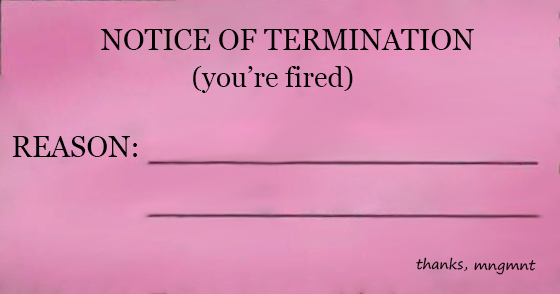
  • Pink Slip Parade: Delta Gives Axe to Some Corporate Staff

    Pink Slip Parade: Delta Gives Axe to Some Corporate Staff

    Well, well, well, it seems Delta Air Lines is trimming the fat. The airline recently announced layoffs in their corporate and management ranks as part of their ongoing cost-cutting efforts.

    Of course, they didn’t specify exactly how many employees would be getting the pink slip, and they made sure to reassure us that this won’t affect the folks on the front lines – you know, the pilots and flight attendants.

    Delta’s statement to CNBC had all the usual corporate jargon about making “adjustments to programs, budgets, and organizational structures.” Translation: “We’re slashing jobs to save a few bucks, and don’t ask us how many.”

    While we’re not yet back to full capacity, now is the time to make adjustments to programs, budgets and organizational structures across Delta to meet our stated goals — one part of this effort includes adjustments to corporate staffing in support of these changes. These decisions are never made lightly but always with care and respect for our impacted team members and the Delta family.

    Delta statement to CNBC

    It’s interesting to note that not too long ago, Delta, along with other airlines, were hiring like there was no tomorrow. The post-COVID revenge travel boom was in full swing, and airlines were in a rush to bring more hands on deck.

    But now, that boom seems to be drying up faster than a puddle in the desert. International travel, especially to Europe, is still hanging in there, but domestic demand is taking a nosedive. Delta might be the first major airline to publicly announce layoffs, but it’s not the only one feeling the heat.

    Spirit Airlines recently put a halt on hiring, citing a drop in demand and Pratt & Whitney engine issues with their A320neo fleet. The airline industry is facing some headwinds, no doubt. However, we can’t paint the whole industry with the same brush just yet. It appears that most of the pain is being felt by low-cost carriers, and that’s probably because the bulk of their routes are domestic. While Southwest hasn’t announced any broad personnel actions just yet, they did make positive changes to their Rapid Rewards program – usually not something you see when times are good. If you were placing bets on broad layoffs at a legacy carrier, you might want to keep an eye on American Airlines, as their international route network isn’t as robust as their peers, and they’ve had a rough couple months financially, owing to payouts tied to new union contracts.

    Of course, there’s always the possibility that Delta just went on a hiring spree during COVID and is now realizing they’ve got too many cooks in the kitchen. Maybe they should’ve thought a little more strategically before expanding their corporate team.

    Some are speculating that this could be payback from frequent flyers who are none too pleased with the recent changes to Delta’s SkyMiles program. Medallion status is now all about how much cash you’re shelling out, and it’s a lot harder to attain. SkyClub access has been tightened up, and those Delta Reserve and AmEx Platinum cardholders can kiss their unlimited access goodbye.

    Sure, Delta tried to appease their elites with a partial rollback, but CEO Ed Bastian, aka “Fast Eddie,” pretty much spilled the beans to investors that this is just a temporary move. Looks like Delta has shown its true intentions, and it’s not sitting well with the loyal flyers. However, it’s likely that if this is in fact the cause, we won’t see any empirical evidence of this until at least Delta’s next 10-Q.

    So, what’s really going on at Delta? Are they just streamlining their operations, or are they facing a rebellion from their most loyal customers? Only time will tell, but one thing’s for sure – the airline industry is in for a bumpy ride.

  • Delta Pilot Allegedly Pulled Gun on Captain, Threatened to Shoot

    Delta Pilot Allegedly Pulled Gun on Captain, Threatened to Shoot

    In a shocking incident that took place in August 2022, reported in a recent grand jury indictment uncovered by the AP, a pilot, Jonathan J. Dunn, who was a participant in the Transportation Security Administration’s Federal Flight Deck Officer (FFDO) program, has been indicted for allegedly threatening to shoot the plane’s captain if the flight was diverted due to a passenger requiring medical attention.

    Dunn, who had previously been authorized to carry a firearm on board as part of the TSA FFDO program, now finds himself expelled from this program and facing serious legal consequences. His employment with Delta Air Lines has also, of course, been terminated.

    The dispute arose over the potential diversion of the flight because of a passenger’s medical emergency. Dunn reportedly threatened the captain with multiple gunshots if the flight was diverted.

    The details surrounding the incident, including the airline, flight route, and whether the diversion eventually occurred, remain undisclosed. The Transportation Department’s inspector general’s office is working alongside the FBI and the Federal Aviation Administration to investigate this alarming case.

    Dunn’s indictment, issued by a grand jury in Utah, alleges that he “did use a dangerous weapon in assaulting and intimidating the crew member,” a felony that carries a maximum penalty of 20 years in prison. An arraignment for Dunn is scheduled for November 16.

    This disturbing revelation comes just days after an off-duty pilot in the jumpseat attempted to shut down the engines of a Horizon Air jet midflight. Joseph David Emerson, an Alaska Airlines pilot, cited depression and psychedelic mushrooms use as contributing factors. This incident raises questions about the screening processes for pilots, as they are primarily reliant on self-disclosure during medical exams. Trustworthiness and mental health assessments are vital, as even a perceived issue can have serious consequences in the airline industry. Passengers have to be able to trust the people flying the airplane beyond any reasonable doubt.

    It will be interesting to see if new security measures are implemented as a result of these incidents. While this particular incident took place over a year ago, the timing of this revelation coming so soon after the Horizon 2059 incident is sure to raise some eyebrows among Federal officials and the traveling public. Jumpseats are a critical piece of the airline logistics puzzle, helping crew members reposition and commute to work. Meanwhile, absent having air marshals present on most flights – just like one of many measures El Al takes to protect passengers, the FFDO program theoretically sounds like a great idea – pilots are already (again, in theory) subject to a high degree of vetting, so why not deputize them?

    Following these incidents, however, I could see Uncle Sam taking a very close look at just how much trust we’re blindly placing in our airline crews. Of course, the overwhelming majority of airline crew members in the US are trained, trustworthy professionals who just want to get you from point A to point B safely. And those who do it right, who dedicate their careers to our safety, deserve our respect. However, as they say, a few bad apples spoil the bunch – and given lives are at stake here, I could see a re-evaluation of protocols taking place over the coming months. In fact, we already see Known Crewmember (KCM) protocols being revisited, with DEN piloting new screening technology for crew.

    The incident involving Dunn and the recent Horizon incident underscore the importance of ensuring the mental and emotional well-being of those responsible for flying commercial aircraft. Maintaining the highest standards of trust and mental health screening is critical to guaranteeing passenger safety and the smooth operation of our airline industry.

  • Southwest Airlines Braces for DOT Fine Following 2022 Holiday Fiasco

    Southwest Airlines Braces for DOT Fine Following 2022 Holiday Fiasco

    Southwest Airlines is bracing itself for a hefty fine from the U.S. Department of Transportation (DOT) in the wake of the notorious Christmas 2022 travel chaos that left a staggering 16,700 flights canceled, impacting over 2 million passengers. According to reports from Reuters based on a Southwest SEC filing, the DOT has pinpointed several shortcomings on the part of Southwest, citing inadequate customer service, delayed flight status notifications, and sluggish refund processes as grounds for a looming civil penalty.

    Based on the wide-scale operational disruption for the Company, which led to the cancelation of a significant number of flights between December 21 and December 29, 2022, the Company could be subject to fines and/or penalties resulting from investigations by the Department of Transportation or other government agencies. See Note 1. On October 27, 2023, the Department of Transportation notified the Company that it has determined the Company had failed to provide adequate customer service assistance, prompt flight status notifications, and proper and prompt refunds and that the assessment of a civil penalty is warranted. The Company could also face monetary damages or other costs resulting from litigation initiated by Customers and/or Shareholders. The Company is currently not able to estimate a range of possible loss for such items.

    Disclosure on Southwest Airlines Form 10-Q, as filed with SEC on Oct 30, 2023

    While weather-related disruptions affected multiple airlines during mid-December, Southwest’s operational woes stood out as it disproportionately bore the brunt of cancellations. For three consecutive days, the airline axed over 60% of its flights, all due to its antiquated internal scheduling system—a major setback earning it the unfortunate moniker “Southworst” among some frequent travelers, and even causing SNL to take aim at the airline in the form of a scathing skit.

    I wonder if this skit was written by an AA loyalist?

    CEO Bob Jordan tried to appease critics by highlighting the compensation efforts made—promising refunds, travel credits, free tickets, rewards points, and reimbursements for additional expenses incurred by passengers. However, reports surfaced about the lack of availability and untimely delivery of this compensation, leaving many passengers angered.

    Uncle Sam isn’t alone in looking to throw the book at WN; Southwest found itself embroiled in legal troubles as well. Shareholders rallied with a class action lawsuit, accusing the airline of disseminating “materially false and misleading” information over a two-year period that contributed to the holiday meltdown.

    Attempting damage control, Southwest emphasized improvements, including upgraded de-icing capacity and increased staffing to better handle winter weather. The airline also took steps towards rebuilding its image, introducing advancements like baggage tracking, a feature that was sorely missed during the Christmas 2022 debacle, when numerous bags went missing. Positive changes were made to their Rapid Rewards program, making elite status more attainable, yet the lingering question remains: will these efforts be sufficient to win back customer trust?

    Southwest Airlines seems to be acknowledging its need to step into the 21st century, making strides towards remedying past failures. As they try to restore their reputation and regain the confidence of their customer base, the airline faces an uphill battle to prove that these changes are more than mere cosmetic adjustments. Whether the measures taken will be enough to regain the loyalty of passengers, only time will tell.

  • Southwest Airlines’ Boarding Anarchy: When Rules Don’t Rule the Gates

    Southwest Airlines’ Boarding Anarchy: When Rules Don’t Rule the Gates

    If you’ve ever flown Southwest, you’re probably familiar with their rather unique approach to boarding. It’s a free-for-all, where you’re assigned a boarding position (A, B, or C) and a number, and you’re left to fend for yourself when it’s time to claim your seat. There are no seat assignments, so whoever physically gets to a seat first can sit down and claim it. Sometimes people try to save seats for friends and family with later boarding positions, or they’ll “save” the middle seat in hopes of keeping it empty. Now, I’ll be the first to admit that I’m not a fan of this “Hunger Games” style scramble for a seat, but it’s the price you pay for the airline’s (allegedly) low fares and free checked bags (despite the fact most other airlines will give you this for simply holding a $95 credit card). You either love it or you hate it. I tend to fall into the latter category.

    One of the main reasons I avoid flying Southwest is their obnoxious first-come, first-served seating policy. You have to check in EXACTLY at T-24 to avoid the dreaded C boarding group and the possibility of a middle seat. Even if you do manage to check in at the right time, the notion of a true first-come, first-served setup isn’t entirely accurate. You’re still positioned after Business Select, Elite Members, and those who paid up for EarlyBird check-in. And good luck with that, because it’s only offered on select flights now. You can’t win.

    But let’s talk about the real issue here – Southwest’s gate agents and their enforcement of the boarding process. According to a recent Reddit thread, it seems that some passengers are taking matters into their own hands. People with B and even C boarding positions are sneaking into the A line and getting away with it. How is this happening? Do gate agents just assume everyone is lined up where they belong, and only listen for the scan beep? It’s a valid question. Clearly their gate agents have an issue not going to la la land during the boarding process, as a stowaway recently got past Southwest gate agents, only getting caught as a result of the flight being completely full.

    Some travelers have reported instances of gate agents actually checking and enforcing the boarding order. So, it’s clear that there are still some gate agents out there who are doing their jobs. But the real problem is the inconsistency. Some gate agents follow the rules, and others seem to let things slide. The honor system simply does not work in this setting – people will take advantage of it.

    To be sure, Southwest is far from the only airline with lax enforcement of boarding order. However, the impact on passengers is much more severe on Southwest, as combined with its open seating policy, boarding order determines not when you’ll reach your preferred seat, but if you’ll get a desirable seat at all. On airlines with more civilized boarding procedures, I actually prefer to be one of the last to board, and take the “now boarding” push notification as a sign I should finish up one more drink at the lounge. Doing this on Southwest, however, would all but guarantee a dreaded middle seat near the aft lavatories.

    Southwest’s unique boarding system isn’t the only thing that’s been causing headaches for passengers lately. The airline has faced operational challenges, including a full-scale network meltdown over Christmas 2022. They’ve tried to make amends with changes to their Rapid Rewards program and joining us in the 21st century with baggage tracking, but it’s clear that there are still issues that need to be addressed.

    So, what’s the solution here? Either gate agents need to do their jobs and enforce the boarding order consistently, or the software used to scan boarding passes needs to be changed to deny premature scans. It’s not rocket science. If you try to board before your group is called, you shouldn’t get that loud chime indicating it’s okay to board. And for those passengers who think they can game the system, shame on you.

    Southwest’s boarding process is chaotic, and it’s exacerbated by inconsistent enforcement. It’s time for the airline to step up and ensure that the rules are followed, or they risk alienating even more passengers. After all, if you wanted to play games, you’d go to the casino, not the airport (I suppose it’s fitting that LAS is a quasi-hub for WN?).