Category: Airlines

  • Flight Attendants Advised to Gear Up for Bedbug Hunt: United Union’s Unusual Travel Advice

    Flight Attendants Advised to Gear Up for Bedbug Hunt: United Union’s Unusual Travel Advice

    Amidst a bedbug infestation in France that’s sent shockwaves across Europe, the AFA-CWA, the union representing United flight attendants, is offering some rather unorthodox advice. They’re suggesting flight attendants pack disposable latex gloves and a flashlight for an unexpected mission – the hunt for bedbugs in hotel rooms. While it might sound like a scene from a horror movie, there’s a method to this madness, and it’s not just about avoiding bringing these creepy crawlers home; there’s an unspoken concern here – preventing bedbugs from hitching a ride on commercial aircraft.

    In a recent press release, the AFA-CWA points out that bedbugs can be anywhere, anytime. These pests are notorious for their ability to hide in the tiniest of spaces and their stealthy nocturnal feeding habits. Plus, not everyone reacts to their bites, making it challenging to spot an infestation until it’s too late. Aside from the physical discomfort, bedbugs can take a heavy emotional and psychological toll on their victims, between loss of sleep and scarring.

    While some hotel chains have better housekeeping protocols than others, even the most trustworthy hotel chains aren’t 100% immune to bedbugs. Earlier this year, a friend of mine encountered an infestation at a Hyatt-branded property in the U.S. – a chain many of us (myself included) place an extremely high degree of trust in. To be completely fair, the staff handled the situation very appropriately, even laundering their clothes at no charge – which is exactly what you’d expect from a brand like Hyatt. I won’t disclose the name of the specific property, as they handled the situation well, and clearly had robust protocols in place to deal with such a situation.

    So, what can you do to protect yourself from these unwelcome roommates? Here are some key takeaways:

    1. Pack disposable latex gloves and a flashlight to inspect your hotel room thoroughly. Bedbugs love to hide in cracks and crevices.
    2. Opt for luggage with smooth, hard surfaces. Fabric, pockets, seams, and flaps provide hiding spots for these tiny invaders. I exclusively use hard-sided luggage, and this is one of many reasons why.
    3. Keep your luggage away from sleep and rest areas in the hotel room. Glass tables and luggage racks are your friends, and plastic is better than wood.
    4. Inspect the mattress and box spring for signs of bedbugs, such as tar-like splotches and shed skin fragments. Pay close attention to the corners, seams, and labels.
    5. Notify hotel staff ASAP if you suspect an infestation and take photos for evidence. The union even suggests bagging and keeping the pests in case you need additional evidence later… I’m not sure I have enough faith in Ziploc to put that into practice, but you do you.
    6. If you’re bitten or find bedbugs, get out of that room immediately. If changing hotels isn’t an option, move as far away from the infested room as possible.
    7. Upon returning home, unpack your luggage outside or on a garage floor and inspect your belongings carefully. Wash anything washable in hot water and dry at a high temperature. For extremely frequent travelers, you can purchase a unit to bake your luggage and its contents at a high temperature to ensure it’s clear of pests.
    8. Remember that eliminating an infestation can be a long process, and you may need multiple pest control visits. Bedbug-proof mattress encasements can help salvage infested bedding.

    This advice isn’t just for flight attendants; it’s sage wisdom for all travelers, particularly those visiting Europe, where bedbug incidents are on the rise. Fortunately, the situation may not have as much of an impact in the United States due to more modern building structures and our tendency to drive places in our own cars.

    However, if you’re considering heating your luggage to eliminate any potential bedbugs, here’s a crucial warning: Remove any lithium-ion battery packs before attempting it. We’re after bedbugs, not fireworks displays.
  • Delta SkyMiles Rollbacks: A Step in the Right Direction, but Is It Enough?

    Delta SkyMiles Rollbacks: A Step in the Right Direction, but Is It Enough?

    Last month, Delta Airlines made some significant changes to its SkyMiles program that left many frequent flyers less than pleased. The alterations included a shift to fully revenue-based status, imposing steep thresholds for Medallion status, and severe restrictions on SkyClub access. Unsurprisingly, the blowback from Delta’s loyal customer base was swift and severe, with many elites defecting to rival airlines; American reported record cobranded card signups on their earnings call, while requests for United status matches have gone up “dramatically,” presumably driven by disgruntled Delta elites abandoning ship.

    CEO Ed Bastian’s Acknowledgment

    In the midst of this intense backlash, Delta CEO Ed Bastian, now often not-so-affectionately referred to as “Fast Eddie,” admitted that the airline might have gone too far. He hinted at potential rollbacks to the contentious changes. While these changes didn’t come to light during Delta’s recent investor call, it turns out that my predictions about some adjustments were quite accurate.

    Adjustments to Elite Status Requirements

    One of the most significant SkyMiles changes was the switch to a fully revenue-based system, with Medallion Qualifying Dollars (MQDs) as the sole qualifying metric. However, Delta has now reduced the initially announced steep thresholds for the 2024 membership year, though they’re still a far cry from what customers were used to:

    • Silver Medallion: Reduced from $6,000 to $5,000 (compared to $3,000 in 2023).
    • Diamond Medallion: Reduced from $35,000 to $28,000 (compared to $20,000 in 2023).

    SkyMiles Credit Cardholders Catch a Break

    While the MQD earn ratio on co-branded AmEx cards remains unchanged, SkyMiles Platinum and Reserve cardholders (both personal and business variants) will benefit from a $2,500 MQD boost per card. Holding two of these cards is now an efficient way to attain Silver Medallion status immediately, and holding all four would grant Gold Medallion (though the opportunity cost would be significant, taking most of your “slots” with AmEx). Those signing up for new Delta AmEx products should be aware of new “waterfall” restrictions and plan application strategies accordingly.

    SkyClub Reprieve for AmEx Cardmembers

    SkyClub access for AmEx cardholders will still transition from unlimited access to a capped system, but the caps on visits have been raised slightly:

    • Delta Reserve cardmembers now get 15 visits per year, up from 10.
    • AmEx Platinum members now enjoy 10 visits annually, up from 6.
    • After reaching the visit limit, travelers can purchase additional visits for $50 per day. Previously, this was not an option.
    • A subtle yet significant change is that a subsequent same-day entry to a club no longer uses up a “visit.” Instead, each visit allows unlimited entries for 24 hours after the initial entry, a boon for those on connecting itineraries through multiple airports.

    Enhancements to Lifetime Status

    To retain lifetime status members, Delta is improving lifetime status-earn and making it a more significant upgrade tie-breaker. The new thresholds for lifetime status now align more closely with United:

    • 1 Million Miles: Lifetime Silver (matching United).
    • 2 Million Miles: Lifetime Gold (matching United).
    • 3 Million Miles: Lifetime Diamond (matching United).
    • 5 Million Miles: Lifetime 360 Status (United offers Global Services at 4 million).
    • Million miler levels will be calculated using flight miles going forward, but they’ll honor existing totals earned via qualifying miles.

    Looking Ahead to 2025

    For 2025, Delta has announced new Choice benefits, including the ability for Diamonds to pick $2,000 MQDs and for Platinums to choose $1,000 MQDs. This should make earning status a little easier in the absence of other benefits. Additionally, Diamonds can again select Sky Club membership for two choice selections.

    Assessing my Predictions

    Many of my predictions about the SkyMiles rollbacks were quite close, with MQD thresholds dropping between 16.67% and 20% (I predicted between 20-30%) and visit allowances increasing by 50% and 66.67% (my prediction was 40-60%). As predicted, the $75,000 spend threshold for unlimited visits remains intact. While I partially got it wrong about the MQD earn ratio on cobranded AmEx cards being upped, cardholders of select cobranded products are getting a flat boost of 2,500 MQDs annually.

    Delta’s Uphill Battle

    Despite these rollbacks, Delta still faces an uphill battle to win back the trust of its elite customers. CEO Ed Bastian even hinted when the initial changes were announced that more could be on the horizon. Many have already jumped ship to competitors American and United. As the future remains uncertain, loyalists to the airline will continue to closely watch the evolving landscape of Delta’s SkyMiles program.

  • Southwest Airlines Unveils Major Updates to Rapid Rewards Program

    Southwest Airlines Unveils Major Updates to Rapid Rewards Program

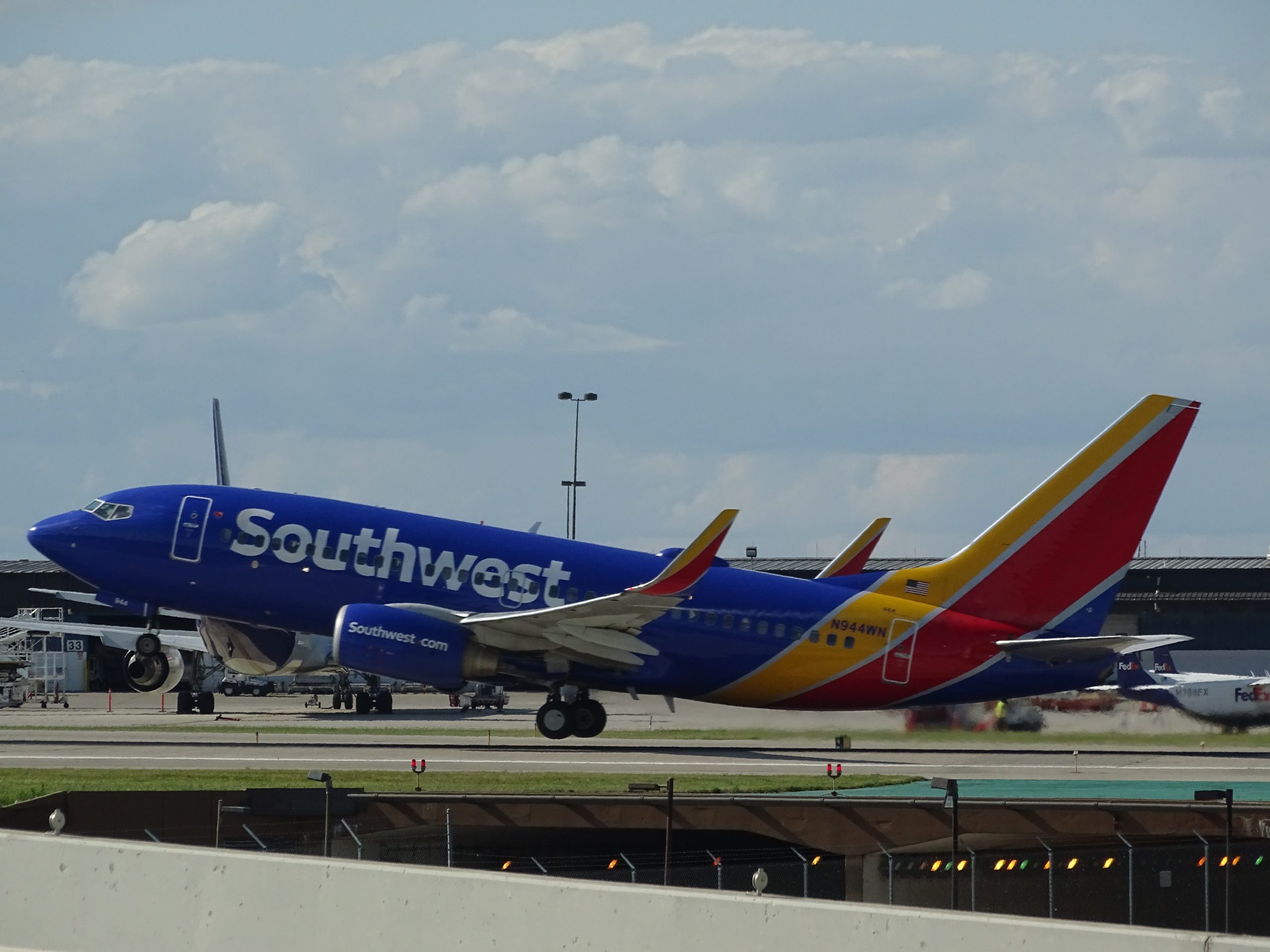
    Southwest Airlines is shaking up its Rapid Rewards program with a series of changes that aim to enhance the experience for its loyal customers. These enhancements come at a crucial time for the airline, which has been grappling with operational challenges and striving to regain the trust of its passengers. Let’s dive into what these changes mean for Southwest’s Rapid Rewards members.

    Earning Elite Status Just Got Easier

    One of the most significant changes is the adjustment to the requirements for earning A-List and A-List Preferred status. Starting on January 1, 2024, Rapid Rewards members will need to complete fewer qualifying flights to qualify or requalify for status. Interestingly, the thresholds for those qualifying by tier-qualifying points remain unchanged, though earning TQPs from a cobranded credit card becomes easier.

    For A-List status, the bar has been lowered from 25 one-way qualifying flights to just 20 flights, or 35,000 tier-qualifying points. This change makes it more attainable for frequent Southwest flyers to enjoy the benefits of A-List status, which include priority boarding, priority check-in, bonus points, and even same-day confirmed changes with no difference in base fare (pending availability).

    A-List Preferred status, which offers even more perks, will also be more accessible. The requirements have been reduced from 50 one-way qualifying flights to 40 flights or 70,000 tier-qualifying points. Achieving A-List Preferred status brings additional benefits such as free inflight WiFi. Again, the TQP thresholds remain the same, so this primarily helps those who qualify by number of flights taken.

    Boosting Your Status with Credit Card Spending

    The Rapid Rewards program’s tie-in with Southwest’s cobranded credit cards from Chase has also received a facelift. Cardmembers will now earn 1,500 tier-qualifying points for every $5,000 spent, previously $10,000. This change encourages credit card users to accelerate their progress toward elite status by making everyday purchases on their cobranded Chase cards.

    In-Flight Perks for A-List Preferred Members

    For A-List Preferred Members, starting November 6, 2023, there’s a new perk on the horizon: up to two complimentary premium drinks per flight. These drink coupons will be seamlessly added to their mobile boarding passes to redeem onboard.

    Flexibility in Booking with Cash and Points

    In spring 2024, Rapid Rewards Members will enjoy increased flexibility when booking flights. They will have the option to pay for their flights using a combination of cash and Rapid Rewards points, starting with as few as 1,000 points. This may prove to be a much better option than purchasing points to top off your account when you fall just short of a redemption.

    Southwest’s Road to Recovery

    While these changes to the Rapid Rewards program may seem like a welcome improvement, they come at a time when Southwest is working diligently to regain the trust of its customers. The airline has faced operational challenges and customer service issues in recent years that have earned it the unfortunate moniker “Southworst” by some passengers.

    It’s important to note that Southwest’s business model of point-to-point flights without large hubs has, at times, made it more vulnerable to operational issues. Unlike major hub airports where replacement aircraft and crew can be more readily available, point-to-point models can face greater challenges when issues arise. Additionally, when a single flight number is used for many stops, and passengers are thru-ticketed on it, any issue from A-B creates a domino effect on B-C, C-D, and so on.

    Furthermore, while the offer of complimentary premium drinks for A-List Preferred Members is a nice touch, it may not be a game-changer for everyone, especially when compared to the perks offered by legacy carriers. For instance, American’s entry-level Gold elites enjoy complimentary access to Main Cabin Extra seating, which includes complimentary alcoholic beverages without a stated limit. Additionally, if an elite passenger is upgraded, complimentary drinks are a standard offering.

    As for earning tier status, American’s Loyalty Points scheme still makes it considerably easier to earn elite status via credit card spend alone, offering a straight $1 = 1 LP ratio. Earning low-tier A-list elite status will still require over $116k of credit card spend to earn on Southwest, while AAdvantage Gold requires only $40k (and that’s assuming you don’t partake in the myriad of other ways to earn LPs).

    A Tough Competitive Landscape

    Southwest’s decision to revamp its loyalty program is occurring in a competitive landscape where low-cost carriers are facing headwinds. The post-pandemic “revenge travel” boom appears to be fizzling out amid mass layoffs and rising inflation, and those who are traveling tend to favor European destinations, where Southwest does not operate. It theoretically could reach northwest Europe from the northeast US using the Boeing 737 MAX 8, but that would require obtaining costly landing slots at level 3 airports, and convincing passengers to spend 7 hours on a single-aisle narrowbody with limited catering.

    Legacy carriers, on the other hand, are expanding their fleets, matching fares, and offering more international routes. This increased competition puts pressure on Southwest to adapt and make changes to keep its loyal customer base.

    The changes to the Rapid Rewards program are undoubtedly a positive step for Southwest and its loyal passengers. It aims to make elite status more attainable, offers in-flight perks, and provides greater flexibility in booking flights. However, the airline still faces challenges on its path to recovery and must navigate a fiercely competitive aviation landscape. These enhancements to the Rapid Rewards program are a significant step in the right direction for Southwest, but the road ahead remains challenging.

  • What is C-MUSIC? How El Al Protects Passengers from Anti-Aircraft Missiles

    What is C-MUSIC? How El Al Protects Passengers from Anti-Aircraft Missiles

    When it comes to airline security, El Al is known for taking absolutely zero chances. And understandably so – operating in one of the world’s most geopolitically volatile environments, the Israeli airline knows the importance of staying ahead of the curve. This importance is more apparent than ever, especially amid Israel’s ongoing war with Hamas and repeated attempted rocket attacks on Tel Aviv’s Ben Gurion International Airport.

    There’s a common misconception that El Al’s commercial airliners are armed with actual missiles – and that simply isn’t true. However, these aircraft do have onboard missile defense systems, which are designed to thwart heat-seeking missiles. In the past, these systems primarily used flares for this purpose, while newer installations have increasingly adopted the sophisticated C-MUSIC system, created by Elbit Systems of Haifa, Israel.

    What’s the Threat?
    Heat-seeking, anti-aircraft missiles, or MANPADS (Man-Portable Air Defense Systems), pose a grave danger to commercial aviation and VIP aircraft. These highly transportable and extremely lethal missiles have proliferated across the region in recent years, finding their way into the hands of terrorists and hostile non-state organizations. The consequences of a missile attack against an aircraft can often be dire, resulting in the loss of the aircraft and, tragically, the passengers on board.

    A Brief History
    El Al was an early pioneer in the development of onboard missile defense systems, commencing their foray into this technological realm back in the early 2000s under the moniker ‘Flight Guard.’ This initial system employed flares to confound heat-seeking missiles, a strategy that sparked controversy. Aviation authorities in some countries took issue with the utilization of flares, deeming it a potential fire hazard, and leading to the airline being banned from landing in some European countries like Switzerland. Such concerns ultimately catalyzed the development of an even more sophisticated and modern solution.

    Enter C-MUSIC
    C-MUSIC, short for Commercial-Multi Spectral Infrared Countermeasure, offers a powerful Directed Infra-Red Counter Measure (DIRCM) solution against MANPADS, drawing on years of proven experience in military settings to protect civilian aircraft. This advanced system has been installed on a wide range of commercial and civilian aircraft, including those transporting heads of state. Notably, it is certified by Israel’s Civil Aviation Authority, laser-based, and fully autonomous, requiring no action from the crew during engagement. In other words, it provides large jet aircraft with comprehensive protection against advanced heat-seeking ground-to-air missiles.

    How C-MUSIC Works
    C-MUSIC is neatly contained within a single, fuselage-mounted pod, employing sophisticated missile detection and jamming techniques to deliver superior aircraft protection. It has undergone extensive operational testing under the Israeli Ministry of Defense’s watchful eye. Additionally, it’s in use on various aircraft worldwide, including those serving high-profile passengers. The low-profile pod’s versatility enables swift detachment from one aircraft and reattachment to another, a crucial feature for fleets.

    The system uses an onboard FLIR infrared camera to detect incoming missiles, and fires back with infrared of its own to jam the missile’s target acquisition capabilities and (intentionally) lead it astray. C-MUSIC has gained the Government of Israel’s trust and is tasked with protecting all Israeli commercial airliners. It’s certified and installed on several Boeing and Airbus aircraft, with negligible impact on the aircraft’s performance. Through a multitude of flight tests and live fire tests, C-MUSIC has amassed over 35,000 operational hours across various aircraft platforms, proving its effectiveness under a wide range of operational conditions.

    Per FlightAware data at time of writing, it seems most of the flights still going in and out of Tel Aviv are on El Al metal. While most non-Israeli carriers have suspended all service to Ben Gurion, save for some limited repatriation flights, it seems to be largely business as usual for El Al – a testament to the airline’s advanced technology and know-how when it comes to operating in a volatile environment.

    Bottom Line
    C-MUSIC is more than just another addition to El Al’s security arsenal; it’s a testament to the airline’s unwavering commitment to passenger safety. Amid the outbreak of war in the Middle East, it’s reassuring to know that innovations like C-MUSIC are helping to keep the skies a safer place for everyone. Whether you’re an aviation enthusiast or just someone who values security in the skies, C-MUSIC is an advancement worth celebrating.

    Featured image courtesy Elbit Systems

  • Breeze Airways Pulls the Plug on TUL

    Breeze Airways Pulls the Plug on TUL

    Breeze Airways, the brainchild of JetBlue founder David Neeleman, took off in 2021 with grand aspirations. They aimed to disrupt the airline industry with their point-to-point, leisure-focused routes. Yet, it’s safe to say they’ve had a rocky start.

    Earlier this year, One Mile at a Time sounded the alarm bells, hinting that Breeze might be in deep financial trouble. Their Q1 2023 financial report painted a grim picture, with revenue at $67,378,610 and expenses soaring to $115,400,500, resulting in a staggering loss of $48,021,890 and an operating margin of -71%. A year ago, in Q1 2022, the airline wasn’t faring any better, with a loss of $21,026,850 and an operating margin of -122%. Ouch.

    Now, I’m no CPA, but even I can see that these numbers are concerning. Sure, it takes time for an airline to find its wings, but these margins are, to put it mildly, horrendous. It’s likely that Breeze has already burned through a considerable chunk of their startup capital, and it’ll be interesting to see if Neeleman’s airline can continue to stay afloat amid strong economic headwinds.

    The latest news in the Breeze saga is the discontinuation of their service to my home airport, Tulsa International Airport (TUL). I was actually at dinner when the announcement broke, and my phone started blowing up with texts from friends and colleagues about an article from The Bulkhead Seat breaking the news.

    At the time of the announcement, Breeze had only one route out of TUL, which they’d started less than a month ago. This route was operating twice-weekly service to Louis Armstrong New Orleans International Airport (MSY), with a “BreezeThru” to Orlando International Airport (MCO). It seems like they barely gave the service a chance to spread its wings before pulling the plug.

    Now, to be honest, I can’t say that I’m too surprised. I only personally know one person who has ever flown Breeze into or out of TUL, and that was on a TUL-BNA route that doesn’t even exist anymore. If there’s not enough demand to sustain a route, then it’s understandable that Breeze would cut it loose.

    TUL isn’t the only city that’s seen Breeze pull the plug recently. They’ve also bid adieu to BNA, OKC, and SAT. This airline is developing a reputation for adding and removing routes at a staggering pace. So, while it might seem like a goodbye now, it could very well be a “see you later.” TUL has already played this game with Breeze several times, and who’s to say we won’t see them back in a few months? It’s hard to rely on an airline that seems to throw darts at the wall to see what sticks, rather than taking a more measured and carefully-researched approach to route planning.

    Breeze Airways certainly has a lot to prove, both to its investors and to travelers like us. The airline industry is notorious for its ups and downs, and Breeze appears to be experiencing both in quick succession. The future for this leisure-focused carrier remains uncertain, but in the aviation world, anything can happen. Time will tell if Breeze can soar to new heights or if they’ll find themselves grounded for good.

  • Update: Air Canada Fires Suspended Pilot Involved in Anti-Semitic Posts

    Update: Air Canada Fires Suspended Pilot Involved in Anti-Semitic Posts

    In a significant development following our previous report, Air Canada has made an official statement confirming the termination of the pilot involved in the disturbing incident. The airline previously suspended Mostafa Ezzo, a first officer, earlier this week after a series of anti-Semitic posts surfaced on a now-deleted Instagram account associated with him. The posts, which depicted Ezzo in his pilot’s uniform draped in a Palestinian flag, included deeply offensive statements directed at Israel and its people.

    While Air Canada initiated an internal investigation process following the suspension, they understandably refrained from commenting on the specifics of their internal HR procedures. However, the airline has now concluded that process and officially announced in a statement on X (formerly Twitter) the termination of the pilot’s employment with Air Canada.

    The timing of Ezzo’s hateful online outbursts had raised concerns, coinciding with escalating tensions in the Middle East, notably a surprise attack on Israeli soil. The attack resulted in the loss of numerous lives and others taken hostage, including Israelis and tourists. In response to these events, Israeli Prime Minister Benjamin Netanyahu declared war.

    The airline unequivocally recognized the gravity of the situation and responded promptly by suspending Ezzo from service, sending a clear message that there is no place for anti-Semitism or any form of racially or religiously motivated hatred within the airline’s ranks. This is especially crucial during a period of heightened global tensions, and serves as a stark reminder that there can be no compromise when it comes to the trust placed in those who operate commercial aircraft.

  • United Airlines Adopts “WILMA” Boarding Order

    United Airlines Adopts “WILMA” Boarding Order

    United Airlines is taking a step back to the past in an effort to streamline their boarding process. Starting on October 26, 2023, they will be reintroducing a previously-trialed boarding system known as “WILMA.” Now, you might be wondering what WILMA stands for, and trust me, you’re not the only one scratching your head over this acronym. It stands for Window, Middle, and Aisle, though the origin of that “L” remains somewhat unclear.

    Why the switch? Well, United Airlines has noticed that it takes them an average of two minutes longer to board a flight now compared to 2019. You might think that two minutes isn’t much, but when multiplied across their entire network, that time can quickly add up. Oddly, this lag in boarding time has happened at a time when United has been expanding its basic economy fare class, which, notably, doesn’t include a carry-on bag.

    Why could this be? With business travel still lagging behind pre-pandemic levels, leisure travelers and families, who might not be as accustomed to the boarding process, now make up a significant chunk of their passenger roster, slowing down boarding.

    So, United is making a change, but what exactly does this mean for travelers? In a nutshell, the idea is to seat passengers in the window, middle, and aisle seats in that order. Starting with Group 3, the new system is as follows:

    • Preboarding remains the same and includes customers with disabilities, unaccompanied minors, active military members, Global Services members, travelers with children 2 years and younger, and Premier 1K members.
    • Group 1 continues to include Premier Platinum and Gold members, Star Alliance Gold members, and travelers in United Polaris, United First, and United Business cabins.
    • Group 2 still consists of Premier Silver members, Star Alliance Silver members, travelers with Premier Access or priority boarding, and select cobranded credit card holders.
    • Group 3 encompasses window seats, exit row seats, and non-revenue travelers.
    • Group 4 is for the middle seats.
    • Group 5 is for passengers in aisle seats.
    • Group 6 is for basic economy customers, though it’s important to note that for long-haul flights and select Central American routes, there won’t be a Group 6. This exception is due to United allowing carry-on bags for passengers with intercontinental basic economy tickets.

    At first glance, it might seem like a lot of groups, but keep in mind that United’s competitors like American Airlines and Delta both have a whopping 10 boarding groups, making United’s seven seem relatively tame. United also has one of the most punitive Basic Economy products in the business, placing even their MileagePlus elite members in Group 6 when flying on a Basic Economy ticket; on competing airlines, many of the restrictions of BE fares can be defeated with elite status or the right credit card.

    In my opinion, if an airline really wants to speed the boarding process, the current fee structure of charging most passengers to check a bag should be flipped. Carry-on bags slow the boarding process immensely, especially towards the end of the process as overhead bins fill, and people have to get creative as to where to stow their bags. This slowdown plays out in reverse upon landing, creating frustrating delays in getting off the aircraft. Road warriors and business travelers recognize the huge time suck involved in checking a bag, and I imagine most would be willing to pay a premium for the ability to bring a full-size carry-on. As an AA elite, I’m entitled to free checked bags, yet I rarely utilize this benefit based on the inconvenience factor alone. United seems to recognize this reality, as they already require Basic Economy passengers to check their bags (and pay for the privilege). Perhaps airlines should consider a fee structure charging non-elites to bring a full-size carry-on into the cabin, and incentivize more passengers to check their bags by making those free of charge.

    Ultimately, the airline industry is fiercely competitive, and with razor-thin margins, carriers are constantly seeking ways to shave precious minutes off their boarding times. There are countless academic studies all centered around shaving minutes and seconds off the boarding process. For airlines like Southwest, their open-seating policy allows for fast boarding, as passengers can just sit down wherever they see a seat and space for their carryon; this is especially crucial as their business model has long relied on quick turns. United’s reversion to the “WILMA” system might be just the ticket to streamline the process and get passengers on board a bit faster, even if we’re still pondering the mysterious “L” in the acronym.

  • Delta SkyMiles Changes: Could a Partial Rollback be Announced Tomorrow?

    Delta SkyMiles Changes: Could a Partial Rollback be Announced Tomorrow?

    Last month, Delta Airlines made some significant changes to their popular SkyMiles loyalty program, and the response was far from positive. The sweeping alterations sent shockwaves through the airline’s loyal customer base, with many longtime Delta aficionados expressing their frustration and disappointment. The changes were anything but customer-friendly, and the backlash was swift and fierce.

    Disclaimer: I do not earn any stock in Delta, nor do I have any inside knowledge. This is all educated speculation.

    Here’s a quick recap of the alterations that left many Delta customers reeling:

    1. All About the Benjamins:
      Delta went all-in on a revenue-based status system, effectively making Medallion Qualifying Dollars (MQDs) the only metric for determining your elite status. The problem? The new thresholds were incredibly steep. To attain even the lowly Silver Medallion status, you’d need to spend a substantial $6,000. And for those aiming for the coveted Diamond Medallion status, prepare to shell out a whopping $35,000.
    2. SkyClub Access:
      Delta also scaled back access to its SkyClub network. Effective from February 1, 2025, Delta SkyMiles Reserve and Reserve Business American Express Card Members, who previously enjoyed unlimited visits, would be capped at just 10 visits per Medallion year. The Platinum Card and Business Platinum Card from American Express saw a reduction from unlimited to just 6 visits per year. There was a carve-out, however, for those who spent over $75,000 a year on their card, allowing them to retain unlimited visits. Also announced was the discontinuation of the $50-per-visit SkyClub access for Delta SkyMiles Platinum and Platinum Business American Express Cardholders starting from January 1, 2024; on the same date, the current carve-out allowing Basic Economy passengers to access the SkyClub when using an eligible AmEx card for access would be removed.
    3. Fast Eddie and His Regrets:
      Delta’s CEO Ed Bastian, now affectionately nicknamed “Fast Eddie” by some, acknowledged that the airline may have gone too far with these changes. He made this admission during a speech at an Atlanta Rotary Club event, where he promised that Delta would address the concerns and make modifications to the changes they’d announced. This was late September, and he promised an announcement “in the coming weeks…” Well, it’s been a few weeks, and Delta’s Q call is tomorrow.

    So, here’s the big question: what can we expect tomorrow when Delta Airlines announces these potential rollbacks? Let’s take a look at a few likely scenarios:

    1. Revenue-Based System Stays:
      It’s almost certain that Delta won’t reverse its course on the revenue-based status system – that’s been a long time coming, and follows competitors United and American. However, they might reconsider the steep thresholds that have drawn so much criticism. I expect an adjustment between 20-30%.
    2. MQD Earn Rate Adjustment:
      We might see a slightly improved MQD earn rate on Delta Platinum and Reserve American Express cards. This could be a step in the right direction to appease their loyal customers. Again, look for a change in the ballpark of about 20-30%
    3. SkyClub Access Tweaks:
      While we shouldn’t expect a return to unlimited access, Delta could make some changes regarding SkyClub access. This could come in the form of either an increased visit allowance (my guess is 40-60% more than the previously announced caps) for American Express cardholders or a lower spending threshold to “earn back” unlimited visits (currently set at $75,000 per year). I think it’s more likely we’ll see a higher number of complimentary visits than a lower spend threshold, as $75k happens to also be the magic number to unlock complimentary guest access to the Centurion Lounge.

    But the big question is, will these modifications be enough to rebuild the trust that has been broken with loyal Delta flyers? Many have already jumped ship to American or United, with American Airlines, in particular, having a great year under their new CEO, Robert Isom. Isom’s quiet success in fixing operational issues and improving service quality has not gone unnoticed. Meanwhile, Delta seems to be moving in the opposite direction, with increasing delays, cancellations, and declining service quality.

    As we eagerly await Delta’s Q call tomorrow, one thing is clear: the airline will need to make significant changes to win back the loyalty of their once-loyal customer base. Whether they can successfully navigate these challenges remains to be seen, but it’s clear that the ball is now in Delta’s court.

  • BA Diverts Tel Aviv Flight on Final Approach; BA, VS Suspend Israel Operations

    BA Diverts Tel Aviv Flight on Final Approach; BA, VS Suspend Israel Operations

    A British Airways flight bound for Tel Aviv found itself diverting back to London Heathrow on Wednesday, just as it was on its final approach into Ben Gurion Airport (TLV). Flight BA165, operated on an Airbus A350-1000, touched down safely in London a little after 6:30 PM local time, after almost 10 hours airborne. The reason behind this unexpected change of course was the launch of a barrage of rockets by Hamas toward the city. While the Israel Airport Authority stated that the rocket attack didn’t pose an immediate threat to the airliner’s safety, British Airways decided to take no chances, and immediately suspended all its operations to Israel.

    This incident occurred amid escalating tensions in the region, with the conflict between Israel and Hamas intensifying. British Airways had been among the few airlines that continued to operate regular flights to Tel Aviv even after the hostilities began over the weekend. However, a spokesperson for the airline cited the “changing security environment” as the reason for discontinuing the flights.

    “Following the latest assessment of the situation, we’re suspending our flights to and from Tel Aviv,” the airline’s spokesperson confirmed. While Tel Aviv Airport had experienced sporadic rocket attacks in the days prior, British Airways had continued to operate non-stop flights from its Heathrow hub. BA had already pivoted towards daytime flights into Ben Gurion to prevent their crews from having overnight layovers in the country amid the ongoing war. Interestingly, fellow IAG-owned carrier Iberia Express still has flights scheduled for tomorrow between TLV and Madrid-Barajas (MAD), though it’s unclear if that will change amid this rapidly-evolving situation.

    Virgin Atlantic, another carrier operating flights to Tel Aviv from London Heathrow, initially indicated Wednesday that they intended to continue service to the region as scheduled. However, as the situation has continued to evolve, the airline has now suspended Israel service for at least the next 72 hours as they continue to re-assess conditions on the ground.

    Even Turkish Airlines, known for its high geopolitical risk tolerance and steadfast approach to serving conflict zones, has suspended its flights to Israel. Even amid the ongoing Russia-Ukraine conflict, TK has maintained its flights to Russia, providing about the only reliable link for essential travel to and from the region while most US and EU carriers have suspended their Russia operations indefinitely. However, the escalating tensions in Israel have proven too much even for Turkish, underscoring the gravity of the situation on the ground.

    As for British Airways, their services to Tel Aviv have been suspended for at least the remainder of the week. Given the current state of affairs, it’s highly likely that this suspension will extend well beyond that initial timeframe. It’s interesting to note that European carriers appear to have a higher geopolitical risk tolerance compared to their US counterparts. For instance, Delta Airlines has suspended its flights to Tel Aviv for at least the remainder of October.

    For those currently in Israel, especially tourists, the situation has become increasingly challenging as flight options out of Tel Aviv continue to dwindle. British Airways was once a reliable choice for exiting the region, but it’s no longer an option. In light of this, it’s essential for individuals to take proactive steps to ensure their safety and well-being. Registering with your country’s embassy (STEP program for American citizens) is a prudent move to ensure your government is aware of your whereabouts.

    For US and Canadian citizens, the most practical strategy may be to seek the soonest available means to get to Europe and then determine a game plan from there. Despite President Joe Biden’s pleas to the airline industry, it’s unlikely that we’ll see nonstop air service to North America from the region (except some limited service on El Al) until the conflict subsides. The situation is evolving rapidly, and travelers are advised to stay informed and make well-informed decisions based on the latest updates and guidance.

  • Air Canada Takes Swift Action Against Anti-Semitic Pilot

    Air Canada Takes Swift Action Against Anti-Semitic Pilot

    In a recent and disturbing incident, Air Canada has taken swift action to suspend a first officer, Mostafa Ezzo, after a series of hateful and anti-Semitic posts came to light. The posts, shared on a now-deleted Instagram account, depicted Ezzo in his pilot’s uniform, draped in a Palestinian flag, and accompanied by deeply offensive statements directed at Israel and its people.

    The timing of Ezzo’s hateful online outbursts coincided with escalating tensions in the Middle East. In response to a surprise attack on Israeli soil, resulting in the loss of hundreds of lives, including Israelis and tourists, with countless others taken hostage, Israeli Prime Minister Benjamin Netanyahu declared war on Hamas on Sunday.

    Ezzo’s Instagram posts, uncovered by StopAntiSemitism.org, included shocking comments such as his assertion that Hitler would be proud of Israel, and a picket sign depicting the disposal of an Israeli flag with caption “Keep the World Clean.” These comments not only displayed a shocking level of anti-Semitism but also raised alarming concerns about Ezzo’s judgment and soundness of mind as an airline pilot.

    In a statement on X (formerly Twitter), Air Canada made it clear that they were taking this issue seriously, removing Ezzo from service.

    Air Canada’s actions in this case are commendable for several reasons. Firstly, they recognize that there is no room for anti-Semitism or any form of racially or religiously motivated hatred, especially during a period of heightened tensions in the Middle East.

    Furthermore, being a pilot comes with a unique set of responsibilities. Passengers entrust their lives to these professionals when they board an aircraft, and that trust relies on both an incredibly high standard of training, as well as unquestionable professionalism at all times. Ezzo’s actions seriously undermined this trust. While nobody should ever be making statements like Ezzo did, a pilot needs to uphold a higher standard of integrity and professionalism than a typical individual. There cannot even be an appearance of a doubt as to whether a pilot can be entrusted to fly 289 passengers and keep them safe.

    While it is unclear which routes Ezzo operated, it’s worth noting that Air Canada’s Boeing 787s have the capability to serve international destinations, including Tel Aviv, Israel, from various points in Canada like Toronto (YYZ) and, of course, his home base of YUL, which offers seasonal TLV service. It’s a scary thought that there may have potentially been a time that Ezzo was at the controls of a Dreamliner headed into a country he publicly hates so much; after all, all the heightened security measures in the world are worthless if we can’t absolutely trust the pilots.

    Even with union contracts in place, airlines still maintain the authority to take action when their employees engage in behavior that threatens the company’s reputation or the safety and well-being of their passengers. Ezzo’s posts unquestionably fell into this category.

    Air Canada’s prompt suspension of Mostafa Ezzo serves as a reminder that bigotry and hatred must find no harbor within the aviation industry or within our broader society. The airline’s swift response underscores the fundamental principle that every passenger should feel safe and welcome when stepping on board an aircraft. This incident reinforces the enduring importance of upholding unquestionable professionalism in the world of aviation.